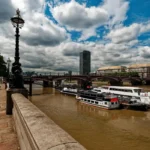
Lambeth’s Thames frontage offers several strong locations for seeing illuminated bridges after dark. Westminster Bridge, Lambeth Bridge, Vauxhall Bridge and the nearby Golden Jubilee Footbridges create a connected evening landscape of historic architecture, river traffic, landmark lighting and riverside walking routes.
- Which bridges are best to see at night around Lambeth?
- Where can visitors get the best view of Westminster Bridge at night?
- Is Lambeth Bridge worth visiting after dark?
- Where can visitors see both Westminster Bridge and Lambeth Bridge together?
- What is the Illuminated River and why does it matter for Lambeth?
- Can visitors see Lambeth’s bridges from the Thames Path?
- Where is the best viewpoint for bridge reflections on the Thames?
- Is Vauxhall Bridge a good night-time viewpoint near Lambeth?
- Can visitors combine several illuminated bridges in one evening walk?
- Which bridge viewpoints work best for photographers at night?
- What landmarks can visitors combine with Lambeth bridge viewing?
- What is the best time to see Lambeth’s bridges illuminated?
- How can visitors plan a safe evening bridge walk in Lambeth?
- Why are Lambeth’s bridges important to London’s night-time landscape?
The area is particularly significant because the Illuminated River artwork connects Westminster Bridge and Lambeth Bridge with seven other central London bridges. The permanent public artwork uses dynamic LED lighting to reveal bridge structures after sunset. The completed installation stretches for 3.2 miles from London Bridge to Lambeth Bridge.
For visitors, the best night-time viewpoints are not limited to the bridges themselves. South Bank, the Thames Path, Victoria Tower Gardens, Albert Embankment and riverside areas around Westminster provide different angles across the water. Each location changes the relationship between bridge, skyline and reflection.
Which bridges are best to see at night around Lambeth?
Westminster Bridge and Lambeth Bridge provide the strongest combination of illuminated architecture, landmark views and riverside access, while nearby Vauxhall Bridge adds historic sculpture and a different perspective towards Pimlico and Westminster. Golden Jubilee Footbridges extend the evening bridge experience towards Waterloo.
Westminster Bridge is particularly prominent because it sits beside the Palace of Westminster and connects Westminster with the South Bank. The current bridge opened in 1862 and is Grade II* listed. Its Gothic detailing, green-painted ironwork and seven arches are especially recognisable after dark.
Lambeth Bridge is further upstream. The present bridge opened in 1932 and has five steel arches supported by reinforced concrete piers faced with granite. Historic England lists it at Grade II. Its red appearance creates a clear visual contrast with Westminster Bridge.
Vauxhall Bridge is further west. The current bridge opened in 1906 and is Grade II*. Its piers contain bronze sculptures by Alfred Drury and Frederick Pomeroy. These figures represent subjects including government, education, fine art, science, agriculture, architecture, engineering and pottery.
The Golden Jubilee Footbridges sit beside Hungerford Bridge and provide pedestrian routes between the north and south banks. Their modern structure and position near the London Eye make them useful for combining bridge views with the South Bank skyline.
Where can visitors get the best view of Westminster Bridge at night?
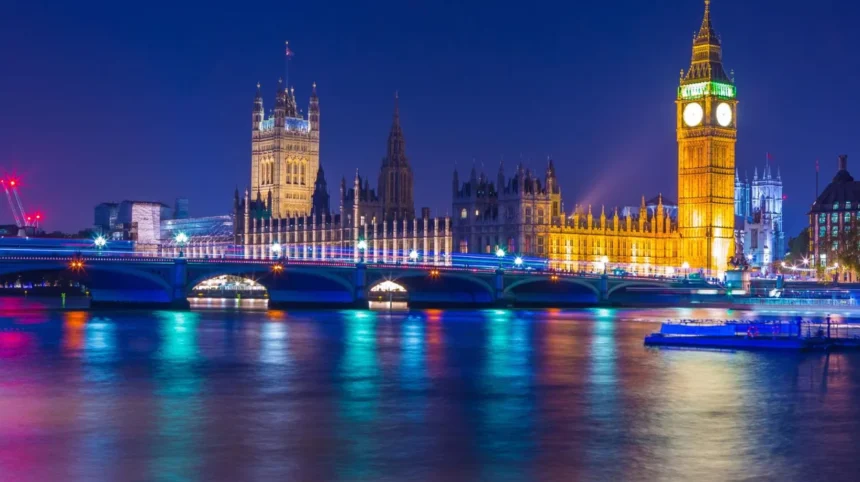
The South Bank riverside beside Westminster Bridge gives visitors a direct view of the illuminated bridge, Big Ben, the Palace of Westminster and the London Eye. Crossing the bridge adds closer views of its Gothic ironwork, lamps and reflections on the Thames.
Westminster Bridge is one of the most recognisable night-time locations in central London. Its position creates several simultaneous sightlines. Looking north, visitors see the Elizabeth Tower and the Palace of Westminster. Looking south, the London Eye dominates the opposite skyline.
The bridge is also part of the Illuminated River artwork. Its lighting uses soft green tones that emphasise the latticework and complement the bridge’s historic green colour.
The South Bank side is useful for photographers because the bridge can be viewed with the river in the foreground. Reflections change according to water movement, boat traffic, weather and the position of other lighting along the river.
The bridge itself remains a working road crossing. Visitors should use the pedestrian footways and avoid stopping in areas where they obstruct other pedestrians.
Visit London identifies Westminster Bridge as a central sightseeing viewpoint with views of Big Ben, the Houses of Parliament, the London Eye and the Thames.
Is Lambeth Bridge worth visiting after dark?
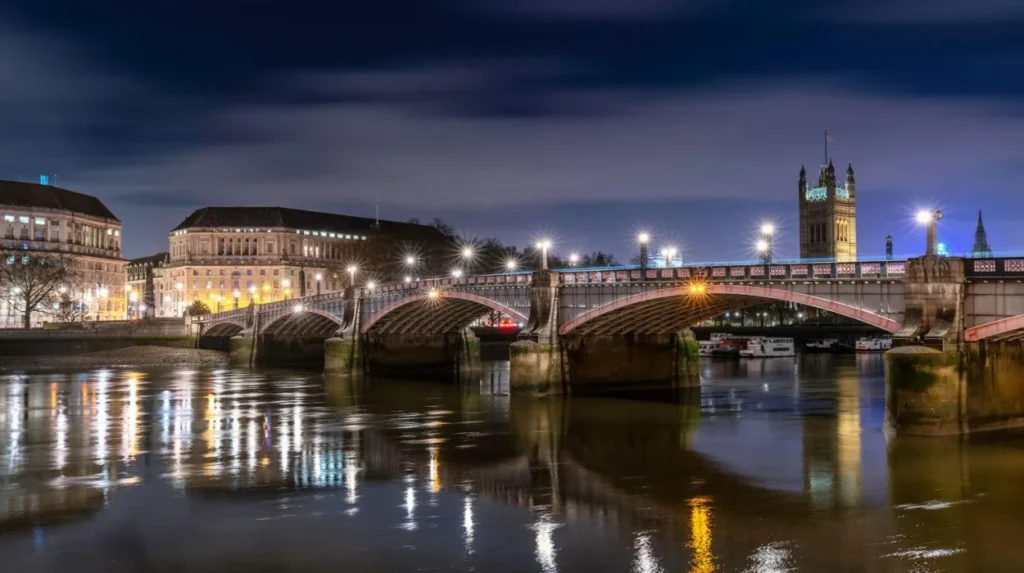
Lambeth Bridge is a strong night-time viewpoint because its red structure receives warm illumination while nearby Westminster landmarks create a wider political and architectural skyline. The bridge also connects directly with riverside walking routes on both sides of the Thames.
Lambeth Bridge has a distinctive appearance after dark. Its red colour is historically connected with the House of Lords, while Westminster Bridge uses green in association with the House of Commons. This colour relationship gives the two bridges a clear visual identity.
The current Lambeth Bridge was designed by engineer Sir George Humphreys with Sir Reginald Blomfield and George Topham Forrest as consulting architects. It opened on 12 July 1932.
Historic England records that the site has been associated with Thames crossings since at least the 13th century. A horse ferry operated here before the modern bridges were built, and the historic connection survives in the name Horseferry Road.
The Illuminated River treatment adds warm light around the bridge’s handrails and red underside. This lighting highlights the structure without changing its historic visual character.
As you explore the modern crossing, you are walking through a location shaped by centuries of Thames transport and development. Read about the full [Insert Anchor Text for History Article Here] to understand its origins.
Where can visitors see both Westminster Bridge and Lambeth Bridge together?
Victoria Tower Gardens provides one of the clearest riverside viewpoints towards both Westminster Bridge and Lambeth Bridge. The park sits beside the Thames and offers views across the river towards Albert Embankment, Westminster Bridge and the London Eye.
Victoria Tower Gardens is on the north bank of the Thames beside the Palace of Westminster. The Royal Parks describes the site as a riverside park with views extending from Lambeth Bridge towards the London Eye.
The location is especially useful before sunset and during early evening. Visitors can establish the surrounding geography while there is still daylight, then observe the bridges as the artificial lighting becomes more prominent.
The park has defined opening hours. Royal Parks currently lists pedestrian gates as open from 7am to 8:30pm. This makes it unsuitable for very late-night viewing after the gates close.
For visitors planning a later evening, the public riverside routes around Westminster provide alternatives. Checking current access conditions remains important because temporary closures, events and maintenance affect individual locations.
Victoria Tower Gardens also contains the Buxton Memorial, the Emmeline Pankhurst memorial and Rodin’s Burghers of Calais. These landmarks add historical context to an evening Thames walk.
What is the Illuminated River and why does it matter for Lambeth?
The Illuminated River is a permanent public artwork using dynamic LED lighting across nine central London Thames bridges. It extends from London Bridge to Lambeth Bridge and includes Westminster Bridge and Lambeth Bridge at its western end.
The project was designed by American artist Leo Villareal with British architectural practice Lifschutz Davidson Sandilands. The completed artwork covers nine bridges across a 3.2-mile section of the Thames.
The first phase opened in July 2019. It covered London Bridge, Cannon Street Railway Bridge, Southwark Bridge and Millennium Bridge. The second phase added Blackfriars Bridge, Waterloo Bridge, Golden Jubilee Footbridges, Westminster Bridge and Lambeth Bridge in April 2021.
Each bridge has its own lighting treatment. Westminster Bridge uses soft green tones. Lambeth Bridge receives warm illumination that works with its red structure. Waterloo Bridge has moving illumination designed around the flow of the Thames. Golden Jubilee Footbridges use a more restrained monochromatic approach.
The artwork creates a connected night-time experience rather than treating each bridge as an isolated landmark. Visitors can therefore move between several viewpoints while following the river.
The official Illuminated River project describes the installation as a 3.2-mile artwork designed to reveal the architecture and relationship between London’s bridges and the Thames.
Can visitors see Lambeth’s bridges from the Thames Path?
Yes. The Thames riverside routes provide continuous viewpoints around Westminster, Lambeth and South Bank, allowing visitors to see bridge structures from changing distances. The riverbank offers lower-level views, reflections and perspectives unavailable from the bridge decks.
Walking beside the Thames changes the scale of the bridges. From directly below or beside a crossing, the piers and underside become prominent. From farther along the embankment, the full bridge profile becomes easier to recognise.
The Westminster riverside is particularly useful for visitors combining bridge viewing with major landmarks. Visit London describes the riverside route as a sightseeing walk passing the Houses of Parliament, Big Ben and Westminster Bridge.
South Bank provides another important section. The riverside promenade passes the London Eye, County Hall, cultural venues and restaurants. It also gives visitors views back towards Westminster Bridge and the Palace of Westminster.
The Thames Path is not a single uninterrupted pedestrian surface with identical conditions everywhere. Surface types, stairs, crossings, crowds and temporary works differ between sections. Visitors should follow signed pedestrian routes and observe local restrictions.
Night-time river walks also require practical awareness. Keep to lit public routes, avoid restricted edges and take extra care around steps, cyclists and busy pedestrian areas.
Where is the best viewpoint for bridge reflections on the Thames?
The South Bank riverside near Westminster Bridge offers strong opportunities for seeing bridge lights reflected on the Thames. Water movement, passing boats and changing illumination produce different reflection patterns throughout the evening. The viewpoint also includes Big Ben and the London Eye.
Bridge reflections depend on several physical conditions. Calm water creates clearer vertical reflections. Wind and river traffic break reflections into moving sections. Passing boats introduce additional light sources and change the appearance of the water surface.
The Thames is tidal through central London. Water levels therefore change during the day and night. This affects the visible relationship between bridge lighting and the river.
The viewpoint near Westminster Bridge has an additional advantage. Visitors see multiple illuminated elements within one field of view. The bridge, Elizabeth Tower, Palace of Westminster and London Eye create a concentrated night-time skyline.
Visit London’s Westminster guidance identifies the bridge as a viewpoint for Big Ben, the Houses of Parliament, the London Eye and the Thames.
Photography conditions also depend on the surrounding pedestrian movement. A stable position away from the main flow gives better opportunities for longer exposures without interfering with other visitors.
Is Vauxhall Bridge a good night-time viewpoint near Lambeth?
Vauxhall Bridge provides a different evening experience from Westminster Bridge because its Grade II structure combines historic engineering with unusual sculptural decoration. Its position upstream gives views towards Westminster and the central London river corridor.*
Vauxhall Bridge opened in 1906. It was designed by Sir Alexander Binnie and Sir Maurice Fitzmaurice, with sculptures by Alfred Drury and Frederick Pomeroy. Historic England identifies the sculptural work as an important feature of the bridge.
The bridge is especially distinctive because its piers contain bronze female figures representing different functions and activities. The upstream and downstream sides use different groups of sculptures.
Its current colour scheme combines burgundy and orange with blue and white trim. These colours distinguish Vauxhall Bridge from the green Westminster Bridge and red Lambeth Bridge.
The surrounding area also connects with Lambeth’s wider riverside landscape. Vauxhall station and Vauxhall’s commercial area provide transport and hospitality options for visitors ending an evening walk.
Vauxhall Bridge is therefore useful when the aim is to see historic bridge architecture rather than only London’s most photographed central skyline.
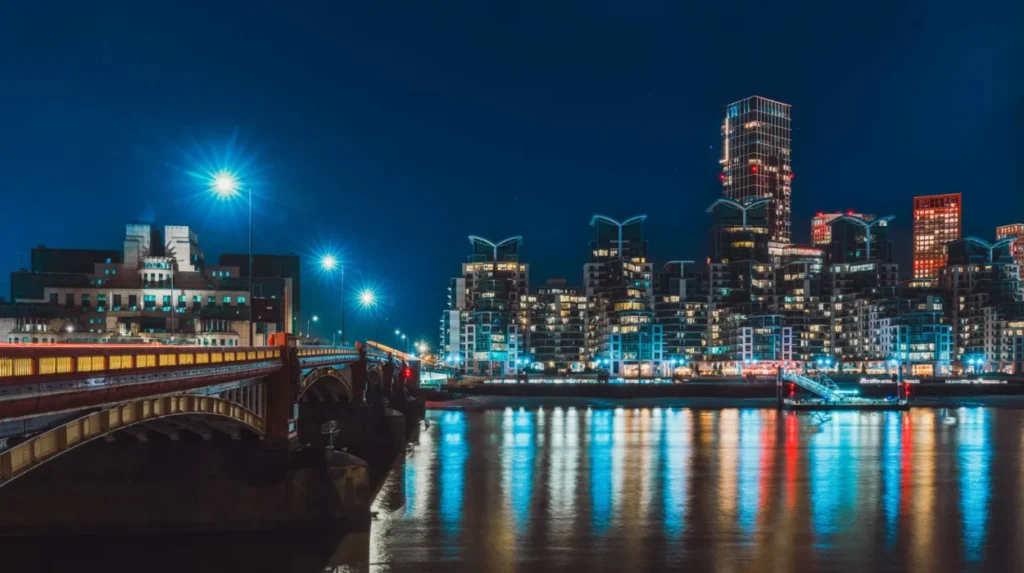
Can visitors combine several illuminated bridges in one evening walk?
Visitors can connect several illuminated bridges through a central Thames walking route. The Illuminated River’s full nine-bridge route takes up to two hours, while shorter sections around Waterloo, Westminster and Lambeth provide more manageable evening walks.
The Illuminated River Foundation provides a self-guided map and audio tour covering all nine illuminated bridges. Its published full route starts at Monument, crosses Blackfriars Bridge and finishes at Lambeth Bridge, taking up to two hours.
For visitors focused specifically on Lambeth, a shorter route is more practical. One option begins around Waterloo and follows the South Bank towards Westminster Bridge and Lambeth Bridge.
Another route begins near Westminster Station, crosses Westminster Bridge, follows the South Bank and finishes around Lambeth Bridge. This route combines bridge viewing with the London Eye and other South Bank attractions.
A longer walk can continue west towards Vauxhall Bridge. This adds another major historic crossing and changes the visual character of the riverfront.
The exact walking time depends on stops, crowd levels and photography. Bridge viewing is therefore better planned as a flexible riverside walk than as a fixed point-to-point journey.
Which bridge viewpoints work best for photographers at night?
Westminster Bridge works well for landmark compositions, Lambeth Bridge provides architectural detail and colour contrast, and Vauxhall Bridge offers sculptural subjects. South Bank provides wider river compositions with bridge lighting, reflections and London’s illuminated skyline.
Westminster Bridge is suited to wide compositions because the Palace of Westminster and Elizabeth Tower stand immediately beside it. The London Eye appears across the river from the South Bank side.
Lambeth Bridge offers stronger structural detail. Its arches, piers, lamp standards and red colour create identifiable architectural elements. Historic England records the bridge’s 236.5-metre total length and five-span steel arch construction.
Vauxhall Bridge provides close architectural details through its sculptural piers. Historic England records its Grade II* status and the work of Drury and Pomeroy.
Night photography also benefits from stability. A tripod provides consistent framing, but some busy pedestrian locations have restrictions or limited space. Handheld cameras and modern smartphones work well when visitors use stable surfaces and appropriate exposure settings.
The strongest compositions often include the river itself. Reflections provide a visual connection between the bridge and the water without requiring additional landmarks.
What landmarks can visitors combine with Lambeth bridge viewing?
Bridge viewing combines easily with the London Eye, Palace of Westminster, Big Ben, South Bank, Victoria Tower Gardens and the Thames riverside. These landmarks sit within a compact central London area and support evening sightseeing without requiring long journeys between attractions.
The Palace of Westminster is immediately beside Westminster Bridge. Its Gothic Revival architecture forms the principal backdrop on the north side of the river.
The London Eye stands on the South Bank near Westminster Bridge. Its observation capsules provide elevated views over the Thames, bridges and central London. Visit London lists Waterloo as the nearest major Tube station, with several bus services serving the area.
South Bank also contains the Southbank Centre, National Theatre and other cultural venues. The riverside environment remains active into the evening and provides food, entertainment and pedestrian routes.
Victoria Tower Gardens offers another perspective towards Lambeth Bridge and the London Eye, although its pedestrian gates close at 8:30pm according to Royal Parks.
This concentration of landmarks makes the Lambeth riverside useful for visitors with limited evening time. A single walk can incorporate architecture, public art, bridge lighting, river views and major London attractions.
What is the best time to see Lambeth’s bridges illuminated?
The strongest viewing period begins after sunset, when natural light fades and bridge illumination becomes clearer. Blue hour provides detail in the sky, while full darkness increases contrast between the illuminated structures, river reflections and surrounding London landmarks.
Sunset time changes significantly across the year. Winter evenings become dark earlier, while summer evenings retain daylight much later.
The Illuminated River is designed as an evening artwork. Visit London states that the installation is displayed from sunset until 2am.
Visitors should therefore distinguish between sunset, twilight and full darkness. During twilight, the sky retains colour and bridge structures remain visible without artificial light dominating the scene. Later at night, illuminated architecture becomes more visually prominent.
The best time also depends on the purpose of the visit. Photographers often benefit from the transition between daylight and darkness. Visitors seeking a straightforward illuminated landmark experience can arrive after full darkness.
Bridge lighting schedules and public access conditions can change because of maintenance, events or operational requirements. Visitors should check current information before making a dedicated journey.
Explore More Area Guide
Where to Watch River Thames Traffic in Lambeth
Best Early Morning Walks in Lambeth, South London
How can visitors plan a safe evening bridge walk in Lambeth?
A safe evening bridge walk uses established public paths, keeps visitors away from traffic and restricted river edges, and allows extra time for crowds, crossings and photography. Visitors should check opening hours for parks and current travel information before setting out.
Westminster Bridge, Lambeth Bridge and Vauxhall Bridge remain working transport crossings. Pedestrian routes are provided, but traffic continues throughout the evening.
Visitors should stay on designated pavements and crossings. Stopping in narrow pedestrian areas can obstruct other people. Bridge edges also require care, particularly when taking photographs.
Parks have separate access arrangements. Victoria Tower Gardens currently lists pedestrian gate hours of 7am to 8:30pm.
The riverside also contains steps, railings, changing surfaces and areas affected by maintenance or events. Checking current local conditions reduces the risk of arriving at a temporarily restricted viewpoint.
Public transport provides practical alternatives to long late-night walks. Westminster, Waterloo, Lambeth North and Vauxhall stations serve different parts of the riverside area.
Visitors staying out later should plan their return journey before starting the walk. This is particularly important when combining several bridges rather than visiting one central viewpoint.
Why are Lambeth’s bridges important to London’s night-time landscape?
Lambeth’s bridges combine transport infrastructure, architectural heritage, public art and illuminated landmarks within a compact section of the Thames. Their lighting creates a continuous evening landscape that connects Westminster, South Bank, Lambeth and the wider central London river corridor.
The bridges are important individually and collectively. Westminster Bridge is a Grade II* listed structure associated directly with the Palace of Westminster. Lambeth Bridge is Grade II listed and represents a later generation of steel bridge construction. Vauxhall Bridge is Grade II* listed and contains an exceptional sculptural programme.
The Illuminated River adds a contemporary layer to this historic infrastructure. The project uses connected LED lighting while retaining the identity of individual bridges. Its nine-bridge sequence extends from London Bridge to Lambeth Bridge.
This combination gives evening visitors several ways to understand Lambeth’s riverfront. The bridges function as crossings, heritage structures, public artworks and viewpoints.
For tourists, the area provides access to major London landmarks. For residents, it offers a different perspective on familiar streets and river routes. Digital nomads and business travellers can also use the riverside as a short evening sightseeing route between daytime commitments.
Lambeth’s bridges therefore form more than a collection of crossings. They provide a connected night-time corridor where historic architecture, modern lighting, river movement and London’s central skyline meet.
What are the best places to see Lambeth’s bridges at night?
The South Bank riverside, Westminster Bridge, Lambeth Bridge, Victoria Tower Gardens and the Thames Path provide strong evening viewpoints. These locations offer illuminated bridges, river reflections and views of major London landmarks.