Lambeth has a wide network of public parks, formal gardens, commons, orchards and landscaped open spaces across Waterloo, Vauxhall, Kennington, Brixton, Camberwell, Herne Hill and Streatham. Lambeth Council lists more than 78 parks, commons and other public open spaces, giving visitors access to formal planting, flower gardens, ponds, orchards, wildlife areas and community gardens.
- Where are the main public gardens in Lambeth?
- Which Lambeth garden is best for formal historic planting?
- What can visitors see at Kennington Park’s flower garden?
- Does Brockwell Park have a public garden?
- Where can visitors find gardens in Vauxhall?
- Can visitors find a public garden near Waterloo and Lambeth Palace?
- Which Lambeth gardens are suitable for visitors exploring Brixton?
- What garden features can visitors find in Ruskin Park?
- Are there smaller public gardens worth visiting in Lambeth?
- How do Lambeth’s gardens support wildlife and biodiversity?
- When are Lambeth’s public gardens open?
- How can visitors choose the right public garden in Lambeth?
- Why are Lambeth’s public gardens important for visitors?
For visitors specifically looking for gardens rather than large recreational parks, the borough offers several distinct choices. The Rookery at Streatham Common provides a historic formal garden. Kennington Park contains its restored Old English Flower Garden. Brockwell Park has a historic walled garden. Vauxhall Park includes a Lavender Garden and sensory garden. Brixton Orchard provides a community-focused fruit-growing space, while St Mary’s Gardens offers a compact landscaped setting close to the Thames.
Lambeth’s garden landscape also connects directly with the borough’s history. Eight landscapes in Lambeth appear on the national Register of Historic Parks and Gardens, including Brockwell Park, Kennington Park, Lambeth Palace, Myatt’s Field, Ruskin Park, The Rookery and West Norwood Cemetery.
Where are the main public gardens in Lambeth?
Visitors can find public gardens throughout Lambeth, with notable examples at The Rookery in Streatham, Kennington Park, Brockwell Park, Vauxhall Park, Ruskin Park, Brixton Orchard and St Mary’s Gardens. These locations provide different combinations of formal planting, heritage features, wildlife habitats and quiet spaces.
Lambeth’s public garden network is distributed rather than concentrated in one district. This makes garden visits easy to combine with sightseeing, walking routes, local shopping and cultural attractions.
In northern Lambeth, St Mary’s Gardens and Archbishop’s Park provide green spaces around Waterloo and Lambeth Palace. Vauxhall Park and Vauxhall Pleasure Gardens serve Vauxhall and Stockwell. Kennington Park sits further south-east of Vauxhall.
Central and southern Lambeth contain several substantial landscaped destinations. Brockwell Park sits between Herne Hill and Brixton. Ruskin Park is close to Denmark Hill. Myatt’s Field Park serves the Camberwell and Brixton area. The Rookery sits within Streatham Common.
The council’s parks directory also identifies smaller gardens and open spaces, including Agnes Riley Gardens, Albert Embankment Gardens, St John’s Church Gardens and St Matthew’s Church Gardens.
This range means visitors can choose a garden according to location and purpose. A traveller exploring Waterloo can use a compact riverside garden. Someone visiting Streatham can combine a large common with a formal historic garden. A visitor staying around Brixton can explore an urban orchard or landscaped park.
Which Lambeth garden is best for formal historic planting?
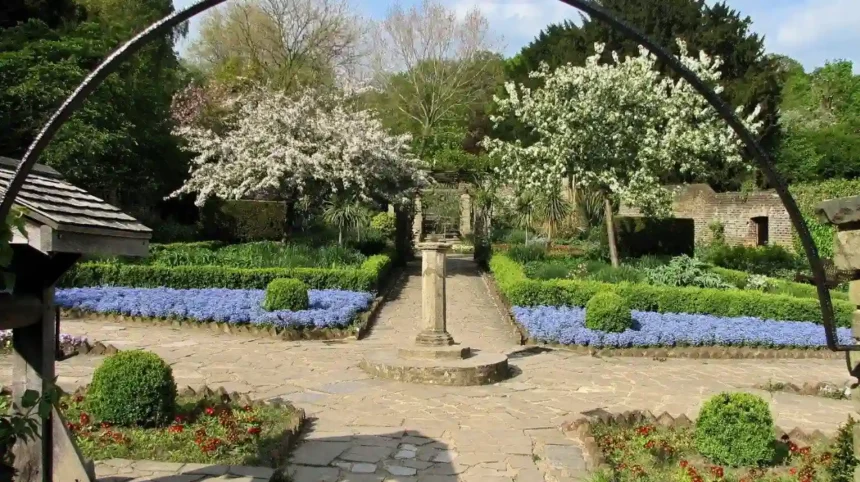
The Rookery at Streatham Common is one of Lambeth’s clearest destinations for formal historic gardening, with ornamental ponds, herbaceous and wildflower beds, an Old English Garden, White Garden, hedges, orchard planting and community gardening within a Grade II listed historic garden.
The Rookery is a formal garden situated between Streatham, Norbury and West Norwood. It occupies part of the wider Streatham Common landscape and has a distinct horticultural character.
The garden originally formed part of the grounds of a large private house known as The Rookery. The site was threatened with disposal and redevelopment before public subscription secured it for public use. The garden opened to the public in 1913.
Its historic designation is important for visitors interested in designed landscapes. The Rookery is a Grade II listed historic garden. Its layout includes ornamental ponds, planted beds, hedges, an orchard, an Old English Garden and a White Garden.
The garden also has ecological importance. Part of The Rookery and Streatham Common was declared a Local Nature Reserve in 2013. The site supports wildlife through its wooded edges, ponds, hedges and orchard.
The Rookery is therefore useful for visitors seeking a combination of horticulture and nature. It also connects with the Capital Ring, a long-distance walking route around Greater London.
Opening arrangements are different from some of Lambeth’s larger open spaces. The Rookery normally opens from 7.30am until 30 minutes before dusk, with earlier closure possible during severe weather. Visitors should check current arrangements before travelling.
What can visitors see at Kennington Park’s flower garden?
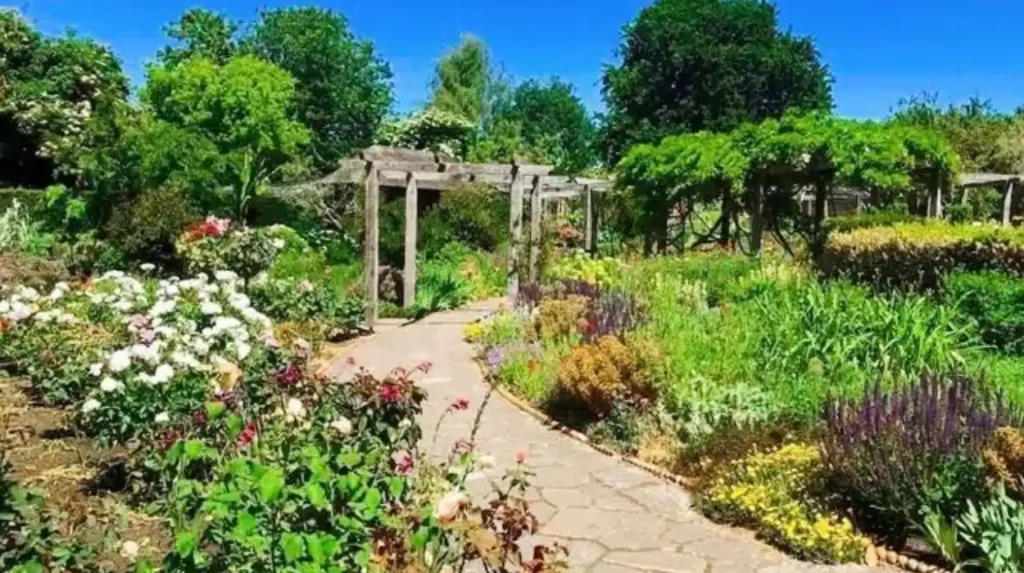
Kennington Park contains a restored Old English Flower Garden surrounded by mature trees, lawns and historic park features. The garden forms part of a Victorian public park that also contains rose beds, ornamental planting, wildlife areas, sports facilities, paths and community-focused environmental projects.
Kennington Park is one of Lambeth’s most historically significant public parks. The site was originally Kennington Common, an open area where local people exercised common rights and gathered for public meetings.
The Common became associated with major political gatherings. In April 1848, more than 25,000 supporters of the Chartist movement assembled there. The Chartists campaigned for electoral reform, including wider voting rights.
The Common was converted into a public park in 1852. The new park included boundary railings, formal gardens and fountains.
The Old English Flower Garden is now one of the principal horticultural features. Its restoration received funding from the National Lottery Heritage Fund and Lambeth Council.
Visitors also find rose beds, mature trees, open wildlife areas and a Green Link connecting the historic Victorian park with the later Kennington Park Extension. The park also contains a café, toilets, children’s facilities and sporting infrastructure.
Kennington Park has environmental importance as a Borough Site of Importance for Nature Conservation, known as a SINC. This designation recognises the site’s value for wildlife and public access to nature.
The park is normally open from 7.30am until 15 minutes before sunset.
Does Brockwell Park have a public garden?
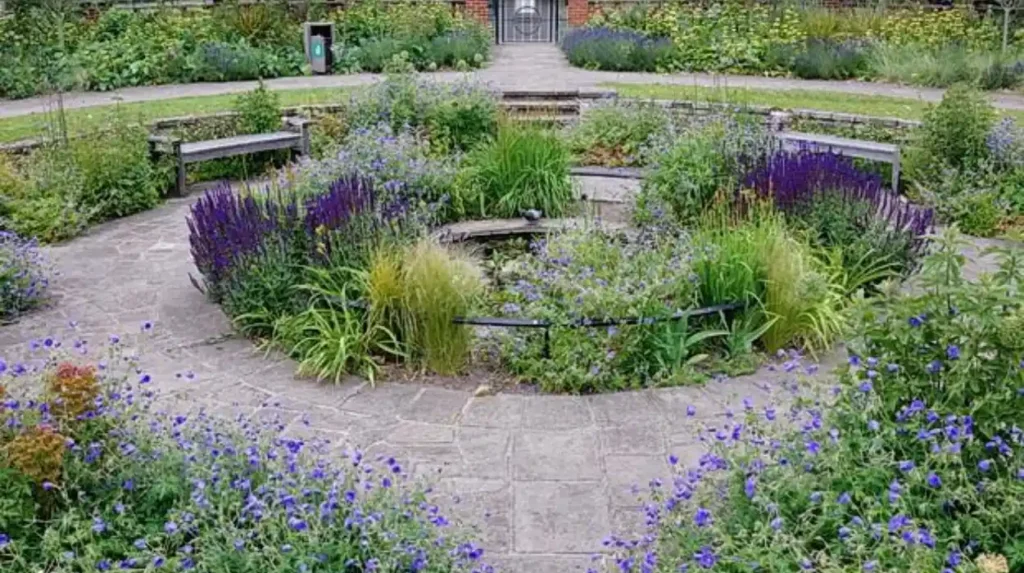
Brockwell Park contains a historic walled Old English flower garden within a much larger landscaped park. Visitors can combine formal horticultural planting with meadows, ponds, mature trees, heritage buildings, walking paths and community gardening facilities across the Brockwell Park landscape.
Brockwell Park is one of Lambeth’s major green destinations. The park covers about 50.8 hectares and was formally opened to the public in 1892 after being acquired and landscaped as a public park.
The Walled Garden provides the most garden-focused experience. It sits within a wider landscape containing ponds, ancient oaks, open meadows and established trees.
Brockwell Park also contains Brockwell Hall, the Grade II listed Brockwell Lido, the 19th-century Tritton Clocktower and a network of paths and vistas. These features make the park particularly relevant to visitors interested in both landscape design and heritage.
Community participation forms an important part of the garden’s management. Brockwell Park Community Greenhouses and the Friends of Brockwell Park contribute to horticultural activity, including care of the Walled Garden and tree planting.
The park is also a Borough SINC. This reflects its importance as an urban habitat as well as a recreational landscape.
As you explore the modern site, you are crossing land with a deep heritage. Read about the full [Insert Anchor Text for Brockwell Park History Article Here] to understand its origins.
Brockwell Park normally opens from 7.30am until 15 minutes before sunset. The seasonal wet-play facility operates during the warmer part of the year, subject to maintenance and operational arrangements.
Where can visitors find gardens in Vauxhall?
Vauxhall provides two distinctive public garden destinations: Vauxhall Park, a Victorian landscaped park with a Lavender Garden and sensory garden, and Vauxhall Pleasure Gardens, a historic entertainment site redesigned as a public open space with trees, meadow planting, bulbs and wildlife habitats.
Vauxhall Park lies between Vauxhall and Stockwell. It was opened on 7 July 1890 after local campaigning secured the land for public use.
The park’s design was created by Fanny Rollo Wilkinson, one of Britain’s early professional female landscape architects. Its original features include the playground and fountain, while later improvements introduced an orchard, café, multi-use games court and dedicated dog exercise area.
The Lavender Garden was created in 2003 on the site of a former bowling green. The park also contains the Fawcett Sensory Garden, created as part of later improvements.
Vauxhall Park is particularly useful for visitors seeking a compact landscaped environment rather than a large open common. Its historic paths, planting and architectural details give the site a clear garden character.
Vauxhall Pleasure Gardens has a different historical identity. The original privately managed entertainment venue was first laid out in 1661 and became one of London’s well-known pleasure gardens. It closed in 1859. The site was later cleared and converted into a public open space after the Second World War.
The modern Vauxhall Pleasure Gardens includes meadow grassland, new tree planting, spring-flowering bulbs, improved paths and wildlife planting. The site is also connected with Vauxhall City Farm.
Vauxhall Pleasure Gardens is open 24 hours according to Lambeth Council, while Vauxhall Park normally closes 15 minutes before sunset.
Can visitors find a public garden near Waterloo and Lambeth Palace?
Visitors around Waterloo and Lambeth Palace can find St Mary’s Gardens and Archbishop’s Park, with additional landscaped green space around Lambeth Palace and the Garden Museum. These locations provide accessible places for sitting, walking, relaxing and experiencing historic central Lambeth.
St Mary’s Gardens is a small public garden on Lambeth Palace Road. It sits close to Lambeth Palace, the Garden Museum, Archbishop’s Park and St Thomas’ Hospital.
The garden was created by Lambeth Borough Council in 1932–33 after changes to the road layout associated with the former Lambeth Bridge site. Its present design includes a central paved area with seating and a water fountain, surrounded by grasses and shrubs.
The garden is part of a Borough SINC that also includes the Garden Museum and Lambeth Palace Gardens. This gives the site ecological significance despite its compact urban setting.
Archbishop’s Park provides a larger landscape nearby. Lambeth Palace has served as the London residence of the Archbishops of Canterbury since the 13th century. In the 19th century, Archbishop Archibald Campbell Tait opened about nine acres of palace garden land for local poor residents.
The area later became Lambeth Palace Field. A campaign for permanent public access led to the creation of Archbishop’s Park, which opened in 1901 with lawns, a playground and sports fields.
Visitors interested in London’s religious and civic history can therefore combine the parkland with nearby Lambeth Palace and the Garden Museum.
Which Lambeth gardens are suitable for visitors exploring Brixton?
Brixton offers several accessible green spaces with different purposes, including Brixton Orchard, Rush Common, Myatt’s Field Park and nearby Ruskin Park. These locations combine community gardening, formal landscapes, wildlife planting, mature trees, walking routes and everyday public recreation.
Brixton Orchard is directly opposite Lambeth Town Hall on Brixton Hill. It is a community green space containing more than 30 fruit trees, edible planting and biodiversity-focused projects.
The orchard is managed by the Brixton Business Improvement District with support from local volunteers. Regular gardening sessions allow people to participate in planting, weeding and seasonal maintenance.
Rush Common provides a wider ecological and historical setting. The remaining public sections form a green corridor along Brixton Hill between Brixton and Streatham. The area includes Brixton Orchard, Rush Common Woodland Walk, Pencil Park and a larger open section near Roupell Park Estate.
Myatt’s Field Park adds another garden-focused destination. Its landscape includes lime trees, a Victorian Roundhouse, a bandstand and a Quiet Garden. The wider site also supports community food-growing activity through Myatt’s Fields Park Community Greenhouses.
These locations demonstrate how Lambeth’s public gardening network extends beyond conventional municipal flower gardens. Community orchards, growing projects and wildlife-focused planting form part of the borough’s wider green infrastructure.
What garden features can visitors find in Ruskin Park?
Ruskin Park combines an Edwardian public park with formal and ecological garden features, including an ornamental pond, Labyrinth Garden, community garden, wildlife area, orchard, mature trees and historic structures. Its location between Camberwell, Brixton and Herne Hill makes it accessible for local exploration.
Ruskin Park opened as a public park in 1907. Its design was created by J.J. Sexby, a prominent landscape architect. The park was named after John Ruskin, the Victorian writer and naturalist who grew up locally.
The central ornamental pond provides one of the park’s established landscape features. The park also contains a community garden and wildlife area with a pond and orchard.
The Labyrinth Garden contains a restored terracotta sundial associated with the history of Denmark Hill. The park also retains a Portico Shelter and historic garden features connected with former houses that occupied parts of the land.
Ruskin Park has a practical role beyond tourism. It sits near King’s College Hospital and the Maudsley Hospital and provides outdoor space for patients, staff and visitors.
A self-led tree walk was launched in 2022 with stopping points focused on notable trees and views. This provides a structured way to explore the park’s planting and landscape character.
Ruskin Park normally opens from 7am until 15 minutes before sunset. Lambeth Council notes that there is no public car park on the site, while Denmark Hill railway station and local bus services provide public transport access.
Are there smaller public gardens worth visiting in Lambeth?
Lambeth also has smaller public gardens that suit short visits, including St John’s Church Gardens, St Luke’s Church Gardens, St Mark’s Churchyard, St Matthew’s Church Gardens, Stockwell Memorial Gardens and Albert Embankment Gardens. These spaces provide compact landscaped settings across densely developed neighbourhoods.
Smaller gardens are important because they provide access to greenery without requiring a long park visit. They often sit beside churches, roads, transport hubs or residential districts.
Albert Embankment Gardens form a chain of small open spaces between Vauxhall and Waterloo. Their riverside position makes them useful for visitors combining green space with Thames-side walking.
St John’s Church Gardens is located in Waterloo and provides space for relaxation, wildlife and gardening. St Luke’s Church Gardens surrounds the church in West Norwood. St Mark’s Churchyard provides another landscaped setting associated with a historic religious building.
Stockwell Memorial Gardens is adjacent to Stockwell Underground Station. Its memorials and murals commemorate the lives of Lambeth residents.
These smaller spaces are particularly useful for short breaks during sightseeing or business travel. Their scale supports brief visits rather than full-day recreational activities.
How do Lambeth’s gardens support wildlife and biodiversity?
Lambeth’s public gardens support biodiversity through ponds, mature trees, meadows, orchards, wildflower planting, hedges and community growing areas. Examples include The Rookery, Brockwell Park, Ruskin Park, Vauxhall Pleasure Gardens and Brixton Orchard, each combining public access with habitat value.
Biodiversity means the variety of living organisms within an environment. In an urban borough, gardens provide habitat networks between buildings, streets and larger open spaces.
Lambeth identifies several green spaces as Sites of Importance for Nature Conservation. Examples include Brockwell Park, Kennington Park, The Rookery, Ruskin Park, Vauxhall Pleasure Gardens and Streatham Common.
The Rookery’s ponds, hedges, orchard and woodland edges provide different habitats. Brockwell Park combines ancient trees, ponds, meadow areas and formal horticulture. Vauxhall Pleasure Gardens includes meadow grassland, tree planting and pollinator-friendly planting.
Brixton Orchard has more than 30 fruit trees and includes biodiversity-focused projects. Community volunteers contribute to its ongoing maintenance.
Streatham Common provides an even larger ecological setting around The Rookery. More than half of Streatham Common is designated as a Local Nature Reserve, reflecting its woodland and acid-grassland habitats.
This combination makes Lambeth’s gardens relevant to visitors interested in urban ecology as well as traditional horticulture.
When are Lambeth’s public gardens open?
Opening times vary by location, but many Lambeth parks normally close around 15 minutes before dusk. Exceptions include sites with different published arrangements, such as St Mary’s Gardens and Vauxhall Pleasure Gardens, while The Rookery normally closes 30 minutes before dusk.
Lambeth Council states that the borough contains more than 78 parks, commons and other public open spaces. Its parks byelaws require public access to follow the opening hours displayed at individual sites.
The normal closing time for many parks is 15 minutes before dusk. This means closing times change throughout the year, with later access during summer and earlier closure during winter.
The Rookery normally closes 30 minutes before dusk and can close earlier during severe weather. Ruskin Park normally closes 15 minutes before sunset, while Brockwell Park and Kennington Park follow similar sunset-based arrangements.
Vauxhall Pleasure Gardens is listed by Lambeth Council as open 24 hours. St Mary’s Gardens is also listed as open 24 hours.
Visitors should check the relevant Lambeth Council page before travelling because seasonal maintenance, weather conditions, events and operational changes can affect access.
Explore More Area Guide
Lambeth Bridges at Night: Best Evening Viewpoints
Where to Watch River Thames Traffic in Lambeth
How can visitors choose the right public garden in Lambeth?
Visitors can choose according to garden style, location and available facilities. The Rookery suits formal horticulture and heritage; Brockwell Park suits large landscaped surroundings; Brixton Orchard suits community gardening; and St Mary’s Gardens suits a short central-London green-space visit.
The choice depends primarily on the type of experience required.
Visitors seeking formal historic gardening have strong options at The Rookery and Kennington Park. The Rookery has an Old English Garden and White Garden, while Kennington Park contains a restored Old English Flower Garden.
Visitors wanting a larger landscape can choose Brockwell Park. Its walled garden sits within a substantial park containing meadows, ponds, mature trees and historic buildings.
Visitors exploring Vauxhall can choose between Vauxhall Park and Vauxhall Pleasure Gardens. The former provides Victorian landscape character, a Lavender Garden and sensory garden. The latter combines contemporary public landscaping with the history of the former pleasure gardens.
Visitors around Brixton have community-oriented choices such as Brixton Orchard and Myatt’s Field Park. Ruskin Park provides a larger landscaped setting close to Denmark Hill.
Visitors around Waterloo can choose St Mary’s Gardens or Archbishop’s Park, while Albert Embankment Gardens provides a sequence of smaller riverside spaces.
This distribution makes public gardens easy to incorporate into broader South London itineraries. Garden visits can be combined with museums, historic buildings, shopping districts, railway stations, Underground stations and Thames-side routes.
Why are Lambeth’s public gardens important for visitors?
Lambeth’s public gardens provide accessible green infrastructure alongside major cultural and historic destinations. They preserve designed landscapes, support biodiversity, provide recreation and create short breaks within dense urban areas, making gardens relevant to sightseeing, local exploration, work breaks and slower travel.
The significance of Lambeth’s gardens extends beyond their appearance. They form part of the borough’s public realm and provide residents and visitors with access to nature.
Historic landscapes also preserve evidence of changing urban development. The Rookery represents the transformation of private grounds into a public garden. Kennington Park records the transition from common land to a formal Victorian park. Vauxhall Pleasure Gardens preserves the location of a major historic entertainment venue.
The national Register of Historic Parks and Gardens recognises eight landscapes within Lambeth. These include Brockwell Park, Kennington Park, Lambeth Palace, Myatt’s Field, Ruskin Park, St Michael’s Convent, The Rookery and West Norwood Cemetery.
Community management is another important element. Brixton Orchard uses volunteer involvement. Brockwell Park has active community partners and horticultural groups. The Rookery is managed through Streatham Common Cooperative with support from local organisations and residents.
For visitors, this creates a broad choice of public gardens rather than one single destination. The network ranges from compact church gardens to historic formal gardens and substantial landscaped parks.
Lambeth’s public gardens are therefore best understood as part of the borough’s wider green infrastructure. They connect heritage, horticulture, biodiversity and public recreation across South London while providing accessible places for visitors to pause, walk and explore.
What are the best public gardens in Lambeth?
Some of the most notable public gardens in Lambeth include The Rookery at Streatham Common, Brockwell Park’s Walled Garden, Kennington Park’s Old English Flower Garden, Vauxhall Park, Ruskin Park, Brixton Orchard and St Mary’s Gardens.