Key Points
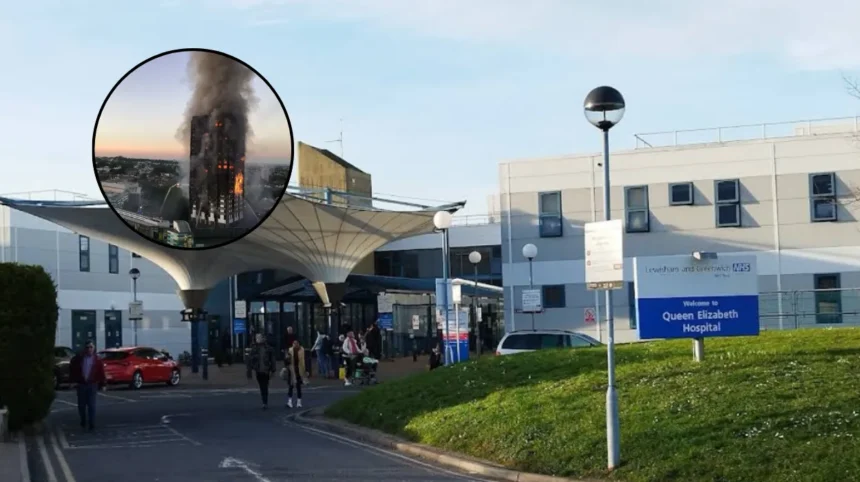
- Combustible cladding discovered: Surveys conducted at Queen Elizabeth Hospital in Woolwich have revealed combustible materials and deficiencies within its external wall and cladding systems.
- Risk of rapid spread: Structural assessments indicate that these external deficiencies create the potential for “rapid fire spread” across the healthcare facility.
- Trust response: Lewisham and Greenwich NHS Trust emphasized that it maintains “robust fire safety arrangements” and remains confident that interim mitigations ensure patient and staff safety.
- Interim controls active: The trust is employing enhanced, regularly reviewed fire safety measures while negotiating a long-term remediation plan with the building’s private owner.
- Broader safety audits: Fire door surveys are currently underway at University Hospital Lewisham, with trust-wide fire evacuation plans slated for completion by March next year.
Woolwich (South London News) September 30, 2026 – Comprehensive structural surveys conducted across the estate of Queen Elizabeth Hospital (QEH) in Woolwich have uncovered severe fire safety vulnerabilities caused by combustible materials and construction deficiencies within the hospital’s external walls and cladding systems. The official findings highlight that these wall structures possess the physical characteristics to enable a “rapid fire spread” in the event of a blaze, raising urgent safety concerns for patients, visitors, and healthcare personnel housed within the South East London facility.
How Has the Lewisham and Greenwich NHS Trust Responded to the Cladding Findings?
In response to the survey disclosures, representatives from the Lewisham and Greenwich NHS Trust stated that the administration maintains rigorous safety oversight and remains fully confident in the hospital’s current operational security. As reported by local media coverage, a spokesperson for the Lewisham and Greenwich NHS Trust affirmed that the organisation operates under robust fire safety protocols designed to manage immediate risks effectively.
“We have robust fire safety arrangements in place across our sites and are committed to ensuring that our buildings are safe for all who use them,” the spokesperson stated.
“These arrangements are regularly reviewed as part of our assurance and risk management processes, and we are transparent about any resulting concerns and mitigations, working closely with the London Fire Brigade as needed.”
What Interim Measures Are Being Implemented to Mitigate the Fire Hazard?
Addressing the specific deficiencies identified in the Woolwich facility’s exterior construction, the trust spokesperson confirmed that active management strategies have been deployed while structural remedies are drawn up.
“As disclosed, there are concerns about elements of the external wall and cladding system at Queen Elizabeth Hospital. These concerns are being actively and safely managed through a range of regularly reviewed, enhanced fire safety measures and controls, while we work with the building owner to develop and implement a long-term programme of remediation,” the spokesperson added.
“We are confident that we have the right measures in place to effectively reduce and manage the concerns and keep Queen Elizabeth Hospital safe for those who use it.”
Are Other Hospitals Within the Trust Undergoing Similar Safety Reviews?
The disclosure regarding Queen Elizabeth Hospital forms part of a wider, system-wide fire safety evaluation being carried out across the trust’s entire property portfolio. In addition to the cladding investigations at Woolwich, extensive fire door inspections are actively taking place at University Hospital Lewisham, with full completion expected within the coming month. Furthermore, hospital administrators are working towards finalizing updated, trust-wide fire evacuation procedures across all operational sites by March next year.
Background to the Development
How Did Queen Elizabeth Hospital Accumulate These Infrastructure Challenges?
Queen Elizabeth Hospital in Woolwich was constructed under a Private Finance Initiative (PFI) contract signed in the late 1990s, opening its doors to patients in November 2000. Designed, built, financed, and operated through a special purpose vehicle named Meridian Hospital Company Ltd, the capital cost of the original build stood at £96.1 million. Under the terms of the PFI framework, Lewisham and Greenwich NHS Trust—which took over the administration of QEH in 2013—pays a monthly unitary charge to Meridian to cover debt servicing, interest, and facility maintenance managed by sub-contractors.
Over the past decade, the physical infrastructure of the Woolwich site has faced recurring structural issues. Multi-million-pound capital projects have previously been funded by the central government and local authorities to address deep-seated issues including electrical power instability, water supply disruptions, flooding risks, and inadequate theatre ventilation systems.
Disputes regarding building maintenance, structural repairs, and fire safety compliance between the NHS trust and the PFI building owners have been active for several years. Recent technical audits and campaign investigations revealed ongoing friction regarding missing or improperly fitted cavity fire barriers, building design configurations that could encourage external flame propagation between adjoining wings, and the presence of non-compliant combustible cladding panels across the exterior façade.
Future Predictions and Impact Assessment
How Will This Development Affect Patients, Hospital Staff, and the Local Community?
The ongoing identification and management of combustible external materials at Queen Elizabeth Hospital will directly influence several key stakeholder groups across South East London:
- Hospital Patients and Vulnerable Care Recipients: For inpatient populations—particularly those in non-ambulatory wards, intensive care units, or surgical recovery spaces—the presence of elevated fire risks necessitates stricter ward-level monitoring. While interim safety controls remain active, any requirement for physical remediation or panel replacement may result in temporary internal room closures, patient transfers, or localized noise disruption during construction phases.
- Healthcare Staff and First Responders: Clinical staff and facility operators will bear an increased operational burden regarding mandatory fire safety protocol adherence. Staff must undergo updated training focused on early evacuation procedures and heightened vigilance. Concurrently, the London Fire Brigade will need to maintain tailored tactical response plans specifically configured for the building’s external wall vulnerabilities.
- Local Residents and Taxpayers: The broader community relying on Queen Elizabeth Hospital faces potential long-term financial and logistical impacts. Resolving structural cladding defects within complex PFI ownership frameworks frequently leads to protracted negotiations over liability and capital funding. If remediation requires significant external scaffolding or building work, access routes to emergency departments and outpatient services could experience temporary alterations.