Lambeth is one of London’s most useful boroughs for visitors seeking accessible green space without travelling beyond the capital. The borough contains more than 78 parks, commons and other public open spaces, ranging from large historic landscapes to compact gardens and riverside spaces.
- What makes Lambeth’s green spaces accessible to London visitors?
- Which Lambeth parks offer the largest natural landscapes?
- Where can visitors combine nature with Lambeth’s history?
- Where can visitors find green space near the River Thames?
- Which Lambeth green spaces are best for historic gardens and biodiversity?
- Which Lambeth parks work well for families and active visitors?
- How can visitors explore Lambeth’s green spaces without a car?
- What should visitors know about opening times and park facilities?
- Why are Lambeth’s green spaces important to London’s urban environment?
- Which Lambeth green spaces should visitors include in a London itinerary?
Its green spaces connect central London with neighbourhoods including Waterloo, Vauxhall, Kennington, Brixton, Herne Hill, Streatham and Clapham. Visitors can combine parks with museums, markets, historic buildings, cafés, railway stations and the River Thames.
The result is a nature experience that does not require a countryside journey. A visitor can spend a morning beside the Thames, walk through a historic park, explore a community garden and reach another London attraction on foot or by public transport.
What makes Lambeth’s green spaces accessible to London visitors?
Lambeth’s green spaces are accessible because the borough has more than 78 parks, commons and public open spaces distributed across central and southern neighbourhoods, with major sites close to Underground, railway, bus and walking routes.
Lambeth’s park network is unusually varied for an inner London borough. The council manages more than 78 parks, commons and other public open spaces. These include large landscapes such as Clapham Common and Brockwell Park, historic parks such as Vauxhall Park and Kennington Park, and smaller spaces such as Brixton Orchard and Albert Embankment Gardens.
This distribution matters for visitors. Green space does not exist in one isolated destination. It forms part of the borough’s wider urban landscape.
A traveller staying around Waterloo can reach Archbishop’s Park. A visitor exploring Vauxhall can use Vauxhall Pleasure Gardens or Vauxhall Park. Someone visiting Brixton can combine local attractions with Brockwell Park. A visitor around Clapham can use Clapham Common.
Lambeth also manages parks according to accessibility, safety, sustainability and environmental objectives. Its parks strategy identifies environmental, social and economic benefits associated with public open spaces.
This makes Lambeth particularly suitable for short nature breaks. Visitors do not need to dedicate an entire day to travelling outside London.
Which Lambeth parks offer the largest natural landscapes?
Brockwell Park and Clapham Common provide two of Lambeth’s most substantial green landscapes, offering open lawns, mature trees, ponds, recreation areas and walking space within the built-up environment of South London.
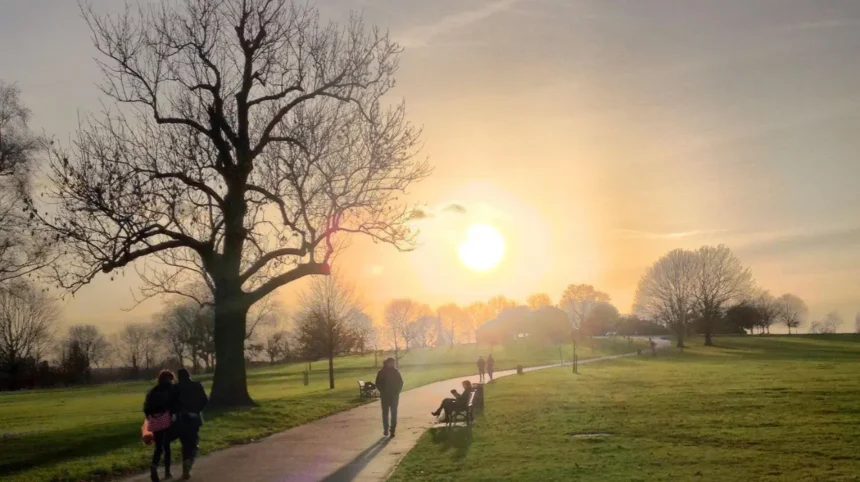
Brockwell Park is one of the borough’s principal destinations for open-air recreation. It covers a large, hilly landscape containing ponds, mature trees, ancient oaks, meadows and a walled Old English flower garden. Brockwell Hall and other historic features add architectural interest to the landscape.
The park was formally opened to the public in 1892 after the Metropolitan Board of Works acquired the former private estate associated with John Blades, a London glass merchant.
Visitors can combine nature with recreation. Facilities include tennis and basketball courts, football pitches, a large children’s playground, a wet play area and a BMX track. The park also contains the Brockwell Lido and community-managed facilities.
Brockwell Park has environmental significance as a Site of Importance for Nature Conservation, a designation recognising its value for wildlife and public access to nature. It is also a Green Flag Award-winning park and a Green Flag Heritage site.
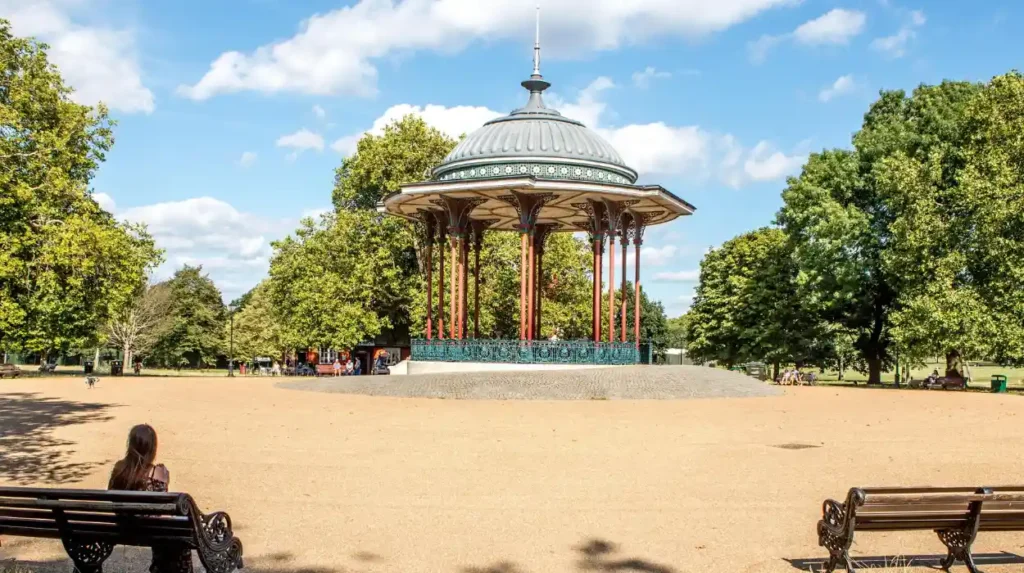
Clapham Common provides another major open landscape. Lambeth Council describes it as more than 85 hectares in size and one of London’s largest and oldest public open spaces.
Its scale creates a different experience from smaller neighbourhood parks. Visitors have more room for walking, informal recreation and open views while remaining within a dense London district.
These large parks work well for visitors who want an extended outdoor period without leaving the capital.
Where can visitors combine nature with Lambeth’s history?
Visitors can combine nature and heritage at Brockwell Park, Vauxhall Pleasure Gardens, Vauxhall Park and Archbishop’s Park, where present-day public landscapes occupy sites shaped by historic estates, entertainment grounds, civic investment and community campaigns.
Lambeth’s green spaces often preserve evidence of earlier land uses. Parks are not simply recreational areas. Several retain historic buildings, landscape features, boundaries or associations with important London institutions.
Vauxhall Pleasure Gardens is one of the clearest examples. The current park occupies the site of the historic Vauxhall Pleasure Gardens, an entertainment venue first laid out in 1661. The original gardens became famous for dining, music, visual entertainment and landscaped walks before closing permanently in 1859.
The modern park includes paths, grassed areas, trees, meadow planting and biodiversity improvements. It also borders Vauxhall City Farm. The site is recognised as a local Site of Importance for Nature Conservation.
As you explore the modern site, you are crossing land with a deep heritage. Read about the full to understand its origins.
Vauxhall Park provides another example of historic landscape preservation. The park opened on 7 July 1890 after a campaign involving Millicent Fawcett, Octavia Hill, local residents and the Kyrle Society. Landscape architect Fanny Rollo Wilkinson was commissioned to design the park.
The site retains historic landscape features while providing modern facilities including a playground, sports courts, café, orchard and lavender garden.
Archbishop’s Park in Waterloo has an equally strong historical connection. It occupies land that was formerly part of Lambeth Palace, the London residence of the Archbishop of Canterbury. Part of the palace grounds was opened as a public park in 1901.
These locations demonstrate how London’s public green spaces developed through changing patterns of land ownership, public recreation and urban growth.
Where can visitors find green space near the River Thames?
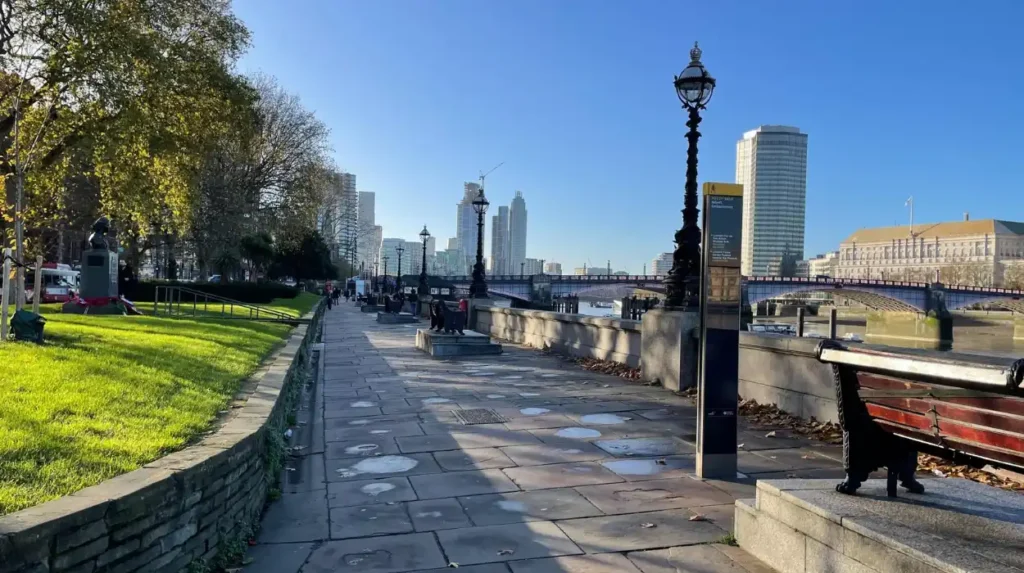
Visitors can find riverside green space along the Lambeth waterfront, particularly around Albert Embankment Gardens, where small connected open spaces provide a break from central London streets between Vauxhall, Lambeth and Waterloo.
The River Thames gives Lambeth a distinctive type of urban nature experience. The waterfront does not resemble a countryside landscape. Instead, it combines water, planted areas, pedestrian routes, bridges, historic buildings and the city skyline.
Albert Embankment Gardens form a chain of smaller open spaces running between Vauxhall and Waterloo.
Their location makes them useful during sightseeing itineraries. Visitors can move between riverside attractions while using landscaped areas as short outdoor pauses.
The Thames itself adds ecological and visual interest. Water birds, riverside vegetation and changing tidal conditions create a different environment from inland parks.
The riverside also connects several major London destinations. Visitors can combine a Thames walk with Lambeth Palace, the South Bank, Westminster Bridge, Vauxhall and central Waterloo.
For digital nomads and business travellers, smaller waterfront gardens also provide a change of setting between appointments. The emphasis is on short outdoor breaks rather than a full-day park visit.
Visitors should distinguish riverside public space from formal parks. Some areas are primarily landscaped pedestrian environments rather than large recreational parks. Their value comes from connectivity, views and proximity to major destinations.
This makes the Lambeth waterfront particularly relevant to visitors who want nature without adding a separate journey to their itinerary.
Which Lambeth green spaces are best for historic gardens and biodiversity?
Brockwell Park, Vauxhall Pleasure Gardens and Archbishop’s Park combine planted landscapes with wildlife habitats, mature trees, gardens and conservation designations, giving visitors opportunities to experience biodiversity alongside historic and recreational features in central and southern London.
Biodiversity in Lambeth is distributed across different types of public space.
At Brockwell Park, visitors encounter ponds, mature trees, ancient oaks, open meadows and the walled garden. The combination of formal horticulture and less formal landscape creates different habitats within the same park.
The park is designated as a borough Site of Importance for Nature Conservation. This status reflects its importance for wildlife as well as public access to nature.
At Vauxhall Pleasure Gardens, investment has created meadow grassland, spring-flowering bulb areas and pollinator-focused planting. A Small Pleasure Garden project transformed an underused section into a wildlife area with new habitats and natural seating.
This illustrates how urban parks can support biodiversity through deliberate landscape management.
Archbishop’s Park also contains mature trees, herbaceous borders and wildlife habitats. Its community garden is managed by the Friends of Archbishop’s Park and volunteers.
These spaces provide different levels of nature engagement. A visitor interested in plants can explore formal gardens. Someone interested in urban wildlife can observe trees, ponds, meadows and planted habitats. A family can combine these features with playgrounds and sports facilities.
Lambeth’s green infrastructure therefore operates at several scales. Large parks provide extensive habitat. Smaller gardens provide stepping stones through built-up neighbourhoods. Riverside spaces connect green areas along the Thames.
The network is important because urban biodiversity does not depend solely on large rural-style reserves.
Which Lambeth parks work well for families and active visitors?
Brockwell Park, Vauxhall Park and Archbishop’s Park provide strong family and recreation facilities, including playgrounds, sports courts, pitches, gardens and open areas, allowing visitors to combine outdoor activity with nature without leaving London.
Lambeth’s green spaces serve more than passive recreation. Several major parks include formal facilities for children and sports.
Brockwell Park contains a large playground, wet play area, tennis courts, basketball courts, football pitches and BMX facilities. Its miniature railway is also community operated.
The range of facilities makes the park suitable for visitors travelling with children or groups with different interests.
Vauxhall Park has a large playground, tennis and basketball courts, a multi-use games area and a dedicated dog exercise area. The park also contains an orchard and lavender garden.
Archbishop’s Park provides another central option. Its facilities include a large children’s playground, artificial grass sports pitches, cricket nets and tennis courts. The site also has changing rooms and toilets.
These facilities demonstrate an important characteristic of Lambeth’s green-space network. Recreation and nature are managed together.
A visitor does not need to choose between an outdoor activity and a green setting. Parks can support both.
For domestic business travellers, these spaces also provide accessible options for walking during downtime. For residents, they support regular exercise close to home. For tourists, they add outdoor activities to city sightseeing without requiring a separate excursion.
How can visitors explore Lambeth’s green spaces without a car?
Visitors can explore many Lambeth green spaces without a car because parks are distributed through neighbourhoods served by London Underground, National Rail, buses and pedestrian routes, allowing park visits to form part of wider walking and public transport itineraries.
Lambeth is well suited to car-free exploration. Its major parks sit within the wider London transport network rather than outside it.
Brockwell Park is located in the Herne Hill area. Its position allows visitors to combine the park with local streets, cafés and railway connections.
Vauxhall Pleasure Gardens sits beside Vauxhall train and Underground station, making it one of the borough’s most convenient green spaces for visitors arriving from other parts of London.
Vauxhall Park lies between Vauxhall and Stockwell, providing another green destination within an established residential and transport corridor.
Archbishop’s Park is in Waterloo, close to one of London’s major transport hubs. Its location makes it particularly useful for visitors with limited time between central London activities.
Public transport also reduces the need to treat each park as a separate destination. Visitors can create connected routes.
For example, a day can combine Waterloo with Archbishop’s Park, a riverside walk and Vauxhall. Another itinerary can combine Brixton with Brockwell Park and Herne Hill.
Walking between nearby green spaces also reveals neighbourhood character that is less visible from major tourist routes.
Visitors should check current transport information before travelling because service patterns, engineering works and station access change over time.
What should visitors know about opening times and park facilities?
Lambeth’s parks generally close at night, with normal closing times set at around 15 minutes before dusk, while individual facilities have their own schedules, seasonal arrangements and access conditions that visitors should check before travelling.
Lambeth Council states that its parks and open spaces are closed at night throughout the year. Normal official closing times are generally 15 minutes before dusk, so opening periods change with the seasons.
This is important for visitors planning early-morning or evening walks.
Individual parks also operate different arrangements. Brockwell Park and Vauxhall Park normally close 15 minutes before sunset. Vauxhall Pleasure Gardens has a different published arrangement and is listed by Lambeth Council as open 24 hours.
Facilities within parks can have separate seasonal schedules. Brockwell Park’s wet play facility, for example, normally operates from late May until the last weekend of September, subject to maintenance requirements.
Visitors should therefore distinguish between park opening hours and facility opening hours.
Sports courts, cafés, playground facilities, event areas and community facilities can have separate operating arrangements.
Accessibility also varies by site and facility. Vauxhall Pleasure Gardens is listed as wheelchair friendly, while individual paths, entrances and facilities should still be checked against the visitor’s specific requirements.
Checking official park information before a visit provides the most reliable information about access, facilities and seasonal changes.
Explore More Area Guide
Best Family Picnic Places in Lambeth: Parks and Green Spaces
Lambeth Boat Trips: Thames Cruises, Westminster Pier & London Eye
Why are Lambeth’s green spaces important to London’s urban environment?
Lambeth’s green spaces provide recreation, biodiversity, heritage, social infrastructure and environmental value within a densely developed London borough, creating accessible opportunities for outdoor activity without requiring visitors to travel beyond the capital.
The significance of Lambeth’s green spaces extends beyond leisure.
The council identifies environmental, social and economic benefits from its parks and open spaces. These areas provide places for recreation while contributing to the wider quality of the urban environment.
The environmental role is particularly important in a densely built city. Trees, planted areas, ponds, meadows and gardens contribute to urban biodiversity.
Lambeth’s conservation designations demonstrate this function. Brockwell Park, Archbishop’s Park and Vauxhall Pleasure Gardens are identified as Sites of Importance for Nature Conservation at borough or local level.
Heritage is another major component. Lambeth has eight landscapes on the national Register of Historic Parks and Gardens, including Brockwell Park, Kennington Park, Lambeth Palace, Myatt’s Field, Ruskin Park, St Michael’s Convent, The Rookery and West Norwood Cemetery.
Brockwell Park is listed at Grade II, while West Norwood Cemetery is listed at Grade II* on the national register.
This combination of heritage and ecology gives visitors more than a conventional park experience.
The future relevance of Lambeth’s green spaces also comes from their distribution. A connected network gives residents and visitors access to outdoor environments across different parts of the borough.
For tourists, this means nature can become part of a normal London itinerary rather than a separate excursion.
For residents, it means everyday access to public open space.
For digital nomads and business travellers, it provides accessible locations for breaks, walking and informal outdoor time between work commitments.
Which Lambeth green spaces should visitors include in a London itinerary?
Visitors seeking varied urban nature should consider Brockwell Park for its landscape and heritage, Vauxhall Pleasure Gardens for history and biodiversity, Archbishop’s Park for central access, Vauxhall Park for Victorian character, and the Thames-side gardens for riverside walking.
The best choice depends on the type of outdoor experience required.
Brockwell Park suits visitors seeking a large landscape with meadows, ponds, mature trees, gardens, heritage buildings and recreational facilities. Its Grade II historic character and conservation importance add depth to a park visit.
Vauxhall Pleasure Gardens suits visitors interested in the relationship between history, entertainment and modern urban biodiversity. The site preserves the name and location of one of London’s historic pleasure gardens while functioning today as public open space.
Vauxhall Park provides a more intimate Victorian park environment. Its history includes a campaign by Millicent Fawcett, Octavia Hill and local residents to secure the site as a public park.
Archbishop’s Park is particularly useful for visitors staying around Waterloo. Its connection with Lambeth Palace gives the park a strong historical context while its playgrounds, sports facilities, trees and community garden support modern use.
Albert Embankment Gardens work well as part of a Thames-side itinerary. They provide smaller landscaped spaces between major central London destinations.
The broader lesson is straightforward. Visitors do not need to leave London to experience meaningful green space.
Lambeth provides large parks, historic gardens, community landscapes, conservation sites and riverside spaces within an accessible part of the capital. Its more than 78 parks, commons and public open spaces create a distributed network rather than one single nature destination.
That network allows visitors to choose outdoor experiences according to time, location and interest while remaining within London.
What are the best green spaces to visit in Lambeth?
Brockwell Park, Clapham Common, Vauxhall Park, Vauxhall Pleasure Gardens, Archbishop’s Park and Albert Embankment Gardens are key green spaces in Lambeth. Each offers a different combination of nature, recreation, history and accessibility.