Lambeth is one of the most varied boroughs in inner London. It stretches along the south bank of the River Thames and extends south through Waterloo, Vauxhall, Kennington, Brixton, Clapham, Herne Hill, Tulse Hill and Streatham. Each area has a different visitor identity.
- Which part of Lambeth is best for first-time visitors?
- Why is Brixton one of Lambeth’s most interesting areas?
- What makes Vauxhall and Kennington interesting for visitors?
- Is South Bank the best Lambeth area for culture and major attractions?
- What is Brixton best known for among visitors?
- Which Lambeth area is best for parks and outdoor activities?
- Why should visitors explore Herne Hill and Brockwell Park?
- Is Clapham worth visiting for its green space and local atmosphere?
- Which Lambeth areas are best for history and heritage?
- Which Lambeth area is best for visitors with only one day?
- How should visitors choose between Lambeth’s most interesting areas?
For first-time visitors, South Bank and Waterloo provide the strongest concentration of major attractions. Brixton stands out for markets, music, Black British heritage and international food. Vauxhall and Kennington combine riverside spaces, historic sites and central-London access. Clapham is known for its large common and social scene. Brockwell Park and Herne Hill provide a greener visitor experience with heritage buildings, sport and open space.
Lambeth therefore works best as a collection of distinct neighbourhood experiences rather than a single sightseeing district. The borough contains major cultural institutions, historic buildings, public parks, markets, entertainment venues and riverside routes.
Which part of Lambeth is best for first-time visitors?
South Bank and Waterloo are the strongest choices for first-time visitors because they combine the River Thames, London Eye, Southbank Centre, National Theatre, BFI, museums, restaurants and major transport connections within a compact central area.
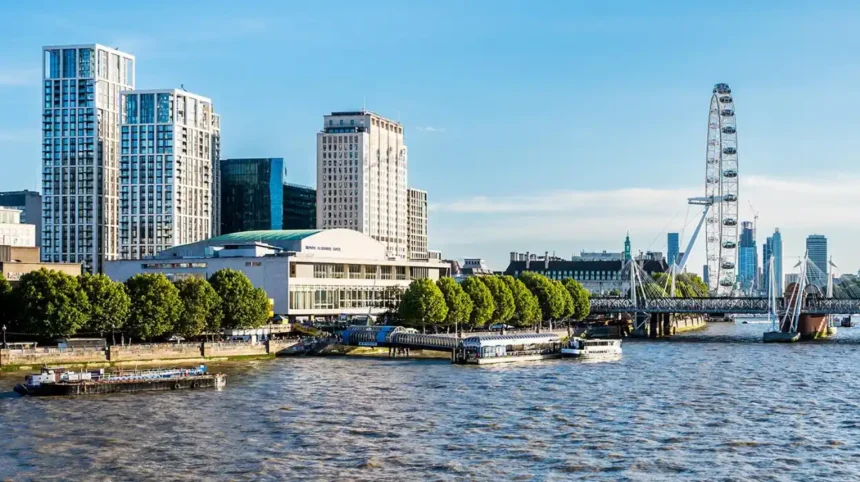
South Bank occupies the riverside part of Lambeth facing central London. The visitor district stretches broadly between Lambeth Bridge and Blackfriars Bridge. Its riverside promenade connects major attractions and provides direct views towards Westminster, the City of London and landmarks across the Thames.
The London Eye is the area’s most recognisable landmark. It provides elevated views across central London. The Southbank Centre adds a major cultural dimension. Its Royal Festival Hall opened as part of the 1951 Festival of Britain and has a 2,700-capacity auditorium. The building is Grade I listed.
The National Theatre, BFI and nearby cultural venues make Waterloo and South Bank particularly useful for visitors who want several activities without extensive travel between them. The area also has restaurants, cafés, food markets and riverside walking space.
Waterloo is equally important as a transport hub. Waterloo Underground Station is served by the Bakerloo, Jubilee, Northern and Waterloo & City lines. Waterloo railway station provides extensive National Rail connections.
This makes the area suitable for a short London visit. A visitor can arrive by train, explore the riverside, visit a cultural attraction and continue towards Westminster without changing neighbourhood.
The area is also highly suitable for families. Major attractions include the London Eye, SEA LIFE London Aquarium and London Dungeon. The riverside route itself provides an accessible sightseeing experience, with wide pedestrian areas and numerous places to stop.
Why is Brixton one of Lambeth’s most interesting areas?
Brixton is one of Lambeth’s most distinctive visitor areas because its markets, Caribbean and African influences, Black British heritage, music venues, independent food businesses and cultural institutions create a dense concentration of experiences.
Brixton sits in the central-southern part of Lambeth and has a strong identity shaped by migration, commerce, music and community life. It is one of the borough’s most culturally significant visitor destinations.
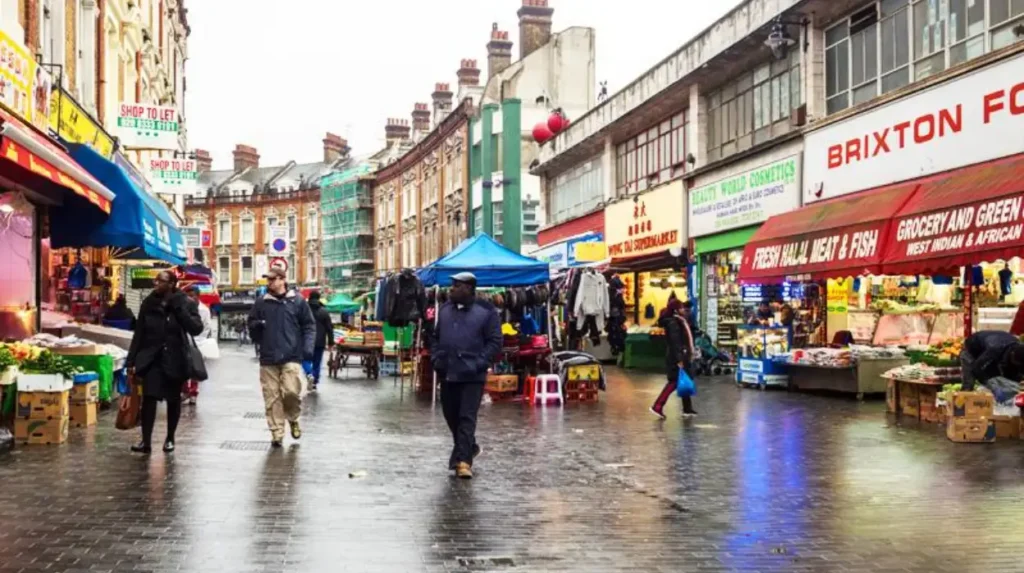
Brixton Market is central to this identity. Lambeth Council records around 150 years of market history. Railway development in 1862 helped transform Brixton from a semi-rural location into a growing suburban centre. Market trading developed around Atlantic Road and later expanded into neighbouring streets.
The market’s character changed significantly during the twentieth century. African and Caribbean communities became an important influence on the area, while later migration added further international influences. Today, food stalls and businesses reflect a wide range of cuisines and ingredients.
Brixton Village occupies the former Granville Arcade. The arcade was built in 1937 and later became known as Brixton Village. Market Row and Brixton Village form an important part of the area’s food and independent retail scene.
Music is another defining element. Brixton has established venues including the O2 Academy Brixton, Electric Brixton and other live-music spaces. The area also has the Ritzy cinema, an independent cinema operating from a building dating from 1910.
Windrush Square provides another important point of interest. It connects the visitor experience with the history of Caribbean migration to Britain. The nearby Black Cultural Archives focuses on the history and influence of Britain’s Black communities.
Brixton also works well for visitors interested in architecture, street photography and urban culture. Its combination of historic arcades, railway infrastructure, public art, busy streets and independent businesses produces a very different experience from the formal cultural district beside the Thames.
As you explore the modern neighbourhood, you are crossing land shaped by centuries of change. Read about the full to understand its origins and development.
What makes Vauxhall and Kennington interesting for visitors?
Vauxhall and Kennington are interesting for visitors because they combine Thames-side scenery, historic royal connections, public gardens, cultural venues, transport links and residential streets close to central London and Westminster.
Vauxhall occupies a strategic position beside the River Thames. Its riverside location provides a transition between the central attractions around Westminster and the more residential neighbourhoods further south.
Vauxhall Pleasure Gardens form part of the area’s historical identity. The original pleasure gardens became a major eighteenth-century entertainment destination, attracting visitors to concerts, dining and public entertainment. The modern area retains the name and heritage association.
Vauxhall is also useful for visitors who want to move between different parts of London. Vauxhall Underground Station is on the Victoria line, while Vauxhall railway station provides National Rail services.
Kennington lies immediately east and south-east of Vauxhall. It contains important historical sites and green spaces. Kennington Park provides an open recreational setting close to the centre of London. Lambeth Council also provides sports facilities at Kennington Park, including cricket nets and basketball facilities.
The area is also connected with political and religious history. The Oval, immediately south of Kennington, is internationally recognised as a cricket ground and has a long association with English cricket.
Visitors interested in quieter heritage walks can use the streets around Kennington to understand the contrast between nineteenth-century residential development and modern regeneration.
Lambeth’s official events programme also includes guided heritage walks covering Vauxhall and Kennington. These have included tours focused on artists and London’s artistic history, demonstrating the area’s wider cultural significance.
The combination of transport, parks, historic streets and proximity to Westminster makes Vauxhall and Kennington particularly useful for visitors who want central London access without remaining entirely within the main tourist core.
Is South Bank the best Lambeth area for culture and major attractions?
South Bank is Lambeth’s strongest cultural concentration, with the Royal Festival Hall, National Theatre, BFI, London Eye, riverside promenade, museums, galleries and performance venues creating a dense visitor district beside the River Thames.
South Bank’s cultural importance developed strongly during the twentieth century. The 1951 Festival of Britain transformed the riverside into a major cultural and architectural destination.
The Royal Festival Hall remains one of the area’s most important institutions. It opened in 1951 and became a landmark performance venue. Its Grade I listed status reflects its architectural and historical importance. The venue’s Open Foyer policy, introduced in 1983, established the building as a public space as well as a performance venue.
The National Theatre adds another major cultural institution. Its programme covers theatre productions and performances throughout the year. The BFI provides another important focus for cinema and film culture.
The riverside itself functions as a cultural route. Visitors can walk between major venues rather than treating each attraction as an isolated destination.
The area also contains the Florence Nightingale Museum at St Thomas’ Hospital. Florence Nightingale was a nineteenth-century British nursing reformer associated with the development of modern professional nursing. The museum explores her life and work.
For visitors interested in art, performance, architecture and cinema, South Bank therefore provides unusually high cultural density.
The district also supports visitors with limited time. A short visit can combine a riverside walk, a cultural venue, food and views of Westminster. A longer visit allows several institutions to be explored without substantial cross-city travel.
What is Brixton best known for among visitors?
Brixton is best known for multicultural food, Caribbean heritage, Black British history, live music, markets, independent businesses and its connection with David Bowie, making it one of London’s most recognisable neighbourhood destinations.
Brixton’s visitor identity is strongly connected with its cultural history. Its markets developed alongside nineteenth-century transport and suburban growth. The arrival of the railway in 1862 was a major turning point in the area’s development.
The area’s Caribbean connections became particularly significant after the Second World War. Brixton became an important centre for Caribbean communities and businesses. This history remains visible through food, music, community institutions and public spaces.
Windrush Square provides a major reference point for this history. The Black Cultural Archives offers another important destination for understanding Black British experiences and historical records.
Food is equally significant. Brixton Village, Market Row and surrounding businesses provide international cuisine in a concentrated area. Current visitor guides highlight the neighbourhood’s combination of markets, restaurants, music venues and cultural attractions.
Brixton also has a strong music identity. The O2 Academy Brixton has hosted major performers, while other venues provide smaller-scale live music and club events.
David Bowie is another important cultural connection. The musician was born in Brixton in 1947. His association with the neighbourhood forms part of the area’s modern cultural heritage.
For visitors, Brixton therefore offers more than a food market or nightlife destination. Its attractions represent interconnected layers of migration, commerce, music, cinema, architecture and community history.
Which Lambeth area is best for parks and outdoor activities?
Clapham Common and Brockwell Park are among Lambeth’s strongest outdoor visitor destinations, combining large open landscapes with sports facilities, historic features, ponds, gardens, walking routes and community events.
Clapham Common covers more than 85 hectares and is one of London’s largest public open spaces. It sits between Clapham, Battersea and Balham, with parts of the wider landscape extending beyond Lambeth.
The Common has a long history. It is recorded in the Domesday Book of 1086 and was historically common land associated with the Manors of Battersea and Clapham. The Metropolitan Board of Works acquired it in 1877, providing long-term protection for the open landscape.
Its modern visitor facilities include ponds, woodlands, meadows, paths, a Victorian bandstand, cafés, playgrounds, a paddling pool and sports facilities. It is also designated as a Site of Importance for Nature Conservation and a Local Nature Reserve.
Brockwell Park offers a different outdoor experience. The park opened to the public in 1892 after the Metropolitan Board of Works acquired the former private estate of glass merchant John Blades.
Its features include Brockwell Hall, Brockwell Lido, a walled garden, ponds and the nineteenth-century Tritton Clocktower. The park also contains sports facilities, a BMX track, miniature railway, playground and open meadows.
Brockwell Park is particularly suitable for visitors who want green space alongside heritage. Its elevated landscape also provides views towards London’s skyline.
Both parks demonstrate that Lambeth’s visitor appeal extends beyond museums and major landmarks.
Why should visitors explore Herne Hill and Brockwell Park?
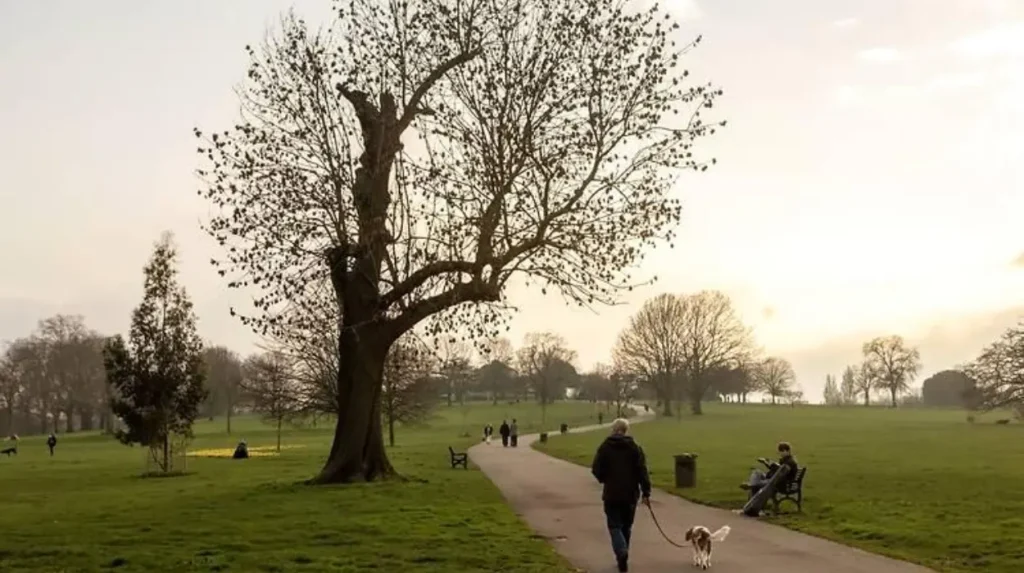
Herne Hill and Brockwell Park provide a quieter Lambeth experience built around independent local streets, historic parkland, gardens, sports facilities, community activity and views across London, making the area useful for visitors seeking open space away from central tourist concentrations.
Herne Hill sits beside Brockwell Park and provides an important gateway to the park. Its railway station connects the area with central London and other South London destinations.
Brockwell Park is the principal attraction. Its historic landscape combines formal gardens with open recreational areas. The Walled Garden and Brockwell Hall provide architectural and horticultural interest, while the park’s ponds and mature trees create wildlife habitats.
The park is also formally recognised for its environmental value. Lambeth Council designates Brockwell Park as a Site of Importance for Nature Conservation. It also holds Green Flag and Green Flag Heritage recognition.
The park’s conservation area status adds another layer of historical protection. Brockwell Park Conservation Area was first designated on 10 December 1983, with its boundary extended in 1999.
Visitors can therefore combine several interests in one trip. A morning can begin around Herne Hill, continue through the park’s historic landscape and finish at nearby independent businesses.
This area is also relevant for outdoor exercise. Lambeth provides sports facilities within Brockwell Park, including cricket nets, basketball facilities and other recreational spaces.
For digital nomads and business travellers, the neighbourhood offers a slower setting for downtime while remaining connected to central London. For residents, it provides a practical starting point for local walks and outdoor activities.
Is Clapham worth visiting for its green space and local atmosphere?
Clapham is worth visiting for Clapham Common, independent food and drink, local entertainment, sports, historic landscapes and strong transport links, offering a neighbourhood experience that contrasts with Lambeth’s central riverside attractions.
Clapham Common is the area’s defining open space. Its 85-hectare landscape includes mature trees, ponds, meadows, woodlands and formal recreational facilities. The Victorian bandstand remains one of its most recognisable features.
The Common also has significant ecological importance. It is designated as a Site of Importance for Nature Conservation and a Local Nature Reserve. Lambeth Council has developed species-rich wildflower meadows and improved woodland habitats as part of ongoing environmental management.
The surrounding Clapham neighbourhood provides a different type of visitor experience. Restaurants, cafés, pubs and independent businesses line the streets around the Common.
Clapham also has strong transport connections through the Northern line. Stations including Clapham Common and Clapham North provide direct access towards central London.
Visitors interested in local architecture can explore surrounding residential streets. Areas around Clapham Common contain nineteenth-century development associated with London’s expansion beyond its historic core.
Clapham therefore works particularly well when the objective is to combine outdoor time with food, local streets and evening activity.
It is also suitable for visitors staying elsewhere in London who want a half-day South London excursion. The Common provides a clear geographic focus, while the surrounding neighbourhood offers opportunities for dining and entertainment.
Which Lambeth areas are best for history and heritage?
Lambeth Palace, Kennington, Vauxhall, Brixton, South Bank and Brockwell Park provide the strongest heritage experiences, covering medieval institutions, royal associations, Victorian development, migration history, twentieth-century culture and protected historic landscapes.
Lambeth’s heritage is unusually varied because the borough developed from riverfront settlements, religious estates, market centres, commons, suburban expansion and modern cultural districts.
Lambeth Palace is one of the most important historical sites. It has been the London residence of the Archbishop of Canterbury for centuries and remains an active religious and historic institution.
Kennington contributes royal and political associations. The area’s historic streets and buildings reflect its transformation from rural land into an inner-London district.
Brixton demonstrates a different form of heritage. Its market history begins in the nineteenth century, while its twentieth-century development reflects migration and multicultural commerce. The survival of Brixton Village and Market Row provides a physical connection with this commercial history.
South Bank represents twentieth-century cultural heritage. The Royal Festival Hall remains a direct architectural legacy of the 1951 Festival of Britain.
Brockwell Park demonstrates how historic private landscapes became public parks. Its nineteenth-century buildings, gardens and landscape structure remain important visitor features.
Clapham Common provides an even older landscape history, with documentary evidence reaching back to the Domesday Book. Its status as protected common land also connects modern recreation with historic land-use rights.
These areas show why Lambeth should not be treated as a single uniform destination. Each neighbourhood represents a different stage of London’s development.
Explore More Area Guide
What Is Lambeth Known For? Top London Visitor Attractions
How Long Should You Spend Exploring Lambeth London?
Which Lambeth area is best for visitors with only one day?
Visitors with one day should prioritise South Bank and Waterloo for major landmarks, then choose either Brixton for culture and food or Brockwell Park for green space, depending on whether urban attractions or outdoor experiences are the main priority.
South Bank provides the most efficient one-day base because major attractions are concentrated along the Thames. Visitors can begin around Waterloo, walk towards the riverside and continue through the Southbank Centre district.
A cultural-focused day can include the Royal Festival Hall, National Theatre area, BFI and London Eye. The riverside route connects these attractions and provides views towards Westminster.
A heritage-focused itinerary can incorporate the Florence Nightingale Museum and nearby historic institutions. The museum is located at St Thomas’ Hospital and provides a focused introduction to Florence Nightingale’s work.
For a more local itinerary, visitors can travel south to Brixton. A typical route can include Brixton Market, Brixton Village, Windrush Square and the Black Cultural Archives, followed by food or live music.
For an outdoor day, Brockwell Park provides a stronger setting. Visitors can combine the park’s historic buildings, gardens, ponds and recreational facilities with a walk through Herne Hill.
Clapham Common provides another option for outdoor-focused visitors. Its large landscape and nearby businesses support a half-day or full-day neighbourhood visit.
The best choice therefore depends on the visitor’s main purpose. South Bank is strongest for iconic sightseeing. Brixton is strongest for culture and food. Brockwell Park is strongest for heritage and outdoor space. Clapham is strongest for green space and neighbourhood atmosphere.
How should visitors choose between Lambeth’s most interesting areas?
Choose South Bank for major attractions and culture, Brixton for food, music and Black British heritage, Vauxhall and Kennington for history and central access, Clapham for green space and local life, and Brockwell Park and Herne Hill for heritage, recreation and quieter exploration.
Lambeth works particularly well when visitors select an area according to their available time and interests.
For a first London visit, South Bank and Waterloo provide the highest concentration of internationally recognised attractions. The riverside location and transport connections make this the simplest introduction to Lambeth.
For food and multicultural culture, Brixton provides markets, restaurants, music venues and heritage institutions within a compact area. Its market history and Caribbean connections are central to its identity.
For history, Vauxhall, Kennington, Lambeth Palace and Brockwell Park provide different historical periods and themes. Visitors can explore religious history, royal associations, historic landscapes and Victorian urban development.
For parks and outdoor activities, Clapham Common and Brockwell Park are the strongest choices. Both provide large green landscapes, sports facilities and nature-focused experiences.
For culture and entertainment, South Bank and Brixton stand out. South Bank focuses on major institutions and performance venues, while Brixton combines music, markets, independent businesses and community heritage.
For quiet exploration, Herne Hill, Brockwell Park and parts of Kennington offer a more residential setting. These areas allow visitors to experience Lambeth beyond the main tourist routes.
Lambeth’s greatest visitor strength is therefore its range. The borough connects the Thames with parks, markets, historic streets, cultural institutions and neighbourhood centres. Its areas provide distinct experiences within a relatively compact part of South London.
Visitors who understand these differences can choose a Lambeth itinerary that matches their interests rather than attempting to cover the entire borough in one trip.
Which area of Lambeth is best for first-time visitors?
South Bank and Waterloo are the best choices for first-time visitors. They provide access to the London Eye, Royal Festival Hall, National Theatre, BFI, River Thames and major transport connections.