Lambeth is known for the London Eye, South Bank cultural attractions, Lambeth Palace, Brixton Market, Vauxhall’s heritage, riverside views, historic parks and diverse food culture. The borough combines major London landmarks with neighbourhood destinations, making it a significant visitor area south of the River Thames.
- Why is Lambeth one of the best-known visitor areas in South London?
- What is South Bank in Lambeth known for?
- Why is the London Eye associated so strongly with Lambeth?
- What historic sites is Lambeth known for?
- What is Lambeth Palace known for?
- Why is Brixton famous with London visitors?
- What is Vauxhall known for among visitors?
- What parks and green spaces is Lambeth known for?
- What food and market culture is Lambeth known for?
- What cultural attractions is Lambeth known for?
- How does the River Thames shape Lambeth’s visitor experience?
- What makes Lambeth different from other London visitor districts?
- How should visitors explore Lambeth in one day?
- Why does Lambeth remain important to London visitors?
Lambeth is a London borough on the south side of the River Thames. It stretches from the central London riverside around Waterloo and South Bank through Vauxhall and Kennington to Brixton, Streatham and other southern neighbourhoods. Its visitor identity is unusually broad because it contains major attractions, historic sites, cultural venues, markets, parks and residential districts.
For many tourists, the best-known part of Lambeth is South Bank. The area contains the London Eye, Southbank Centre, National Theatre and BFI Southbank. It also provides direct views towards Westminster and central London landmarks.
Lambeth also has a strong historical identity. Lambeth Palace is the London residence of the Archbishop of Canterbury and is one of the capital’s surviving medieval buildings. Vauxhall is associated with the former Vauxhall Pleasure Gardens, while Brixton is known for its markets and its important Caribbean cultural history.
Why is Lambeth one of the best-known visitor areas in South London?
Lambeth is one of South London’s best-known visitor areas because it combines major landmarks, cultural institutions, historic districts, markets, parks and Thames-side attractions within a single London borough. Its strongest visitor clusters are South Bank, Vauxhall, Lambeth Palace and Brixton.
Lambeth occupies an important position immediately south of central London. The River Thames forms its northern boundary, placing several of its attractions directly opposite Westminster and the City of Westminster.
This location gives Lambeth a particularly strong sightseeing role. Visitors can combine river views with museums, theatres, historic buildings, markets and public spaces without travelling far between them.
South Bank provides the borough’s most recognisable concentration of attractions. The London Eye stands beside the Thames, while the Southbank Centre, National Theatre and BFI Southbank create a major cultural district.
Further south, the character changes. Brixton provides markets, restaurants, music, independent businesses and a strong multicultural identity. Vauxhall combines transport infrastructure, parks, LGBTQ+ heritage, residential neighbourhoods and the history of Vauxhall Pleasure Gardens.
The borough therefore represents several different aspects of London visitor culture. It functions as a sightseeing destination, cultural district, food destination, historic area and green-space destination.
Its geographical position is also important for visitors planning itineraries. South Bank is close to Westminster, Waterloo and the central London attractions on the opposite bank of the Thames. Brixton provides a different experience further south, centred on local streets and neighbourhood culture.
What is South Bank in Lambeth known for?
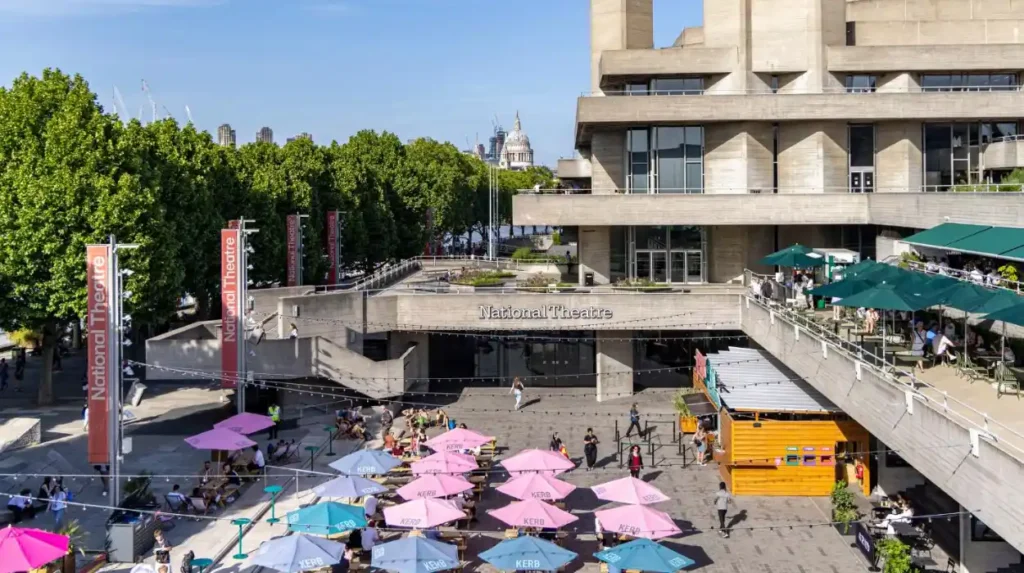
South Bank is known for its Thames-side cultural institutions, London Eye, riverside walking routes, major theatres, film venues, restaurants and views towards Westminster. The district became a major cultural destination after the 1951 Festival of Britain and remains central to London tourism.
South Bank is the part of Lambeth most strongly associated with international tourism. Its riverside setting places visitors close to some of London’s most recognisable landmarks.
The area developed a major cultural identity around the 1951 Festival of Britain. The South Bank was the flagship location for the festival, and the Royal Festival Hall opened as part of that programme. South Bank London identifies the 1951 festival as a major turning point in the district’s transformation into a cultural destination.
The Southbank Centre remains one of the defining institutions. It includes Royal Festival Hall, Queen Elizabeth Hall and other performance and exhibition spaces.
The National Theatre adds another major cultural institution. Its building is one of the most recognisable examples of post-war modernist architecture on the Thames.
BFI Southbank provides another reason for visitors to spend time in the area. It is closely associated with British and international cinema and forms part of South Bank’s wider cultural offer.
The riverside itself is also an attraction. Visitors can walk along the Thames, view Westminster from the opposite bank and continue towards other central London destinations.
South Bank is therefore not simply a collection of individual attractions. Its visitor identity comes from the concentration of culture, architecture, food, entertainment and river scenery.
In 2026, South Bank is also marking the 75th anniversary of the Festival of Britain. The programme highlights the continuing connection between the district and London’s cultural history.
Why is the London Eye associated so strongly with Lambeth?
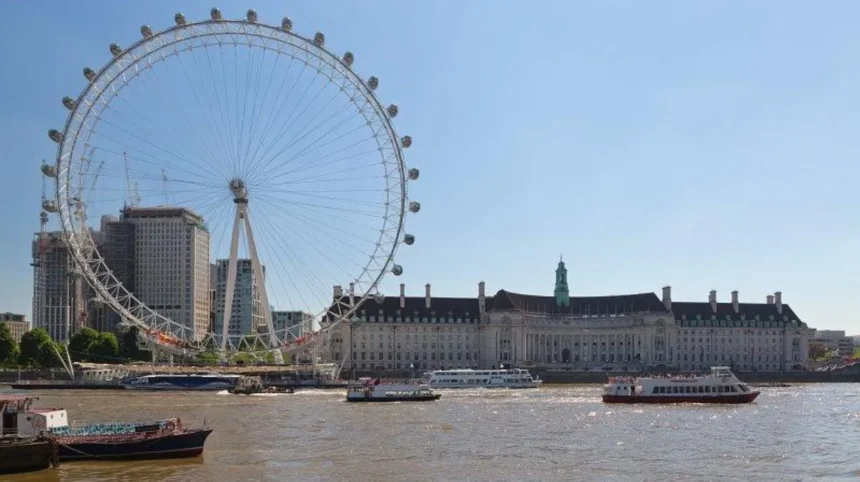
The London Eye is one of Lambeth’s most recognisable visitor landmarks because its 135-metre observation wheel provides panoramic views across London. Launched in 2000, it became a permanent South Bank landmark and a major symbol of modern London.
The London Eye stands beside the River Thames at County Hall on the South Bank. It is one of the most recognisable structures in the borough and one of the strongest associations between Lambeth and international tourism.
The wheel is 135 metres high and has 32 passenger pods. A complete rotation takes approximately 30 minutes. On clear days, views extend up to about 40 kilometres.
The London Eye was designed by Marks Barfield Architects and launched in 2000. It was initially conceived as a temporary structure, but its popularity resulted in its continued presence on the London skyline.
Its importance for visitors comes from its viewing function. The elevated position provides views of landmarks including the Houses of Parliament, Big Ben, St Paul’s Cathedral, Buckingham Palace and Tate Modern.
The attraction also connects Lambeth with London’s modern architectural history. Its construction introduced a large contemporary observation structure into one of the capital’s most historic riverfront landscapes.
For visitors planning a first London trip, the London Eye provides a clear geographical overview of central London. The River Thames, Westminster, the City and major landmarks become visible from a single viewpoint.
The attraction also demonstrates how South Bank combines historic London with modern visitor infrastructure. Lambeth’s visitor identity is therefore not limited to heritage.
What historic sites is Lambeth known for?
Lambeth is known for historic sites including Lambeth Palace, Vauxhall Pleasure Gardens, historic churches, conservation areas and surviving buildings connected with London’s religious, entertainment and residential development. These sites show how Lambeth evolved from riverside and semi-rural land into a dense metropolitan borough.
Lambeth has a long historical record extending well beyond its modern reputation as a visitor destination.
Lambeth Palace is one of its most important historic sites. It has served as the London residence of the Archbishop of Canterbury for centuries and remains an important centre of the Church of England.
The palace is also significant because it contains surviving medieval fabric within central London. Visitor tours include areas such as the Crypt, Guard Room, Chapel and Library, with advance booking required.
Vauxhall provides another major historical connection. Vauxhall Pleasure Gardens developed into one of London’s major entertainment venues during the eighteenth and nineteenth centuries. Its attractions included landscaped walks, music, performances, fireworks, food and drink.
The gardens finally closed in 1859. The site later underwent redevelopment and was eventually transformed into a public park.
Brixton has a different historical trajectory. Its nineteenth-century development was strongly connected to railway expansion, shopping and markets. The Chatham mainline reached Brixton in 1862, helping transform the area from a semi-rural settlement into a growing suburban centre.
As you explore the modern borough, you are crossing land shaped by centuries of religious, commercial and social change. Read about the full to understand its origins and development.
What is Lambeth Palace known for?
Lambeth Palace is known as the London residence of the Archbishop of Canterbury and as one of London’s surviving medieval buildings. Its historic rooms, chapel, crypt and library provide visitors with access to an important part of England’s religious and architectural heritage.
Lambeth Palace stands beside the River Thames close to Lambeth Bridge. Its location makes it particularly relevant to visitors exploring South Bank and the wider Westminster area.
The Archbishop of Canterbury is the senior bishop and principal leader of the Church of England. Lambeth Palace serves as the Archbishop’s London residence and an important institutional centre.
The palace’s significance extends beyond religion. Its surviving medieval architecture provides evidence of London’s development before the modern city expanded across South London.
Visitors can experience selected parts of the palace through guided tours. The Crypt, Guard Room, Chapel and Library are among the areas included in visitor programmes.
The library is particularly important for historical research because Lambeth Palace has long been associated with manuscript and documentary collections.
The palace also provides a useful contrast with South Bank’s modern attractions. A short distance from the London Eye and contemporary cultural venues, visitors encounter a building with medieval origins.
This combination contributes to Lambeth’s distinctive visitor appeal. The borough contains both internationally recognised modern attractions and historic institutions with national significance.
Why is Brixton famous with London visitors?
Brixton is famous with London visitors for its markets, Caribbean cultural heritage, international food, music history, independent businesses and distinctive streets. Brixton Market remains a central visitor attraction, while its wider neighbourhood provides a strong example of multicultural London.
Brixton is one of Lambeth’s strongest neighbourhood destinations. Its reputation is closely connected with food, markets, music and cultural history.
Brixton Market has roots in the nineteenth century. Market stalls appeared around Atlantic Road after the railway reached the area in 1862. The market subsequently expanded into neighbouring streets.
Lambeth Council currently records more than 80 licensed pitches across Electric Avenue, Pope’s Road and Brixton Station Road. These businesses sell fresh produce, clothing, prepared food and other goods.
The market’s cultural importance increased significantly after the arrival of Caribbean communities in the post-war period. From the 1950s, market traders increasingly supplied Caribbean food products and ingredients.
Plantains, yams, rice, spices, patties and other Caribbean foods became established features of the market environment. Brixton therefore became an important commercial and cultural centre for Caribbean communities in London.
Brixton’s covered markets also have architectural significance. Reliance Arcade, Market Row and Granville Arcade form part of the historic market landscape. Granville Arcade is now widely known as Brixton Village.
The neighbourhood’s conservation area includes Brixton Town Hall, the Tate Library, Ritzy Cinema, St Matthew’s Church and the covered markets.
For visitors, this creates an experience centred on neighbourhood culture rather than monumental attractions. Brixton is a destination for exploring food, retail, architecture and social history within a compact area.
What is Vauxhall known for among visitors?
Vauxhall is known for Vauxhall Pleasure Gardens, riverside history, public parks, cultural venues, transport connections and LGBTQ+ heritage. Its visitor identity combines historic entertainment with contemporary urban development and green spaces close to central London.
Vauxhall’s most famous historical association is Vauxhall Pleasure Gardens.
The original pleasure gardens developed into a major entertainment destination. Visitors encountered landscaped paths, music, food, performances, fireworks and spectacles. The gardens attracted people from different social backgrounds and became one of London’s leading leisure destinations.
The site closed permanently in 1859. The present Vauxhall Pleasure Gardens is a modern public park occupying part of the historic location.
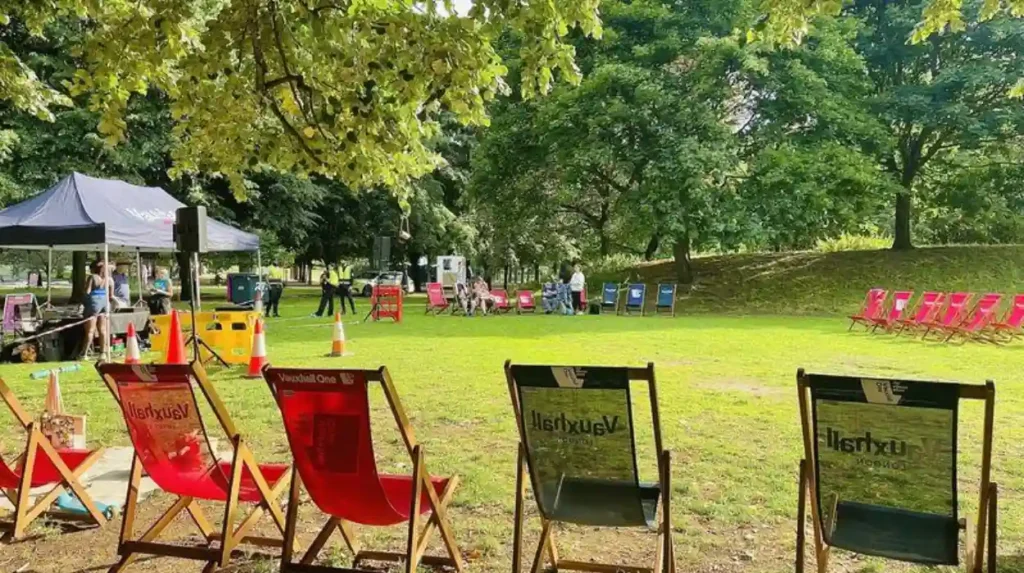
The park includes landscaped areas, paths, trees, meadow planting and facilities for recreation. It is also connected with Vauxhall City Farm and has ecological importance as a Site of Importance for Nature Conservation.
Vauxhall also has LGBTQ+ historical significance. The Royal Vauxhall Tavern opened in 1863 on a corner of the former pleasure gardens site. Lambeth Archives notes that Historic England recognised the building for its importance in LGBTQ+ history when it became the first building listed at Grade II specifically for that significance.
Vauxhall Park provides another green destination. It opened on 7 July 1890 and retains historic landscape features. Its development involved figures including Millicent Fawcett, Octavia Hill and landscape architect Fanny Rollo Wilkinson.
The area therefore offers a strong connection between entertainment history, social history and contemporary urban life.
What parks and green spaces is Lambeth known for?
Lambeth is known for an extensive network of parks, commons and public open spaces that provide visitors with alternatives to central London’s busiest streets. The borough contains more than 78 such spaces, including Vauxhall Park and Vauxhall Pleasure Gardens.
Lambeth’s green-space network is an important part of its visitor identity.
The council states that Lambeth contains more than 78 parks, commons and other public open spaces. These include different types of green areas, such as formal parks, commons and neighbourhood open spaces.
This network provides opportunities for walking, outdoor exercise, photography, relaxation and wildlife observation.
Vauxhall Park is particularly relevant for visitors exploring the northern part of the borough. It contains mature planting, a playground, sports facilities, a café, an orchard and a lavender garden.
Vauxhall Pleasure Gardens provides another accessible green destination close to Vauxhall station. It includes landscaped areas and wildlife-focused planting alongside recreational facilities.
Visitors should also understand that Lambeth’s parks operate according to local opening rules. The council states that parks and open spaces close at night, with official closing times normally set around dusk.
This makes Lambeth’s green spaces useful during daytime sightseeing rather than as unrestricted twenty-four-hour destinations.
The borough’s parks also strengthen its appeal for visitors who want a slower activity between major attractions. A park visit can sit naturally between museum visits, riverside walks and neighbourhood exploration.
What food and market culture is Lambeth known for?
Lambeth is known for diverse food and market culture, particularly in Brixton. Visitors encounter Caribbean, African, European and Asian influences alongside modern street food, independent restaurants, market traders and specialist food businesses across the borough.
Food is an important part of Lambeth’s visitor identity.
Brixton is the clearest example. Its markets developed alongside migration and changing consumer demand. Caribbean communities played a particularly important role in shaping the area’s food culture from the 1950s onwards.
The market environment now includes international food and street-food businesses. Lambeth Council describes its markets as selling products ranging from fresh fruit and vegetables to handmade goods and food inspired by tastes from around the world.
This makes food an effective way for visitors to understand the borough’s social history.
Brixton Village and Market Row provide concentrated areas for eating and exploring. The covered market buildings also demonstrate the connection between architecture and commercial history.
South Bank offers a different food environment. The riverside district contains street food, restaurants, bars and pop-up dining alongside cultural attractions. South Bank London describes the area as offering options ranging from street food and fine dining to rooftop bars and temporary food venues.
The result is a borough where food tourism operates at several scales. Visitors can experience formal riverside dining in South Bank or explore market-based food culture in Brixton.
What cultural attractions is Lambeth known for?
Lambeth is known for major cultural institutions including the Southbank Centre, National Theatre and BFI Southbank, alongside neighbourhood venues in Brixton and Vauxhall. These attractions make theatre, music, cinema, exhibitions and live performance central parts of the borough’s visitor economy.
Culture is one of Lambeth’s strongest visitor sectors.
The Southbank Centre provides major performance and cultural programming. Royal Festival Hall is particularly important because of its connection with the 1951 Festival of Britain.
The National Theatre provides theatre performances and a major architectural landmark on the riverfront.
BFI Southbank adds film culture to the district. Its programme contributes to South Bank’s reputation as a destination for cinema and international film events.
The cultural offer changes over time because individual programmes and exhibitions are seasonal. The underlying importance of the institutions remains consistent.
South Bank’s 2026 programme is particularly significant because the area is commemorating 75 years since the Festival of Britain. The BFI is also hosting the 70th edition of the BFI London Film Festival in October 2026.
This illustrates how Lambeth’s visitor reputation continues to develop around established cultural infrastructure.
For digital nomads and business travellers, these cultural districts also provide useful places for breaks between meetings and work commitments. Cafés, riverside routes, public spaces and transport connections make the wider South Bank area suitable for combining business and leisure.
How does the River Thames shape Lambeth’s visitor experience?
The River Thames shapes Lambeth’s visitor experience by connecting South Bank, Westminster views, Lambeth Palace, riverside walking routes, cultural attractions and modern landmarks. The river provides both a geographical orientation point and a major setting for sightseeing, photography and leisure.
The Thames is fundamental to Lambeth’s geography.
South Bank sits directly beside the river, creating a continuous visitor environment between major cultural attractions and riverside public spaces.
The river also provides visual connections to Westminster. Visitors on the Lambeth side can look across towards the Houses of Parliament and other central London landmarks.
Lambeth Palace occupies an important riverside position close to Lambeth Bridge. This gives visitors the opportunity to combine historic architecture with Thames scenery.
The London Eye creates a different type of riverside experience. Its elevated position changes the perspective from ground-level river views to a broad panorama across the capital.
The river also helps visitors understand Lambeth’s historical development. Riverside land supported industrial, commercial and transport activity before the modern cultural landscape developed.
In Vauxhall, historic development was influenced by the Thames and later by railway infrastructure. Lambeth Council’s conservation documentation identifies the river and railway as fundamental influences on the area’s development.
The Thames therefore functions as more than scenery. It connects Lambeth’s geography, history, architecture and tourism.
What makes Lambeth different from other London visitor districts?
Lambeth stands out because its visitor attractions span major landmarks, national cultural institutions, medieval heritage, markets, multicultural neighbourhoods, parks and riverside landscapes. Visitors can experience several distinct versions of London without leaving one borough.
Many London visitor districts have a dominant identity. Lambeth has several.
South Bank represents major tourism and cultural institutions. The London Eye provides the borough’s most recognisable modern landmark.
Lambeth Palace represents medieval and religious heritage. Its historic fabric creates a direct connection with London’s earlier development.
Brixton represents markets, Caribbean history, international food and neighbourhood culture. Its visitor experience is based on streets, businesses, architecture and community history.
Vauxhall represents historic entertainment, parks and LGBTQ+ heritage. Its connection with the former pleasure gardens gives the neighbourhood a distinctive place in London’s leisure history.
The borough’s green spaces add another layer. More than 78 parks, commons and other public open spaces create opportunities to move away from busy streets and major attractions.
This range makes Lambeth particularly useful for repeat London visitors. A visitor who has already experienced South Bank can explore Brixton, Vauxhall or the borough’s parks without simply repeating the same central London sightseeing itinerary.
Lambeth’s importance therefore comes from its combination of scale and variety. It contains internationally recognised landmarks while retaining strong neighbourhood identities.
Explore More Area Guide
How Long Should You Spend Exploring Lambeth London?
What to Know Before Visiting Lambeth for the First Time
How should visitors explore Lambeth in one day?
A one-day Lambeth itinerary works best by combining one major South Bank attraction, a riverside walk, a historic site and a neighbourhood experience. A practical route can connect the London Eye area with Lambeth Palace, Vauxhall or Brixton.
Start in South Bank because it contains the highest concentration of major visitor attractions.
The London Eye provides a strong opening activity for visitors seeking a broad view of London. Its approximately 30-minute rotation creates a defined sightseeing experience.
Continue along the Thames towards Lambeth Palace. Visitors should check current tour arrangements because palace access operates through scheduled visitor programmes.
From there, continue towards Vauxhall for a different interpretation of Lambeth. Vauxhall Pleasure Gardens and Vauxhall Park provide green-space breaks within an urban environment.
A later visit to Brixton changes the pace again. The markets provide opportunities to explore food, architecture and local commercial culture.
Visitors interested in cultural programming can instead allocate additional time to South Bank. The Southbank Centre, National Theatre and BFI Southbank provide enough programming for a dedicated cultural itinerary.
The best route depends on the visitor’s main purpose. First-time tourists often prioritise the London Eye and South Bank. History-focused visitors benefit from Lambeth Palace and Vauxhall. Food-focused visitors benefit from Brixton.
The borough’s transport network supports these combinations. South Bank, Vauxhall and Brixton are connected to central London by Underground, rail, bus and walking routes.
Why does Lambeth remain important to London visitors?
Lambeth remains important to London visitors because its attractions combine established landmarks with living neighbourhood culture. The London Eye, South Bank, Lambeth Palace, Brixton Market, Vauxhall heritage and extensive parks provide enduring reasons to return.
Lambeth’s visitor relevance is based on both heritage and continuing cultural activity.
The London Eye continues to define the modern South Bank skyline. Its 135-metre height and panoramic views make it a major observation attraction.
South Bank continues to operate as a major cultural district. The 2026 Festival of Britain anniversary programme demonstrates how its historical significance remains part of its present identity.
Brixton’s markets continue to support local businesses and international food culture. The borough currently records more than 80 licensed market pitches across its principal Brixton market streets.
Vauxhall continues to connect contemporary London with the history of Vauxhall Pleasure Gardens. The present public park retains the site’s historical name and interpretation while providing modern recreation and biodiversity facilities.
Lambeth’s extensive public-space network also gives the borough long-term relevance. More than 78 parks, commons and open spaces provide infrastructure for recreation alongside its built attractions.
For visitors, the result is a destination that changes considerably from one neighbourhood to another. South Bank provides landmark tourism. Lambeth Palace provides heritage. Vauxhall provides historic entertainment and green space. Brixton provides markets and multicultural culture.
That combination explains what Lambeth is best known for among London visitors: a concentrated mix of iconic London sightseeing, riverside culture, historic places, markets, food, parks and distinctive South London neighbourhoods.
What is Lambeth best known for?
Lambeth is best known for the London Eye, South Bank, Lambeth Palace, Brixton Market, Vauxhall, the River Thames, cultural venues and extensive parks. These attractions give the borough a diverse visitor identity.