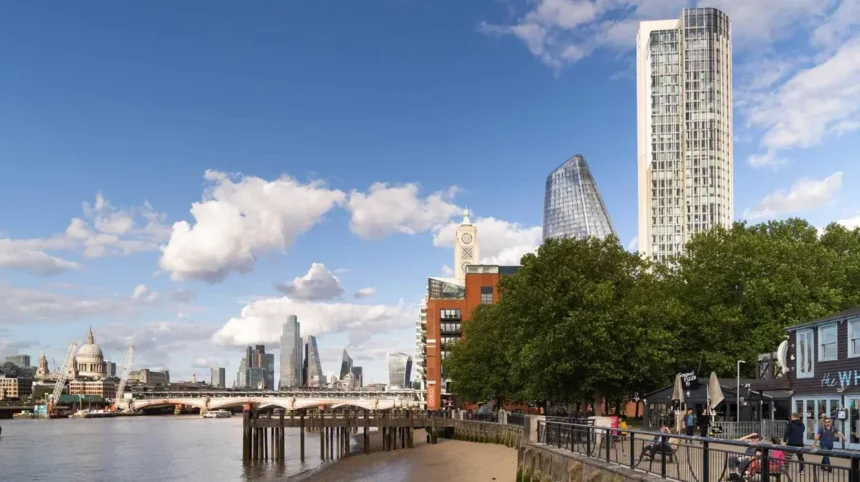
The London Borough of Lambeth sits on the south bank of the River Thames, directly opposite the City of Westminster and the City of London. Historically, this stretch comprised marshland, timber yards, industrial wharves, and informal entertainment grounds. The transformation of the Lambeth riverfront began in the 19th century with land reclamation projects and accelerated during the 1951 Festival of Britain.
- What Makes the Southbank Centre a Cultural Hub on the Thames?
- Origins and Architectural Structure of the Southbank Centre
- Performance Programmes and Educational Resources
- Social and Economic Impact on South London
- How Can Visitors Experience the London Eye and County Hall?
- Engineering and Operations of the Lastminute.com London Eye
- Historical Governance and Adaptive Reuse of County Hall
- Commercial Attractions and Visitor Amenities Inside County Hall
- What Historic Treasures Are Preserved at Lambeth Palace and the Garden Museum?
- Architectural History of Lambeth Palace
- Lambeth Palace Library Collections
- The Garden Museum: Transformation and Collections
- Where Can Leisure Travellers Walk Along the Albert Embankment?
- Engineering History and Construction of the Albert Embankment
- Historical Dock Infrastructure: White Hart Dock
- Modern Walkways and Public Art along the Embankment
- What Performing Arts and Cinematic Destinations Line the Lambeth Waterfront?
- How Do Open Public Spaces Enhance Lambeth’s Riverside Experience?
- Landscape Design and Amenities of Jubilee Gardens
- History and Facilities of Archbishop’s Park
- Historic Vauxhall Pleasure Gardens
- How Should Visitors Plan a Day Itinerary Along Lambeth’s Riverside?
Today, the Lambeth riverside forms the core of the South Bank cultural precinct. The geographical boundaries of this riverside sector span 3 major Thames bridges: Westminster Bridge to the north, Lambeth Bridge in the centre, and Vauxhall Bridge to the south. The primary pedestrian artery traversing this area is the Queen’s Walk, a continuous traffic-free promenade constructed to facilitate public river access.
Key Geographic and Demographic Statistics
Lambeth’s riverfront attracts over 14 million leisure travellers, local residents, and international tourists each year. The riverside zone covers approximately 80 hectares of land. It contains 4 international cultural venues, 3 heritage sites listed at Grade I status by Historic England, and 2 metropolitan open green spaces.
Transportation infrastructure supports rapid access to the waterfront. Transport for London operates 3 Underground stations within 500 metres of the riverfront: Waterloo Station (Bakerloo, Jubilee, Northern, and Waterloo & City lines), Westminster Station (District, Circle, and Jubilee lines, connected via Westminster Bridge), and Vauxhall Station (Victoria line). National Rail services serve Waterloo Station and Vauxhall Station, while Uber Boat by Thames Clippers operates regular passenger ferry services from London Eye Waterloo Pier and Vauxhall St George Wharf Pier.
Strategic Implications for Visitors and Digital Nomads
The high concentration of attractions makes Lambeth’s riverside a self-contained destination. Visitors access world-class performing arts, historic architecture, and interactive family activities within a 20-minute walk.
For digital nomads and remote professionals, the precinct offers public Wi-Fi networks, open-access cultural foyers, and work-friendly spaces at the Royal Festival Hall and BFI Southbank. The area links public transportation hubs directly with riverboat transit routes, creating an accessible urban corridor for domestic and international travellers.
What Makes the Southbank Centre a Cultural Hub on the Thames?
The Southbank Centre is Europe’s largest arts centre, spanning 11 acres along the Thames. Opened in 1951 for the Festival of Britain, it encompasses Royal Festival Hall, Queen Elizabeth Hall, Purcell Room, and the Hayward Gallery, presenting 2,000 performance events annually.
Origins and Architectural Structure of the Southbank Centre
The Southbank Centre originated during the post-war reconstruction of London. The UK Government created the 1951 Festival of Britain—a national exhibition designed to demonstrate British achievements in science, technology, architecture, and the arts—to revitalise the bombed riverside district.
The complex spans 4 primary venue structures:
- Royal Festival Hall: A 2,700-seat auditorium designed by Leslie Martin, Peter Moro, and Robert Matthew. It achieved Grade I listed status in 1988, making it the first post-war modernist building to receive top-tier heritage protection in the United Kingdom.
- Queen Elizabeth Hall: A 913-seat chamber music venue opened in March 1967, featuring Brutalist architectural design characterized by raw cast concrete structures.
- Purcell Room: A 371-seat auditorium integrated into the Queen Elizabeth Hall building, dedicated to chamber music, solo recitals, and poetry readings.
- Hayward Gallery: An international art gallery opened in July 1968, housing contemporary art exhibitions without maintaining a permanent collection.
Performance Programmes and Educational Resources
The Southbank Centre operates year-round cultural programming across music, dance, literature, and visual arts. It hosts 4 resident orchestras: the London Philharmonic Orchestra, the Philharmonia Orchestra, the London Sinfonietta, and the Orchestra of the Age of Enlightenment.
The complex houses the National Poetry Library on Level 5 of the Royal Festival Hall. Founded by the Arts Council of Great Britain in 1953, the library holds over 40,000 poetry titles, making it the largest public collection of modern poetry in the United Kingdom.
Social and Economic Impact on South London
The Southbank Centre acts as a major economic driver for the London Borough of Lambeth. The arts complex generates over £50 million in annual economic activity and supports 1,200 cultural sector jobs.
Its public foyers operate under an open-door policy, providing free workspace, public Wi-Fi, and accessible seating for students, digital nomads, and remote workers. Free weekly musical performances in the Royal Festival Hall Central Bar area lower economic barriers to arts access for local residents.
How Can Visitors Experience the London Eye and County Hall?
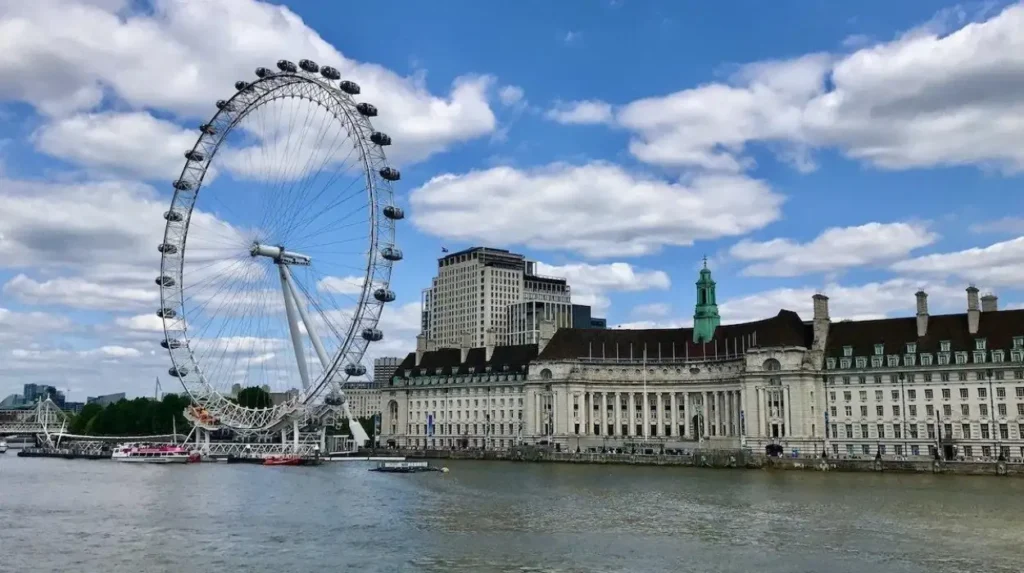
Visitors access the London Eye wheel and historic County Hall on the Queen’s Walk. Standing 135 metres tall, the wheel offers 30-minute rotation rides, while the 1922 Edwardian Baroque County Hall houses SEA LIFE London Aquarium and Shrek’s Adventure! London.
Engineering and Operations of the Lastminute.com London Eye
The London Eye (originally designated the Millennium Wheel) is a giant observation wheel designed by architects Marks Barfield (David Marks and Julia Barfield). Construction commenced in 1998, and Prime Minister Tony Blair ceremonially opened the structure on 31 December 1999. Public passenger service began on 9 March 2000.
The engineering specifications of the London Eye include:
- Height: 135 metres (443 feet), making it the tallest observation wheel in Europe.
- Wheel Diameter: 120 metres (394 feet).
- Capsule Capacity: 32 sealed, air-conditioned glass passenger capsules representing the 32 London boroughs. Each capsule weighs 10 tonnes and accommodates up to 25 people.
- Rotation Speed: 26 centimetres per second (0.9 kilometres per hour). One complete revolution takes 30 minutes. The wheel rotates continuously without stopping for passenger boarding, except to accommodate elderly or disabled travellers.
- Annual Visitor Capacity: Over 3.5 million passengers per year.
Historical Governance and Adaptive Reuse of County Hall
London County Hall stands directly adjacent to the London Eye. Architect Ralph Knott designed the building in the Edwardian Baroque style. Construction started in 1911 and King George V officially opened the building in 1922.
For 64 years, County Hall functioned as the headquarters of London municipal governance—first for the London County Council (LCC) and later for the Greater London Council (GLC). Following the abolition of the GLC under the Local Government Act 1985, the government vacated the building in 1986. Private investors purchased County Hall in 1992 and converted the Grade II* listed building into a multi-use commercial and entertainment complex.
Commercial Attractions and Visitor Amenities Inside County Hall
County Hall houses 4 major commercial leisure attractions operated primarily by Merlin Entertainments:
- SEA LIFE London Aquarium: Founded in 1997, this facility contains 2 million litres of water and showcases 500 marine species across 14 themed zones, including shark walkthrough tunnels and coral reef displays.
- DreamWorks Tours Shrek’s Adventure! London: An immersive walk-through attraction featuring live actors, theatrical sets, and 4D animation technology based on the Shrek film franchise.
- The London Dungeon: A theatrical attraction detailing 1,000 years of London history through 19 live shows, 2 underground rides, and historical set recreations.
- The Park Plaza Westminster Bridge Hotel: A modern hotel complex integrated into the rear block of the County Hall site, providing 1,019 accommodation units for business and leisure travellers.
What Historic Treasures Are Preserved at Lambeth Palace and the Garden Museum?
Lambeth Palace serves as the official London residence of the Archbishop of Canterbury, featuring 13th-century architecture and the 1490 Morton’s Tower gatehouse. Next door, the Garden Museum occupies the former St Mary-at-Lambeth church, displaying historic botanical tools and historic gardens.
Architectural History of Lambeth Palace
Lambeth Palace has served as the official residence of the Archbishop of Canterbury—the senior bishop and principal leader of the Church of England—since approximately 1200 AD. The palace complex contains architectural styles spanning 8 centuries.
Key structural elements of Lambeth Palace include:
- The Crypt Chapel: Built around 1200, this vaulted room is the oldest surviving structure within the palace complex.
- Morton’s Tower: A red-brick Tudor gatehouse constructed in 1490 by Cardinal John Morton. It forms the main entrance to the palace from Lambeth Palace Road.
- The Lollards’ Tower: Built between 1434 and 1445, this stone tower served historically as a prison during the 16th and 17th centuries.
- The Great Hall: Rebuilt in 1663 by Archbishop William Juxon following destruction during the English Civil War. It features a 70-foot-high timber hammerbeam roof and houses the Lambeth Palace Library collection.
As you explore the modern site, you are crossing land with a deep heritage. Read about the full [Insert Anchor Text for History Article Here] to understand its origins.
Lambeth Palace Library Collections
Lambeth Palace Library holds the official archives of the Church of England and the Archbishops of Canterbury. Founded as a public library by Archbishop Richard Bancroft in 1610, it contains over 200,000 printed books and 4,600 manuscript volumes.
The collections include illuminated medieval manuscripts, such as the 12th-century Lambeth Bible, and primary documents relating to English ecclesiastical history. In 2021, the Church Commissioners opened a newly built, state-of-the-art library facility at the edge of the palace grounds to house the collection.
The Garden Museum: Transformation and Collections
The Garden Museum occupies the deconsecrated medieval church of St Mary-at-Lambeth, located adjacent to Morton’s Tower. Local residents John and Rosemary Nicholson founded the museum in 1977 to prevent the demolition of the historic church structure.
St Mary-at-Lambeth is the burial site of John Tradescant the Elder (1570–1638) and John Tradescant the Younger (1608–1662). The Tradescants were royal gardeners, botanists, and naturalists who introduced exotic plants to England, including the tulip tree, runner bean, and Virginia creeper. Their collection of curiosities formed the core of the Ashmolean Museum in Oxford.
The museum features:
- Botanical Tool Collections: Over 2,000 historic gardening tools, seed packets, and horticultural equipment dating from the 17th century to the present day.
- The Sackler Garden: An outdoor courtyard garden designed by Dan Pearson, featuring rare botanical species introduced by the Tradescant family.
- The Medieval Tower: A 14th-century church tower containing 131 steps. Visitors climb the tower to gain panoramic views over Lambeth Palace, Lambeth Bridge, and the Houses of Parliament.
Where Can Leisure Travellers Walk Along the Albert Embankment?
Leisure travellers walk along the 1-mile Albert Embankment, constructed between 1865 and 1868 under engineer John Grant and Metropolitan Board of Works chief engineer Sir Joseph Bazalgette. The riverfront path connects Westminster Bridge to Vauxhall Bridge, providing unhindered views.
Engineering History and Construction of the Albert Embankment
The Metropolitan Board of Works commissioned the construction of the Albert Embankment to reclaim river mudflats and create public land along the south bank of the Thames. Construction began in September 1865 under civil engineer John Grant, working under the direction of Sir Joseph Bazalgette (1819–1891), the Chief Engineer of the Metropolitan Board of Works.
The engineering specifications of the Albert Embankment project included:
- Construction Period: September 1865 to May 1868.
- Length: 1.0 mile (1.6 kilometres) extending from Westminster Bridge to Vauxhall.
- Reclaimed Land: Approximately 8.5 acres of land reclaimed from the Thames riverbed.
- Structural Materials: Granite facing blocks sourced from Lamorna Cove in Cornwall, set over foundations of Portland cement concrete.
- Infrastructure Function: The embankment wall encloses the Southern Low-Level Interceptor Sewer, a key component of Sir Joseph Bazalgette’s London sewerage system designed to stop raw sewage discharges into the central Thames.
Historical Dock Infrastructure: White Hart Dock
The Albert Embankment incorporates historic industrial river infrastructure, including White Hart Dock. Established in the 14th century as a tidal draw dock, White Hart Dock allowed barges to unload timber, coal, and pottery clay directly into Lambeth warehouses.
When John Grant constructed the embankment in 1868, he built granite arches supporting the roadway over the dock entry, preserving access for landside industrial operations. Today, White Hart Dock survives as a preserved historic site featuring public art installations and timber mooring posts.
Modern Walkways and Public Art along the Embankment
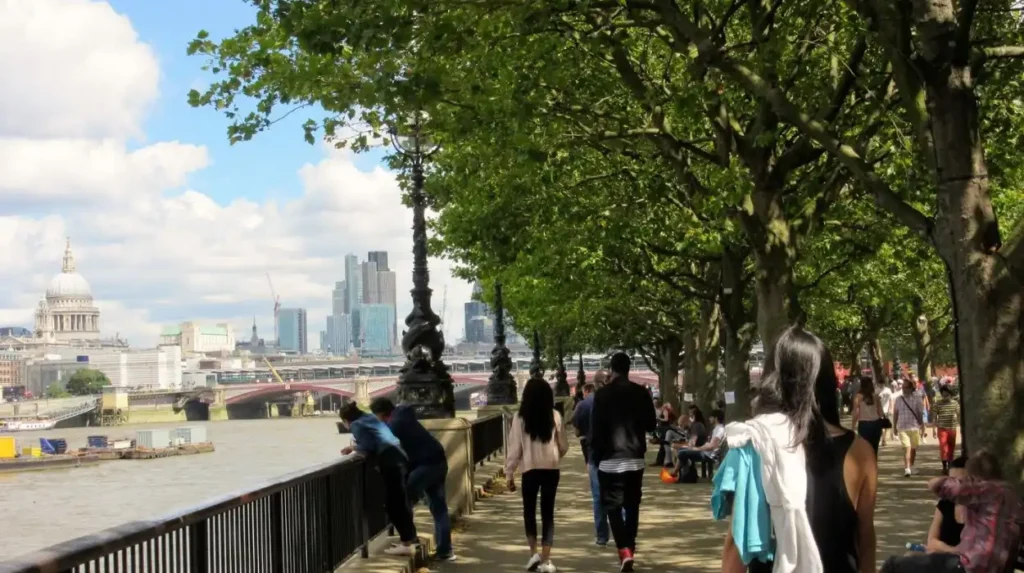
The Albert Embankment provides a continuous pedestrian route for walkers, runners, and commuters. The promenade forms part of the Thames Path National Trail, a 185-mile long-distance walking route following the course of the River Thames.
Public art installations along the Albert Embankment include:
- The International Maritime Organization (IMO) Memorial: A bronze sculpture of a ship’s bow created by artist Michael Sandle, situated outside the IMO headquarters at 4 Albert Embankment.
- Doulton Pottery Reliefs: Architectural terra-cotta embellishments embedded in remaining commercial facades, commemorating the Doulton & Co. Royal Doulton pottery works that operated on Albert Embankment from 1815 to 1956.
What Performing Arts and Cinematic Destinations Line the Lambeth Waterfront?
The Lambeth waterfront contains premier performing arts and cinematic institutions, including the Royal National Theatre and BFI Southbank. Designed by Sir Denys Lasdun, the National Theatre houses 3 stages, while BFI Southbank operates 4 screens and the BFI IMAX.
Architecture and Performance Spaces of the National Theatre
The Royal National Theatre stands on the Queen’s Walk, downstream from the Southbank Centre. Architect Sir Denys Lasdun designed the complex in the Brutalist style, utilizing board-marked cast concrete surfaces. The building opened in phases between 1976 and 1977 and achieved Grade I listed status in 1994.
The National Theatre operates 3 distinct auditoriums:
- The Olivier Theatre: An 1,150-seat open-stage amphitheatre modelled on the ancient Greek theatre at Epidaurus. It is named after Sir Laurence Olivier, the theatre’s first artistic director. It features a drum revolve stage—a 5-storey rotating mechanical system weighing 117 tonnes.
- The Lyttelton Theatre: An 890-seat proscenium arch theatre offering traditional sightlines and acoustic design.
- The Dorfman Theatre: A 450-seat flexible studio theatre space (formerly the Cottesloe Theatre), renovated in 2014 under the NT Future redevelopment scheme.
BFI Southbank and the BFI IMAX
The British Film Institute (BFI) operates two primary cinematic destinations along the Lambeth riverfront: BFI Southbank and the BFI IMAX.
- BFI Southbank: Located underneath the northern arches of Waterloo Bridge. It operates 4 cinema screens (NFT1, NFT2, NFT3, and the Studio), showing over 2,000 classic, independent, and foreign language films each year. It houses the BFI Reuben Library, which holds the largest collection of documentation on film and television in the world.
- BFI IMAX: Located at the Charlie Chaplin Walk roundabout near Waterloo Station. Designed by architect Bryan Avery and opened in May 1999, the BFI IMAX features a 492-seat auditorium and a screen measuring 26 metres wide by 20 metres high. The projector system includes both 70mm IMAX analogue and dual 4K laser projection systems.
Explore More Area Guide
Where Digital Nomads Can Work Comfortably in Lambeth: Cafés, Co‑Working, Libraries
Best Self-Guided Walking Tours in Lambeth: South Bank, Brixton & Parks Routes
How Do Open Public Spaces Enhance Lambeth’s Riverside Experience?
Public open spaces such as Jubilee Gardens and Archbishop’s Park provide green sanctuaries along Lambeth’s urban riverfront. Re-landscaped in 2012 for the Queen’s Diamond Jubilee, Jubilee Gardens features tree-lined lawns, while Archbishop’s Park offers 9.7 acres of historic recreational grounds.
Landscape Design and Amenities of Jubilee Gardens
Jubilee Gardens is a 1.6-hectare public park positioned between the London Eye, County Hall, and the Royal Festival Hall. The Greater London Council created the park in 1977 to commemorate the Silver Jubilee of Queen Elizabeth II.
In 2012, the Jubilee Gardens Trust completed a £5 million re-landscaping scheme designed by West 8 landscape architects. The redesign transformed the site into a green park featuring:
- Raised Grass Lawns: Granite-edged raised lawns designed to provide elevated views over the Thames and Parliament.
- Tree Canopy: 90 mature trees, including English Oak (Quercus robur), Field Maple (Acer campestre), and Silver Birch (Betula pendula).
- Play Area: A children’s play area constructed from natural timber logs, climbing ropes, and safety matting.
- Sustainability Features: An underground rainwater harvesting system that collects surface runoff to irrigate the lawns.
History and Facilities of Archbishop’s Park
Archbishop’s Park is a 9.7-acre (3.9-hectare) public park located behind Lambeth Palace on Lambeth Palace Road. The park originally formed part of the private gardens and palace grounds of the Archbishop of Canterbury.
In 1901, Archbishop Frederick Temple opened the grounds to the local public to address overcrowding and a lack of green spaces in South London. The London County Council assumed management of the park, and the London Borough of Lambeth maintains the space today.
Facilities within Archbishop’s Park include:
- Sports Fields: 3 artificial turf pitches for football and rugby, alongside 2 hard-surface tennis courts.
- Carlisle Dome Garden: A quiet garden enclosure featuring formal flowerbeds, seating, and historic fruit trees.
- Millennium Pathway: A paved walking loop around the perimeter of the park, suitable for runners and walkers.
Historic Vauxhall Pleasure Gardens
At the southern end of the Lambeth riverfront lies the site of the historic Vauxhall Pleasure Gardens. Originally opened in 1661 as the New Spring Gardens, this site served as London’s premier outdoor commercial entertainment park throughout the 18th and 19th centuries.
Visitors paid admission to experience orchestral concerts, firework displays, hot-air balloon ascents, and illuminated walking avenues. The gardens closed in 1859 and underwent residential redevelopment.
In the late 20th century, the London Borough of Lambeth re-established an open public park on the site. Today, the park hosts Vauxhall City Farm—a registered charity established in 1977 that houses native livestock, educational garden plots, and community riding arenas—providing educational agricultural access in central London.
How Should Visitors Plan a Day Itinerary Along Lambeth’s Riverside?
Visitors should plan a sequential 1-day itinerary starting at Westminster Bridge and proceeding south along the Queen’s Walk. This route passes County Hall, the Southbank Centre, Lambeth Palace, and the Albert Embankment, concluding at Vauxhall Station.
Morning Itinerary: Westminster Bridge to the Southbank Centre
- 09:00 AM – Arrival at Westminster Bridge: Arrive via Westminster Underground Station (District, Circle, and Jubilee lines) or Waterloo Station. Walk across Westminster Bridge to view the Houses of Parliament and the Grade II listed County Hall facade.
- 09:30 AM – County Hall and London Eye: Tour the exterior of County Hall. Take a 30-minute flight on the London Eye to view the London skyline from a height of 135 metres.
- 11:00 AM – Jubilee Gardens and Southbank Centre: Walk through Jubilee Gardens along the Queen’s Walk promenade. Explore the free open foyers of the Royal Festival Hall, visit the National Poetry Library on Level 5, or view contemporary art exhibitions at the Hayward Gallery.
Afternoon Itinerary: National Theatre to Lambeth Palace
- 01:00 PM – Lunch at Southbank Centre Food Market: Sample street food behind the Royal Festival Hall, where vendors serve international cuisine every Friday, Saturday, and Sunday.
- 02:00 PM – National Theatre and BFI Southbank: Walk east along the Queen’s Walk to admire the Brutalist architecture of Denys Lasdun’s National Theatre. Visit BFI Southbank to browse film archives or view an afternoon screening.
- 03:30 PM – Garden Museum and Lambeth Palace: Turn south along the riverfront toward Lambeth Bridge. Visit the Garden Museum inside St Mary-at-Lambeth church, climb the 131-step medieval tower, and view Morton’s Tower gatehouse at Lambeth Palace.
Evening Itinerary: Albert Embankment to Vauxhall
- 05:00 PM – Albert Embankment Walk: Walk south along Sir Joseph Bazalgette’s Albert Embankment promenade. Stop at White Hart Dock to view preserved 14th-century industrial timber docks.
- 06:30 PM – Vauxhall Pleasure Gardens and Departure: Conclude the walking tour at Vauxhall Pleasure Gardens. Depart from Vauxhall Station via the Victoria Line, National Rail services, or Uber Boat by Thames Clippers from Vauxhall St George Wharf Pier.
What are the best riverside attractions in Lambeth?
The top riverside attractions in Lambeth include the London Eye, Southbank Centre, Royal National Theatre, BFI Southbank, Lambeth Palace, the Garden Museum, Jubilee Gardens, Albert Embankment, County Hall, and Vauxhall Pleasure Gardens.