Lambeth’s multicultural history is reflected in its museums, cultural centres, historic streets, religious buildings and community landmarks. Located in South London, the borough has connections to Caribbean migration, African heritage, European settlement, maritime trade and the development of modern multicultural Britain. Attractions across Brixton, Stockwell, Vauxhall, Waterloo and the South Bank help visitors understand how migration, cultural exchange and community activism shaped Lambeth.
- Which Lambeth attractions best explain the borough’s multicultural history?
- Why is Brixton important for understanding Caribbean migration to Lambeth?
- What can visitors learn at the Black Cultural Archives in Brixton?
- How does Brixton Market reflect Lambeth’s multicultural heritage?
- What does Windrush Square reveal about Black British history?
- How does the South Bank explain Lambeth’s international cultural identity?
- What is the significance of the African and Caribbean War Memorial in Lambeth?
- How does the Cherry Groce Memorial explain Lambeth’s history of racial equality?
- Which Brixton music landmarks explain the influence of Caribbean culture?
- What can visitors discover about Portuguese migration in Stockwell?
- How does Lambeth’s riverside heritage connect the borough to international migration?
- Where can visitors research Lambeth’s multicultural history in greater detail?
- How can visitors understand Lambeth’s wider African, Caribbean and Somali communities?
- How can visitors plan a multicultural history walk around Lambeth?
- Start at Windrush Square
- Visit the Black Cultural Archives
- Explore Brixton Market
- Extend the visit towards Stockwell
- Finish at the South Bank
- Why does Lambeth’s multicultural history remain important today?
The borough’s history is closely connected to London’s growth as a capital, port city and international destination. Lambeth developed from riverside settlements and market communities into a densely populated urban area. Industrial employment, transport links, housing, imperial connections and post-war migration all influenced its population.
Visitors exploring Lambeth’s multicultural history encounter more than individual monuments. They discover how people established businesses, created places of worship, developed music scenes, organised political movements and preserved cultural traditions. Museums, public art, local markets and community institutions provide different perspectives on these changes.
Which Lambeth attractions best explain the borough’s multicultural history?
The best attractions for understanding Lambeth’s multicultural history include Brixton’s Black Cultural Archives, Brixton Market, the South Bank’s cultural institutions, the Migration Museum’s London connections and historic community landmarks. Together, these places explain migration, Black British identity, cultural exchange and the development of diverse neighbourhoods.
Lambeth’s multicultural heritage is distributed across the borough rather than concentrated in one museum. Brixton is particularly significant for understanding Caribbean migration and Black British history. Waterloo and the South Bank provide a different perspective through arts, public culture and international audiences. Stockwell and Vauxhall reveal additional connections with migration, neighbourhood change and community life.
The most useful attractions combine physical places with historical interpretation. A market explains the development of local commerce, while an archive preserves documents, photographs and personal accounts. A cultural venue demonstrates how communities create and share artistic traditions.
Visitors should distinguish between attractions located within Lambeth and institutions elsewhere in London that provide relevant context. For example, the Migration Museum has explored Britain’s migration history through exhibitions and public programmes, but its current location and opening arrangements should be checked before planning a visit.
Brixton is an effective starting point because its streets, markets and cultural institutions connect several major themes. A walking route through the area links historical migration, community enterprise, music and political activism.
Why is Brixton important for understanding Caribbean migration to Lambeth?
Brixton is one of the most important places for understanding Caribbean migration and Black British history in Lambeth. Its markets, cultural institutions, public spaces and community businesses reflect post-war migration, settlement, entrepreneurship and the continuing influence of Caribbean communities on London.
Brixton became a major centre of Black British life during the twentieth century. Following the Second World War, people from the Caribbean settled in Britain in response to employment opportunities, family connections and the demand for labour during post-war reconstruction.
The arrival of the Empire Windrush at Tilbury on 22 June 1948 became a landmark in Britain’s migration history. Many passengers came from Caribbean territories, and subsequent generations contributed to London’s public services, transport networks, manufacturing, retail, music and cultural life.
The term Windrush generation commonly describes Caribbean people who arrived in Britain between 1948 and 1971, although its wider use also encompasses the historical experiences of their families and communities. It is an important concept when exploring Brixton because it connects individual migration stories with national policy, citizenship and belonging.
Brixton’s multicultural identity developed through long-term settlement rather than a single arrival. Caribbean-owned shops, restaurants, churches, community organisations and music businesses helped create networks of support. These institutions also provided spaces where traditions were maintained and adapted to British urban life.
Visitors exploring the modern neighbourhood should connect its present-day streets with their historical background. Read about the full [Brixton’s historical development and heritage] to understand how the area evolved before and after post-war migration.
Brixton also has an important history of Black political activism. Residents and community organisations campaigned against racial discrimination, challenged unequal treatment and demanded better representation. These movements formed part of wider struggles over policing, employment, housing and civil rights in Britain.
The Brixton of today reflects continuing change. Independent businesses, long-established Caribbean institutions, newer restaurants and creative enterprises operate alongside rising commercial pressures and redevelopment. This combination makes the area useful for examining how multicultural neighbourhoods preserve heritage while adapting to economic change.
What can visitors learn at the Black Cultural Archives in Brixton?
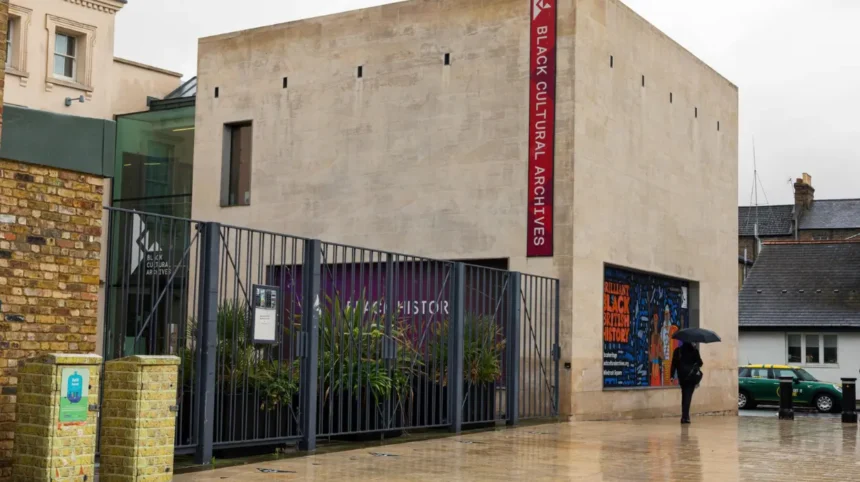
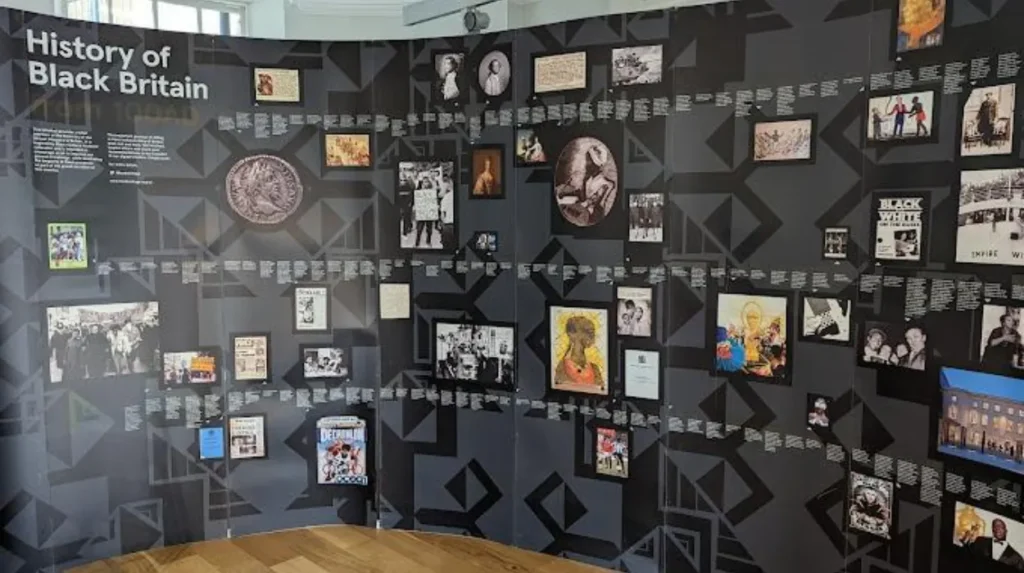
The Black Cultural Archives in Brixton preserves and presents the histories of African and Caribbean people in Britain. Its collections and exhibitions explore migration, identity, activism, cultural achievement and community life, providing essential historical context for understanding Black British contributions to Lambeth and London.
The Black Cultural Archives is a specialist heritage institution dedicated to collecting, preserving and sharing the histories of people of African and Caribbean descent in Britain. Its location in Brixton places it within a neighbourhood closely associated with Black British culture and community activism.
The archive addresses a gap in traditional historical narratives. National histories often concentrated on government, political leaders and major institutions, leaving the everyday experiences of minority communities less visible. Black cultural archives help broaden that record through documents, photographs, oral histories and material relating to individual lives.
Its historical significance extends beyond Caribbean migration. African and Caribbean histories connect to slavery, colonialism, abolition, military service, education, employment, cultural production and the struggle for equal rights. These themes explain the wider circumstances behind the development of Black communities in Britain.
The archive also helps visitors understand the difference between migration history and Black British history. Migration examines movement between countries and the conditions that shape settlement. Black British history also considers people born in Britain, generations of family experience, political identity and contributions to public life.
Windrush Square, where the institution is situated, provides a useful starting point for exploring these subjects in the surrounding neighbourhood. Visitors can connect archival evidence with nearby streets, businesses and public spaces.
Before visiting, check the Black Cultural Archives’ official website for current exhibitions, opening times, admission arrangements and event schedules. Access to specific collections and research materials follows the institution’s current arrangements.
How does Brixton Market reflect Lambeth’s multicultural heritage?
Brixton Market reflects Lambeth’s multicultural history through its food businesses, independent traders and long-standing links with Caribbean and other migrant communities. The market shows how migration influences everyday commerce, ingredients, cooking traditions, employment and the cultural identity of a neighbourhood.
Brixton Market is one of the most accessible places to observe multicultural heritage in everyday life. Its trading areas include Brixton Village, Market Row and the historic Electric Avenue shopping street. These locations illustrate how local retail has changed as London’s population and consumer culture have developed.
Electric Avenue is particularly significant in Brixton’s commercial history. It became one of London’s early shopping streets to receive electric street lighting in the late nineteenth century. Today, its name also carries a strong association with the neighbourhood’s cultural identity through the song Electric Avenue by Eddy Grant, released in 1982.
The market’s food businesses provide a practical way to understand migration. Caribbean ingredients, spices, fresh produce, prepared meals and specialist groceries reflect the ways communities maintain familiar food traditions after moving to a new country. Food retail also creates opportunities for businesses to adapt traditional products to changing customer preferences.
Market life connects cultural heritage with economic participation. Traders serve local residents, workers, students and visitors. Their businesses support employment and maintain commercial activity in central Brixton.
The market also demonstrates that multicultural neighbourhoods are not culturally static. Businesses change ownership, new cuisines appear and commercial rents influence which traders remain. These changes affect how heritage is experienced and represented in public spaces.
Visitors should explore respectfully, purchase from local businesses where possible and recognise that the market remains a working commercial environment rather than solely a tourist attraction.
What does Windrush Square reveal about Black British history?
Windrush Square in Brixton commemorates the contribution of Caribbean migrants and their descendants to British society. Its public setting connects the history of the Windrush generation with remembrance, citizenship, identity and the continuing recognition of Black British experiences in modern London.
Windrush Square is a public space near Brixton’s principal cultural and civic landmarks. Its name recognises the significance of Caribbean migration and the people who helped shape post-war Britain.
The arrival of the Empire Windrush in 1948 is widely used as a reference point for post-war Caribbean settlement. However, people of African and Caribbean descent were present in Britain long before that date. Britain’s connections with Africa and the Caribbean developed over centuries through trade, empire, slavery, military service, education and maritime employment.
This distinction is important because the Windrush story forms one chapter of a much longer history. The square helps visitors explore the post-war period without treating it as the beginning of Black history in Britain.
Public commemoration also raises questions about whose experiences appear in official histories. Memorials, named streets and public artworks establish which events and communities receive recognition. Windrush Square makes Caribbean migration visible within the everyday landscape of Brixton.
The square is also a practical meeting point for exploring the surrounding cultural area. Visitors can combine it with the Black Cultural Archives and Brixton Market to examine migration, historical records and community enterprise in one visit.
How does the South Bank explain Lambeth’s international cultural identity?
The South Bank illustrates Lambeth’s multicultural identity through internationally recognised arts venues, public performance spaces and cultural programming. Institutions such as the Southbank Centre and the National Theatre bring artists, audiences and ideas from different backgrounds together, showing how London’s cultural life reflects international exchange.
The South Bank is a major cultural district beside the River Thames, including prominent arts venues and public spaces around Waterloo. Its development reflects post-war investment in public culture and the role of London as an international centre for music, theatre, literature and visual arts.
The Southbank Centre is one of the United Kingdom’s major arts centres. Its venues include the Royal Festival Hall, Queen Elizabeth Hall and Purcell Room. Concerts, festivals, talks and exhibitions bring together performers and audiences from Britain and abroad.
The National Theatre contributes to this cultural landscape through theatre productions, new writing and reinterpretations of established works. Its programme provides a route into discussions about migration, race, identity and social change when these themes appear in specific productions.
The South Bank does not explain Caribbean migration to Lambeth as directly as Brixton’s archives and markets. Its value lies in the wider context. It shows how international cultural exchange becomes part of public life through performance, education and shared civic spaces.
The area is also geographically close to Waterloo station, making it accessible for visitors arriving from other parts of London or travelling through the capital. Public riverside paths connect cultural buildings with restaurants, bookshops, galleries and public gathering spaces.
Check individual venue programmes before visiting. Exhibitions and performances change throughout the year, so a specific event provides more direct historical context than the architecture alone.
What is the significance of the African and Caribbean War Memorial in Lambeth?
The African and Caribbean War Memorial in Windrush Square honours African and Caribbean service personnel who fought in the First and Second World Wars. It connects Lambeth’s multicultural heritage with military service, imperial history, remembrance and the recognition of communities in Britain’s national story.
The memorial is an important stop for visitors examining the relationship between migration and British history. African and Caribbean people served in military forces during both world wars, reflecting the historical links between Britain, its colonies and the wider Commonwealth.
Military service provides another perspective on multicultural history. It demonstrates that the relationship between Britain and Caribbean communities predates the post-war migration associated with the Empire Windrush. These earlier connections influenced later discussions about citizenship, belonging and the responsibilities of the British state towards people from former colonies.
The memorial’s position in Windrush Square places it alongside other landmarks connected with Black British history. Visitors can examine how different monuments represent military contribution, migration and the struggle for equality within one public space.
A visit also provides an opportunity to discuss historical visibility. Memorials determine which people and events receive recognition in public spaces. The African and Caribbean War Memorial gives prominence to service personnel whose contributions were not always represented equally in traditional accounts of Britain’s military history.
Windrush Square is open to the public throughout the day. Visitors should approach the memorial respectfully, particularly during commemorative events and community gatherings.
How does the Cherry Groce Memorial explain Lambeth’s history of racial equality?
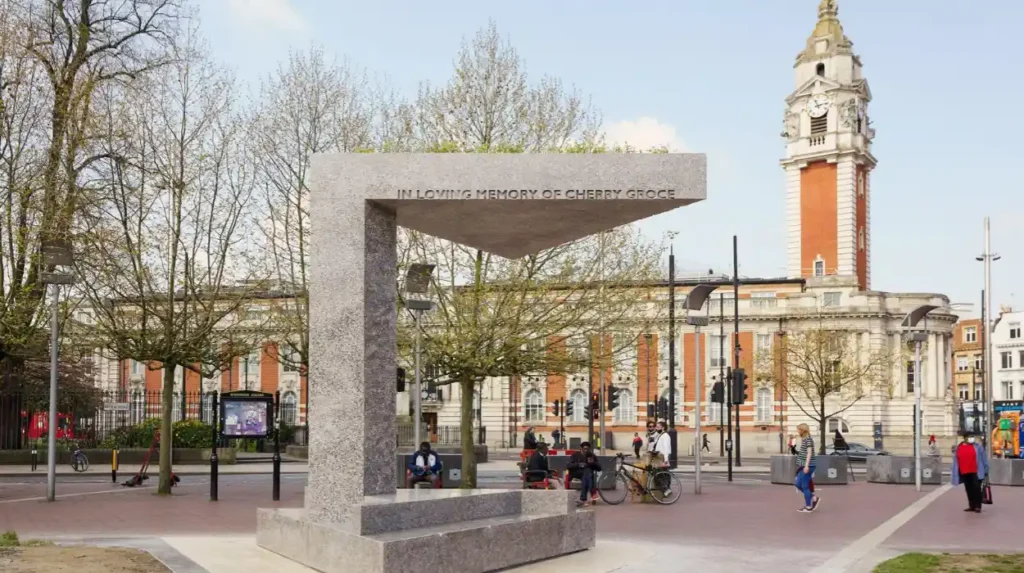
The Cherry Groce Memorial in Brixton commemorates Cherry Groce, who was shot by police during a raid on her home in 1985. The memorial connects Lambeth’s multicultural history with policing, racial justice, public accountability and continuing community efforts to address inequality.
Cherry Groce was a Black woman whose shooting during a Metropolitan Police operation became a defining event in Brixton’s modern history. She survived the shooting but was left paralysed. Her case became closely associated with community demands for justice and accountability.
The incident must be understood within the broader context of racial tension and strained relations between the police and Black communities in London during the 1980s. Brixton experienced serious unrest in April 1981, when conflict between residents and the police reflected wider grievances about discriminatory treatment, unemployment and policing practices.
The Cherry Groce Memorial Pavilion, installed in Windrush Square in 2021, provides a permanent place of remembrance. Its presence recognises the impact of the shooting on Groce, her family and the wider community.
This memorial adds an important dimension to a multicultural heritage itinerary. Cultural history includes music, food and migration, but it also includes political participation, public institutions and the demand for equal treatment under the law.
Visitors can consider how public memorials preserve difficult histories and encourage discussion about institutional responsibility. The site also demonstrates how community campaigns influence the way local authorities and public spaces represent the past.
Which Brixton music landmarks explain the influence of Caribbean culture?
Brixton’s music heritage explains how Caribbean musical traditions influenced British popular culture through reggae, dub, sound-system culture and later musical styles. Local venues, record shops, street culture and the legacy of artists such as Eddy Grant connect migration with creative innovation and Black British identity.
Music is one of the clearest expressions of Caribbean influence on Brixton. Migrants brought musical traditions, instruments, records and performance practices that developed within British cities. Local sound systems, record shops, community events and live venues helped these traditions reach new audiences.
Reggae originated in Jamaica during the late 1960s, developing from earlier Jamaican styles including ska and rocksteady. Dub emerged through studio experimentation and the manipulation of recorded tracks. Both genres influenced musicians and producers in Britain, including artists working in London.
Brixton became part of this wider network of Caribbean cultural exchange. Its businesses and community venues supported the circulation of music and created opportunities for musicians, DJs and promoters. These activities also connected generations, as British-born children of Caribbean migrants developed their own cultural identities.
Electric Avenue is an especially recognisable landmark. The street is associated with Brixton’s retail history and became internationally familiar through Eddy Grant’s 1982 song Electric Avenue. The song addressed social conditions in Brixton and became part of the wider cultural record of the area.
Music heritage is not limited to historic performers. Contemporary artists continue to use Caribbean musical influences alongside hip-hop, electronic music, jazz and other styles. Brixton’s cultural identity therefore reflects both preservation and ongoing experimentation.
Visitors interested in this history should look for current live performances, local music events and heritage programmes. Venue schedules change, so a specific performance offers a more reliable way to experience the neighbourhood’s contemporary music culture than assuming a particular historic venue remains active.
What can visitors discover about Portuguese migration in Stockwell?
Stockwell provides another perspective on Lambeth’s multicultural history through its established Portuguese community and wider connections with European migration. Local shops, cafés, restaurants and community networks demonstrate how migrants create neighbourhood institutions, maintain language and food traditions, and contribute to the social and economic life of South London.
Stockwell sits close to Brixton and Vauxhall, making it a useful extension to a multicultural history walk. Its Portuguese community forms part of London’s broader history of European migration, which developed through different periods of employment, family settlement and movement between Britain and continental Europe.
Portuguese migration to London has included people arriving from mainland Portugal and Portuguese-speaking territories. The reasons for migration have varied, including work, education, family reunification and changes in political and economic circumstances.
The neighbourhood’s Portuguese identity is most visible through everyday businesses and social networks. Portuguese cafés, bakeries, restaurants and specialist shops provide spaces where residents maintain food traditions, speak their language and connect with others who share cultural ties.
These businesses also serve people outside the community. Customers from different backgrounds encounter Portuguese food and customs through ordinary shopping and dining. This illustrates how multiculturalism develops through routine interactions rather than through formal heritage attractions alone.
Stockwell also demonstrates that London’s cultural geography is interconnected. Residents travel between neighbouring areas for work, shopping, worship, education and leisure. Community identities therefore extend beyond administrative boundaries and remain connected to wider networks across London.
Visitors can explore local commercial streets respectfully and support independent businesses. They should avoid assuming that every shop or resident represents the same national or cultural experience. Migration histories include differences in generation, language, occupation and personal circumstances.
How does Lambeth’s riverside heritage connect the borough to international migration?
Lambeth’s position beside the River Thames connects its history with trade, transport, industry and London’s development as an international city. Riverside landmarks and historic streets provide context for understanding how goods, people and ideas moved through the capital long before modern multicultural communities developed.
The River Thames shaped Lambeth’s development by supporting movement, commerce and access to central London. For centuries, riverside settlements depended on the river for transport and trade. The surrounding landscape later accommodated industry, housing, public institutions and transport infrastructure.
The river’s history also connects to Britain’s imperial past. London was a major centre of international trade, and goods moving through its commercial networks linked the capital to Africa, the Caribbean, Asia and Europe. These exchanges were inseparable from the histories of colonialism and slavery as well as the movement of labour and commodities.
Visitors should distinguish between the history of international trade and the history of modern migration. Trade moved goods and generated wealth, while migration involved people relocating, establishing homes and forming communities. Both processes influenced London’s development, but they represent different historical experiences.
The South Bank provides an accessible place to consider how riverside land changed over time. Post-war redevelopment created major cultural venues, public spaces and pedestrian routes. These developments changed how residents and visitors used the riverfront.
The historic Lambeth Palace offers another perspective on the area’s long history. It has served as the London residence of the Archbishop of Canterbury for centuries. Its significance is primarily religious and institutional, but it also demonstrates how Lambeth’s history predates its modern multicultural identity.
Visitors exploring the riverside should look beyond individual buildings. Bridges, streets, transport connections and public spaces reveal how London developed through successive phases of trade, urban expansion and cultural exchange.
Where can visitors research Lambeth’s multicultural history in greater detail?
Lambeth Archives is the borough’s principal local history archive, preserving documents, photographs, maps and records that explain how Lambeth’s communities developed. Its collections cover Black history, social history, migration-related research, transport, architecture and the experiences of local residents.
Located at 16 Brixton Hill, Lambeth Archives provides a valuable research resource for visitors who want evidence beyond public monuments and street landmarks. The archive serves residents, students, family historians and researchers investigating the borough’s development.
Its collections include records from local government, schools, churches, businesses, charities and community organisations. These materials help researchers reconstruct the changing social and cultural character of individual neighbourhoods.
Photographs and historical maps are particularly useful. They show how streets, markets, housing and public buildings changed over time. Researchers can compare earlier urban landscapes with modern Brixton, Stockwell, Waterloo and other parts of Lambeth.
The archive also supports research into Black history, women’s history and LGBTQ+ history. These subjects help explain how different communities participated in local life and challenged exclusion from public institutions.
Visitors interested in migration can use historical records to investigate residential patterns, employment, local organisations and community development. However, the available evidence varies by subject and period. Not every personal migration story appears in a surviving record.
Lambeth Archives also provides access to its online image resource, Lambeth Landmark, which contains more than 16,000 photographs, illustrations, maps and other documents. This allows researchers to begin exploring the borough’s history before arranging an in-person visit.
Check the council’s official archive information for current opening hours, research arrangements and access to specific materials.
How can visitors understand Lambeth’s wider African, Caribbean and Somali communities?
Lambeth’s multicultural history extends beyond Brixton’s Caribbean heritage. Council community research identifies Portuguese-speaking communities in Lambeth and Somali communities with established connections to areas including Stockwell and Streatham, demonstrating the borough’s wider cultural and linguistic diversity.
Lambeth’s cultural identity reflects several migration histories rather than one dominant community experience. Caribbean settlement, Portuguese-speaking communities and Somali residents have each contributed to the borough’s social and commercial life.
Stockwell and Streatham are useful places to investigate these wider connections. Local businesses, community organisations, cafés and specialist services demonstrate how cultural networks develop around everyday needs.
Somali community networks, for example, have connections with shops, cafés and services that serve residents and help maintain social ties. Portuguese-speaking community organisations also provide information and support relevant to residents with different migration backgrounds.
These neighbourhoods demonstrate why multicultural heritage requires more than a list of famous attractions. A community organisation or local business often provides a more direct connection to everyday experiences than a monument designed for public commemoration.
Visitors should also recognise that cultural identity is not uniform. Language, generation, religion, employment and personal migration histories create differences within communities. A neighbourhood’s cultural character develops through interactions between established residents and people who arrive later.
For travellers seeking a fuller understanding of Lambeth, these local connections complement the historical evidence found at Windrush Square, the Black Cultural Archives and Lambeth Archives.
Explore More Area Guide
Lambeth’s Caribbean Heritage: Museums, Brixton and Black History
Brixton Music History: Where to Explore London’s Sound
How can visitors plan a multicultural history walk around Lambeth?
A practical Lambeth multicultural history walk combines Windrush Square, the Black Cultural Archives, Brixton Market and selected music and community landmarks. Visitors can then explore Stockwell or travel towards Waterloo and the South Bank to understand the borough’s wider cultural and historical connections.
A Brixton-focused visit offers the clearest introduction because several important heritage sites are close together. Visitors can organise the day around the following sequence.
Start at Windrush Square
Begin at Windrush Square to understand the public commemoration of Caribbean migration and Black British history. Examine the African and Caribbean War Memorial and the Cherry Groce Memorial Pavilion to explore military service, remembrance and racial justice.
The square is open to the public, making it a useful starting point regardless of whether indoor attractions are open.
Visit the Black Cultural Archives
Arrange a visit or research appointment with the Black Cultural Archives. Its collections provide historical context for the people and events commemorated around Windrush Square.
The archive’s reading room and library operate by appointment, so visitors should contact the institution before travelling.
Explore Brixton Market
Continue to Brixton Market and Electric Avenue. Observe the relationship between food retail, independent businesses and the cultural traditions associated with Caribbean and other communities.
Allow time to explore the commercial streets rather than treating the market as a single building. Trading areas have different opening arrangements, and individual businesses operate independently.
Extend the visit towards Stockwell
Stockwell provides an opportunity to investigate Portuguese-speaking community connections and the wider diversity of Lambeth. Explore local businesses and community spaces respectfully, without assuming every establishment offers historical interpretation or operates as a visitor attraction.
Finish at the South Bank
For a broader perspective, travel towards Waterloo and the South Bank. The Southbank Centre and nearby cultural institutions demonstrate how international arts, public performances and cultural exchange contribute to contemporary London.
This extension works particularly well for visitors interested in the relationship between local heritage and the capital’s wider cultural life.
Why does Lambeth’s multicultural history remain important today?
Lambeth’s multicultural history explains how migration, cultural exchange, community enterprise and activism shaped modern South London. Its archives, memorials, markets and cultural institutions preserve evidence of these changes and help visitors understand how historical experiences continue to influence identity and public life.
The borough’s heritage has practical relevance for residents, visitors, educators and researchers. It provides context for discussions about citizenship, discrimination, cultural representation, employment and urban development.
The Windrush generation remains an important part of British public history because its experiences connect migration with questions of nationality, belonging and government responsibility. Brixton’s memorials and archival institutions provide local places to examine these national issues.
Lambeth’s wider community histories also demonstrate that multicultural Britain developed through many different experiences. Caribbean, African, Portuguese-speaking and Somali communities have distinct histories, and their contributions cannot be reduced to a single migration narrative.
Commercial change adds another important dimension. Markets and independent businesses help preserve cultural traditions, but changes in rents, redevelopment and consumer demand influence which businesses survive. Documenting these changes is important for future generations seeking to understand how neighbourhood identities developed.
Archives, memorials and community organisations therefore play a continuing role in preserving local history. They support historical research, education and public discussion while giving residents opportunities to contribute their own records and experiences.
For visitors, the most informative approach combines historical research with observation of everyday neighbourhood life. A memorial explains public remembrance, an archive supplies documentary evidence, and a market demonstrates how cultural traditions remain part of the living city.
Lambeth’s multicultural attractions provide a connected account of migration, cultural exchange and social change. Brixton offers the strongest starting point, while Stockwell, Lambeth Archives and the South Bank broaden the picture. Together, these places explain how communities helped shape the borough’s identity and continue to influence South London today.
Which Lambeth attractions explain the borough’s multicultural history?
The Black Cultural Archives, Windrush Square, Brixton Market, Lambeth Archives and the South Bank’s cultural venues help visitors understand migration, Caribbean heritage, Black British history and cultural exchange in South London.