Brixton’s music scene developed through migration, community life, independent businesses and live performance. Caribbean communities helped establish reggae, ska, calypso and sound system culture, while local venues and record shops connected these traditions with punk, soul, electronic music and British popular music.
- Which cultural institution explains Brixton’s musical heritage?
- How did Caribbean migration shape Brixton’s reggae and sound system culture?
- Which Brixton landmark is most closely associated with live music history?
- Where can visitors investigate Brixton’s music history through original records and photographs?
- What role did Brixton’s markets and record shops play in its music culture?
- How did Brixton connect reggae with punk, rock and other musical genres?
- How can visitors explore Brixton’s musical landmarks on foot?
- Why does Brixton’s musical heritage remain important today?
- How should visitors plan a music heritage visit to Brixton?
Brixton is a district in the London Borough of Lambeth, in South London. Its musical identity reflects the experiences of people who settled in the area, the venues that supported performers and the businesses that distributed records. Music became an important part of Brixton’s cultural identity during the twentieth century.
The arrival of Caribbean migrants after the Second World War transformed Brixton’s social and cultural landscape. The Empire Windrush arrived at Tilbury on 22 June 1948, carrying passengers from the Caribbean. Many Caribbean people settled in London, including Brixton, where employment, housing and community networks shaped everyday life. The UK Government’s Windrush educational resources identify Brixton as a major centre of Black British life by the late 1950s.
Music helped communities maintain cultural connections while developing new British identities. Jamaican sound system traditions, Caribbean dance music, gospel, jazz and rhythm and blues influenced local musical activity. Sound systems are mobile or locally installed audio systems used by selectors and DJs to play recorded music for audiences. They became important spaces for social gathering, dancing and musical experimentation.
Brixton’s musical history is not limited to one genre. Reggae and dub form an essential part of its Caribbean heritage, while punk, rock, soul, hip-hop, electronic music and contemporary British pop broadened its musical reputation. The district’s history is best understood by connecting its cultural institutions with the streets, shops and performance spaces where music circulated.
Which cultural institution explains Brixton’s musical heritage?
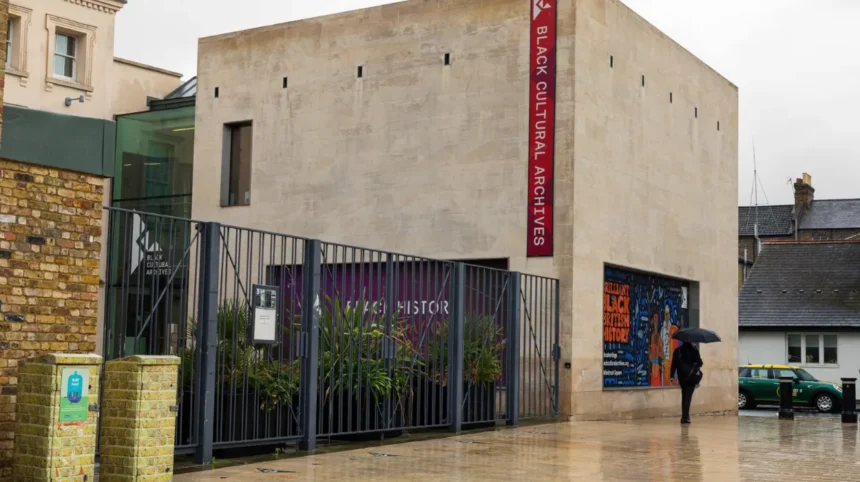
The Black Cultural Archives on Windrush Square is a valuable starting point for understanding Brixton’s musical heritage. It preserves and celebrates Black British history through archival collections, educational programmes, exhibitions and events that provide context for the communities behind the area’s music.
The Black Cultural Archives is located at 1 Windrush Square, Brixton, London SW2 1EF. It is a national centre dedicated to collecting, preserving and sharing the histories of African and Caribbean people in Britain. Its collections help visitors explore the social history that supported Brixton’s musical development.
The organisation’s work is particularly relevant to understanding the relationship between Caribbean migration and British music. Historical documents, photographs, oral histories and records of community organisations help explain how Black communities established cultural networks, created businesses and influenced public life. These wider histories provide context for the emergence of reggae, sound systems and other musical traditions in South London.
Visitors should distinguish between a general cultural archive and a dedicated music museum. The Black Cultural Archives documents a broad range of Black British experiences rather than operating solely as a collection of musical instruments or recordings. Its value lies in connecting music with migration, identity, activism, education and community life.
Access arrangements require advance planning. The organisation states that reading room and library visits are by appointment, with listed opening hours on Wednesday, Thursday and Friday. Exhibition access and public events follow separate arrangements.
Windrush Square itself is a useful place to continue the visit. The public square contains monuments connected with African and Caribbean history, including the African and Caribbean War Memorial. Its location beside the archives makes it an appropriate starting point for exploring the cultural influences that shaped Brixton.
How did Caribbean migration shape Brixton’s reggae and sound system culture?
Caribbean migration helped establish reggae and sound system culture in Brixton by bringing musical traditions, record collections, performance practices and community networks to South London. Local gatherings connected Jamaican music with British audiences and helped develop distinctive forms of Black British musical expression.
The post-war Caribbean presence is central to Brixton’s musical history. People arriving from Jamaica, Trinidad and Tobago and other Caribbean territories brought musical tastes and traditions shaped by calypso, ska, mento, rhythm and blues and reggae. These genres developed in different social and historical settings, but all contributed to the wider musical environment in Britain.
Reggae emerged in Jamaica during the late 1960s, following the development of ska and rocksteady. Its characteristic offbeat rhythms, bass-led arrangements and lyrical themes became internationally recognisable. Dub developed through studio experimentation with recorded reggae, using techniques such as echo, reverb and the removal or emphasis of individual instrumental tracks.
Sound systems played a significant role in bringing this music to audiences. A sound system involves more than loudspeakers. It combines music selection, amplification, DJ or selector performance and a social setting in which audiences gather. In Caribbean communities, sound systems created opportunities to hear new records, dance and build relationships outside formal concert halls.
In Britain, these traditions adapted to local conditions. Community events, clubs and informal gatherings allowed Caribbean music to circulate before it became widely represented in mainstream venues. Independent record shops helped listeners find imported records, while DJs introduced audiences to Jamaican releases and emerging British productions.
Brixton’s importance comes from its concentration of Caribbean communities and its place within London’s broader Black cultural history. The district became associated with reggae, dub and sound system culture, although these traditions also developed in other British cities, including Birmingham, Bristol and London districts beyond Brixton.
The relationship between migration and music is also documented through cultural programmes and local historical research. Lambeth Council has hosted events exploring the journey from the Windrush generation to British reggae, including a 2026 event at Brixton Tate Library featuring reggae historian and record-industry figure Grantley Haynes.
Visitors interested in this history should look for archive exhibitions, public talks and events that discuss reggae and Caribbean music in Britain. These activities provide a more grounded understanding than treating the area’s musical heritage as a collection of famous names alone.
Which Brixton landmark is most closely associated with live music history?
O2 Academy Brixton is one of the district’s most recognisable live music landmarks. The Grade II-listed venue opened as the Astoria cinema in 1929 and became Brixton Academy in 1983, hosting major performers across reggae, rock, pop and alternative music.
The O2 Academy Brixton stands at 211 Stockwell Road, London SW9 9SL. Its history reflects the changing role of entertainment buildings in urban communities. The venue originally opened as the Astoria on 19 August 1929, presenting cinema and variety entertainment before its original use ended in 1972.
The building subsequently operated as the Sundown Centre, a club venue, before entrepreneur Simon Parkes acquired and redeveloped it. Brixton Academy opened on 7 October 1983 with a performance by reggae artist Eek-A-Mouse. This opening connected the venue’s new identity directly with the Caribbean-influenced musical culture for which Brixton had become known.
The venue later hosted artists across a wide range of genres. Its official history highlights performances by The Clash, Amy Winehouse, Blur, Coldplay, Rihanna and many other internationally recognised acts. Its programming demonstrates how Brixton’s musical identity extends beyond reggae to include rock, indie, soul, electronic music and mainstream pop.
The building is also architecturally significant. Its Art Deco interior, distinctive dome, sloping floor and large fixed stage contribute to its status as a prominent concert venue. Historic England’s listed-building designation reflects the building’s architectural and historical value, while its concert history gives it a continuing role in London’s cultural life.
The venue’s recent history also demonstrates the practical importance of checking current information. Following the fatal crowd crush associated with an Asake concert in December 2022, the Academy closed for an extended period and reopened in April 2024 under revised licensing conditions. Visitors should consult the official venue website for current events, entry requirements and access information.
A visit to the exterior provides a useful architectural stop, but access to the performance areas depends on scheduled events and venue arrangements. Concert tickets, opening times and public access should be checked before including the building in a walking itinerary.
Where can visitors investigate Brixton’s music history through original records and photographs?
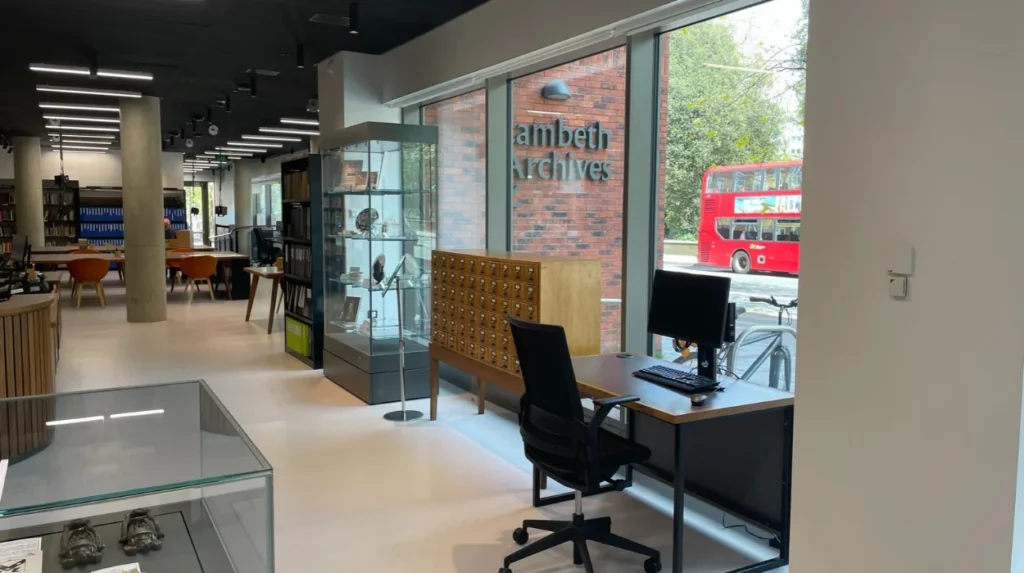
Lambeth Archives provides a research-based way to investigate Brixton’s musical past through historical documents, photographs, maps, artworks and artefacts. Its collections help visitors trace the changing neighbourhood, local communities and cultural institutions that supported the development of music in South London.
The Lambeth Archives is located at 16 Brixton Hill, London SW2 1ET. The service collects and makes available material relating to Lambeth and its residents. Its holdings cover the borough’s history, including the districts of Brixton, Stockwell, Herne Hill, Tulse Hill, Kennington and Norwood.
For visitors researching music, local archives offer a different experience from a concert venue. Photographs and historical documents establish where people lived, how streets changed and which community spaces operated during particular periods. These details help researchers place musical developments within the social and economic history of the neighbourhood.
Archival research also helps distinguish between documented events and later recollections. A photograph can establish the appearance of a building at a particular time. A dated programme can identify a performance. An oral history can preserve a musician’s or resident’s account of a local event. Comparing these records creates a stronger historical picture than relying on individual memories alone.
Researchers interested in reggae, sound systems or live music should contact the archive before visiting. They should explain the period, venue, musician or cultural subject they want to investigate. Staff can advise on relevant collections and access arrangements.
Lambeth Archives also provides research facilities, including internet access and microfilm readers. The council advises visitors to contact the service before travelling because exhibition space is sometimes used for meetings.
A productive research visit begins with a focused question. For example, a visitor can investigate how Caribbean-owned businesses changed Brixton’s commercial streets after the Second World War, or how the opening of a major music venue altered the district’s entertainment landscape. Such questions connect musical heritage with evidence that can be checked and cited.
What role did Brixton’s markets and record shops play in its music culture?
Brixton’s markets and independent businesses helped sustain its musical culture by bringing residents together and supporting the circulation of records, fashion and cultural ideas. Market streets and shopping arcades also provide a physical route through the neighbourhoods shaped by post-war Caribbean settlement.
Markets are important to Brixton’s history because they connect commercial activity with everyday social life. Electric Avenue, Market Row and Brixton Village form recognisable parts of the district’s retail heritage. These locations help visitors understand the wider environment in which music shops, food businesses, community organisations and informal cultural networks operated.
Electric Avenue dates from the nineteenth century and became known for its early electric street lighting. Market Row was built in 1928, while Granville Arcade opened in 1937. The arcade is now known as Brixton Village and connects streets including Coldharbour Lane, Atlantic Road and Popes Road.
The growth of Caribbean communities after the Second World War changed the area’s commercial character. Caribbean food shops, restaurants and other independent businesses became part of Brixton’s cultural landscape. These businesses supported community connections and helped sustain demand for music, records and entertainment linked to Caribbean traditions.
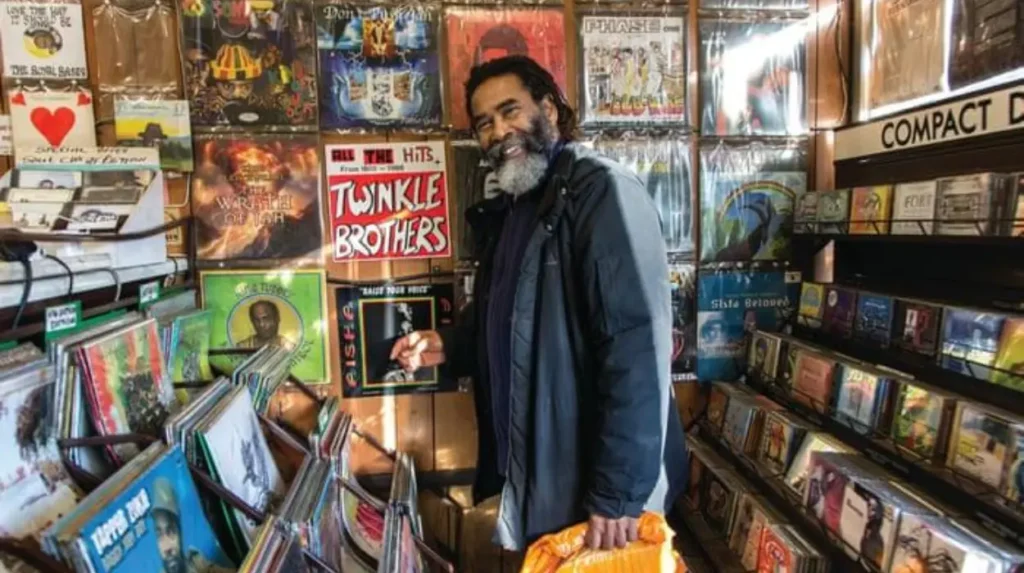
Record shops have historically served a practical role in music culture. They provide access to new releases, imported records and recordings that are difficult to find through mainstream distributors. They also give listeners opportunities to exchange recommendations and discover artists outside commercial radio playlists. In reggae and sound system culture, access to distinctive records was especially important for selectors building a recognisable musical identity.
Visitors should distinguish between Brixton’s documented market history and assumptions about individual businesses. The existence of a historic market does not establish that a particular record shop operated there at a particular time. Researchers seeking specific shops, labels or record dealers should consult dated directories, photographs, advertisements and local archival material.
Today, a walk through Brixton Village and the surrounding shopping streets offers a way to understand the district’s changing cultural economy. Visitors can observe how historic commercial spaces continue to accommodate food, retail and independent businesses. The experience complements visits to archives and music venues by showing the streets where local cultural life developed.
For the broader historical context, explore the history of Brixton’s markets, migration and community development. This is the single contextual internal-link placeholder for a related historical background article. It connects the modern market district with the social changes that helped shape Brixton’s music scene.
How did Brixton connect reggae with punk, rock and other musical genres?
Brixton’s musical identity expanded through the interaction of Caribbean traditions with British rock, punk, soul, hip-hop and electronic music. Live venues, independent promoters and audiences brought different styles into the same district, creating a diverse music culture rather than one defined by a single genre.
Reggae remains a central part of Brixton’s cultural heritage, but the area’s music history includes wider developments in British popular music. From the late twentieth century onwards, musicians and audiences encountered different genres through concerts, clubs, record shops and local events.
Punk developed in Britain during the 1970s as a movement associated with independent music, stripped-back performance and opposition to established cultural conventions. Brixton’s wider London setting placed it within the same musical environment as punk and post-punk performers, while reggae and dub provided different rhythmic and production approaches that influenced British popular music.
The relationship between these genres was not uniform. Some performers shared audiences or toured similar venues. Others drew on musical influences without working directly with Brixton-based artists. Understanding these distinctions prevents the area’s history from becoming a claim that every British genre originated in the district.
O2 Academy Brixton provides a clear example of the breadth of this musical activity. Its documented performers span rock, alternative music, reggae, pop and contemporary genres. Its long life as an entertainment venue shows how a single building can accommodate different musical generations.
Electronic music also forms part of the wider story. The development of DJ culture, dance music and club nights changed how audiences experienced music, moving some musical activity from traditional concerts into extended DJ sets and dance events. Brixton’s position within London’s nightlife network connected it with these changes, although London’s electronic music history extends far beyond the district.
Soul, jazz, hip-hop and gospel also contribute to the area’s diverse musical environment. These genres have distinct histories and performance traditions. Their presence in Brixton reflects the district’s varied communities and the wider exchange of music across London.
Visitors can explore this diversity by combining a historical archive visit with a live event at a current venue. A concert offers evidence of Brixton’s continuing performance culture, while archival sources help explain the historical circumstances behind it. Checking the date, performer and venue history establishes a more precise connection between a contemporary event and the district’s musical past.
How can visitors explore Brixton’s musical landmarks on foot?
Visitors can explore Brixton’s musical heritage through a compact walking itinerary connecting Windrush Square, the Black Cultural Archives, Brixton’s historic markets, local streets and O2 Academy Brixton. The route combines cultural history, architecture and commercial heritage without requiring a dedicated music museum.
A practical visit starts at Brixton Underground station, which is served by the Victoria line. Brixton railway station is also nearby. From either station, visitors can reach the main cultural and commercial landmarks on foot.
1. Windrush Square
Begin with the square’s monuments and its relationship with Black British heritage. It provides context for the migration histories that influenced Brixton’s music culture. The square is open to the public around the clock.
2. Black Cultural Archives
Investigate Black British history through the archive’s exhibitions, learning programmes and historical collections. Confirm appointment and exhibition arrangements before setting out.
3. Electric Avenue and Brixton Village
Walk through Brixton’s historic shopping district to explore the commercial setting shaped by successive generations of residents. Look for the historic street layout and market buildings.
4. O2 Academy Brixton
Examine the exterior of the Grade II-listed venue and learn about its transformation from cinema to concert hall. Check the official listings if you plan to attend a performance.
This route is suitable for visitors interested in cultural heritage, architecture and local history. The exact walking time depends on the length of the archive visit, market stops and event schedules. The itinerary is best treated as a flexible half-day activity rather than a timed tour.
Visitors with limited mobility should check the accessibility arrangements of each venue separately. Public streets, historic buildings and archival reading rooms have different facilities. The official websites provide the most reliable information about access, booking and opening times.
A walking route also helps visitors understand the relationship between place and music. The archive explains the historical context, the markets reveal the commercial environment and the concert venue demonstrates how Brixton became associated with large-scale live performance.
Explore More Area Guide
Lambeth Behind-the-Scenes Tours | South London Venues
Lambeth’s Industrial Heritage: Historic Neighbourhoods to Explore
Why does Brixton’s musical heritage remain important today?
Brixton’s musical heritage remains important because it documents the influence of Caribbean migration, Black British creativity, independent music businesses and live performance on London’s cultural identity. Its archives, historic buildings and active venues preserve connections between past musical movements and contemporary cultural life.
Brixton’s music history is part of a wider story about how migration shaped British culture. Caribbean communities established cultural institutions, businesses and social networks that supported musical expression. Their influence extended beyond Brixton through recordings, performances and the development of British reggae and other music genres.
The Windrush generation is an important part of this history. The term describes Caribbean people who arrived in Britain during the post-war period, particularly those associated with the arrival of the Empire Windrush in 1948. Their experiences helped shape communities across London, including Brixton. The UK Government’s historical resources document the growth of Caribbean settlement and the emergence of Black British cultural life.
Brixton’s musical history also demonstrates the importance of independent cultural spaces. Record shops, markets, clubs and concert halls provide different forms of support for music. Record shops distribute recordings, community gatherings develop audiences, archives preserve evidence and venues provide spaces for live performance. Each contributes to the development and transmission of musical traditions.
Preserving this heritage requires more than maintaining historic buildings. Oral histories, photographs, concert programmes, recordings and personal collections also document how musicians and audiences experienced local music culture. Archives such as Lambeth Archives and the Black Cultural Archives help preserve the wider historical context.
The subject also remains relevant to cultural tourism. Visitors increasingly explore neighbourhoods through music, food, architecture and local history rather than concentrating solely on major tourist attractions. Brixton provides an opportunity to connect these interests within a relatively compact area of South London.
Responsible heritage tourism involves recognising the people and communities behind the music. Visitors should respect residents, follow venue rules, support local businesses and distinguish verified history from promotional claims. These practices help maintain the cultural significance of the neighbourhood while supporting its contemporary economy.
How should visitors plan a music heritage visit to Brixton?
Visitors should plan a Brixton music heritage trip around confirmed archive access, historic landmarks and current concert listings. Checking official opening hours, booking requirements, transport options and event information before travelling helps create a practical visit focused on the district’s musical and cultural history.
The most useful planning approach is to select activities according to the visitor’s interests. Researchers benefit from archival appointments, while concertgoers can organise a visit around a performance. Visitors with limited time can explore Windrush Square, the historic markets and the exterior of O2 Academy Brixton.
Visitors should confirm opening arrangements directly with each organisation. Archive reading rooms, exhibitions, outdoor public spaces and concert venues operate under different access conditions.
For a broader historical investigation, combine the physical itinerary with research into Caribbean migration, reggae, sound system culture and Brixton’s commercial development. This approach connects individual landmarks with the people, businesses and social changes that created the area’s musical identity.
Brixton’s music scene is best understood as a continuing cultural history rather than a collection of historic performances. Its Caribbean roots, Black British heritage, independent commercial spaces and internationally recognised concert venue demonstrate how local communities shaped a musical identity with significance across London and beyond.
What is Brixton famous for in music history?
Brixton is famous for its reggae heritage, Caribbean sound system culture, Black British musical influence and live music venues. It is also associated with punk, rock, soul and contemporary British music.