Lambeth offers a distinctive version of traditional London built around the River Thames, historic institutions, Victorian architecture, theatres, public houses, markets, churches and long-established neighbourhoods. The borough sits directly opposite Westminster and contains several places where visitors can experience London’s historic character without leaving South London.
- What makes Lambeth a good place for a traditional London experience?
- Where can visitors experience historic Lambeth Palace and medieval London?
- Can visitors experience traditional London architecture at the Garden Museum?
- What traditional London experience can visitors find along the South Bank?
- Is the London Eye part of a traditional London sightseeing experience in Lambeth?
- Where can visitors experience traditional theatre, pubs and entertainment in Vauxhall?
- How can visitors experience traditional London markets and neighbourhood life in Brixton?
- How can visitors build a traditional London itinerary across Lambeth?
- Why does Lambeth remain relevant for visitors seeking traditional London character?
- What is the best way to experience traditional London in Lambeth?
Traditional London in Lambeth is not limited to one attraction. It is a combination of riverside walking, heritage buildings, public transport, markets, cultural venues, traditional pubs and historic streets. The strongest experiences connect modern London with places that have served residents and visitors for centuries.
Lambeth stretches from the Thames around Waterloo and Vauxhall through Kennington, Brixton, Stockwell, Herne Hill, Tulse Hill and Norwood. This geographical range gives visitors access to both central London landmarks and neighbourhood experiences. Lambeth Council’s archives record centuries of development, including medieval buildings, Georgian entertainment, Victorian infrastructure and twentieth-century community history.
For visitors searching for a traditional London experience in Lambeth, the most useful approach is to combine several types of place rather than focus on one attraction. The Thames provides the geographical starting point. Historic buildings provide the heritage. Markets and pubs provide everyday local culture. Theatres and museums provide London’s long cultural tradition.
What makes Lambeth a good place for a traditional London experience?
Lambeth combines historic riverside scenery, medieval buildings, Victorian landmarks, traditional pubs, markets, theatres and public spaces, giving visitors a concentrated experience of London’s architecture, culture, transport history and everyday neighbourhood life across central and South London.
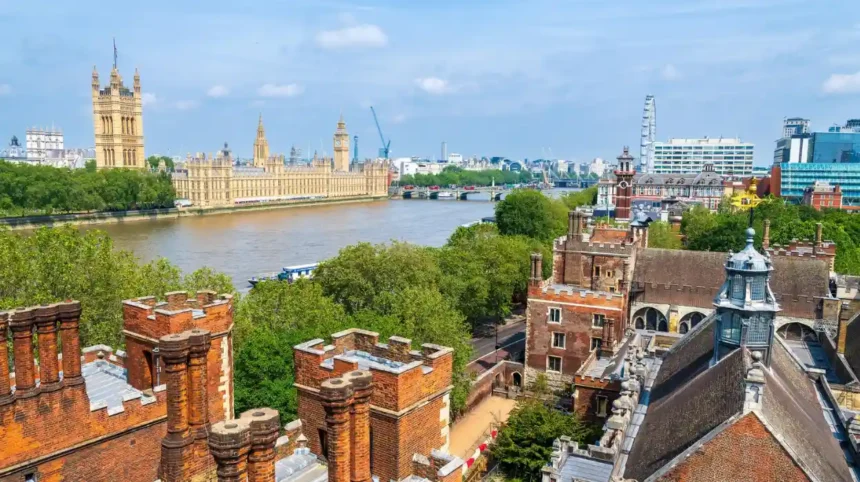
Lambeth’s position explains much of its traditional character. The borough occupies the southern side of the Thames opposite Westminster. The river has shaped transport, commerce, settlement and recreation throughout London’s history.
The stretch between Westminster Bridge and Vauxhall Bridge contains several important heritage landmarks. Lambeth Council’s design guidance identifies Lambeth Palace, St Mary-at-Lambeth, Lambeth Bridge and the surrounding historic townscape as important elements of the riverside character.
Lambeth also contains places associated with different periods of London’s development. Lambeth Palace represents medieval and ecclesiastical London. The Garden Museum occupies the former St Mary-at-Lambeth Church. The Southbank Centre represents post-war cultural London. The Royal Vauxhall Tavern represents Victorian public-house architecture and London’s LGBTQ+ cultural history.
This mixture makes Lambeth particularly useful for visitors who want more than postcard landmarks. A traditional London visit here can include architecture, walking, food, entertainment, public transport and local history within one itinerary.
The borough’s heritage also demonstrates how London changed over time. River crossings encouraged development. Railways transformed Vauxhall. Embankment construction reshaped the Thames frontage. Markets supported expanding communities. Cultural venues created new forms of public entertainment.
As you explore the modern riverside, you are crossing land with a deep heritage. Read about the full to understand its origins.
Where can visitors experience historic Lambeth Palace and medieval London?
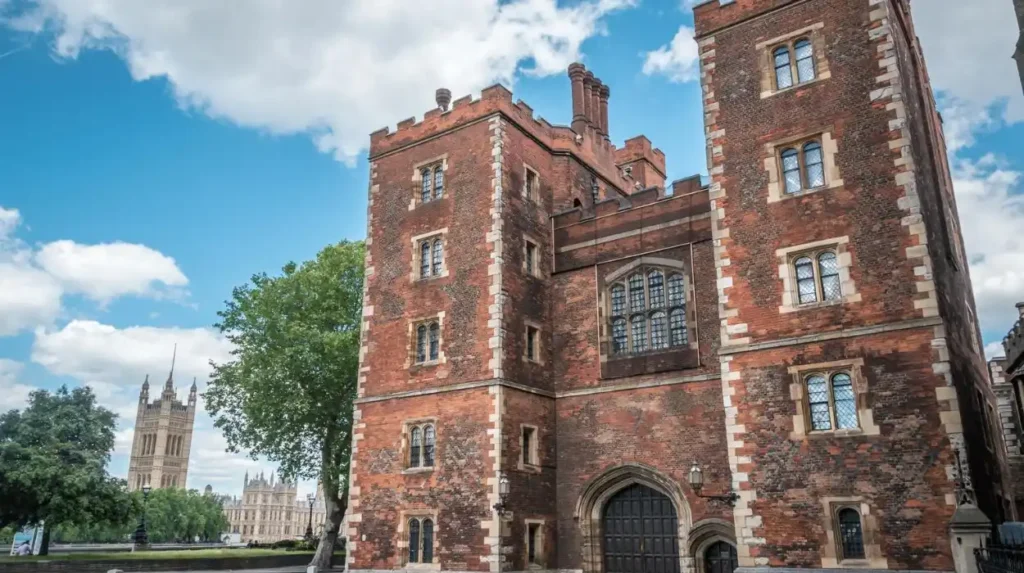
Lambeth Palace provides one of the clearest connections with medieval London because it has served as the London residence of the Archbishop of Canterbury for centuries and remains one of the capital’s important surviving medieval sites beside the River Thames.
Lambeth Palace stands on Lambeth Palace Road beside the Thames. It is the London residence of the Archbishop of Canterbury, the senior bishop and principal leader of the Church of England. The site has been associated with the archbishops for many centuries.
The palace developed during the medieval period. Lambeth Council’s historical records identify building work at Lambeth Palace during the 1300s. Its location beside the Thames reflects the importance of river transport before modern bridges and railways transformed movement across London.
Visitors can experience parts of the palace through guided tours. Visit London identifies the Crypt, Guard Room, Chapel and Library among the areas available on tours, which require advance booking.
The Library is particularly significant because Lambeth Palace has a long association with religious scholarship and historical documents. The palace complex also demonstrates the architectural layers that developed around the Thames.
A visit works well as part of a traditional riverside itinerary. Start at Westminster Bridge, walk along the Thames towards Lambeth Palace, and continue towards St Mary-at-Lambeth and the Garden Museum. This route connects Westminster views with some of Lambeth’s oldest surviving heritage.
The surrounding area also contains Lambeth Bridge. The present bridge opened in 1932, replacing an earlier suspension bridge that opened in 1862. Historic England records Lambeth Bridge as part of a long-established Thames crossing point where people have crossed the river since at least the medieval period.
This makes the Lambeth Palace area especially valuable for visitors interested in traditional London architecture. The experience combines a royal and religious landscape, historic bridges, riverside views and old ecclesiastical buildings within a compact area.
Can visitors experience traditional London architecture at the Garden Museum?
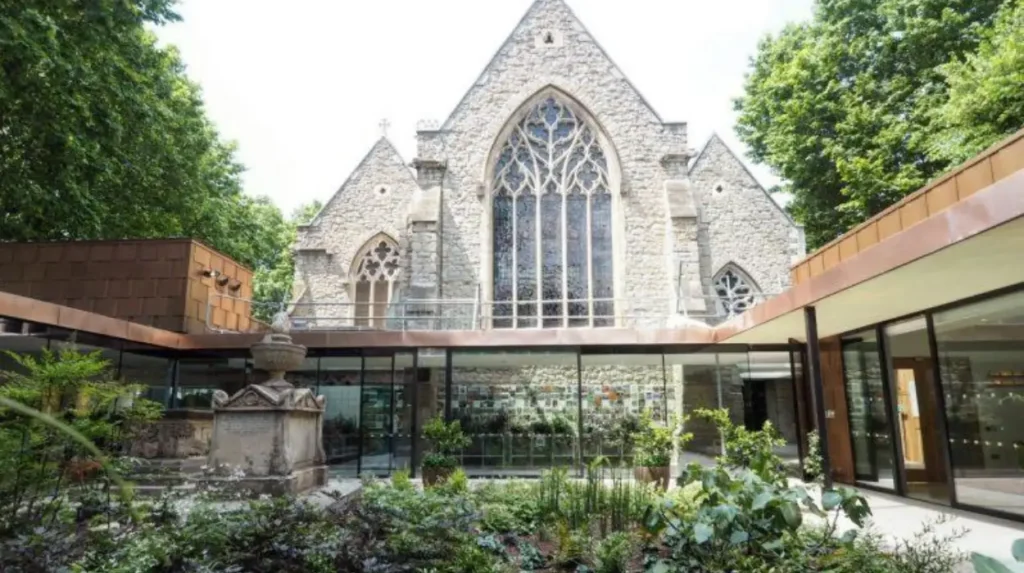
The Garden Museum offers a traditional London heritage experience inside the former St Mary-at-Lambeth Church, combining a medieval church tower, historic monuments, John Tradescant’s tomb, garden history and views towards Lambeth Palace beside the Thames.
The Garden Museum occupies the historic former St Mary-at-Lambeth Church beside Lambeth Palace. The church site dates back to the medieval period, while its surviving tower dates from the fourteenth century.
The Garden Museum states that a wooden church stood on the site in 1062. The church was later rebuilt in stone and became associated with the Archbishops of Canterbury and their London residence at Lambeth Palace. The Domesday Survey of 1086 also records the church.
The medieval tower is especially important. The Garden Museum identifies it as the oldest surviving structure in the London Borough of Lambeth. Repairs were carried out during 1834–35, but much of the tower remains connected with its medieval construction.
The churchyard contains the tomb of John Tradescant, a seventeenth-century gardener and plant collector. Tradescant settled in Lambeth in 1629 and developed a garden and collection that became known as the Ark. His work forms an important part of Britain’s gardening heritage.
The building was threatened with demolition during the twentieth century. Rosemary and John Nicholson established a campaign to save it, and the Garden Museum was founded in 1977. The museum describes the rescue as an important architectural conservation project.
Today, the museum is Britain’s only museum dedicated to the art, history and design of gardens. Its collection connects historic gardening with architecture, horticulture, design and British cultural history.
For visitors seeking traditional London character, the value of the Garden Museum extends beyond its exhibitions. The building itself provides the experience. Medieval masonry, historic monuments, a church tower and a riverside setting create a direct connection with older London.
The Garden Museum also provides a useful contrast with the modern buildings along the South Bank. A visitor can see a medieval religious structure, a modern cultural centre and contemporary London architecture within a relatively short walk.
What traditional London experience can visitors find along the South Bank?
The South Bank combines Thames-side walking with historic cultural institutions, modernist architecture, public spaces, street entertainment and major London views, making it one of Lambeth’s strongest locations for experiencing the capital’s long transition from post-war Britain to modern London.
The South Bank is one of Lambeth’s most recognisable visitor areas. The Queen’s Walk provides a pedestrianised riverside route with views across the Thames towards Westminster and the City.
The Southbank Centre is central to this experience. It includes the Royal Festival Hall, Queen Elizabeth Hall, Purcell Room and Hayward Gallery. The Royal Festival Hall opened in 1951 as part of the Festival of Britain. It became a major London cultural venue and remains a Grade I listed building.
The Festival of Britain was a national exhibition held in 1951 to promote British art, science, industry and design after the Second World War. The Royal Festival Hall was the only permanent building constructed for the main festival site.
The Royal Festival Hall has a capacity of approximately 2,700 people. Its Open Foyer policy began in 1983, allowing the public to access the building during the day rather than only around performances.
The Southbank Centre’s history also records the development of London’s cultural life after the Second World War. The Hayward Gallery, Queen Elizabeth Hall and Purcell Room were added in the 1960s. The Undercroft later became associated with the development of British skateboarding.
The traditional London experience here therefore differs from medieval heritage. It represents twentieth-century London. Visitors see a city rebuilding itself after war, investing in public culture and developing new forms of entertainment.
The riverside setting adds another traditional feature. Thames walks have long been central to London’s visitor culture. From the South Bank, visitors can see Westminster, the Houses of Parliament and bridges crossing the river.
The area also works well for digital nomads and business travellers during downtime. The public spaces, cafés, cultural venues and pedestrian routes create opportunities to combine sightseeing with short breaks between other activities.
In 2026, the Southbank Centre is celebrating its 75th anniversary, marking 75 years since the Royal Festival Hall opened for the Festival of Britain. The centre states that more than 3.7 million people visited in 2024.
Is the London Eye part of a traditional London sightseeing experience in Lambeth?
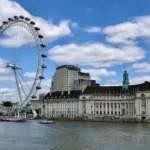
The London Eye provides a modern landmark experience while connecting visitors with traditional London sightseeing through panoramic views of Westminster, the Thames, St Paul’s Cathedral and central London landmarks from its South Bank position.
The London Eye stands beside the River Thames on the South Bank. It opened to passengers in March 2000 after construction began in 1998. The attraction was designed by architects David Marks and Julia Barfield as a millennium landmark.
The structure reaches 135 metres in height and has 32 passenger capsules. The capsules represent London’s 32 boroughs. Each capsule can accommodate up to 25 passengers, while a complete rotation takes approximately 30 minutes.
The London Eye is not historic in the medieval or Victorian sense. Its importance comes from its role in modern London. It became a permanent feature after originally being conceived as a temporary millennium attraction.
For traditional sightseeing, its main value is the view. From the capsules, visitors can identify major London landmarks including the Houses of Parliament, Big Ben, St Paul’s Cathedral and sections of the Thames.
The attraction also demonstrates how London combines historic architecture with contemporary engineering. Westminster’s historic buildings, Lambeth’s riverside setting and the modern observation wheel form a single visual landscape.
This makes the London Eye useful for first-time visitors. A panoramic view provides geographical context before exploring the streets at ground level.
Visitors seeking a more traditional experience can combine the London Eye with a Thames walk. Walking before or after the ride allows the visitor to experience the river at street level while the observation wheel provides a wider view of London’s historic centre.
The London Eye also anchors the South Bank visitor economy. Its location places major cultural institutions, restaurants, riverside spaces and public transport connections within walking distance.
Where can visitors experience traditional theatre, pubs and entertainment in Vauxhall?
Vauxhall provides a traditional London entertainment experience through Victorian public-house architecture, historic performance culture and the Royal Vauxhall Tavern, a Grade II listed building associated with LGBTQ+ history and alternative cabaret.
Vauxhall has a long association with entertainment. The former Vauxhall Pleasure Gardens operated from the 1660s until 1859 and became one of London’s major destinations for music, food, fireworks, spectacle and social entertainment.
The Royal Vauxhall Tavern stands on part of the former pleasure gardens site. Historic England identifies the building as dating from 1860–62 and lists it at Grade II. The building is recognised for its architectural and historic importance.
The Royal Vauxhall Tavern is particularly important to London’s LGBTQ+ history. Historic England describes it as one of the capital’s longstanding LGBTQ+ venues and highlights its role as a performance space and community venue.
The building itself displays Victorian public-house architecture. Its curved frontage, brick construction, stucco detailing and internal cast-iron columns reflect the nineteenth-century redevelopment of Vauxhall.
This is an important part of understanding traditional London. Historic London is not only associated with royal buildings, churches and monuments. Pubs, theatres and entertainment venues also form part of the city’s social history.
Vauxhall’s earlier entertainment tradition was highly diverse. The pleasure gardens attracted aristocrats, writers, middle-class families, workers and other visitors. The site became associated with music, food, drinking and public spectacle.
The Royal Vauxhall Tavern continues the area’s connection with performance. Its LGBTQ+ history adds another layer to the traditional London experience by showing how London’s entertainment culture changed across generations.
Visitors should distinguish between historical significance and current programme information. Events, performances and opening arrangements change, so checking the venue’s current information before travelling is necessary.
Vauxhall also works well as part of a walking route. Visitors can combine the Thames, Vauxhall Bridge, Vauxhall Pleasure Gardens and the Royal Vauxhall Tavern before continuing towards Kennington or central Lambeth.
How can visitors experience traditional London markets and neighbourhood life in Brixton?
Brixton provides a traditional London neighbourhood experience through covered markets, independent traders, food businesses, street activity and strong Black Caribbean cultural heritage, showing how South London’s traditional market culture developed alongside migration and community life.
Brixton sits in the southern part of Lambeth and provides a different experience from the central riverside. Its identity is strongly connected with markets, music, food, independent businesses and community history.
Brixton Village developed from the market and shopping environment that expanded during the nineteenth and twentieth centuries. Brixton Village records that Brixton became a major shopping centre for south London during the nineteenth century and that its market developed from outdoor trading in fresh produce and household goods.
Electric Avenue is another important part of the area’s history. It was built during the 1880s and became the first market street in Britain to receive electric lighting. Market Row was later constructed in 1928.
The Brixton Village complex includes the former Granville Arcade, opened in 1937. The arcade connects Coldharbour Lane, Atlantic Road and Popes Road and remains an important part of Brixton’s built environment.
Brixton’s twentieth-century history is also closely connected with migration. Caribbean communities became an important part of Brixton’s population after the Second World War. The arrival of the Empire Windrush at Tilbury in 1948 became a major symbol of post-war Caribbean migration to Britain.
This heritage is visible through food, music, businesses, public spaces and community activity. Historic England recognises Brixton’s markets as important symbols of the social and cultural impact of the Black Caribbean community in post-war Britain.
Brixton therefore expands the definition of a traditional London experience. Tradition includes established markets and architecture, but it also includes cultural practices that became part of London through migration and community development.
For visitors, a market visit provides an opportunity to experience everyday London rather than only formal attractions. Browsing food stalls, walking through covered arcades and exploring nearby streets creates a neighbourhood-focused itinerary.
Brixton also works particularly well for visitors with limited time. Brixton Underground station provides a direct connection to central London, while the market areas are concentrated around the town centre.
How can visitors build a traditional London itinerary across Lambeth?
A traditional Lambeth itinerary works best by combining the Thames, Lambeth Palace, the Garden Museum, South Bank, Vauxhall and Brixton, creating a route that connects medieval heritage, Victorian entertainment, markets, cultural institutions and modern London landmarks.
A one-day itinerary can begin at Westminster Bridge. The bridge provides immediate views of the Thames, the Palace of Westminster and Lambeth’s riverside skyline.
Walk south along the Thames towards Lambeth Palace. This section introduces the historic relationship between Lambeth and Westminster. The river crossing, palace and surrounding architecture establish the area’s medieval and ecclesiastical context.
Continue towards the Garden Museum at St Mary-at-Lambeth. The museum provides access to one of the borough’s oldest surviving buildings and explains the history of British gardening through a historic church setting.
From the Garden Museum, continue towards the Southbank Centre. The route shifts from medieval London to twentieth-century London. The Royal Festival Hall provides a direct connection with the 1951 Festival of Britain and Britain’s post-war cultural history.
The London Eye can then provide a panoramic view of the same landscape. Its elevated position helps visitors understand the relationship between the Thames, Westminster, Lambeth and the wider capital.
For an evening experience, continue towards Vauxhall. The Royal Vauxhall Tavern provides a connection with Victorian pub architecture and London’s LGBTQ+ performance history. Historic England’s Grade II listing confirms its national heritage significance.
A separate half-day itinerary can focus on Brixton. Start at Brixton Village and continue through Market Row and Electric Avenue. This route provides a strong introduction to market culture, local food and Black Caribbean heritage.
Visitors with limited time should prioritise the riverside section. Visitors interested in architecture should prioritise Lambeth Palace and the Garden Museum. Visitors interested in cultural history should include Southbank Centre and the Royal Vauxhall Tavern. Visitors interested in food and neighbourhood culture should spend time in Brixton.
Public transport makes these areas practical to combine. Waterloo and Waterloo East serve the South Bank area, Lambeth North provides access to the northern part of the borough, Vauxhall provides rail and Underground connections, and Brixton is served by the Victoria line.
The exact order should reflect opening hours and booked entry times. Guided visits to heritage attractions require advance planning, while riverside walking remains the simplest flexible component.
Explore More Area Guide
Best Thames Riverside Sights in Lambeth, London
How Much Can You See in Lambeth in One Day? South London 2026
Why does Lambeth remain relevant for visitors seeking traditional London character?
Lambeth remains relevant because its heritage is still embedded in active streets, cultural venues, markets, public houses, museums, bridges and riverside spaces, allowing visitors to experience London’s historic development as a living urban environment rather than a collection of isolated monuments.
Lambeth’s strongest heritage feature is continuity. Historic sites remain connected to modern uses. Lambeth Palace remains an active ecclesiastical residence. The former St Mary-at-Lambeth Church operates as the Garden Museum. The Royal Festival Hall continues as a major performance venue.
This continuity creates a more complete understanding of London. Visitors can see how buildings change purpose while retaining historical significance.
The borough also demonstrates the importance of transport infrastructure. Westminster Bridge, Lambeth Bridge, Vauxhall Bridge, railways and Underground stations helped integrate Lambeth into the expanding capital.
Vauxhall’s development illustrates this particularly clearly. Vauxhall Bridge opened in 1816 and accelerated development in the surrounding area. Vauxhall Station opened in 1848 after the railway reached the area. The railway changed the relationship between the riverside and inland districts.
The Albert Embankment later transformed the Thames frontage between 1866 and 1870. The project reclaimed land, addressed flooding and improved London’s drainage infrastructure. It also removed older industrial and riverside structures.
These changes explain why Lambeth looks different from the medieval core of the City of London. Much of its visible character comes from layers of development rather than one architectural period.
The borough also demonstrates London’s social diversity. Brixton’s Black Caribbean heritage, Vauxhall’s LGBTQ+ history and the South Bank’s international cultural programme all form part of modern London’s traditional identity. Historic England’s approach to heritage explicitly recognises buildings and places connected with communities whose histories were previously less visible.
For visitors, this means a traditional London experience does not require limiting a trip to old buildings. Traditional character exists in markets, pubs, theatres, churches, public spaces, bridges, food businesses and community venues.
Lambeth provides all these elements within one borough. Its location beside the Thames also gives visitors an efficient route through different periods of London’s history.
The most valuable approach is therefore to explore Lambeth on foot where possible, use public transport between neighbourhoods, and allow time for both formal attractions and ordinary streets. The combination reveals how London’s historic character continues to operate in everyday urban life.
What is the best way to experience traditional London in Lambeth?
The best approach is to combine a Thames walk with Lambeth Palace, the Garden Museum and Southbank Centre, then add Vauxhall or Brixton for evening entertainment, markets and community history, creating a balanced experience of Lambeth’s traditional London character.
A traditional Lambeth experience begins with the Thames because the river explains the borough’s geography and history. Westminster Bridge, Lambeth Bridge and the riverside walkway provide direct connections between historic London landmarks.
Lambeth Palace should be the principal heritage stop for visitors interested in medieval London. The Garden Museum should follow for historic architecture and gardening heritage.
The Southbank Centre provides the strongest twentieth-century cultural connection. The Royal Festival Hall’s 1951 opening links Lambeth with the Festival of Britain and the transformation of the South Bank into a major cultural destination.
The London Eye adds a modern landmark to the itinerary and provides panoramic views across the same historic landscape. Its 135-metre height makes it particularly useful for understanding London’s central geography.
Vauxhall adds another historical layer through its connection with Vauxhall Pleasure Gardens and the Royal Vauxhall Tavern. The area demonstrates London’s long tradition of public entertainment and changing social culture.
Brixton provides the neighbourhood element. Its markets, covered arcades, food businesses and Black Caribbean heritage demonstrate how traditional London culture continues to evolve through communities.
Together, these places create a comprehensive traditional London experience in Lambeth. The itinerary covers medieval heritage, Victorian architecture, twentieth-century cultural development, modern landmarks, markets, food, entertainment and community history.
Lambeth is therefore particularly suitable for visitors who want to understand London rather than simply photograph its most famous landmarks. Its attractions demonstrate how the capital developed around the Thames and how older places continue to serve contemporary residents and visitors.
The result is a London experience rooted in history but active in the present. Lambeth’s traditional character exists in its buildings, streets, riverfront, markets, cultural venues and communities.
Where can visitors experience traditional London in Lambeth?
Visitors can experience traditional London in Lambeth along the Thames, at Lambeth Palace, the Garden Museum, Southbank Centre, Vauxhall and Brixton. These areas combine historic architecture, markets, cultural venues, riverside scenery and long-established community traditions.