Key Points
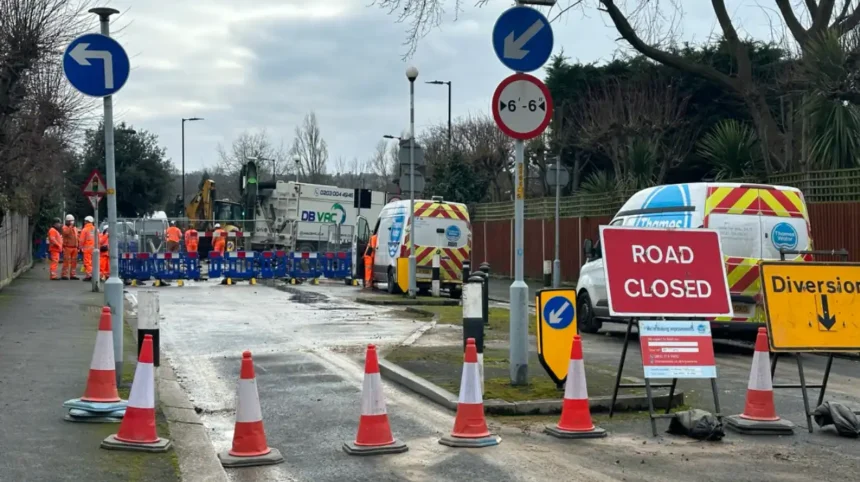
- Full Road Closure: The Spinney in Sidcup will be completely closed to through traffic across its entire length to facilitate essential infrastructure works.
- Project Duration: Mains replacement operations are scheduled to commence on Monday, 26 October, and are expected to last for up to 132 days, or roughly four months.
- Regulatory Order: Bexley Council has implemented a legal temporary traffic order, valid for up to 18 months, ensuring flexibility should unforeseen engineering delays occur.
- Intermittent Restrictions: Road closures and access prohibitions will only apply when actively indicated by physical traffic signs rather than continuously across the whole term.
- Strict Parking Prohibitions: All waiting and loading will be strictly prohibited along the full expanse of The Spinney while active restriction measures are in force.
- Official Diversion Route: Motorists will be redirected around the affected residential perimeter via The Grove and adjacent local links.
- Emergency Vehicle Exemptions: Emergency services and contracted maintenance vehicles carrying out the infrastructure upgrades remain exempt from the traffic orders.
- Contractor Oversight: The project is being directly executed by infrastructure provider MGroup Water acting on behalf of Thames Water.
Sidcup (South London News) October 23, 2026 – An entire residential thoroughfare in the London Borough of Bexley is preparing for four months of significant travel disturbance as major utility upgrades get underway. The Spinney, a quiet residential street in Sidcup, is set to be rendered entirely impassable to general traffic along its whole length to accommodate comprehensive mains replacement works.
As reported by reporter Ezekiel Bertrand of Newsquest local titles including London Now and the News Shopper, the substantial undertaking is being executed by specialist contractor MGroup Water operating on behalf of utility giant Thames Water. Work is scheduled to start on Monday, 26 October, marking the beginning of an extensive infrastructure overhaul designed to modernise local water supply networks.
To enable the engineering works, the local authority has instituted formal statutory measures. As detailed by Andrew Bashford, Head of Highways, Traffic and Infrastructure at Bexley Council, the authority officially issued a public notice confirming the making of a temporary traffic order on Wednesday, 21 October. The order grants legal permission to prohibit any vehicle from proceeding along the whole stretch of The Spinney while physical engineering activities are in progress.
Although the formal legal order remains valid for a maximum statutory window of 18 months, municipal notices confirm that the physical replacement works are anticipated to be completed within 132 days—representing approximately four calendar months.
What Traffic and Parking Controls Will Be Implemented?
Motorists navigating the area will not necessarily encounter a continuous four-month total blackout, as municipal officials confirmed that restriction measures will apply strictly when denoted by physical site signage. However, whenever active works take place, the prohibition on vehicular movement will cover the entire street.
In addition to driving bans, kerbside access will be severely curtailed to allow heavy machinery and trenching equipment space to operate safely. Council documentation confirms that both waiting and loading will be completely banned along the full length of The Spinney whenever restrictions are operational.
To mitigate local gridlock, Bexley Council has laid out designated alternate routes for non-exempt traffic. Motorists approaching the zone will be diverted via The Grove and returning sections of The Spinney. Emergency response vehicles as well as construction equipment directly engaged in the utility operation are explicitly exempt from all traffic prohibitions.
Public transparency regarding these closures has been facilitated via the Public Notice Portal, an online directory managed by the News Media Association (NMA) and supported by the Google News Initiative. The initiative pools statutory notices published across almost 900 local and regional newspaper titles, ensuring local residents remain informed about local planning, licensing, and highway restrictions.
Background to the Infrastructure Upgrade
What Is the Context Behind Water Mains Replacements in Bexley?
The upcoming mains replacement scheme in Sidcup reflects a broader regional push by Thames Water to address ageing underground utility networks across South East London. Residential enclaves within the London Borough of Bexley—including suburban developments such as the High Beeches area adjacent to The Spinney—largely date back to the 1930s expansion.
Much of the sub-surface pipe infrastructure laid during the interwar residential boom consists of legacy iron pipework that has become increasingly prone to degradation, fracture, and structural leakage over decades of continuous operation. In recent years, South East London has experienced repeated burst mains incidents, leading to severe localized flooding, low water pressure, and unplanned emergency street excavations.
To reduce water loss and protect long-term supply stability, Thames Water and its main delivery partner, MGroup Water, have stepped up planned replacement programmes across outer London boroughs. Replacing legacy mains with modern, flexible polyethylene piping requires extensive deep trenching along residential carriageways. Because narrow suburban streets like The Spinney lack the width to safely separate open construction trenches from live vehicular traffic, full carriageway closures and strict kerbside parking bans are required under modern health and safety legislation.
Future Impact and Predictions
How Will This Four-Month Works Project Affect Local Stakeholders?
The four-month execution window for the scheme on The Spinney will have distinct operational, logistical, and economic consequences for residents, nearby businesses, and the wider municipality.
| Stakeholder Group | Primary Challenge | Expected Impact & Mitigation |
| Local Residents | Loss of kerbside parking and direct drive access | Severe parking displacement into surrounding streets; necessity of off-site parking; potential delivery disruptions. |
| Commuters & Motorists | Localized traffic delays along diversion corridors | Increased travel times around The Grove and local connecting routes during peak hours. |
| Emergency & Municipal Services | Access planning for waste collection and response units | Direct statutory exemption for emergency vehicles; refuse collection coordinated via temporary holding points. |
| Utility Customers | Temporary supply interruptions during pipe cut-ins | Improved long-term water pressure, reduced leak risks, and fewer emergency outages post-completion. |
Impact on Area Residents
For households situated along The Spinney, the four-month project will cause notable daily inconvenience. Total bans on waiting and loading mean residents without private off-street driveways will have to park on neighboring roads, placing additional strain on available parking spaces in nearby streets such as The Grove and St James’ Way. Delivery drivers, waste collection vehicles, and postal services will need to adjust routes around active work zones. However, once completed, residents should benefit from a more reliable water supply with significantly lower risks of sudden mains bursts or emergency outages.
Impact on Surrounding Traffic and Infrastructure
While The Spinney is primarily a residential street, closing its full length will redirect traffic onto surrounding local roads. The designated diversion via The Grove is expected to handle higher traffic volumes during morning and afternoon commute hours. Nearby main thoroughfares connecting Sidcup to North Cray and Bexleyheath may also experience minor knock-on delays during peak times as drivers navigate around local road closures.
Long-Term Network Reliability
From an operational perspective, completing these planned works should reduce the need for reactive emergency road openings by Thames Water contractors in the future. Replacing aging pipework under controlled statutory conditions lowers the risk of catastrophic pipe ruptures, helping to preserve carriageway surfaces and protecting local utility infrastructure for decades to come.