Key Points
- Conviction and Sentence: Kevin Rees, 63, has been jailed for 15 years at the Old Bailey after being found guilty of causing an explosion likely to endanger life, following an investigation led by Counter Terrorism Policing London.
- Terrorism Connection: The trial judge determined that the offence was committed with a statutory terrorism connection, handing down a 15-year custodial term for the bombing and a concurrent three-year sentence for possessing three prohibited stun guns.
- Method of Attack: Investigators established that Rees used a homemade metal cylinder bomb packed with low-explosive “black powder” to deliberately destroy an Ultra Low Emission Zone (ULEZ) camera.
- Widespread Destruction: The detonation hurled sharp shrapnel and debris up to 100 metres, shattering a child’s bedroom window frame, penetrating a passing vehicle’s seat, damaging nearby buildings, and narrowly missing a passing public bus.
- Forensic Evidence: Police uncovered precursor explosive chemicals—including aluminium powder and iron oxide—in postal packages and loft storage at his Sidcup address, along with deleted photographs of the target and crime scene on his mobile phone.
- Police Commendation: The sentencing judge officially commended the Counter Terrorism Policing London unit and local Bexley officers for their comprehensive forensic and investigative execution.
Sidcup (South London News) October 2, 2026 — A 63-year-old anti-ULEZ campaigner who detonated a homemade explosive device in a residential south-east London street has been sentenced to 15 years in prison after a judge ruled the attack carried a statutory terrorism connection.
- Key Points
- How Did the Counter-Terrorism Investigation Uncover the Explosive Attack?
- What occurred on the night of the explosion in Shuttle Close?
- What was the physical extent of the blast radius and structural damage?
- What Forensic Evidence Led to the Arrest and Conviction of Kevin Rees?
- How did CTP London officers trace the suspect to his Sidcup home?
- What digital evidence was recovered from the defendant’s mobile device?
- What Were the Official Responses from Police Leadership?
- What Is the Background of the ULEZ Camera Attacks Development?
- What Is the Prediction for How This Development Can Affect London Communities and Campaigners?
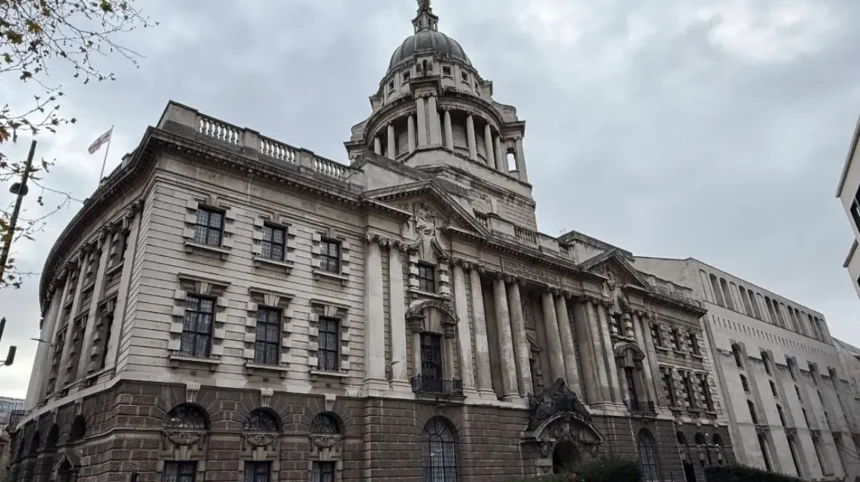
As reported by Metropolitan Police crime correspondents, Kevin Rees, of Harcourt Avenue, Sidcup, was sentenced at the Central Criminal Court (the Old Bailey) on Friday, 2 October, following his conviction at Woolwich Crown Court. The court heard how Rees deployed a metal cylinder packed with explosive powder to destroy a newly installed Ultra Low Emission Zone (ULEZ) camera on 6 December 2023, motivated by extreme hostility towards the clean air expansion scheme.
Handing down the custodial term, the presiding judge determined that the offence was executed with a clear terrorism connection, sentencing Rees to 15 years’ imprisonment for causing an explosion likely to endanger life or cause serious damage to property. The court simultaneously imposed a concurrent three-year prison term for three counts of possessing prohibited weapons, namely homemade stun guns. In his final sentencing remarks, the judge formally commended the Counter Terrorism Policing (CTP) London investigation team for their forensic precision and case assembly.
How Did the Counter-Terrorism Investigation Uncover the Explosive Attack?
What occurred on the night of the explosion in Shuttle Close?
As detailed in evidence presented by prosecutors at Woolwich Crown Court, police investigators reconstructed Rees’s movements on the evening of 6 December 2023. Rees travelled in his Smart car from his home in Sidcup to the vicinity of Shuttle Close shortly after 6:20 pm. The ULEZ camera at the location had been fitted earlier that same day; in an unrelated event, the structure had already been cut down by another individual, who was separately identified, arrested, and convicted by the same policing team.
Rees parked his vehicle, walked a short distance to the camera mounting, planted the metal cylinder device, and lit an attached fuse. A eyewitness observed Rees walking hurriedly away from the immediate scene seconds before the improvised device detonated.
What was the physical extent of the blast radius and structural damage?
As documented by forensic collision and explosive experts, the force of the blast generated significant localized kinetic force and propelled high-velocity shrapnel across a wide area. A nearby delivery van sustained extensive physical damage, whilst the force blew out the tyre of a parked car. Sharp fragments of metal were driven directly through the bodywork of a passing motorist’s car, embedding into the lower structure of a passenger seat.
The surrounding residential infrastructure absorbed substantial secondary impacts. The explosion damaged a brick perimeter wall, a house front porch, a garden shed, and a children’s Wendy house. Metal fragments were hurled over 100 metres through the air, striking and damaging the window frame of a young child’s bedroom. A passing public bus travelling down the roadway narrowly avoided the flying debris by mere seconds, as captured on onboard CCTV footage. Authorities confirmed that despite the severe destruction, no members of the public suffered physical injuries.
What Forensic Evidence Led to the Arrest and Conviction of Kevin Rees?
How did CTP London officers trace the suspect to his Sidcup home?
As reported by legal affairs writers covering the Woolwich Crown Court trial, CTP London detectives executed a targeted arrest operation on 18 December 2023, detaining Rees at his residence in Harcourt Avenue, Sidcup. A detailed forensic search of the premises yielded critical chemical components and precursor materials associated with pyrotechnic and explosive formulations.
Officers seized an unopened postal package addressed directly to Rees containing fine aluminium powder, alongside a plastic bag filled with iron oxide—two primary compounds required to prepare low-explosive thermite or related compositions. Further search operations inside the property’s loft space revealed chemical storage containers and documentation confirming an active research interest in explosive manufacturing.
What digital evidence was recovered from the defendant’s mobile device?
As demonstrated by police cyber forensic analysts in court evidence, digital examination of Rees’s mobile phone and social media accounts revealed systematic anti-ULEZ activity and attempts to conceal evidence:
- Social Media Broadcasting: Detectives identified multiple public posts published by Rees advocating opposition to ULEZ infrastructure and explicitly encouraging the public destruction of monitoring equipment.
- Pre-Attack Reconnaissance: Analysts recovered a deleted photograph taken on 6 December 2023 depicting the installation of the camera at Willersley Avenue. System logs showed Rees deleted this file on 7 December.
- Post-Attack Documentation: The device contained saved screenshots of Facebook posts discussing the explosion, as well as a photograph taken by Rees at Willersley Avenue while emergency services were responding to the scene. These images were intentionally erased from the device on 8 December.
- Prohibited Weapons Manufacture: Investigators located three functional, homemade electrical stun guns hidden within the residential premises, forming the basis of the weapons convictions.
What Were the Official Responses from Police Leadership?
How did local policing commanders characterize the safety risks?
As stated by Detective Chief Superintendent James Derham, who leads local policing across the London Borough of Bexley, the incident presented an extraordinary threat to public safety:
“It was miraculous that nobody was killed or seriously injured in the large explosion caused by Rees. He showed a complete disregard for the welfare and safety of the people who live in, or were travelling through, the area at the time of the explosion – all because he was unhappy with the ULEZ scheme. CCTV from a bus travelling down the road at the time shows how it narrowly missed the blast of debris by seconds.
“The conviction and sentencing have been possible due to the commitment and professionalism of our CTP London Detectives, supported by our frontline policing colleagues in Bexley. I’d like to thank the local community for their support and understanding while we responded and investigated this incident, and I hope this sends a very strong message of the dangers and consequences of using home-made explosives. Damage of any kind is completely unacceptable, and this particular incident demonstrates the very serious consequences for those responsible when taken to this extreme.”
What Is the Background of the ULEZ Camera Attacks Development?
The Ultra Low Emission Zone (ULEZ) was originally introduced in central London in April 2019 by Transport for London (TfL) to curb nitrogen dioxide ($NO_2$) levels and fine particulate matter emissions from non-compliant vehicles. The zone was subsequently expanded to inner London within the North and South Circular roads in October 2021.
The political and social climate surrounding the scheme escalated significantly when the Mayor of London expanded the ULEZ across all 32 London boroughs, bringing outer London regions—including Bexley and Sidcup—under the daily £12.50 charging regime. The expansion provoked organized civic campaigns, legal challenges from outer London councils, and the emergence of grassroots opposition groups.
Alongside peaceful political opposition, a fringe subculture of direct-action vandalism developed. Autonomous individuals calling themselves “Blade Runners” began systematically targeting enforcement infrastructure. Initial methods of opposition primarily involved severing power lines, spray-painting camera lenses, or unscrewing mounting brackets. However, the progression from basic physical sabotage to the construction and deployment of improvised explosive devices (IEDs) marked a severe escalation in tactical methods, triggering the direct involvement of Counter Terrorism Policing London to treat targeted infrastructure attacks as serious national security and public safety threats.
What Is the Prediction for How This Development Can Affect London Communities and Campaigners?
The judicial ruling establishing a formal statutory terrorism connection for ULEZ infrastructure sabotage creates a far-reaching legal precedent that will fundamentally alter how future acts of criminal damage against public property are prosecuted and penalized.
1. Deterrence Effect on Anti-ULEZ Activists and Direct Action Groups
The imposition of a 15-year custodial sentence sends an unequivocal legal warning to radical anti-ULEZ activist networks. By classifying the deployment of explosive devices against civic monitoring property under counter-terrorism statutory frameworks, the judiciary has eliminated any legal ambiguity regarding political protest defenses. Individuals engaging in physical sabotage face the prospect of double-digit prison sentences, extended licence periods, and stringent post-release notification requirements, which will likely deter fringe actors from escalating physical interventions.
2. Operational Security and Policing Protocols for Public Infrastructure
Transport for London and the Metropolitan Police Service are anticipated to expand tactical security measures around sensitive traffic monitoring equipment. Greater London communities may witness increased deployment of high-resolution surveillance, concealed monitoring systems, and accelerated forensic response units around newly installed civic technology. While these measures protect physical assets, local residents in outer boroughs may experience heightened security patrols, temporary street closures during suspicious package alerts, and prolonged investigative operations surrounding public infrastructure maintenance.