Key Points
- Kevin Rees, a 64-year-old retired engineer from Sidcup, was sentenced to 15 years in prison at the Old Bailey for detonating an explosive device targeting an Ultra Low Emission Zone (ULEZ) camera.
- Judge Anthony Bate ruled that Rees’ actions possessed a terrorist connection due to the nature and intent of the explosive attack.
- The device used was a metal cylinder filled with explosive powder commonly found in commercial fireworks, which was placed along Willersley Avenue.
- Prosecutor Simon Denison KC noted the targeted camera had been installed around 12:00 pm on December 6, 2023, and was initially cut down by another activist, Stephen Harwood-Stamper, hours before the blast.
- The detonation occurred at approximately 6:45 pm, casting dangerous shrapnel into a nearby parked vehicle and a moving car, narrowly missing the driver.
- The conviction forms part of a wider series of jailings recorded across South London courts throughout September, involving offenses ranging from direct anti-ULEZ sabotage to violent crimes.
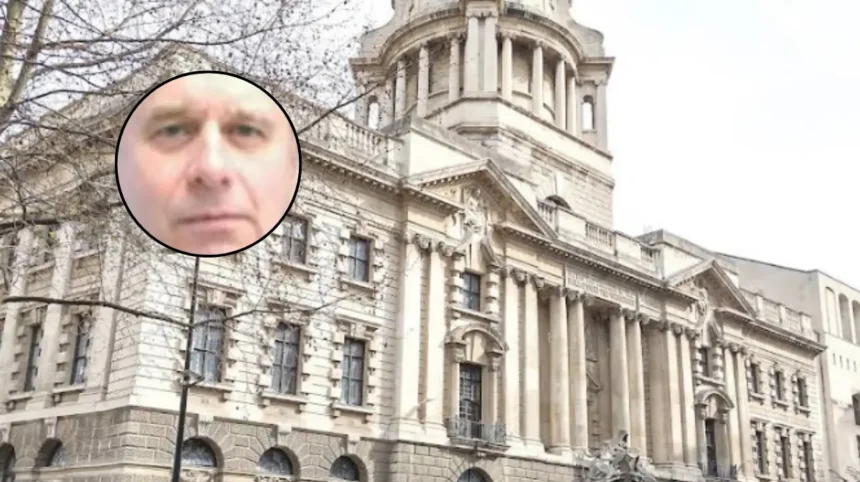
Sidcup (South London News) October 5, 2026 – A 64-year-old retired engineer, Kevin Rees, has been sentenced to 15 years in prison at the Old Bailey following a court determination that his detonation of a home-made explosive device against an Ultra Low Emission Zone (ULEZ) camera held a statutory terrorist connection. The sentencing of Rees, residing at Harcourt Avenue in Sidcup, tops a broader series of court judgments handed down across South London during September, which saw several offenders convicted for severe public safety breaches and violent crimes.
What Happened During the Willersley Avenue ULEZ Explosion?
The incident occurred on December 6, 2023, along Willersley Avenue in Sidcup, a suburban residential street that serves as a active bus route. Court proceedings revealed that Transport for London contractor infrastructure had installed a brand-new ULEZ monitoring camera at approximately 12:00 pm that day. Within hours of installation, another anti-ULEZ activist, Stephen Harwood-Stamper, cut down the camera pole.
Later that evening, at around 6:45 pm, Kevin Rees approached the fallen installation with a metal cylinder packed with explosive low-grade pyrotechnic powder commonly utilised in commercial fireworks. Rees positioned the home-made device alongside the camera equipment, ignited the fuse, and vacated the immediate area.
Addressing the Old Bailey during prosecution submissions, prosecutor Simon Denison KC described the setting and potential consequences of the detonation. As detailed in trial records, Simon Denison KC stated that:
“Willersley Avenue is a residential avenue with houses on both sides and is a bus route. At that time of day there is significant vehicle traffic passing through and pedestrians walking past.”
The subsequent explosion sent metal fragments and shrapnel travelling at high speed across the roadway. Shrapnel struck a stationary parked van alongside a moving vehicle passing through the residential street. Court transcripts noted that a projectile pierced the bodywork of the moving motor vehicle, where prosecutor Simon Denison KC observed that a piece “mercifully” missed the driver.
How Did the Court Conclude the Offending Constituted a Terrorist Connection?
Presiding over the case at the Central Criminal Court, Judge Anthony Bate reviewed forensic evidence, witness testimony, and safety assessments surrounding the construct of the home-made bomb. The court evaluated the composition of the metal cylinder and the placement of high-density pyrotechnic materials within a residential area during peak evening transit hours.
Judge Anthony Bate concluded that Kevin Rees’ deliberate deployment of an explosive device in a public space to advance an anti-ULEZ political objective satisfied the legal parameters necessary to establish a terrorist connection. Consequently, Judge Anthony Bate handed down a 15-year custodial sentence, citing the severe risk to public safety and the destruction of public infrastructure.
Background
The Ultra Low Emission Zone (ULEZ) was originally introduced by Transport for London (TfL) to reduce nitrogen dioxide pollution across Greater London by enforcing daily charges on non-compliant motor vehicles. In August 2023, the scheme was expanded to cover all 32 London boroughs, encompassing outer London suburbs such as Bexley and Sidcup.
Following the outer London expansion, opposition groups and individual activists—frequently self-identified as “Blade Runners”—engaged in campaign activities and direct action targeting ULEZ infrastructure. Acts of vandalism predominantly consisted of cutting camera power cables, spraying lenses with paint, or cutting down support structures. The incident on Willersley Avenue marked a notable escalation from mechanical sabotage to the manufacture and employment of improvised explosive devices in public thoroughfares, leading law enforcement agencies and counter-terrorism units to increase monitoring around key transport infrastructure across Outer London.
Prediction: How Will This Development Affect the Local Community and Public Infrastructure?
The sentencing of Kevin Rees and the formal legal classification of ULEZ sabotage as carrying a terrorist connection are likely to affect local residents, motorist activist groups, and local governance authorities in several key ways:
- Legal Precedent for Infrastructure Sabotage: The 15-year custodial sentence and the terrorism designation set a clear judicial standard. Individuals engaging in physical destruction of public monitoring property face elevated prosecution charges beyond standard criminal damage or arson, likely deterring planned direct action against road infrastructure.
- Increased Security and Monitoring in Residential Areas: Transport for London and local policing authorities are expected to maintain heightened surveillance and security patrols around newly reinstalled camera networks in outer London suburbs like Sidcup to safeguard municipal workers and prevent secondary property damage.
- Impact on Local Residents and Public Safety Measures: For residents living along busy suburban thoroughfares and bus routes like Willersley Avenue, the legal resolution provides clarity following an incident that posed direct physical risks to passersby and motorists. Local councils may implement additional public safety reporting protocols to report suspicious activity around roadside infrastructure swiftly.