Key Points
- Foiled Tunnelling Attempt: A criminal gang attempted to dig through the wall of an adjacent business into a jewellery shop on Mitcham Road in Tooting, South London.
- Prompt Police Response: Metropolitan Police officers arrived at the scene at 3.12am on Friday, 17 July, within minutes of being alerted to a break-in.
- Direct On-Site Arrests: Officers arrested Laurentiu-Daniel Nitisoara, 38, in a nearby alleyway, whilst Ioan Asafeti, 39, was located and detained whilst hiding on a rooftop.
- Uncovered Equipment: Searching an adjacent massage parlour that the men had broken into, police seized bags of tools and equipment utilized in an attempt to breach the shop wall.
- Substantial Prison Sentences: Members of the organized gang have been sentenced to a collective total of more than 10 years in prison following their convictions.
- Link to Broader Offending: Detectives successfully linked the group to a wider series of high-value robberies with an estimated total loss of £700,000.
Tooting (South London News) October 24, 2026 — A high-profile criminal plot to breach a South London jewellery shop via an adjoining building has been thwarted by police officers, leading to the conviction and imprisonment of the perpetrators for more than 10 years in total.
- Key Points
- How Did the Metropolitan Police Thwart the Tooting Jewellery Shop Heist?
- What Evidence Linked the Suspects to Broader Criminal Activity Across the Region?
- What is the Background to Tunnelling and Subterfuge Methods in Commercial Heists?
- How Will This Development Impact South London Business Owners and Local Communities?
How Did the Metropolitan Police Thwart the Tooting Jewellery Shop Heist?
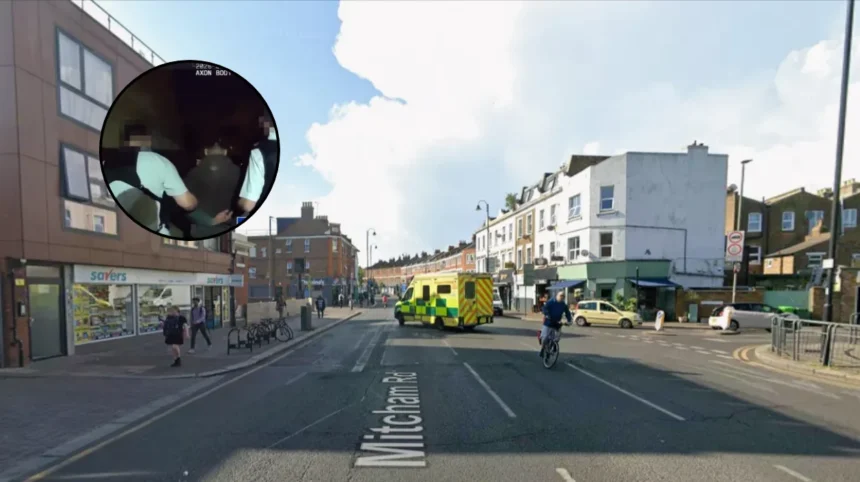
The attempt unfolded during the early hours of Friday, 17 July, on Mitcham Road in Tooting. According to official reports and body-worn video footage released by the Metropolitan Police Service, officers responded swiftly after being alerted to an ongoing burglary at approximately 3.12am.
Upon arriving at the scene within minutes of the alarm, response teams established a perimeter around the targeted row of commercial premises. Body-worn camera footage captured the moments officers searched the immediate vicinity, leading to the immediate arrest of 38-year-old Laurentiu-Daniel Nitisoara in an alleyway adjacent to the property.
Continuation of the search led officers to a rooftop above the commercial block, where a second suspect, 39-year-old Ioan Asafeti, was discovered hiding in an attempt to evade capture.
Following the initial arrests, investigating officers entered a neighboring massage parlour that had been broken into by the suspects. Inside the premises, police uncovered an active attempt to dig directly through an internal wall into the adjacent jewellery establishment. The search revealed multiple bags containing specialised tools and equipment intended to complete the masonry breach.
What Evidence Linked the Suspects to Broader Criminal Activity Across the Region?
Following the arrests on Mitcham Road, detectives launched an investigation to establish the full extent of the group’s activities. Through forensic analysis, surveillance review, and cross-jurisdictional intelligence gathering, investigative officers established links between the trio and a series of previous commercial burglaries and robberies.
Police records indicate that the criminal network had been operational across multiple locations, employing sophisticated methods to target high-value commercial sites. The wider conspiracy brought to light by detectives involved stolen goods, cash, and luxury items with an aggregate estimated value of £700,000.
The accumulated evidence was presented before the court, demonstrating a systematic pattern of planned commercial break-ins. The prosecution detailed how the gang deliberately selected neighboring, lower-security commercial properties to gain covert access to higher-value targets by breaching shared interior walls.
Following court proceedings, members of the gang received custodial sentences combining to more than 10 years for their respective roles in the Tooting attempt and the associated conspiracy offences.
What is the Background to Tunnelling and Subterfuge Methods in Commercial Heists?
The practice of gaining entry to high-value premises through adjoining, less-secure structures—often referred to as subterranean or breach burglaries—has a long history within organized commercial crime in the United Kingdom.
Traditionally, high-street jewellery shops and financial institutions invest heavily in reinforced street-level security, including heavy-duty shutters, reinforced glass display cases, and door-access controls. In response, organized burglary rings occasionally adopt tactics designed to bypass external physical barriers entirely by accessing neighboring properties such as vacant shops, residential flats, or service businesses like massage parlours and cafes.
Once inside an adjacent space, offenders typically utilize heavy masonry equipment, diamond-tipped drills, and hydraulic jacks to breach internal partition walls or floors during non-business hours, aiming to avoid triggering perimeter security alarms until entry to the main vault or showroom is completed.
Recent years have seen police forces across the United Kingdom deploy rapid-response tactics alongside body-worn video technology and aerial surveillance to counter these specialized methods. The integration of instant sensor alerts and coordinated multi-unit containment strategies has significantly reduced the window of time available for offenders to complete complex structural breaches.
How Will This Development Impact South London Business Owners and Local Communities?
The foiled heist and subsequent convictions carry notable implications for various stakeholders within the South London commercial ecosystem and the broader public:
Impact on Local High-Street Merchants and Jewellers
For business owners along commercial corridors like Mitcham Road, the successful interception provides reassurance regarding police response times to overnight alarms. However, the revelation of the gang’s methods is likely to prompt local commercial tenants to review security protocols not just for primary frontages, but also for shared boundary walls, basements, and secondary access routes. Insurance providers may similarly adjust risk assessment criteria for high-value retailers, placing greater emphasis on structural security measures in adjoining spaces.
Impact on Law Enforcement Strategy
The outcome validates the effectiveness of tactical response procedures and body-worn video recording in securing direct evidence at crime scenes. For police forces, the successful linking of an on-site arrest to a £700,000 broader conspiracy underlines the value of thorough follow-up investigations in dismantling broader criminal networks rather than treating commercial break-ins as isolated incidents.
Impact on Public Perception and Community Safety
For residents and shoppers in Tooting and the wider borough, visible police effectiveness serves to enhance confidence in local public safety. The quick capture of suspects on-site reduces community concerns regarding unaddressed commercial crime trends, whilst demonstrating that sophisticated criminal tactics are actively countered by modern policing techniques.