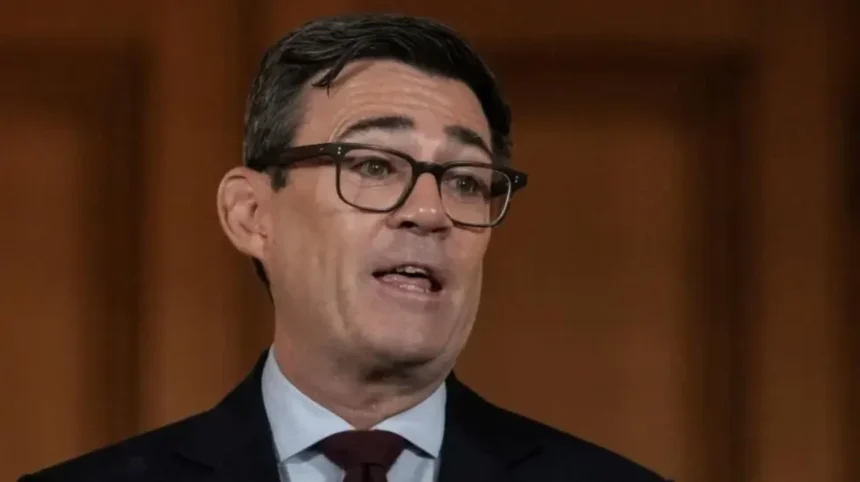
Key Points
- Formal Apology Under Consideration: Prime Minister Andy Burnham announced that the U.K. government is open to considering a formal state apology for Britain’s historic role in the trans-Atlantic slave trade.
- Reparations Firmly Rejected: The U.K. leader explicitly ruled out financial reparations, stating that current generations cannot be held liable for historic wrongs.
- Structured Dialogue Offered: The British government has proposed initiating a structured dialogue with Commonwealth nations in Africa and the Caribbean affected by the legacy of slavery.
- Commonwealth Summit Context: The statement comes ahead of Burnham’s upcoming diplomatic visit to Antigua and Barbuda for a meeting of Commonwealth leaders aimed at bolstering U.K. relations with former colonies.
- Acknowledging History to Protect Unity: Burnham stressed that Britain must address its complicated past, warning that ignoring the issue damages the Commonwealth’s ability to function effectively.
London, UK (South London News) October 31, 2026 — Prime Minister Andy Burnham stated that the U.K. government will consider issuing an official apology for the nation’s participation in the trans-Atlantic slave trade, while firmly dismissing demands for financial reparations. Writing in an op-ed published by the Guardian, Burnham acknowledged that Britain must confront its complex historical legacy to preserve and strengthen relationships within the Commonwealth, a 56-nation bloc formed primarily out of former territories of the British Empire.
Burnham noted that for years, Commonwealth members affected by the slave trade have requested a candid dialogue regarding the enduring impact of slavery. Burnham expressed that by avoiding the subject, the U.K. has undermined the functional capacity of the Commonwealth organisation.
To address these long-standing concerns, Burnham indicated that the British government is prepared to establish a structured dialogue with affected nations. Through this process, the administration intends to evaluate calls for a formal state apology regarding Britain’s extensive role in the slave trade prior to its abolition in 1833, a period during which the British Empire derived immense economic benefit from the practice.
Addressing the issue of financial compensation, Burnham clarified that the U.K. will not offer monetary reparations to former colonies. Burnham explained that contemporary British citizens cannot be held accountable for historical atrocities committed centuries ago under different legal frameworks, noting that individuals alive today played no personal role in those events.
Burnham’s public statements arrive immediately prior to an official diplomatic mission to Antigua and Barbuda in the Caribbean, where leaders from across the Commonwealth are scheduled to gather. The U.K. administration views the upcoming summit as a pivotal opportunity to fortify diplomatic and economic ties with partner nations across Africa and the Caribbean.
What is the Historical Context of Britain’s Involvement in the Trans-Atlantic Slave Trade?
The trans-Atlantic slave trade operated for over three centuries, during which millions of African men, women, and children were forcibly transported across the Atlantic Ocean to work on plantations in the Americas and the Caribbean. British ships played a central role in this triangular trade network, transporting an estimated three million enslaved Africans between the 16th and 19th centuries. The economic yield from slave labor—primarily through commodities such as sugar, tobacco, and cotton—substantially funded the expansion of the British Empire and the development of major domestic financial and industrial sectors.
Although Britain passed the Abolition of the Slave Trade Act in 1807, prohibiting the trade of enslaved people on British ships, slavery itself remained legal across British territories until the Slavery Abolition Act of 1833. When emancipation was implemented, the British government compensated former slave owners for the loss of their “property” through a statutory fund of £20 million—a vast sum at the time—while the formerly enslaved individuals received no financial compensation or land redistribution. In recent years, member states of the Caribbean Community (CARICOM) and African diplomatic representatives have increasingly called upon European nations, including the U.K., to participate in formal reparatory justice frameworks.
How Could This Policy Affect Commonwealth Member Nations and U.K. Diplomacy?
The U.K. government’s willingness to discuss a formal apology alongside its firm rejection of financial reparations is likely to generate mixed reactions across key international and domestic stakeholders:
- Commonwealth Member States (Caribbean and African Nations): Leaders seeking full reparatory justice may view the refusal of financial compensation as inadequate, potentially creating tension during diplomatic exchanges at the Antigua and Barbuda summit. However, the offer of a structured dialogue and a potential formal apology provides a structured political avenue for member states to keep the historical legacy of slavery on the international agenda.
- British Foreign Policy and Diplomatic Relations: By acknowledging the need to discuss historical grievances, the U.K. government aims to prevent diplomatic friction from hindering economic, trade, and strategic cooperation with developing economies in Africa and the Caribbean. Successfully navigating this issue could help stabilize Britain’s influence within the Commonwealth framework.
- Domestic U.K. Electorate and Political Groups: The stance presents a balanced position designed to navigate internal political dynamics. It addresses calls from human rights advocates and international partners for historical accountability, while reassuring taxpayers and conservative demographics that current state funds will not be allocated toward historic reparations.