Peckham, a vibrant district in South London, captivates with its rich history, diverse culture, and evolving urban charm. Nestled within the London Borough of Southwark, it offers timeless appeal for locals and visitors seeking authentic neighborhood experiences.
Peckham’s Ancient Roots
Peckham’s story begins in the Domesday Book of 1086, where it appears as a modest settlement with just four households, highlighting its early rural character. By the 1500s, it emerged as a favored retreat for London’s elite, who built grand estates amid its green fields and commons. The name “Peckham” derives from Old English, meaning “beaked hill” or “hill of the woodpeckers,” evoking its hilly terrain and wooded landscapes near Peckham Rye.
This period set the stage for Peckham’s transformation, as proximity to the Thames and open spaces drew affluent residents escaping the city’s bustle. Farms and market gardens dotted the area, with cattle drovers resting herds on Peckham Rye Common before heading to London markets. Such pastoral scenes persisted into the 18th century, underscoring Peckham’s role as a serene outlier to urban London.
19th-Century Urban Boom
The early 1800s marked Peckham’s shift from countryside to suburbia, spurred by infrastructure like the Grand Surrey Canal ending at Peckham High Street. Villas and terraces sprouted near Old Kent Road to the north, while grand homes flanked Peckham Rye to the south, creating “Peckham New Town” on Hill family lands along Peckham Hill Road.
Railways and horse trams from the 1860s accelerated growth, filling fields with modest housing and threatening the Rye Common with development. Rye Lane evolved into a bustling shopping hub, with stores like Jones & Higgins drawing crowds from across south London, fueled by a young, prosperous population. By mid-century, bus services to the West End and Peckham Rye station solidified its commuter status.
Cultural and Architectural Highlights
Peckham Rye Park and Common remains a green heart, largely unchanged since the 1700s, offering 113 acres for recreation amid its historic boundaries. The park’s ponds, woods, and sports fields host events year-round, preserving the area’s rural legacy.
Art Deco gems like the Peckham Odeon cinema (now a Lidl) and Victorian terraces showcase architectural diversity. Multistory housing from the 1960s-70s, such as the infamously demolished “suicide blocks” on Peckham Hill, reflect post-war experimentation, later replaced by modern estates. Street art thrives today, with murals turning Rye Lane into an open-air gallery.
Markets and Culinary Scene
Rye Lane Market pulses with energy, offering fresh produce, fabrics, and global street food from African, Caribbean, and Asian vendors. It’s a sensory feast where Peckham’s multiculturalism shines, with stalls selling plantain, jerk chicken, and halal meats alongside vintage clothes.
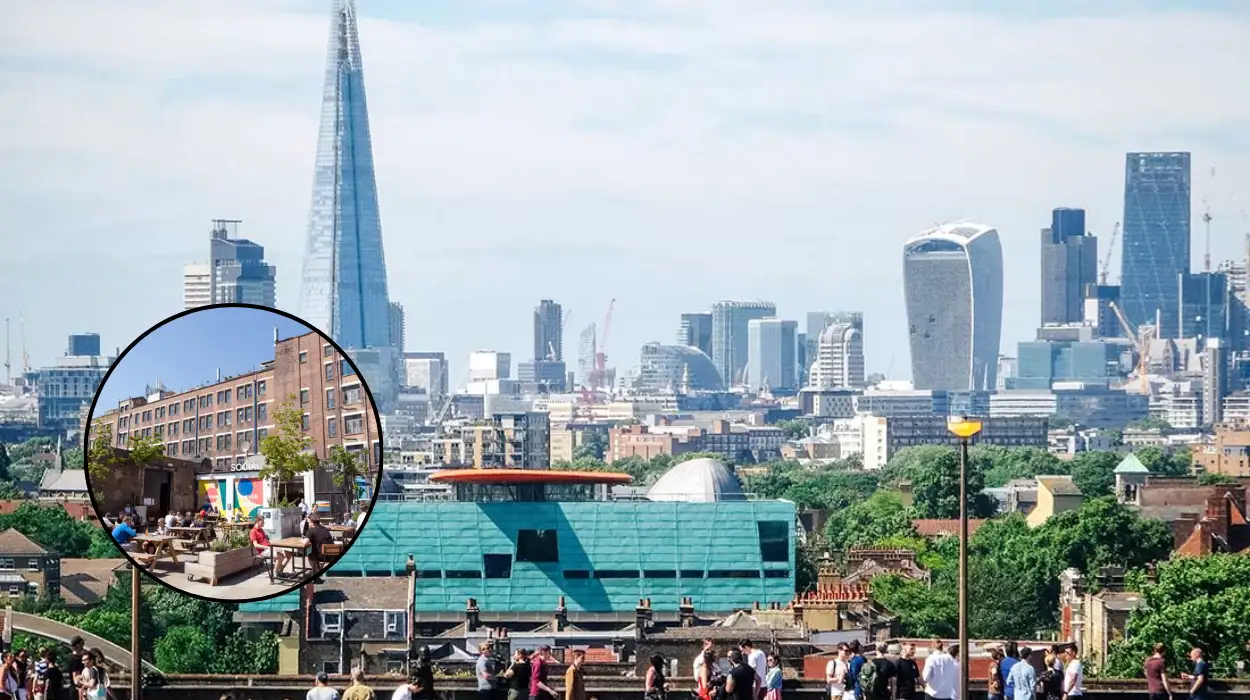
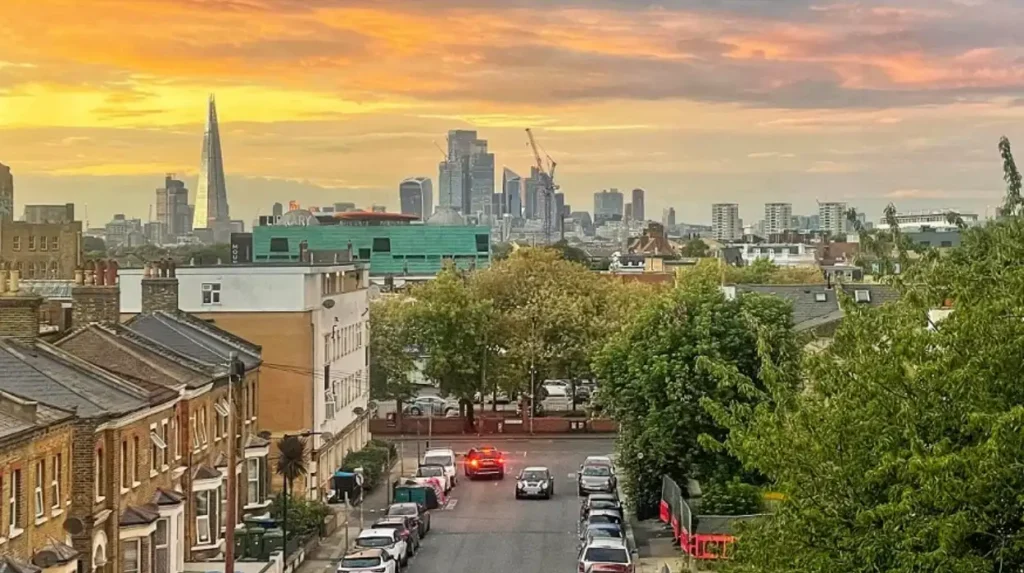
Peckham Levels, a repurposed multi-story car park, buzzes with independent eateries, bars, and creative spaces serving craft brews and fusion dishes. Frank’s Café atop another car park provides panoramic views and seasonal cocktails, embodying Peckham’s innovative reuse of industrial spaces. These spots ensure Peckham ranks among London’s top food destinations.
Modern Community and Diversity
Peckham’s population exceeds 90,000, boasting high diversity with large Black African and Caribbean communities alongside Eastern Europeans and others. This mix fuels festivals like Peckham Pride and the annual Peckham Rye Fayre, celebrating shared heritage.
Regeneration efforts, including the Peckham Town Centre Framework, balance growth with community needs, enhancing libraries and leisure centers. Areas like Bellenden Road feature trendy cafes and galleries, attracting young professionals while retaining working-class roots.
Getting Around Peckham
Peckham Rye station connects to London Bridge and Victoria via Thameslink and Southeastern lines, with Overground links to Clapham Junction. Queenstown Road and Peckham Rye stations serve additional routes. Buses like the P13 and 63 link to central London, while cycling paths traverse the Rye.
Notable Figures and Legacy
Peckham birthed talents like footballer Ian Wright, singer Adele (who name-checked it in “North Star”), and artist Denzil Forrester. Literary ties include Charles Dickens, who referenced local inns, and modern authors drawing from its grit. Television’s “Only Fools and Horses” filmed here, cementing Peckham’s pop culture status as the Trotters’ Del Boy domain.
Why Peckham Endures
Peckham blends history, affordability, and vibrancy, drawing families, artists, and foodies to south London. Its markets, parks, and street life offer endless exploration, ensuring it remains a timeless gem.