Educational group visits in Lambeth, South London, provide opportunities to study history, science, art, literature, architecture, politics and social change outside the classroom. The borough includes major cultural institutions such as the Imperial War Museum London, Florence Nightingale Museum and Garden Museum. These destinations support curriculum-linked learning for school pupils, college students, university groups and adult learners.
- Which Lambeth attractions are best for educational group visits?
- What can school groups learn at the Imperial War Museum London?
- How does the Florence Nightingale Museum support healthcare education?
- Why is the Garden Museum suitable for science and environmental studies?
- What historical lessons does Lambeth Palace offer educational groups?
- How can groups connect Lambeth’s attractions with local history?
- Which Lambeth attractions are suitable for university and adult learning groups?
- How should teachers plan an educational group visit to Lambeth?
- Are Lambeth’s educational attractions accessible and affordable for groups?
- What should students do before and after visiting Lambeth’s museums?
- Which Lambeth attractions should educational groups prioritise?
Lambeth sits on the south bank of the River Thames, opposite central London. Its museums, historic buildings, public spaces and cultural venues connect classroom subjects with real objects, documented events and local communities. Teachers and group organisers can select destinations according to students’ ages, learning objectives, accessibility requirements and available budgets.
Educational visits also introduce learners to London’s changing identity. Lambeth’s history includes medieval religious institutions, industrial development, migration, public health reform, political activism and contemporary cultural life. Visiting relevant sites helps students understand how local events connect with wider British and international history.
Which Lambeth attractions are best for educational group visits?
Lambeth’s strongest educational attractions include the Imperial War Museum London, Florence Nightingale Museum, Garden Museum and Lambeth Palace area. These destinations connect museum collections, historical buildings and documented events with school subjects, university research and adult learning. The best choice depends on the group’s age, curriculum and preferred learning activities.
The Imperial War Museum London in Lambeth provides material for studying twentieth-century conflict, military history, civilian experiences and the consequences of war. Its collections include objects, photographs, documents and personal accounts that help visitors investigate how conflict affects individuals and societies.
The Florence Nightingale Museum focuses on nursing, healthcare reform and the development of modern nursing practices. It suits groups studying biology, health and social care, public health, women’s history and the history of medicine.
The Garden Museum explores garden design, landscape history, horticulture and the relationship between people and plants. It supports lessons in biology, environmental studies, art and design, and cultural history.
Lambeth Palace, the historic London residence of the Archbishop of Canterbury, provides a different perspective on religious history, architecture and the Church of England. Access arrangements depend on the type of visit, so organisers should check current visitor and group-tour provisions before planning a trip.
These destinations serve different educational purposes. A history class studying wartime Britain benefits from the Imperial War Museum, while a health and social care group gains more subject-specific material from the Florence Nightingale Museum.
What can school groups learn at the Imperial War Museum London?
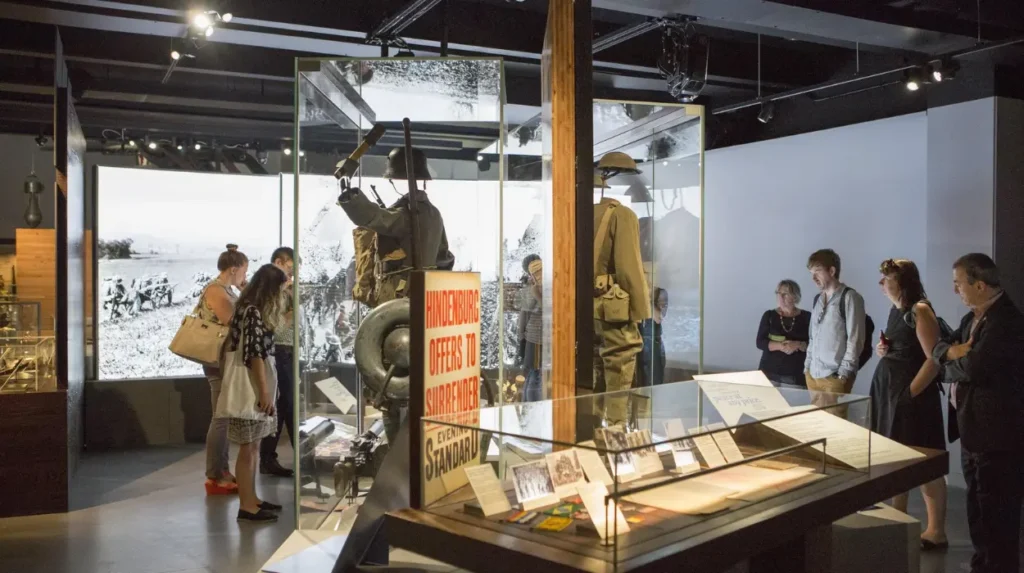
The Imperial War Museum London helps students investigate the causes and consequences of conflict, civilian experiences, military technology and social change. Its historical collections support lessons in history, citizenship, politics and English through objects, photographs, documents and personal testimony.
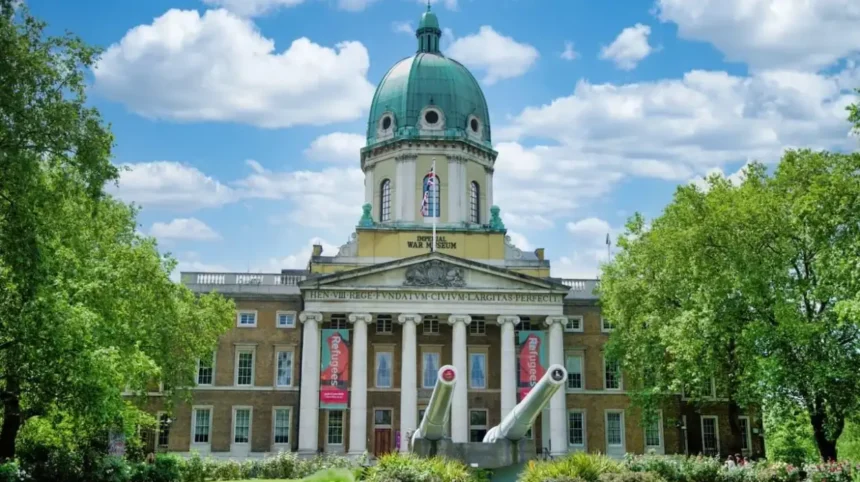
The Imperial War Museum London is located on Lambeth Road. Its collections examine war and its effects on people, communities and countries. The museum provides a valuable setting for studying the First World War, the Second World War and the wider history of modern conflict.
History teachers can prepare students to examine primary sources. A primary source is an original record or object produced during the period being studied. Examples include photographs, letters, official documents and objects connected with military or civilian life.
Students can compare personal accounts with official records, identify different perspectives and discuss how historical evidence shapes public understanding. English groups can analyse testimony and written accounts, while citizenship classes can investigate civilian protection, human rights and the effects of war on society.
A successful educational visit starts with a defined learning objective. Teachers should select a historical period or theme, prepare questions before arrival and allow time for students to record observations.
The museum’s official website provides current information about exhibitions, accessibility and visitor arrangements.
How does the Florence Nightingale Museum support healthcare education?
The Florence Nightingale Museum introduces learners to nursing, public health, medical history and healthcare reform. Its exhibits connect Florence Nightingale’s work during the Crimean War with the development of professional nursing, sanitation and evidence-based improvements in patient care.
The Florence Nightingale Museum stands within the grounds of St Thomas’ Hospital on Lambeth Palace Road. It explores the life and work of Florence Nightingale (1820–1910), a pioneering nurse and public health reformer.
Nightingale became widely known for her nursing work during the Crimean War from 1853 to 1856. She later promoted improvements in hospital hygiene, nursing education and the use of statistical evidence in healthcare administration.
Students studying health and social care can investigate how professional nursing developed. Science learners can explore the relationship between sanitation, infection prevention and patient outcomes. History students can examine the role of women in Victorian public life and the changing organisation of hospitals.
The museum also offers organised group visits, educational sessions and selected outreach activities. Its published group-visit guidance states that groups of 10 or more people must book in advance. Self-guided visits accommodate up to 50 people per booking, while larger groups need additional time slots. Guided tours have separate capacity limits.
Organisers should consult the museum’s group visits information to check the current programme, prices and availability. Schools should use the dedicated education enquiry route rather than assume that a standard group booking includes a curriculum-specific workshop.
Why is the Garden Museum suitable for science and environmental studies?
The Garden Museum is suitable for groups studying plant biology, ecology, horticulture, landscape design and environmental change. Its school programme uses practical activities, including plant dissection, soil investigations and leaf drawing, to connect scientific concepts with real specimens.
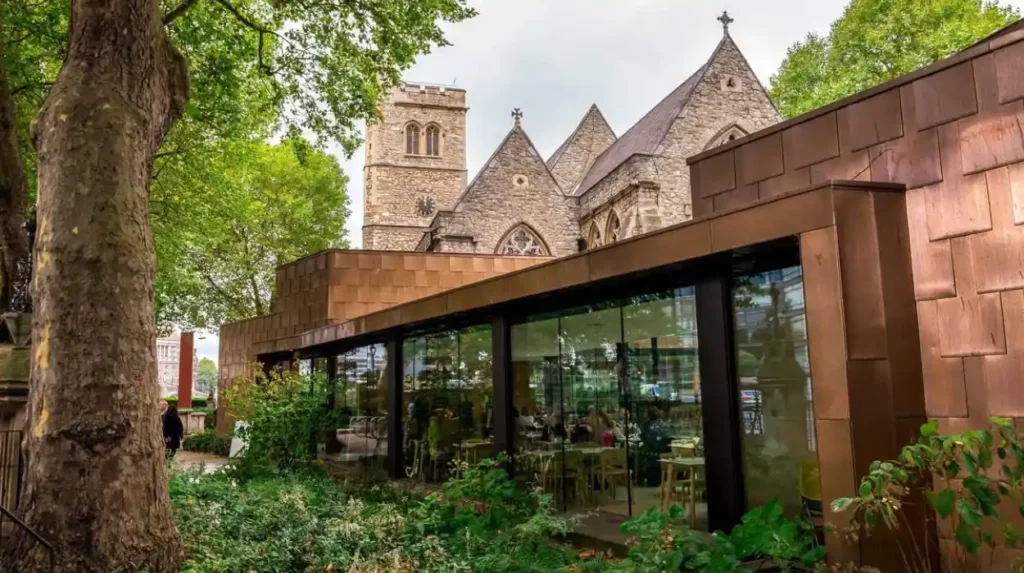
The Garden Museum occupies the former church of St Mary-at-Lambeth beside Lambeth Palace. It explores the history, art and design of gardens, making it relevant to both scientific and creative subjects.
Its school learning programme includes practical plant science. Activities described by the museum include examining plant structures, investigating soil samples, drawing leaves and exploring the role of earthworms. Sessions also address topics such as photosynthesis, water transport in plants and climate change.
These activities suit primary pupils who learn through observation and practical investigation. Secondary students can use them to reinforce biology and environmental science concepts. Art and design groups can explore botanical illustration, garden layouts and the relationship between landscape and cultural identity.
The museum also provides a connection between environmental science and history. Students can examine how gardens reflect changing ideas about food production, recreation, social status and the use of urban land.
The school programme published by the museum lists sessions during term time, with a dedicated learning space accommodating up to 30 pupils. It also states that visits are free for London state schools under the current programme. Teachers should confirm these arrangements before booking because session availability and terms can change.
What historical lessons does Lambeth Palace offer educational groups?
Lambeth Palace provides insight into the history of the Church of England, religious institutions, architecture and British public life. Its medieval and later buildings offer material for examining continuity and change, although educational access depends on scheduled tours and special opening arrangements.
Lambeth Palace has served as the London residence of the Archbishop of Canterbury for centuries. The Archbishop is the senior bishop and principal leader of the Church of England. The palace is also associated with the administration and history of the Anglican Church.
The site provides a useful starting point for studying medieval architecture, religious authority and the relationship between church and state. Its historic spaces include the Guard Room, Great Hall and chapel, each connected with different periods of the building’s development.
Students studying religious education can examine the role of the Church of England in British society. History students can investigate how religious institutions accumulated influence, preserved records and participated in public life. Architecture groups can consider how historic buildings adapt to changing institutional needs.
The nearby Lambeth Palace Library holds important historical collections associated with the Church of England and the history of Christianity. Its records support research into religious, political and social history.
However, Lambeth Palace is a working residence rather than a museum open every day. Its official visitor information states that regular guided tours are currently suspended, with a return intended later in 2026. Special open days and library tours follow separate arrangements.
How can groups connect Lambeth’s attractions with local history?
Lambeth’s educational attractions become more meaningful when visitors connect museum collections with the surrounding streets, religious buildings and riverside landscape. A planned walking route helps learners investigate how healthcare, religion, warfare, migration and urban development shaped South London over time.
Lambeth’s location beside the River Thames has influenced its development as a place of transport, settlement and public activity. Its built environment contains evidence of different periods, from historic religious sites to modern hospitals, cultural institutions and residential neighbourhoods.
A group visiting the Florence Nightingale Museum can examine the relationship between Victorian healthcare reform and the continuing role of St Thomas’ Hospital. Students can then compare historical approaches to public health with contemporary healthcare systems.
A visit to the Garden Museum provides a different perspective on heritage. The former church building illustrates how historic structures receive new uses while retaining links to their earlier communities. Students can investigate architectural features, the building’s changing function and the conservation of historic spaces.
For a broader introduction, organisers can incorporate a single contextual link to the site’s dedicated historical resource: Lambeth’s history and heritage from medieval settlements to modern South London. This placeholder should be replaced with the live URL of the matching historical background article before publication.
A guided walking activity can ask learners to identify building materials, compare architectural styles and record evidence of changes in land use. These observations help students distinguish between surviving historical features and modern additions.
The route should remain practical. Groups need designated meeting points, sufficient crossing time and a plan for wet weather. Teachers should also check photography restrictions and site-specific rules before conducting structured activities.
Which Lambeth attractions are suitable for university and adult learning groups?
University and adult learning groups benefit from Lambeth’s specialist museums, historic collections and cultural institutions. The Florence Nightingale Museum supports healthcare research, the Imperial War Museum supports historical analysis, and the Garden Museum provides material for environmental humanities and design studies.
The borough’s educational offer is not limited to school trips. University departments, professional associations, lifelong learning organisations and community groups can use its institutions to explore specialist subjects.
Healthcare students can investigate nursing history, professional ethics and the relationship between public health and social reform at the Florence Nightingale Museum. Students on nursing, medical humanities and health policy courses can compare historical practice with contemporary standards.
History and politics students can use the Imperial War Museum to examine conflict, government decisions, civilian experiences and the representation of war. Lecturers can frame visits around a research question, such as how personal testimony contributes to historical interpretation.
Garden Museum collections provide another research opportunity. Students in landscape architecture, environmental studies, horticulture and visual arts can examine how gardens express cultural values and respond to environmental conditions.
Adult learning groups can also use museum visits as introductions to subjects that they have not studied formally. A short preparatory reading list, a guided discussion and a follow-up session help participants turn a general visit into a structured learning experience.
Organisers should contact each institution directly when the group requires a specialist lecture, archive access, a private tour or a session designed around a particular course. Standard admission does not automatically include academic teaching or access to restricted collections.
How should teachers plan an educational group visit to Lambeth?
Teachers should select an attraction based on curriculum objectives, confirm group capacity and availability, arrange transport, assess accessibility and prepare learning activities. Advance booking is essential for many organised visits, particularly school sessions and specialist tours with limited capacity.
A structured visit begins with a clear educational purpose. Teachers should identify the subject, age group and intended learning outcomes before choosing a destination.
The following planning sequence helps organisers prepare:
- Define the learning objective. Examples include analysing wartime evidence at the Imperial War Museum, investigating plant structures at the Garden Museum or exploring the development of nursing at the Florence Nightingale Museum.
- Contact the venue. Confirm the date, admission arrangements, group size, educational sessions and payment conditions.
- Prepare students. Introduce relevant vocabulary, historical context and questions to investigate during the visit.
- Arrange supervision. Assign staff responsibilities, establish headcounts and communicate meeting points and emergency procedures.
- Check accessibility. Discuss mobility needs, sensory requirements, rest breaks and any adjustments required by individual participants.
- Plan follow-up work. Use notes, sketches, source analysis or group presentations to assess what students learned.
Teachers should check transport routes using the official Transport for London journey planner. Waterloo, Westminster, Lambeth North and Vauxhall provide useful connections for different parts of Lambeth, although the most convenient station depends on the destination and the group’s starting point.
Group organisers should also establish a realistic timetable. The Florence Nightingale Museum recommends approximately 45–75 minutes for a typical visit, while the Garden Museum’s school sessions follow a booked timetable. The Imperial War Museum requires enough time for students to explore selected galleries and complete their assigned work.
Avoid scheduling several lengthy museum sessions without allowing for travel, lunch, toilets and rest periods. One substantial visit with a focused activity often provides a clearer learning experience than a rushed itinerary covering too many sites.
Are Lambeth’s educational attractions accessible and affordable for groups?
Educational visit costs depend on the institution, group size, age of participants and chosen activities. Some school programmes offer free entry or subsidised sessions, while standard admission, specialist tours, transport and refreshments require separate budgeting and accessibility checks.
The Garden Museum states that its school visits are free for London state schools under its current learning programme. Its dedicated classroom has a capacity of 30 pupils, so larger classes need to discuss arrangements with the education team.
The Florence Nightingale Museum publishes separate prices for standard admission and organised group activities. Its group-visit information also specifies limits for self-guided groups, guided tours and performances. These restrictions affect both the budget and the timetable for larger parties.
The Imperial War Museum offers a different type of visit, centred on its galleries and collections. Organisers should check the official website for current admission policies, available learning resources and any additional charges associated with their planned activities.
Budget calculations should include more than admission. Teachers need to consider return transport, refreshments, printed materials, any guided session fees and contingency arrangements. Schools should also check their own policies for staff expenses and parental contributions.
Accessibility requires equally careful planning. Lambeth’s attractions occupy different types of buildings, including historic structures and specialist museum spaces. Step-free access, lifts, accessible toilets, seating and sensory considerations vary by venue and exhibition.
The official Lambeth Palace visitor information states that step-free access is available to most areas, with assistance available for specific requirements during accessible visits. Organisers should confirm access to the exact spaces included in their booking.
For every destination, contact the venue before confirming arrangements for visitors who require adjustments. Do not assume that the general building-access statement guarantees access to every room, gallery or activity.
Explore More Area Guide
Where to Find Hands-On Cultural Experiences in Lambeth
What Visitors Can Experience at Lambeth’s Community Arts Venues
What should students do before and after visiting Lambeth’s museums?
Students gain more from educational visits when teachers connect the experience with classroom preparation and follow-up work. Research questions, observation sheets, source analysis and reflective assignments help learners interpret exhibits, evaluate evidence and explain how the visit supports their studies.
Preparation should introduce the topic without revealing every detail students will encounter. A class studying the history of nursing can research Florence Nightingale’s work during the Crimean War. A biology group can revise photosynthesis, plant structures and soil composition before attending a Garden Museum session.
During the visit, students should collect evidence rather than simply list objects they see. They can record the name of an exhibit, describe its historical or scientific significance and explain how it answers a research question.
Teachers can use different activities for different age groups. Primary pupils can draw an object and describe its purpose. Secondary students can compare sources and identify contrasting perspectives. University students can evaluate the reliability of evidence and develop a research argument.
After the visit, students can prepare a presentation, illustrated report, historical timeline or scientific investigation. These tasks connect observations with subject knowledge and provide a way to assess learning outcomes.
Group discussions also encourage students to consider how museums select and interpret their collections. Historical evidence does not always provide a complete account of an event. Comparing different objects, records and personal testimonies helps learners understand the importance of context and interpretation.
A well-planned visit therefore continues beyond the museum itself. Preparation establishes the questions, the visit provides evidence, and follow-up work develops the understanding required for meaningful learning.
Which Lambeth attractions should educational groups prioritise?
The Imperial War Museum London, Florence Nightingale Museum and Garden Museum are strong starting points for educational visits in Lambeth. Each offers a distinct subject focus, allowing organisers to match the destination with historical enquiry, healthcare education, environmental science or practical learning.
The most appropriate destination depends on the group’s educational priorities.
- History and citizenship: Choose the Imperial War Museum London for the study of conflict, historical evidence and civilian experiences.
- Healthcare and public health: Choose the Florence Nightingale Museum for nursing history, healthcare reform and the development of professional nursing.
- Science and environmental studies: Choose the Garden Museum for plant science, soil investigations, horticulture and climate-related learning.
- Religious history and architecture: Investigate Lambeth Palace through its scheduled tours, open days or library visits, subject to availability.
Lambeth’s proximity to central London makes these destinations practical for day trips from schools, colleges and universities. However, each institution has different booking requirements, educational resources and visitor capacities.
Organisers should prioritise curriculum relevance, confirm current arrangements directly with the venue and build a realistic itinerary around the group’s needs. With suitable preparation, Lambeth’s museums and historic sites provide a valuable setting for connecting classroom knowledge with real historical evidence, scientific observation and cultural heritage.
Which Lambeth attractions are best for educational group visits?
The Imperial War Museum London, Florence Nightingale Museum and Garden Museum are excellent options. They offer learning opportunities in history, healthcare, science, environmental studies and cultural heritage.