Lambeth, a historic borough in South London, offers students opportunities to investigate British history through museums, archives, historic buildings, cemeteries, public spaces and neighbourhood walks. Learning outside the classroom connects historical evidence with real places, helping students understand how religion, healthcare, migration, industry, warfare and cultural change have shaped the area.
- Why Is Lambeth a Valuable Place for Learning History Outside the Classroom?
- How Can Students Discover Lambeth’s History Through Its Archives?
- How Can Students Explore Medieval History at Lambeth Palace?
- How Can the Florence Nightingale Museum Teach Students About Victorian Healthcare?
- How Can Students Study War and Conflict at the Imperial War Museum London?
- How Can Brixton Help Students Understand Migration and Social Change?
- How Can Students Investigate Victorian Society at West Norwood Cemetery?
- How Can Lambeth’s Historic Parks Help Students Learn About Urban Development?
- How Can Students Explore Lambeth’s Religious and Architectural Heritage?
- How Can Students Plan a Successful Educational History Walk Around Lambeth?
- Sample educational visit: Lambeth’s heritage
- How Can Students Connect Lambeth’s Past With Its Present?
- How Can Students Use Historical Sources to Build an Evidence-Based Project?
- What Should Students Know About Accessibility, Costs and Visit Preparation?
- How Can Students Continue Exploring Lambeth’s History After Their Visit?
- Why Should Students Explore Lambeth’s History Beyond the Classroom?
Students can begin at Lambeth Archives, examine medieval heritage at Lambeth Palace, investigate Victorian healthcare at the Florence Nightingale Museum and study wartime experiences at the Imperial War Museum London. Historic parks, Brixton Market and West Norwood Cemetery provide further opportunities to explore social history, architecture and community identity.
These visits support history lessons, independent research, geography projects and local heritage studies. A well-planned educational visit combines direct observation, historical documents, guided interpretation and reflective activities.
Why Is Lambeth a Valuable Place for Learning History Outside the Classroom?
Lambeth provides a practical setting for studying British history because its historic buildings, archives, museums and neighbourhoods preserve evidence of religious authority, urban development, public health, migration and social change. Students can connect historical events with surviving places and documentary records.
Lambeth stretches from the River Thames around Waterloo and Vauxhall towards districts including Kennington, Brixton, Stockwell, Herne Hill and Norwood. Each area contains evidence of different periods and social experiences. Historic England’s Lambeth Heritage Hub documents listed buildings, historic photographs and architectural features that help explain the borough’s development.
The borough is particularly useful for place-based learning. Place-based learning is an educational approach that uses the local environment as a source of evidence and investigation. Instead of studying a Victorian building only through a textbook, students examine its materials, location, original purpose and relationship with the surrounding streets.
Lambeth also supports interdisciplinary education. History students can investigate changes in housing, geography students can map urban expansion, art students can examine architectural design, and citizenship students can research community institutions.
Teachers can connect these activities to the National Curriculum for England by exploring historical interpretation, chronological understanding, evidence and significant changes across different periods.
How Can Students Discover Lambeth’s History Through Its Archives?
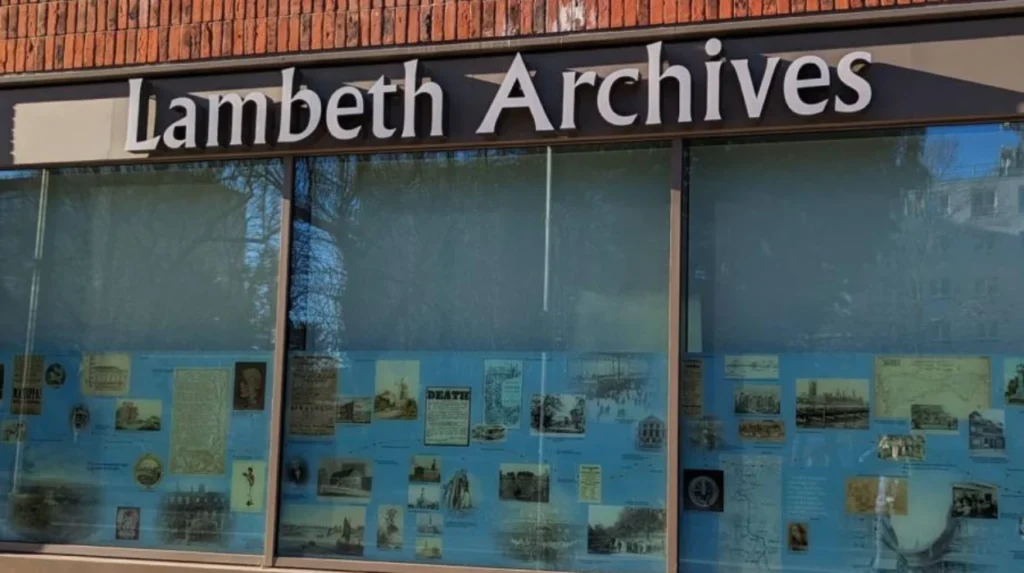
Lambeth Archives gives students access to historical documents, maps, photographs, artworks and artefacts relating to the borough. These primary sources support investigations into family history, education, architecture, migration, transport and social change across different historical periods.
Lambeth Archives is the borough’s local record office and local studies library. Its collections include records dating back to the sixteenth century, providing evidence of how local communities, institutions and neighbourhoods developed. The archive is based on Brixton Hill and welcomes residents, students and researchers.
A primary source is an original record produced during the period being studied. Examples include a nineteenth-century map, an old school photograph, a council document or a historical letter. These sources help students distinguish direct evidence from later interpretations written by historians.
What Can Students Investigate at Lambeth Archives?
Students can build research projects around several historical themes, including:
- Local housing: Compare historic maps and property records to investigate changes in streets, buildings and residential development.
- Education: Examine school records and photographs to understand how education changed across generations.
- Migration and identity: Investigate records that document the experiences and contributions of different communities.
- Transport: Compare historic maps with present-day railway stations, roads and transport routes.
- Women’s history: Explore documents relating to women’s work, public roles and community organisations.
For example, a student researching Brixton can compare an older street map with a contemporary map. The student can identify changes in building density, transport infrastructure and commercial areas, then use documentary evidence to explain those changes.
Teachers should contact the archive before arranging a group visit. Staff can advise on access arrangements, relevant collections, research questions and any restrictions affecting original materials. Students should confirm whether supervised group sessions or exhibitions are available on their intended date.
An archive visit works particularly well when students arrive with a defined research question. Asking how a particular neighbourhood changed between two dates produces a more focused investigation than browsing documents without a clear purpose.
How Can Students Explore Medieval History at Lambeth Palace?
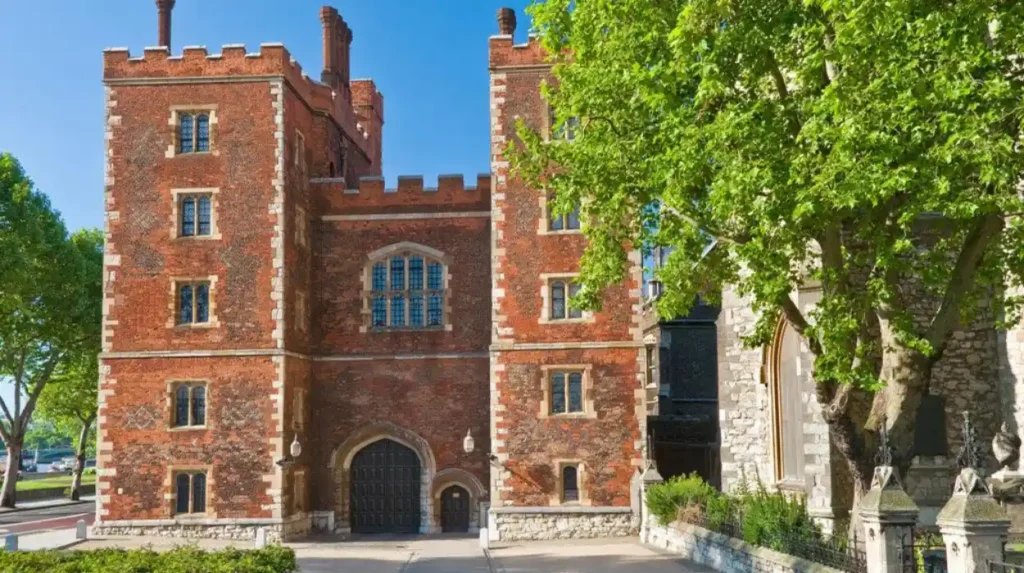
Lambeth Palace introduces students to the history of the Church of England, medieval religious authority and the relationship between religion and government. Its long association with the Archbishop of Canterbury makes it a valuable subject for studying ecclesiastical institutions and historic architecture.
Lambeth Palace has served as the London residence of the Archbishop of Canterbury since 1197. The Archbishop of Canterbury is the senior bishop of the Church of England and holds a central position within the Anglican tradition. The palace therefore provides a connection between Lambeth’s local history and wider developments in English religious and political life.
Students studying medieval Britain can investigate why senior religious figures maintained residences close to the political centre of London. They can also examine how religious institutions accumulated land, maintained libraries and influenced education, charitable activity and public life.
Which Historical Features Should Students Research?
Students can investigate the palace’s architectural development, historic gardens and institutional role. They should distinguish the building’s medieval origins from later alterations, because a historic building often contains features from several centuries.
The palace gardens also offer a way to examine changing attitudes towards land. Historic England explains that Lambeth Palace’s gardens originally served practical purposes before developing into pleasure grounds. This provides an opportunity to discuss how historic gardens reflected the needs, resources and tastes of their owners.
A research activity can ask students to investigate three themes: religious authority, architectural change and the relationship between institutions and urban development. Examples include researching the Archbishop’s role, identifying architectural features and examining how the palace relates to the River Thames.
Access to the palace and its grounds depends on opening arrangements and organised events. Teachers should check official visitor information before planning an on-site lesson. Where entry is unavailable, students can still investigate its documented history through historical records, published images and library resources.
How Can the Florence Nightingale Museum Teach Students About Victorian Healthcare?
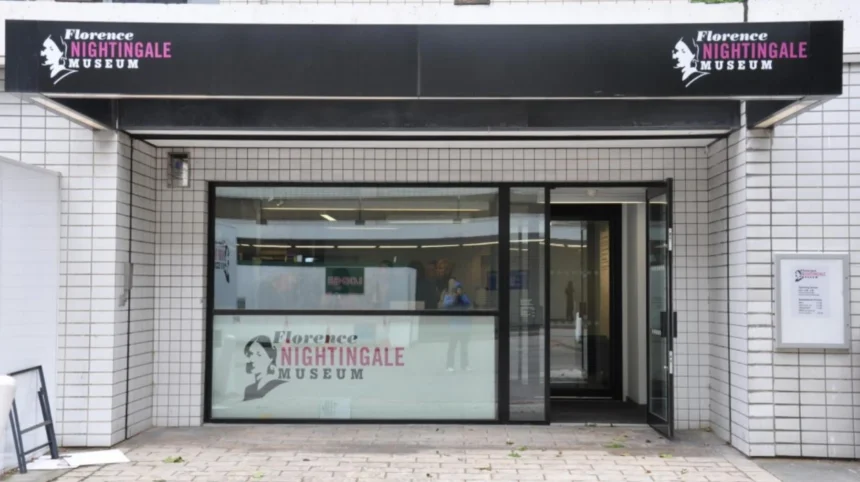
The Florence Nightingale Museum helps students investigate Victorian healthcare, nursing reform and the development of professional medical practice. Its historical objects and educational resources connect Florence Nightingale’s work during the Crimean War with lasting changes in nursing, hospital care and public health.
The Florence Nightingale Museum is located at St Thomas’ Hospital on Lambeth Palace Road. It explores the life and work of Florence Nightingale (1820–1910), a pioneering nurse and healthcare reformer whose work influenced modern nursing and hospital administration.
The museum’s collection includes personal possessions, historical documents, a medicine chest and the lamp associated with Nightingale’s wartime nursing work. Its exhibitions also explore her experiences during the Crimean War and her campaign for improvements in healthcare.
How Can Students Connect Historical Objects With Evidence?
Students can examine how objects provide evidence of past working conditions, medical practices and social expectations. For example, a historical medicine chest provides a starting point for comparing nineteenth-century medical equipment with modern clinical tools.
A study of Nightingale’s work also introduces students to the relationship between healthcare and statistics. Nightingale used statistical analysis to communicate the importance of sanitary conditions and hospital reform. Students can explore how evidence, data and professional advocacy influence public policy.
The museum also recognises Mary Seacole, another important figure in nineteenth-century nursing history. Comparing the lives and work of Nightingale and Seacole gives students a broader understanding of healthcare during the Crimean War and the different experiences of women who contributed to nursing.
The museum provides educational activities, family trails and learning opportunities for different age groups. Its published visitor information lists standard opening hours as Tuesday to Sunday, 10 am to 5 pm, with last entry at 4.30 pm; the museum is normally closed on Mondays. Student admission and group arrangements should be checked before travel.
A useful classroom follow-up is a short evidence report. Students can select one historical object, explain its original purpose and identify what it reveals about healthcare at the time. They can then compare that evidence with current nursing practice.
How Can Students Study War and Conflict at the Imperial War Museum London?
The Imperial War Museum London enables students to study the human impact of conflict through exhibitions about the First World War, the Second World War, the Holocaust and later conflicts. Historical displays connect military events with civilian experiences, political decisions and social change.
The Imperial War Museum London, commonly called IWM London, is situated on Lambeth Road. It is part of Imperial War Museums, a group of museums dedicated to understanding conflict and its effects on Britain, the Commonwealth and people around the world.
The museum is particularly relevant to students studying twentieth-century history. Its First World War Galleries explore experiences of war at the front and on the home front, including the lives of people who worked in munitions factories. Other exhibitions address the Holocaust, a genocide in which Nazi Germany and its collaborators systematically murdered six million Jewish people, alongside other victims of Nazi persecution.
What Questions Should Students Ask During a Visit?
A structured visit encourages students to examine evidence rather than simply collect facts. They can investigate how warfare changed daily life, how governments communicated with the public and how civilians experienced conflict.
Useful questions include:
- How did the First World War affect workers and families in Britain?
- What evidence shows how warfare changed technology and military strategy?
- How did propaganda influence public understanding of conflict?
- How do museums preserve testimony and explain difficult historical events?
Students should record the title of an exhibit, identify the type of evidence it presents and explain how it supports a historical interpretation. A photograph, personal letter or military object can each communicate different information about the same event.
IWM London is listed as a free museum, although special events and some activities can carry charges. Teachers should check current exhibitions, school booking procedures and access arrangements on the official museum website before organising a visit.
The visit can lead to a source-comparison exercise in which students compare a museum object with a written account or historical photograph. This helps them recognise that different sources reveal different aspects of a conflict.
How Can Brixton Help Students Understand Migration and Social Change?
Brixton provides opportunities to investigate London’s social history through its markets, streets, community institutions and cultural heritage. Students can examine migration, commerce, music, public life and changing urban identities by comparing historical evidence with the neighbourhood’s present-day character.
Brixton is a major district in Lambeth with a long history of commercial activity and community development. Its streets and market areas provide a starting point for studying how transport, employment, migration and local businesses shape an urban neighbourhood.
Historic England identifies Brixton Markets, including Reliance Arcade, Market Row and Granville Arcade, among the area’s notable historic places. These sites offer architectural evidence of the development of covered markets and everyday commercial life.
Students can investigate the relationship between markets and local communities. They can examine how shops serve residents, how commercial areas change over time and how different forms of trade contribute to neighbourhood identity.
How Can Students Research Brixton’s Diverse Heritage?
Students should combine observation with reliable historical records rather than relying on assumptions about a community. Lambeth Archives provides collections relevant to Black history, social history, migration, transport and local organisations. These records help students investigate personal experiences alongside wider social developments.
A practical project can involve documenting a short high-street route. Students record building uses, historic features, public artworks and community institutions, then compare their observations with archive photographs or local historical accounts.
The project can explore how the built environment reflects economic and cultural change. Students can ask which buildings retain earlier functions, which have been adapted and what evidence explains those changes.
Brixton is also relevant to research into music and popular culture. Students can investigate how venues, local businesses and community networks contribute to cultural movements, provided they support their conclusions with credible sources.
Respectful research is essential. Students should avoid treating a diverse community as a single historical experience. Comparing different records, voices and periods creates a more accurate account of how the neighbourhood developed.
How Can Students Investigate Victorian Society at West Norwood Cemetery?
West Norwood Cemetery offers students an outdoor setting for studying Victorian society, burial customs, architecture and changing attitudes towards death. Its monuments and landscape provide evidence of nineteenth-century commemorative practices, social status and the development of London’s historic cemeteries.
West Norwood Cemetery was founded in 1837 and was originally known as South Metropolitan Cemetery. It forms part of Lambeth’s historic landscape and is recognised for its architectural and funerary heritage. Historic England documents the cemetery as an early nineteenth-century burial ground designed by William Tite.
The cemetery provides an opportunity to examine how Victorian London responded to population growth and changing burial needs. During the nineteenth century, expanding urban populations placed pressure on burial provision, contributing to the development of large commercial cemeteries beyond older churchyards.
What Can Gravestones and Monuments Reveal?
Gravestones and memorials contain evidence about individuals, families, occupations, religious beliefs and commemorative traditions. Students can compare inscriptions, dates and architectural features to investigate how people chose to remember the dead.
For example, a student can compare two monuments from different decades and record differences in materials, inscriptions and decorative features. The student can then research the people commemorated and investigate what their memorials reveal about social position or cultural traditions.
Teachers should establish clear expectations for respectful behaviour. Students must remain on authorised paths, avoid touching fragile monuments and recognise that cemeteries are places of remembrance as well as historical sites.
A cemetery investigation can also support art and geography lessons. Students can sketch architectural details, map landscape features and examine how trees, paths and memorials shape the site’s layout.
Access conditions and the availability of guided walks should be checked before the visit. Students can also use Historic England’s records to research individual listed structures and compare documented heritage with observations made on site.
How Can Lambeth’s Historic Parks Help Students Learn About Urban Development?
Lambeth’s historic parks help students explore the development of public recreation, landscape design and urban planning. Brockwell Park, Kennington Park and Myatt’s Fields contain features that connect changes in public space with the growth of London and the changing needs of its communities.
Historic parks provide evidence of how land use changes over time. A site that once served a private estate, agricultural purpose or industrial activity can later become a public recreational space. Students can investigate these changes by examining maps, landscape features, monuments and historical records.
Historic England identifies several Lambeth parks with important heritage connections. Brockwell Park was established in 1892 and contains historic gardens and a mansion. Kennington Park was established in 1854, while Myatt’s Fields developed as a public park after William Minet donated the land in the nineteenth century.
Which Outdoor Activities Support Historical Learning?
Students can conduct a landscape survey by identifying old trees, paths, memorials, buildings and changes in ground layout. They can then compare those observations with historic maps or photographs.
A Brockwell Park investigation can focus on the relationship between historic gardens, the mansion and the park’s later public use. At Kennington Park, students can examine the history of public recreation and the development of municipal green space.
A Myatt’s Fields visit can lead to a project on philanthropy and public facilities. Students can research why landowners donated land for public use and how parks became part of urban life.
These activities also connect history with environmental studies. Students can investigate how historic landscapes have been adapted for modern recreation, biodiversity and community events.
Teachers should check access arrangements and current site information before visiting. Parks are public spaces, but specific buildings, facilities and organised activities have their own opening arrangements.
How Can Students Explore Lambeth’s Religious and Architectural Heritage?
Lambeth’s historic buildings help students investigate religious practice, architectural design and changing urban life. Churches, former institutional buildings, historic theatres and listed structures provide physical evidence that students can compare with archival photographs, building records and historical accounts.
Historic England’s Lambeth Heritage Hub identifies buildings from different periods, including churches, theatres, public institutions and commercial structures. Its records show how Lambeth’s built environment developed through successive architectural styles and changing social needs.
Architectural history examines how buildings are designed, constructed and used within particular historical contexts. Students can investigate building materials, window styles, decorative features and the relationship between a structure and its surroundings.
Which Buildings Can Students Use as Case Studies?
The Old Vic theatre provides a case study in London’s theatrical history. The historic building dates from 1816–1818 and has connections with the development of theatre and performance in the capital. Students can research how entertainment venues changed their audiences, functions and cultural significance over time.
The former Waterloo Road Fire Station offers a different perspective. Its early twentieth-century design provides evidence of the development of municipal services and public infrastructure.
Students can also investigate historic churches in Lambeth to understand how religious buildings served their congregations and influenced local communities. Comparing a church with a theatre or public building helps students identify differences in architectural purpose and public use.
A building survey should record the structure’s location, apparent age, materials, original function and present use. Students should verify these observations against historical records instead of assuming that a building’s present appearance reflects its original design.
This approach creates a direct link between physical observation and documentary research. It also shows how historic buildings remain part of everyday urban environments.
How Can Students Plan a Successful Educational History Walk Around Lambeth?
A successful Lambeth history walk combines a manageable route, clear research questions and activities suited to students’ ages. Teachers should group nearby locations, check opening arrangements, plan safe crossings and allow time for observation, note-taking and discussion.
Lambeth’s heritage locations are spread across different neighbourhoods. A route should therefore focus on a single geographical area or historical theme instead of attempting to cover the whole borough in one day.
A South Bank route can combine the Florence Nightingale Museum with observations of the surrounding historic environment. A Brixton visit can focus on markets, community history and archival research. A West Norwood route can centre on cemetery heritage and Victorian society.
What Should Teachers Prepare Before the Visit?
Teachers should establish learning objectives and explain what students need to investigate at each stop. Preparation also includes confirming opening hours, group booking requirements, transport, accessibility and any admission charges.
A simple fieldwork notebook should include the location, date, research question, observations, source references and a short explanation of the evidence collected. Students can take photographs where permitted and record architectural details without disturbing other visitors.
Teachers should also plan suitable alternatives for outdoor activities affected by poor weather or restricted access. Archive catalogues, digitised photographs and historical building records provide useful backup resources.
The following sample itinerary demonstrates how a focused visit can work.
Sample educational visit: Lambeth’s heritage
Stop 1: Florence Nightingale Museum
Examine historical objects and investigate changes in nursing, medical care and public health.
Stop 2: Lambeth Palace heritage
Research the Archbishop of Canterbury, medieval institutions and architectural development. Confirm visitor access in advance.
Stop 3: Lambeth Archives
Investigate maps, photographs and documents to compare historical records with the places visited.
This itinerary is a planning framework, not a guaranteed walking schedule. The locations have different access arrangements, so teachers should verify bookings, travel time and availability before confirming the route.
Students should finish the visit by identifying one piece of evidence that changed or strengthened their understanding of Lambeth’s history. This reflection helps connect practical observations with classroom learning.
How Can Students Connect Lambeth’s Past With Its Present?
Students understand local history more effectively when they compare historical evidence with present-day streets, institutions and community spaces. Lambeth provides opportunities to examine continuity, change and historical interpretation through buildings, maps, photographs and the everyday activities of its neighbourhoods.
Historical continuity refers to features or practices that persist over time. Historical change describes differences between periods. Students can investigate both by comparing old photographs with present-day locations and examining which buildings, street layouts or community functions have survived.
For example, students researching Brixton’s markets can compare historic market buildings with their current commercial uses. Students investigating Waterloo can examine the relationship between transport infrastructure, employment and urban development. Those studying Lambeth Palace can explore how a long-established religious institution operates within a modern capital city.
How Can Students Use Historical Photographs?
Students should select photographs that identify a location and, where possible, include a date. They can compare visible features such as road layouts, building heights, shopfronts, transport facilities and public spaces.
A photograph showing an earlier street scene can be compared with a contemporary image taken from a similar viewpoint. Students can record three changes and three continuities, then investigate the causes using reliable historical sources.
Historic England’s Lambeth Heritage Hub provides historic photographs and information about the borough’s built heritage. Lambeth Archives also holds photographs, maps and other local records suitable for this kind of investigation.
Students should recognise the limitations of photographs. An image captures a particular viewpoint and moment rather than providing a complete account of a neighbourhood. Combining photographs with written records and maps creates a more reliable interpretation.
The same method supports independent projects, university assignments and local heritage studies. It gives students a repeatable research process that applies to places beyond Lambeth.
How Can Students Use Historical Sources to Build an Evidence-Based Project?
Students can turn a Lambeth heritage visit into a research project by developing a focused question, collecting primary and secondary sources, comparing evidence and presenting a supported conclusion. This process builds historical enquiry, critical thinking, source evaluation and academic writing skills.
Historical enquiry is the process of asking questions about the past and using evidence to investigate possible explanations. Primary sources include original letters, maps, photographs and objects. Secondary sources include historical books, research articles and interpretations produced after the events being studied.
A project should begin with a question narrow enough to investigate within the available time. Examples include how a Lambeth street changed during the Victorian period, how nursing developed during the nineteenth century or how public parks became part of urban life.
What Steps Should Students Follow?
Students can use a five-stage research process:
- Choose a question. Define the person, place, event or period being investigated.
- Locate reliable sources. Use Lambeth Archives, Historic England, museum collections and academic publications.
- Record the evidence. Note dates, document titles, creators and relevant details.
- Compare interpretations. Identify agreement, disagreement and gaps between sources.
- Present a conclusion. Explain what the evidence establishes and identify any unanswered questions.
For example, a student researching Victorian healthcare can combine objects displayed at the Florence Nightingale Museum with historical documents and published research on hospital reform. The final report should distinguish what the sources directly establish from the student’s interpretation.
Teachers can assess the work through a short written report, annotated map, oral presentation or illustrated timeline. Each format requires students to identify evidence and explain its relevance.
Correct referencing is important. Students should record the institution, collection or publication associated with each source. They should also follow the citation requirements set by their school or university.
This method develops skills that remain relevant beyond history lessons. Source evaluation, research planning and evidence-based writing are valuable in further education, professional research and many workplaces.
What Should Students Know About Accessibility, Costs and Visit Preparation?
Students and teachers should check admission prices, opening times, accessibility provisions, group booking rules and transport before travelling to Lambeth’s historic attractions. Advance planning helps schools manage budgets, support different learning needs and avoid disruption caused by unavailable facilities or restricted access.
The cost of an educational visit depends on the locations selected. IWM London is listed as a free museum, while the Florence Nightingale Museum charges admission for most visitors and publishes a reduced student ticket price. Prices and concessions should be confirmed directly with each venue before booking.
Lambeth Archives is open to the public, but access to particular records, exhibitions and group activities depends on arrangements at the time of the visit. Teachers should contact the archive in advance to establish whether the required materials are available.
How Can Teachers Make Visits Accessible?
Teachers should consider walking distances, step-free access, seating, toilet facilities, sensory needs and the suitability of exhibits for different ages. They should contact venues directly when a student requires a specific adjustment.
Students who cannot access every location in person can still participate through digitised collections, historic photographs, recorded talks and teacher-prepared source packs. These resources support the same core learning objectives when activities focus on evidence and interpretation.
Preparation should also cover safeguarding, student supervision, emergency contact procedures and agreed meeting points. Schools should follow their own educational visit policies and the requirements of their local authority.
A useful preparation checklist includes:
- Confirm venue opening hours and booking requirements.
- Check transport routes, walking distances and accessibility.
- Prepare research questions and source-recording sheets.
- Explain respectful behaviour at religious sites and cemeteries.
- Arrange alternative activities where access is restricted.
- Plan a post-visit assessment or reflective discussion.
These steps help turn a local excursion into a structured educational experience rather than an unplanned sightseeing trip.
Explore More Area Guide
Educational Group Visits in Lambeth: Best Attractions
Where to Find Hands-On Cultural Experiences in Lambeth
How Can Students Continue Exploring Lambeth’s History After Their Visit?
Students can continue exploring Lambeth’s history by using archive catalogues, heritage registers, museum resources, local history organisations and independent neighbourhood research. Follow-up work reinforces classroom learning and helps students develop longer-term projects based on documented evidence.
A visit is the beginning of historical enquiry rather than its conclusion. Students should organise their notes soon after returning, identify missing information and revisit the sources that support their main findings.
Lambeth Archives provides a foundation for further research into local government, schools, businesses, churches, transport, women’s history, Black history and LGBTQ+ history. Its collections support both short educational projects and more detailed local studies.
Historic England’s heritage resources help students investigate listed buildings and architectural development. Museum websites provide information about collections and educational activities, while published research adds context to the evidence collected on site.
Students can also investigate the history of their own street, school or local park. Comparing these places with historical maps and photographs allows them to develop a personal research question grounded in reliable evidence.
What Is the Best Way to Present the Results?
The final presentation should communicate one clear historical argument supported by evidence. Students can produce an illustrated report, a digital timeline, an annotated walking map or a short presentation.
Each project should identify its central question, explain the sources used and distinguish established facts from interpretation. Photographs and quotations should include appropriate source information, and any copyright restrictions should be respected.
A strong project also identifies the limitations of the evidence. If an archive contains no records for a particular period, students should acknowledge that gap rather than assume that no activity occurred.
Through this process, Lambeth becomes more than a collection of historic attractions. Its buildings, streets, documents and community spaces become evidence that students can investigate, compare and interpret independently.
Why Should Students Explore Lambeth’s History Beyond the Classroom?
Lambeth offers students a varied introduction to British history through original documents, historic architecture, museums, public parks and neighbourhood heritage. Each location provides a different perspective on the forces that shaped South London, from medieval religious institutions and Victorian healthcare to urban development, migration and twentieth-century conflict.
The most effective educational visits combine observation with research. Students who examine a historic object, compare a building with an old photograph or investigate a neighbourhood through archival records gain practical experience of historical enquiry.
For teachers, the priority is to select locations that match the learning objectives, confirm access arrangements and prepare activities that encourage evidence-based thinking. For independent learners, Lambeth’s museums, archives and historic streets provide opportunities to investigate the past at their own pace.
To understand how these places fit into the borough’s wider development, explore the [Insert Anchor Text for Lambeth History Background Article Here]. Connecting individual visits with the wider historical background helps students understand how Lambeth’s past continues to shape its present.
Which places in Lambeth are best for educational history visits?
Lambeth Archives, Lambeth Palace, the Florence Nightingale Museum, the Imperial War Museum London, Brixton Market and West Norwood Cemetery offer opportunities to study local history, Victorian society, healthcare, migration, architecture and warfare.