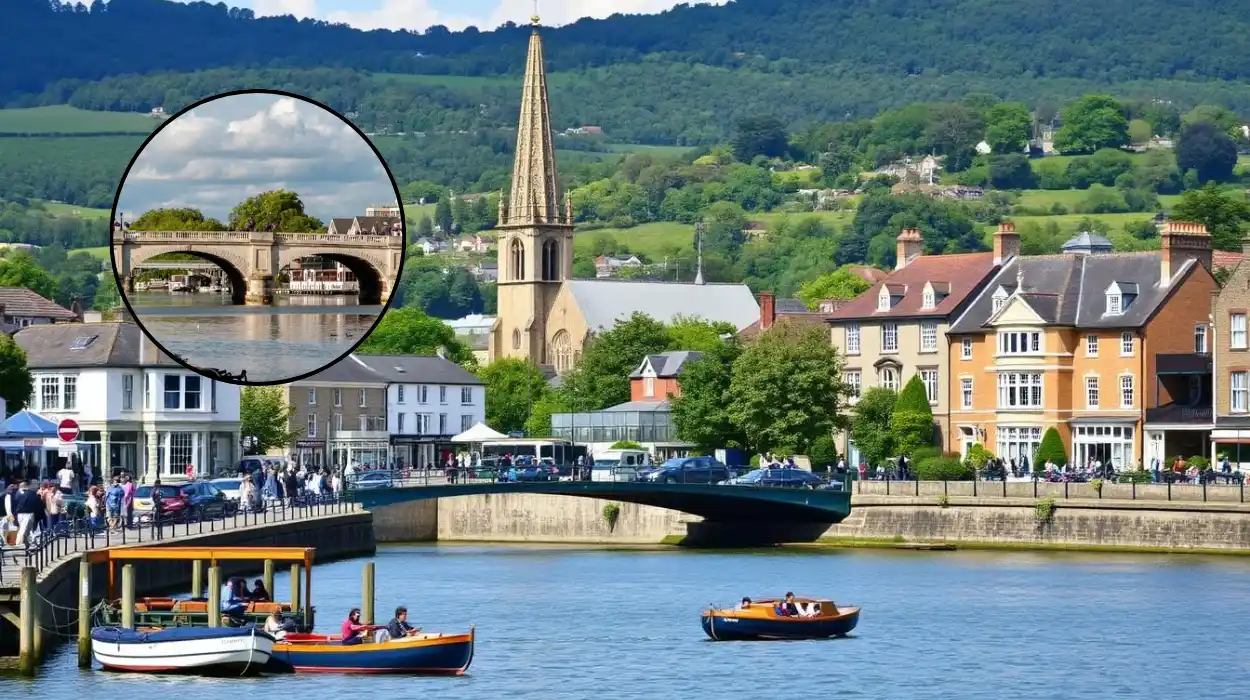
Kingston upon Thames stands as a timeless gem in South London, blending royal heritage with vibrant modern life along the River Thames. This ancient market town, often simply called Kingston, offers endless appeal for locals and visitors seeking history, shopping, and green spaces.
- Royal Origins and Saxon Legacy
- Medieval Market Town Evolution
- Tudor to Georgian Transformations
- Victorian Boom and Industrial Rise
- Becoming the Royal Borough
- Iconic Landmarks and Attractions
- Bustling Shopping and Dining Scene
- Cultural and Educational Hub
- Green Spaces and Outdoor Pursuits
- Getting Around Kingston upon Thames
Royal Origins and Saxon Legacy
Kingston upon Thames traces its roots to Saxon times as “Cyninges tun,” meaning the king’s estate, highlighting its early royal significance. The first record dates to AD 838, when King Egbert of Wessex met the Archbishop of Canterbury there, positioning it on the boundary between Wessex and Mercia. Several Saxon kings received coronations in Kingston, including Edward the Elder in 900, Athelstan in 925, Edmund I in 939 or 940, Eadred in 946, Eadwig in 956, and Edward the Martyr in 975, though some dates vary in historical accounts.
The iconic Coronation Stone in the Guildhall grounds symbolizes this tradition, recovered from the ruins of St Mary’s Chapel in 1730 and later placed prominently as a mounting block before its current spot. Kingston served as a royal manor and strategic Thames crossing point upstream from London Bridge, fostering growth as an inland port for goods like wool, grain, and salmon. By the Domesday Book of 1086, it boasted five watermills, fisheries, and meadows, rendering significant value to William the Conqueror.
Medieval Market Town Evolution
Kingston flourished as a market town from the 12th century, receiving its first charter—likely from King John in 1200 or 1208—granting rights to markets and fairs. Weekly markets and annual fairs traded oats, wheat, fruit, leather, and cattle, with the Thames enabling easy transport to London. Despite setbacks like floods and civil war pillaging in 1263-65, the town thrived, possibly reaching 1,500 residents by 1290.
All Saints Church, dating to the 12th century, anchors this era, serving the parish since at least 838 and hosting events in the Diocese of Southwark. The 1441 charter formally incorporated Kingston as a borough, solidifying its status. Local industries like milling, brewing, tanning, and fishing sustained growth, while Shrovetide Football—a raucous annual event—entertained until outlawed in 1866 due to damage.
Tudor to Georgian Transformations
The 16th century brought grammar school in 1561 and outbreaks of plague in 1625 and 1636, yet Kingston prospered with malting, brewing, and salmon fishing. Cardinal Wolsey’s Hampton Court Palace construction in 1520 nearby boosted demand for local goods. During the English Civil War of 1642, parliamentary forces initially held the town before royalists sacked it post-Edgehill, though it later reverted to parliament.
By 1700, Kingston exported timber via the Thames and hosted three fairs, reduced to one by 1855. The chapel of St Mary Magdalene, founded in 1309 by mayor Edward Lovekyn, survived the Reformation as a rare private chantry. Georgian improvements included gas lighting in 1833, a police force in 1836, and the Market House in 1840.
Victorian Boom and Industrial Rise
The 19th century marked explosive growth with the railway arriving in 1838, pushing population from 8,000 in 1841 to 37,000 by 1901. Surbiton emerged as a commuter hub, while Kingston became Surrey’s county town from 1893 to 1965. Infrastructure advanced with drains in the 1860s, electricity in 1893, and Victoria Hospital in 1897.
Aviation pioneered here from 1912, with Sopwith Aviation producing fighters like the Camel, followed by Hawker’s Hurricane, Hunter, and Harrier at sites like Lower Ham Road until 1992. Brick-making and brewing persisted, and horse buses from 1875 evolved to trams in 1906 and buses in 1931. The Kingston Bypass opened in 1927, easing Thames traffic.
Becoming the Royal Borough
Kingston’s royal title, used customarily, gained formal confirmation from George V in 1927. It formed an urban district in 1894 and borough in 1936, with Guildhall built in 1935. In 1965, amid Greater London creation, it merged with Surbiton and Malden & Coombe into the London Borough of Kingston upon Thames, retaining “Royal Borough” via Queen Elizabeth II’s charter.
Today, as a metropolitan centre in the London Plan, it draws 18 million visitors yearly for retail, home to Kingston University. Population hit 168,063 borough-wide in 2021, with Kingston town wards at 54,925.
Iconic Landmarks and Attractions
Kingston’s Market Place hosts daily markets with fish, jewelry, and local produce, a tradition since 1242. The Bentall Centre (1992) and John Lewis anchor shopping, alongside Eden Walk and Rotunda’s cinema and bowling. Riverside walks through Canbury Gardens lead to Teddington Lock, while upstream paths cross the Hogsmill to Surbiton.
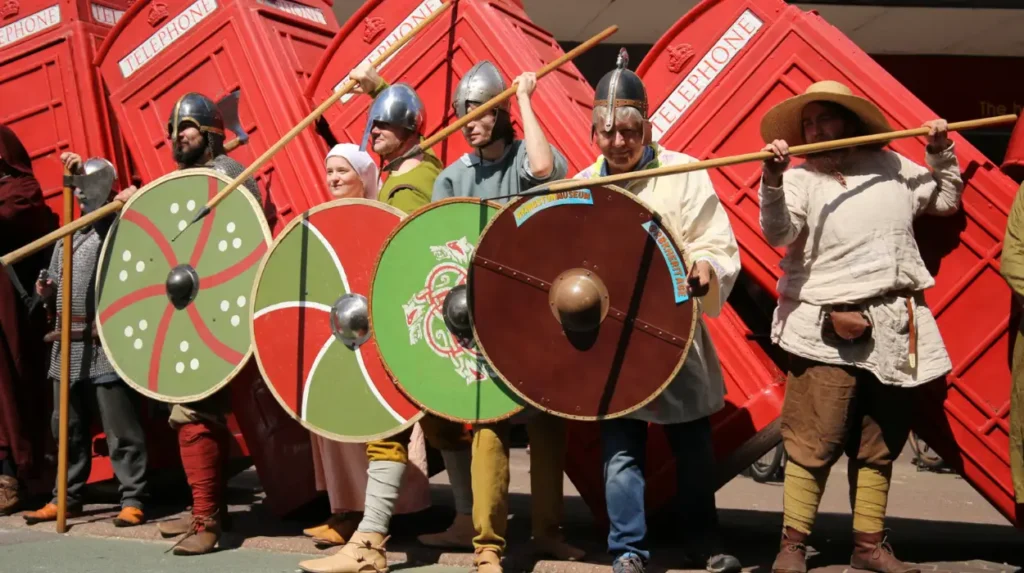
Hampton Court Palace, just west, offers Tudor splendor and gardens. Kingston Museum explores local history, aviation, and art, with trails for families. Public art like David Mach’s Out of Order—12 tipped telephone boxes—and Carole Hodgson’s River Celebration graces the 1989 Relief Road. Kingston Bridge and piers support river tours via Turk Launches.
Bustling Shopping and Dining Scene
Kingston ranks among UK’s top retail spots, with £810 million expenditure in 2010, fifth in Greater London. Pedestrianized streets like Clarence host chains and independents, boosted by the one-way system. Bentalls and Waitrose draw crowds, while pubs like Druid’s Head (famed for 18th-century syllabub) mix with Thai, Indian, and Italian eateries.
The 2013 Kingston Pound local currency, tagged sterling in K£1-20 notes, supported independents until 2021. Ancient fair rights persist, blending heritage with high-street vibrancy for South London shoppers.
Cultural and Educational Hub
Kingston University drives creativity, with alumni like Eadweard Muybridge (born here, pioneered motion photography) and sites honoring John Galsworthy and Jacqueline Wilson. The Rose Theatre (2008) seats 900 for drama, and All Saints hosts choral concerts on its Frobenius organ. Festivals include Readers’ Festival and Festival of the Voice.
Museums, Stanley Picker Gallery, and choirs like Kingston Orpheus enrich arts. Sport thrives at Kingsmeadow (Chelsea Women FC), Kingston Rowing Club (1858), and regattas. Kingston hosted 2012 Olympic cycling and torch relay.
Green Spaces and Outdoor Pursuits
River Thames frontage buzzes with bars and paths to Hampton Court Park across the bridge. Cycle routes like National Cycle Route 4 (EuroVelo 2) link to Greenwich and Reading, with Cycleways 28-30 for safe rides. Parks like Berrylands Nature Reserve and King George’s Recreation Ground offer nature escapes.
Kingfisher Leisure Centre provides pools and gyms, while Sport Kingston promotes activities. Twinnings with Oldenburg (Germany), Delft (Netherlands), and Jaffna (Sri Lanka) foster global ties.
Getting Around Kingston upon Thames
Kingston station (zone 6) connects to Waterloo in 28 minutes via South Western Railway, with Norbiton and Surbiton nearby. Buses from Cromwell Road and Fairfield reach Heathrow and Surrey. The A3 bypass and radials like A307 to Richmond ease access. Cycling networks and river boats complete commuter-friendly transport for South Londoners.