Lambeth, in South London, has a literary heritage shaped by Romantic poetry, religious scholarship, Caribbean-British writing and contemporary spoken-word culture. Its streets, historic buildings, libraries and cultural institutions connect visitors with writers whose work influenced British literature and wider cultural history.
- What Is Lambeth’s Literary Heritage?
- Why Is William Blake Important to Lambeth’s Literary History?
- Which William Blake Works Are Connected with Lambeth?
- How Did Lambeth Influence William Blake’s Writing?
- Where Can Visitors Find William Blake’s Former Home in Lambeth?
- What Can Visitors See at the Blake Commemorative Site?
- How Can Visitors Include the Location in a Literary Walk?
- What Can Visitors Discover at Lambeth Palace Library?
- What Historical Materials Does the Library Preserve?
- Can Tourists Visit Lambeth Palace Library?
- Why Is Lambeth Palace Library Important for Literary Researchers?
- How Is Brixton Connected with Linton Kwesi Johnson’s Poetry?
- What Is Dub Poetry?
- Which Linton Kwesi Johnson Books and Works Should Visitors Know?
- What Makes Brixton Relevant to His Literary Legacy?
- What Is the National Poetry Library’s Connection with Lambeth?
- What Can Visitors Explore Inside the National Poetry Library?
- Can Visitors Use the National Poetry Library for Research?
- How Does Lambeth Archives Help Visitors Explore Literary History?
- What Can Researchers Discover in Lambeth Archives?
- Where Is Lambeth Archives Located?
- Why Should Literary Tourists Visit Local Archives?
- How Does Lambeth’s Caribbean Heritage Influence Its Literary Identity?
- What Is the Relationship Between Caribbean Migration and Literature?
- What Can Visitors Explore Around Windrush Square?
- Which Literary and Cultural Landmarks Can Visitors Combine in Lambeth?
- Waterloo and Hercules Road
- Lambeth Palace and the Historic Library
- Brixton and Black British Cultural History
- Brixton Hill and Local Historical Research
- How Can Visitors Plan a Literary Day Out in Lambeth?
- Morning: Explore William Blake’s Waterloo Connections
- Midday: Discover Lambeth Palace Library
- Afternoon: Explore Brixton’s Literary Connections
- How Has Lambeth’s Urban History Shaped Its Literary Connections?
- Why Is Lambeth Still Relevant to Contemporary Literary Culture?
- How Do Literary Institutions Support Education and Research?
- What Does Lambeth’s Literary Heritage Mean for Future Visitors?
- What Should Visitors Know Before Exploring Lambeth’s Literary Heritage?
- What Can Visitors Discover About Lambeth’s Literary Connections?
The borough offers several ways to explore this heritage. Visitors can discover the former home of poet and artist William Blake in Hercules Road, examine historic manuscripts at Lambeth Palace Library, explore the poetry of Linton Kwesi Johnson in Brixton and visit the National Poetry Library at the Southbank Centre.
Lambeth’s literary identity also reflects the changing social history of London. Its development from a riverside settlement into a densely populated urban borough influenced writers who explored industrialisation, migration, inequality, identity and political change.
For tourists, these connections provide a different way to understand South London. Literary landmarks reveal how writers experienced the neighbourhood, how books and manuscripts were preserved, and how local communities contributed to modern poetry and cultural expression.
What Is Lambeth’s Literary Heritage?
Lambeth’s literary heritage comprises the writers, libraries, historic manuscripts and cultural movements connected with the borough. Its strongest associations include William Blake’s residence, Linton Kwesi Johnson’s Brixton connections, Lambeth Palace Library and the National Poetry Library.
Literary heritage refers to the relationship between a place and its written or spoken cultural history. It includes writers who lived or worked there, buildings associated with their lives, published works connected with local experiences and institutions that preserve literary material.
Lambeth has developed its literary identity through different historical periods. Its connections are not restricted to traditional novels and printed poetry. They also include political writing, religious documents, Caribbean literary traditions and contemporary performance poetry.
The borough covers several neighbourhoods, including Waterloo, Vauxhall, Kennington, Stockwell, Brixton, Herne Hill, Tulse Hill and Streatham. Each area contributes to Lambeth’s wider social and cultural identity.
Three important elements define its literary significance:
- Romantic literature: William Blake lived and produced important works in Lambeth between approximately 1790 and 1800.
- Historical scholarship: Lambeth Palace Library preserves manuscripts, printed books and ecclesiastical records dating back centuries.
- Modern poetry: Brixton’s association with Linton Kwesi Johnson demonstrates the influence of Caribbean-British voices on contemporary literature.
These connections make Lambeth relevant to literary historians, researchers, students and visitors interested in London’s cultural development.
Why Is William Blake Important to Lambeth’s Literary History?
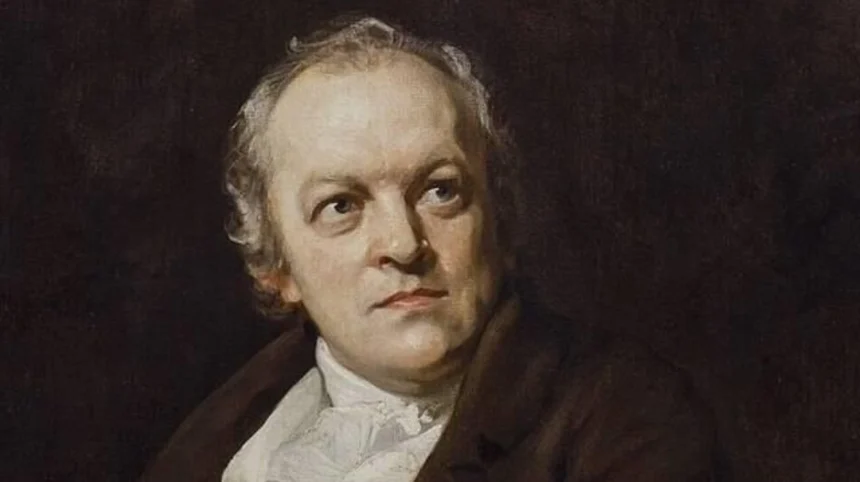
William Blake is one of Lambeth’s most significant literary figures because he lived at 13 Hercules Buildings between approximately 1790 and 1800. During this period, he produced important illuminated books, combining original poetry, illustration and experimental printing techniques.
William Blake (1757–1827) was an English poet, painter, printmaker and visionary artist. His writing challenged conventional religious, political and social ideas. His illustrated books combined poetry with visual artwork, creating a distinctive approach to publishing.
Blake moved to Lambeth with his wife, Catherine Blake, around 1790. Their home was 13 Hercules Buildings, a property situated in the area now associated with Hercules Road.
The Lambeth residence became an important location in his creative life. Blake produced several major works there, including America a Prophecy, Europe a Prophecy and The Book of Urizen.
Which William Blake Works Are Connected with Lambeth?
Several important works belong to Blake’s Lambeth period, demonstrating the development of his poetic and artistic ideas.
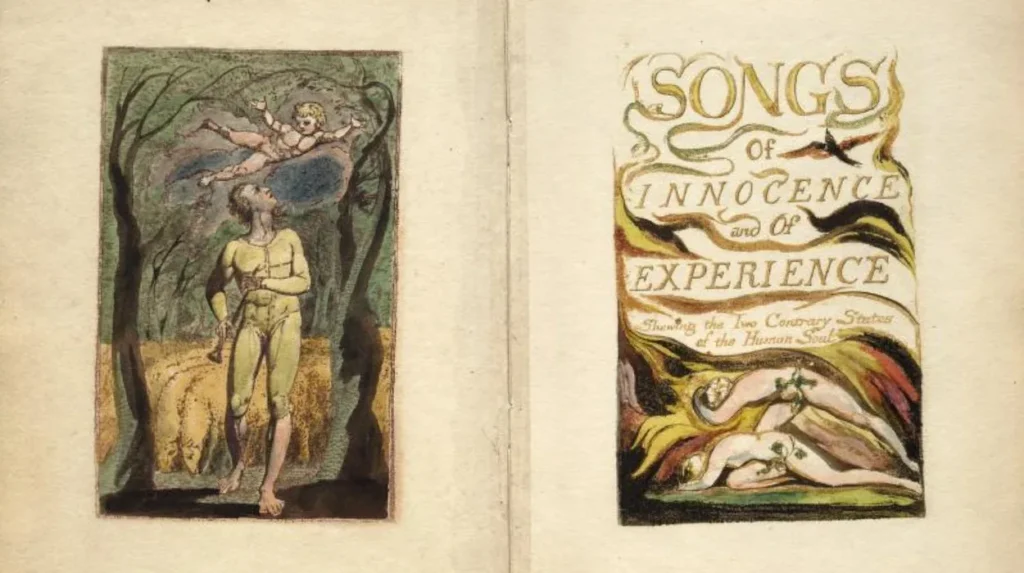
Songs of Experience is particularly significant. Published in 1794, it forms part of the combined collection Songs of Innocence and of Experience. The poems examine contrasting experiences of childhood, society, innocence, suffering and human awareness.
The Marriage of Heaven and Hell is another important work associated with Blake’s early Lambeth period. It challenges established religious and philosophical assumptions through a combination of prose, poetry and symbolic illustrations.
Other works include:
- America a Prophecy (1793), which explores revolutionary themes.
- Europe a Prophecy (1794), which presents symbolic visions of political and spiritual conflict.
- The First Book of Urizen (1794), which examines creation, restriction and the origins of oppressive systems.
These publications demonstrate how Blake used Lambeth as a base for developing his distinctive literary and artistic approach.
How Did Lambeth Influence William Blake’s Writing?
Lambeth was experiencing significant physical and social change during Blake’s residence. Industrial development, urban expansion and changing working conditions were transforming parts of South London.
The neighbourhood provided a different environment from the commercial and residential districts where Blake had previously lived. Its changing landscape formed part of the wider London society that influenced his thinking.
Blake’s writing frequently explored inequality, institutional power, freedom and the relationship between individuals and society. His literary themes therefore connect with the wider historical conditions of late eighteenth-century London.
The Metropolitan Museum of Art and Tate provide useful historical material about Blake’s life, residence and artistic development.
Where Can Visitors Find William Blake’s Former Home in Lambeth?
William Blake’s former residence stood at 13 Hercules Buildings, near present-day Hercules Road in Waterloo. Although the original house was demolished in 1918, a commemorative blue plaque marks its historical location within the modern William Blake Estate.
The former home of William Blake is one of the most direct physical connections between Lambeth and literary history.
Hercules Buildings was the name of the historic residential development where Blake lived with his wife. The original building no longer survives, but its location remains identifiable through the commemorative plaque.
The site is now associated with the William Blake Estate on Hercules Road, London SE1.
What Can Visitors See at the Blake Commemorative Site?
Visitors can examine the blue plaque marking the location of Blake’s former home. The plaque provides a connection between the modern residential landscape and the poet’s eighteenth-century life.
The surrounding streets also help visitors understand the geographical relationship between Blake’s residence and the wider Waterloo district.
A visit is particularly useful when combined with reading Blake’s poetry. Exploring the location after studying Songs of Experience or The Marriage of Heaven and Hell provides historical context for his creative development.
The original house was demolished in the early twentieth century, so visitors should not expect a preserved historic interior or a dedicated Blake museum at the address.
How Can Visitors Include the Location in a Literary Walk?
Hercules Road provides a convenient starting point for exploring Waterloo’s cultural history.
Visitors can combine the former Blake residence with nearby South Bank cultural institutions. The National Poetry Library offers a contemporary connection to the literary traditions that developed long after Blake’s lifetime.
This creates a useful historical route linking eighteenth-century poetry with modern literary research.
What Can Visitors Discover at Lambeth Palace Library?
Lambeth Palace Library is the historic library and archive of the Archbishops of Canterbury. Founded in 1610, it preserves medieval manuscripts, rare printed books, ecclesiastical records and historical documents that illuminate Britain’s religious, political and intellectual development.
Lambeth Palace Library is one of the borough’s most important historical research institutions. It is located within the grounds of Lambeth Palace, the official London residence of the Archbishop of Canterbury.
The library was established in 1610 after Archbishop Richard Bancroft bequeathed his collection of books and manuscripts for the use of successive Archbishops of Canterbury.
Its collections expanded through donations, institutional records and historical acquisitions.
The library preserves material covering religious history, political developments, church administration and intellectual life.
What Historical Materials Does the Library Preserve?
The collections include manuscripts, printed books, letters, official documents and historical records.
Some manuscripts date back to the ninth century, providing evidence of medieval religious scholarship and written communication.
The collections also document the development of the Church of England and the work of successive Archbishops of Canterbury.
Researchers use these materials to investigate historical subjects such as:
- Medieval religious writing, including illuminated manuscripts and theological texts.
- Church administration, including institutional correspondence and official records.
- British political and social history, including documents associated with religious institutions and public life.
The library therefore offers a broader understanding of the written history surrounding Lambeth.
Can Tourists Visit Lambeth Palace Library?
Visitors can explore public exhibitions when available. The exhibitions display selected material from the library’s extensive collections.
The reading room serves researchers who require access to historical documents. Access to original manuscripts generally involves following the library’s registration and consultation procedures.
Public lectures and educational activities also provide opportunities to learn about historical collections.
Visitors should check the official Lambeth Palace Library website before travelling because exhibition schedules, opening arrangements and access requirements change.
Why Is Lambeth Palace Library Important for Literary Researchers?
Historical manuscripts provide evidence of how language, religious ideas and written communication developed across different periods.
The library’s collections help researchers study the relationship between literature and religious institutions. They also support investigations into historical authorship, publishing, education and intellectual exchange.
Its importance extends beyond Lambeth because the collections document national and international religious history.
For visitors interested in early books and manuscript preservation, the library provides a significant cultural destination.
How Is Brixton Connected with Linton Kwesi Johnson’s Poetry?
Brixton is closely connected with Linton Kwesi Johnson, the Jamaican-born British dub poet who moved to the neighbourhood as a child in 1963. His writing explores racism, migration, identity and social inequality within Black British communities.
Linton Kwesi Johnson is one of the most influential figures in modern British poetry. Born in Chapelton, Jamaica, in 1952, he arrived in London in 1963 and joined his mother in Brixton.
His experiences in South London influenced his understanding of British society, racial inequality and the experiences of Caribbean migrants.
Johnson developed a distinctive poetic style that combines spoken verse with reggae rhythms. This form became widely recognised as dub poetry.
His literary contribution demonstrates how Lambeth’s cultural identity extends beyond traditional English literary history.
What Is Dub Poetry?
Dub poetry is a performance-based literary form that combines spoken poetry with reggae rhythms and Caribbean linguistic traditions.
The form developed through the cultural experiences of Caribbean communities, particularly in Jamaica and Britain.
Unlike conventional poetry designed primarily for silent reading, dub poetry frequently uses rhythm, repetition, vocal delivery and musical performance.
Johnson’s work uses Jamaican Creole, often called Jamaican Patois, to communicate political and social experiences.
His poetry explores several themes, including:
- Racial discrimination, examining the experiences of Black communities in Britain.
- Migration and identity, exploring the relationship between Caribbean heritage and British life.
- Political resistance, addressing inequality, policing and institutional power.
These themes made his work an important contribution to modern British literary and cultural history.
Which Linton Kwesi Johnson Books and Works Should Visitors Know?
Visitors interested in his literary contribution can begin with several important publications.
Voices of the Living and the Dead (1974) was his first collection of poetry, published by the Race Today collective.
Dread Beat An’ Blood (1975) established his distinctive poetic voice and later became associated with his 1978 recording of the same title.
Other notable works include Inglan Is a Bitch and Mi Revalueshanary Fren.
His poetry frequently presents the experiences of working-class Black communities through direct language and political commentary.
Johnson became the first Black poet and the second living poet to be published in the Penguin Modern Classics series.
He received the PEN Pinter Prize in 2020, recognising his significant contribution to literature.
What Makes Brixton Relevant to His Literary Legacy?
Brixton provides the geographical and social context for understanding Johnson’s development.
The neighbourhood has a long association with Caribbean migration, Black British culture, political activism and artistic expression.
His experiences in Brixton formed part of a wider cultural movement that challenged racial discrimination and expanded the representation of Black voices in British literature.
Visitors exploring Brixton can therefore understand the relationship between place, community and literary expression.
Goldsmiths, University of London, and the National Portrait Gallery provide biographical information about Johnson’s life and achievements.
What Is the National Poetry Library’s Connection with Lambeth?
The National Poetry Library, located on Level 5 of the Royal Festival Hall at the Southbank Centre, provides visitors with access to a major collection of modern poetry. Founded in 1953, it supports poetry reading, research and literary discovery.
The National Poetry Library is an important destination for anyone exploring contemporary literary culture in South London.
It was founded by the Arts Council in 1953 and opened by poets T. S. Eliot and Herbert Read. In 1988, it moved to its present location at the Southbank Centre.
The collection focuses on modern and contemporary poetry. It provides access to published poetry from Britain and international literary traditions.
Unlike a conventional general-purpose library, its specialist focus makes it particularly relevant to poetry readers, writers, academics and students.
What Can Visitors Explore Inside the National Poetry Library?
The library holds an extensive collection of modern poetry, providing opportunities to discover established and emerging writers.
Visitors can explore poetry books, literary publications and resources relating to different poetic traditions.
Its collection supports research into subjects such as:
- British contemporary poetry, including works by established twentieth-century and twenty-first-century poets.
- International poetry, including writing from different languages and literary cultures.
- Experimental poetry, including modern approaches to language, structure and performance.
The institution also supports the wider poetry community through its public programme and literary activities.
Can Visitors Use the National Poetry Library for Research?
Yes. The library provides resources for poetry research and literary study.
Its collection supports readers investigating individual poets, literary movements and developments in contemporary verse.
The library is free to join for people across the UK. Its location within the Royal Festival Hall also makes it accessible to visitors exploring the South Bank.
The library’s published visiting information identifies Tuesday to Sunday as opening days, with Monday closures. Opening times and access arrangements should be checked before travelling.
Visitors should distinguish between using the specialist poetry collection and finding a general workspace. The library specifically asks people studying unrelated subjects or seeking ordinary working space to use alternative areas of the Royal Festival Hall.
How Does Lambeth Archives Help Visitors Explore Literary History?
Lambeth Archives is the borough’s official record office and local studies library. Its collections preserve historical documents, photographs, maps, publications and personal records that help researchers investigate Lambeth’s writers, communities and cultural development.
Lambeth Archives provides an important connection between literary heritage and local historical research.
The institution preserves records relating to the London Borough of Lambeth and its communities. Its collections date back to the sixteenth century and include material from local government, schools, churches, businesses, organisations and individuals.
For literary researchers, these collections provide evidence about the social environments in which writers lived and worked.
What Can Researchers Discover in Lambeth Archives?
The archives support research into several aspects of local history.
These include historical biographies, neighbourhood development, Black history, women’s history, social history and local architecture.
Documents and photographs can help researchers understand how Lambeth changed across different periods.
For example, someone researching William Blake’s Lambeth residence can investigate the historical development of Hercules Buildings and its surrounding neighbourhood.
A researcher studying Linton Kwesi Johnson can explore the wider history of Brixton, Caribbean migration and Black British cultural development.
The archives also hold records that support family and house-history research.
Where Is Lambeth Archives Located?
Lambeth Archives is located at 16 Brixton Hill, London SW2 1ET.
Its modern facilities include a searchroom and space for exhibitions, meetings and educational activities.
The service welcomes local residents, students and international researchers. Visitors should check current opening times and exhibition arrangements with Lambeth Council before planning a visit.
Why Should Literary Tourists Visit Local Archives?
Literary tourism often concentrates on famous authors and preserved buildings. However, archival collections provide another way to investigate a location’s cultural identity.
Original records establish historical context and help distinguish documented facts from popular assumptions.
Visitors can investigate how neighbourhoods developed, which communities shaped local culture and how writers’ surroundings changed over time.
Lambeth Archives is particularly useful for people interested in deeper research rather than simply visiting commemorative landmarks.
How Does Lambeth’s Caribbean Heritage Influence Its Literary Identity?
Lambeth’s Caribbean heritage contributes to its literary identity through migration, community activism, music and spoken-word traditions. Brixton is particularly significant because Caribbean communities helped develop cultural movements that influenced modern Black British poetry.
Lambeth’s literary history cannot be understood entirely through eighteenth-century British writers.
The borough’s twentieth-century development introduced new cultural influences through Caribbean migration and the growth of Black communities in South London.
Brixton became an important centre of Caribbean-British cultural life. Its history connects literature with music, political activism, education and community organisation.
The arrival of Caribbean migrants after the Second World War contributed to London’s changing cultural landscape. The Windrush generation, named after the Empire Windrush ship that arrived in Britain in 1948, became a major part of this history.
What Is the Relationship Between Caribbean Migration and Literature?
Migration influenced British literature by introducing new experiences, languages, cultural references and social perspectives.
Caribbean writers explored questions of identity, belonging, discrimination and cultural inheritance.
In Brixton, these themes became particularly visible through poetry and music.
Linton Kwesi Johnson’s writing provides a strong example. His poems examine the realities of Black British life through a combination of political commentary and Caribbean linguistic expression.
Other writers from the wider Caribbean-British literary tradition also contributed to this development, including:
- James Berry, a Jamaican-born poet whose work explored Caribbean culture and migration.
- Grace Nichols, a Guyanese-born poet whose writing examines identity, displacement and cultural memory.
- Benjamin Zephaniah, a British poet whose work addressed social justice, multiculturalism and political issues.
These writers should not all be described as Lambeth residents. Their work demonstrates the wider literary traditions that help visitors understand Brixton’s cultural context.
What Can Visitors Explore Around Windrush Square?
Windrush Square is an important public space in Brixton associated with Caribbean heritage and Black British history.
It provides a geographical starting point for exploring the neighbourhood’s cultural institutions and historical landmarks.
The nearby Black Cultural Archives preserves and presents the histories of African and Caribbean people in Britain.
Its exhibitions and collections provide valuable context for understanding the communities that influenced modern Black British literature.
For visitors interested in Linton Kwesi Johnson, exploring this area helps connect his poetry with the broader historical experiences of Caribbean communities in London.
Which Literary and Cultural Landmarks Can Visitors Combine in Lambeth?
Visitors can combine several literary landmarks across Lambeth, including Hercules Road, Lambeth Palace Library, the National Poetry Library, Brixton’s Windrush Square and Lambeth Archives. These locations provide complementary perspectives on historical writing, poetry and community heritage.
A literary visit becomes more informative when different locations are considered together.
Lambeth’s literary landmarks are spread across the borough, so visitors should plan separate geographical sections rather than assume everything is within walking distance.
Waterloo and Hercules Road
Hercules Road provides the strongest direct connection with William Blake.
Visitors can locate the commemorative plaque associated with his former residence and explore the surrounding Waterloo streets.
The National Poetry Library at the Royal Festival Hall offers another literary destination in the same general district.
These locations connect eighteenth-century poetry with modern literary preservation.
Lambeth Palace and the Historic Library
Lambeth Palace provides a historical setting for exploring the development of religious scholarship and manuscript preservation.
Its library offers access to selected exhibitions and historical collections.
Visitors interested in early printed books and medieval manuscripts should include this location in their itinerary.
Access to Lambeth Palace and its library should be checked separately because they have different visitor arrangements.
Brixton and Black British Cultural History
Brixton provides a different literary experience through its connection with Caribbean-British poetry and cultural activism.
Windrush Square and the Black Cultural Archives offer opportunities to understand the historical experiences that influenced writers such as Linton Kwesi Johnson.
Visitors can also explore Brixton’s wider cultural environment, including its public spaces and historic commercial streets.
Brixton Hill and Local Historical Research
Lambeth Archives provides a research-focused destination for visitors interested in the borough’s documentary history.
Its collections support investigations into the people, buildings and communities that shaped Lambeth.
This location is particularly useful for visitors undertaking academic research or developing a deeper understanding of local history.
How Can Visitors Plan a Literary Day Out in Lambeth?
A Lambeth literary day out works best when visitors organise locations by geographical area. A Waterloo visit can cover William Blake and the National Poetry Library, while a separate Brixton visit explores Caribbean-British poetry, archives and Black cultural heritage.
A structured itinerary helps visitors explore different literary connections without spending unnecessary time travelling between distant neighbourhoods.
The following approach combines major landmarks with opportunities for independent exploration.
Morning: Explore William Blake’s Waterloo Connections
Start at Hercules Road and locate the commemorative plaque marking Blake’s former home.
Allow time to explore the surrounding streets and understand the relationship between the historic residence and modern Waterloo.
Continue towards the Royal Festival Hall and visit the National Poetry Library.
The library offers an opportunity to explore modern poetry and discover writers from different literary traditions.
Check its opening hours before starting the visit.
Midday: Discover Lambeth Palace Library
Continue towards Lambeth Palace and investigate its historic collections.
Check whether public exhibitions are available during your visit.
The library is particularly relevant to visitors interested in medieval manuscripts, historical books and religious scholarship.
Allow additional time for the journey between Waterloo and Lambeth Palace.
Afternoon: Explore Brixton’s Literary Connections
Travel to Brixton to explore the neighbourhood associated with Linton Kwesi Johnson.
Start around Windrush Square and visit the Black Cultural Archives if exhibitions or public activities are available.
Explore the area’s historical connections with Caribbean migration, community activism and Black British culture.
Finish at Lambeth Archives on Brixton Hill if you have arranged your visit around its opening times and research facilities.
This itinerary combines different literary periods and cultural experiences within one day, although visitors should allow sufficient travel and exhibition time.
How Has Lambeth’s Urban History Shaped Its Literary Connections?
Lambeth’s urban history shaped its literary connections through industrialisation, population growth, migration and cultural change. These developments influenced the subjects explored by writers, particularly those examining working-class experiences, social inequality, identity and community life.
Lambeth developed from a collection of riverside settlements and historic parishes into a densely populated part of South London.
Its position beside the River Thames influenced its economic and social development. Transport connections, commercial activity and industrial expansion contributed to the growth of Waterloo, Vauxhall and surrounding neighbourhoods.
The expansion of London during the eighteenth and nineteenth centuries also transformed the physical environment.
William Blake experienced Lambeth during an important period of urban change. His writing explored the relationship between individuals, institutions and social conditions.
During the twentieth century, migration transformed the borough’s population and cultural identity. Brixton became particularly significant in the development of Caribbean-British culture.
These changes created different literary perspectives across successive generations.
Where Can Visitors Learn More About Lambeth’s Historical Development?
Lambeth Archives provides documentary evidence of the borough’s development through historical photographs, maps, records and publications.
Visitors interested in understanding the origins of its neighbourhoods can investigate the history of Waterloo, Vauxhall, Kennington and Brixton.
As you explore Lambeth’s modern literary landmarks, you are also crossing places shaped by centuries of social and architectural change. Discover the full [Historical Development of Lambeth and Its Neighbourhoods] to understand how the borough developed from historic settlements into modern South London.
Understanding this historical background provides context for the literary connections associated with its streets, institutions and communities.
Why Is Lambeth Still Relevant to Contemporary Literary Culture?
Lambeth remains relevant to contemporary literary culture because its libraries, archives, cultural organisations and diverse communities support the preservation and development of written expression. Its connections with poetry, migration and social history continue to attract readers and researchers.
The borough’s literary significance is not limited to historic writers.
Its institutions continue to preserve historical material and provide opportunities for literary research.
The National Poetry Library maintains a specialist collection of contemporary poetry. Lambeth Palace Library preserves centuries of religious and historical documents. Lambeth Archives makes local historical records available to researchers.
Brixton’s cultural identity also demonstrates the continuing relationship between literature, music and community experience.
How Do Literary Institutions Support Education and Research?
Libraries and archives provide access to primary and secondary historical resources.
Primary sources are original materials produced during the period being studied. Examples include handwritten letters, historical manuscripts, original photographs and official records.
Secondary sources interpret or analyse historical material. Examples include biographies, academic books and literary research papers.
These resources support several educational activities:
- Literary research, including investigations into writers’ lives and published works.
- Historical analysis, including studies of migration, neighbourhood development and social change.
- Creative education, including poetry reading, writing workshops and literary discussions.
Students and researchers can use these resources to investigate the relationship between literature and local history.
What Does Lambeth’s Literary Heritage Mean for Future Visitors?
Lambeth’s literary heritage provides opportunities for cultural tourism, independent research and educational visits.
Its historical buildings and commemorative sites help visitors understand the geographical connections behind literary works.
Its libraries and archives provide access to original historical evidence.
Its contemporary cultural communities demonstrate how literary traditions continue to develop.
The borough therefore offers a combination of historical discovery and modern cultural experiences.
Explore More Area Guide
Lambeth Musical History: 7 Attractions in South London
Where to Find Independent Art Galleries in Lambeth, London
What Should Visitors Know Before Exploring Lambeth’s Literary Heritage?
Visitors should check opening arrangements, exhibition schedules and research access requirements before visiting Lambeth’s literary landmarks. Some locations offer public access, while specialist archives and historic collections require advance planning or specific registration procedures.
A little preparation helps visitors make better use of their time.
The following considerations are particularly useful:
- William Blake’s former residence: The original property has been demolished. Visitors can see its commemorative location rather than an intact historic house.
- National Poetry Library: Check the Southbank Centre’s current opening hours and visitor information.
- Lambeth Palace Library: Check exhibition availability and access arrangements for original documents.
- Lambeth Archives: Confirm searchroom opening times and any requirements for consulting historical records.
- Black Cultural Archives: Check current exhibitions, opening arrangements and event schedules before travelling to Brixton.
Visitors should also consider public transport when planning a route between Waterloo, Lambeth Palace and Brixton.
Waterloo provides convenient connections for the South Bank and Hercules Road. Brixton has an Underground station on the Victoria line, as well as National Rail services.
Combining nearby attractions into geographical sections makes a literary visit easier to manage.
What Can Visitors Discover About Lambeth’s Literary Connections?
Lambeth offers a distinctive literary experience through its association with historical writers, modern poets, manuscript collections and cultural institutions.
William Blake’s former residence in Hercules Road connects the borough with the Romantic literary movement. Lambeth Palace Library preserves centuries of religious and intellectual history. The National Poetry Library supports contemporary poetry, while Brixton demonstrates the influence of Caribbean-British communities through the work of Linton Kwesi Johnson.
Lambeth Archives provides another important resource for understanding the people and neighbourhoods behind these connections.
Together, these destinations reveal how literature reflects the changing identity of South London. Visitors can explore historic writing, investigate original documents and discover the communities that continue to shape British literary culture.
What is Lambeth famous for in literary history?
Lambeth is famous for its connection with poet William Blake, who lived on Hercules Road, and modern poet Linton Kwesi Johnson, whose life and work are closely associated with Brixton.