Key Points
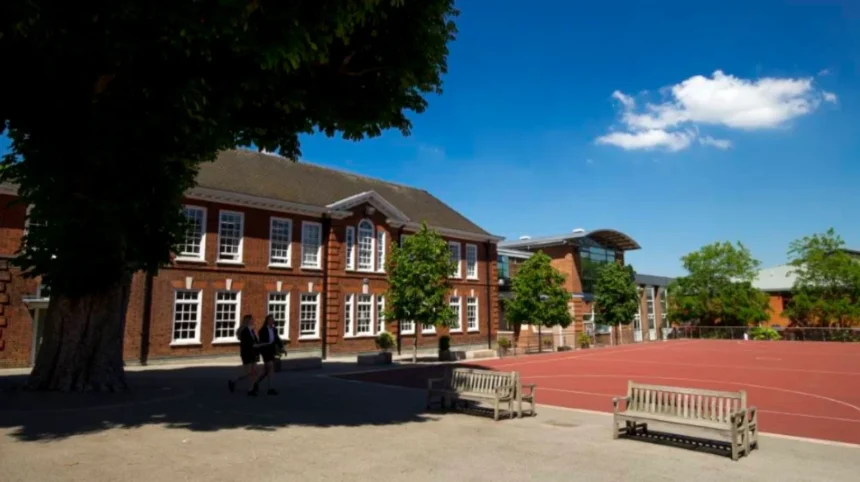
- Dulwich Dominance: Three prestigious schools located in Dulwich—Alleyn’s School, James Allen’s Girls’ School (JAGS), and Dulwich College—have taken the top three places in the 2026 south east London independent school rankings.
- Top Rank: As compiled by education analysis platform Discovery Vision Hub, Alleyn’s School in Dulwich has been named the strongest-performing independent school in south east London.
- National Standing: Alleyn’s School achieved a national ranking of 15th, while Trinity School in Croydon secured 36th place and James Allen’s Girls’ School (JAGS) ranked 37th nationally.
- Evaluation Metrics: The performance standings are calculated using recent exam outcomes, higher education and university destinations, and relative placements in national independent school league tables.
- Data Sources: Findings were compiled utilizing data from educational ranking and prep resources, including Exampapers Plus and The Times private school league tables.
- Borough Coverage: The comprehensive rankings evaluate leading fee-paying institutions spanning the London boroughs of Southwark, Greenwich, Lewisham, Bexley, and Croydon, incorporating co-educational, all-boys, and all-girls establishments.
South London (South London News) October 12, 2026 – Which independent schools have been recognized as the top academic performers across south east London for 2026? A newly published regional education assessment has named Alleyn’s School in Dulwich as the leading independent school in south east London. The comprehensive ranking, compiled by Discovery Vision Hub, positions three prominent Dulwich establishments at the summit of the regional leader board, with James Allen’s Girls’ School (JAGS) taking second place and Dulwich College claiming the third spot.
How do the region’s top institutions rank on a broader national scale? Beyond the local standings, the data compiled from independent education benchmarks shows significant national prominence for south east London institutions. Alleyn’s School achieved 15th position overall across the United Kingdom. Meanwhile, Trinity School in Croydon secured 36th place nationally, followed closely by James Allen’s Girls’ School (JAGS), which achieved 37th position in the national independent school standings.
How were the 2026 performance rankings calculated? Educational researchers formulated the top 10 list by analysing data gathered from multiple industry benchmarking bodies, including examination guidance platform Exampapers Plus and The Times private school league tables. The primary criteria used to determine each school’s standing included public examination results, university destination outcomes, and historical positioning in published independent school performance metrics.
What geographic areas and school models are included in the published list? The 2026 survey evaluates independent academic institutions across a wide territorial area, encompassing the local authority districts of Southwark, Greenwich, Lewisham, Bexley, and Croydon. The dataset evaluates a broad range of educational structures, incorporating single-sex boys’ and girls’ institutions alongside fully co-educational day and boarding schools.
What is the Background to Independent School League Tables in South East London?
Independent school rankings in the United Kingdom have long relied on aggregated public examination performance—specifically GCSE and A-Level or International Baccalaureate results—to assess institutional effectiveness. Platforms such as The Times Parent Power guide and specialist education analysis services like Exampapers Plus regularly process Department for Education statistical returns alongside independent exam board data to track comparative academic progress.
South east London, particularly the historic educational hub around Dulwich and the adjacent borough of Croydon, contains one of the highest concentrations of long-established independent schools in Greater London. Schools in this area frequently draw pupils from across the capital due to established transport links and distinct historical foundations. Over recent academic cycles, performance league tables have increasingly incorporated qualitative and long-term output markers alongside raw test scores, such as progression rates to Russell Group institutions, Oxbridge admissions, and specialist higher education destinations.
What is the Prediction for How This Development Will Affect Local Families and Schools?
How will these updated rankings impact parents, prospective students, and the local education sector? The publication of the 2026 top 10 list is expected to directly influence consumer demand and administrative operations across several key demographics:
Prospective Parents and Applicants
Families preparing for competitive intake points—such as 11-plus, 13-plus, and 16-plus entry—frequently utilize regional rankings to refine application choices. High-ranking institutions like Alleyn’s, JAGS, and Dulwich College are likely to experience an increase in application volumes for upcoming admission cycles. This elevated demand typically intensifies entry competition, raising standard offer thresholds and requiring applicants to demonstrate higher baseline scores during entrance assessments.
Regional Property and Housing Dynamics
The concentration of top-tier schools in specific geographic pockets, notably Southwark’s Dulwich area and Croydon, historically correlates with localized residential demand. Real estate analysis demonstrates that families routinely prioritize housing proximity to high-performing independent schools to ease daily commuting requirements. Consequently, confirmed leader board dominance may sustain premium property demand within designated school catchments and surrounding transport corridors.
Mid-Tier and Competing Institutions
For independent schools positioned further down the comparative rankings or outside the regional top 10, published standings create strategic imperative to review academic programming, co-curricular provisions, and university placement support. To retain enrollment levels in a competitive market, non-ranked or lower-ranked fee-paying schools may expand bursary schemes, upgrade physical infrastructure, or adjust curricular options to attract families evaluating educational return on investment.