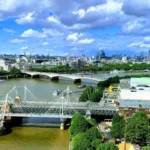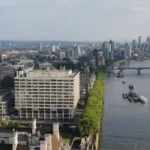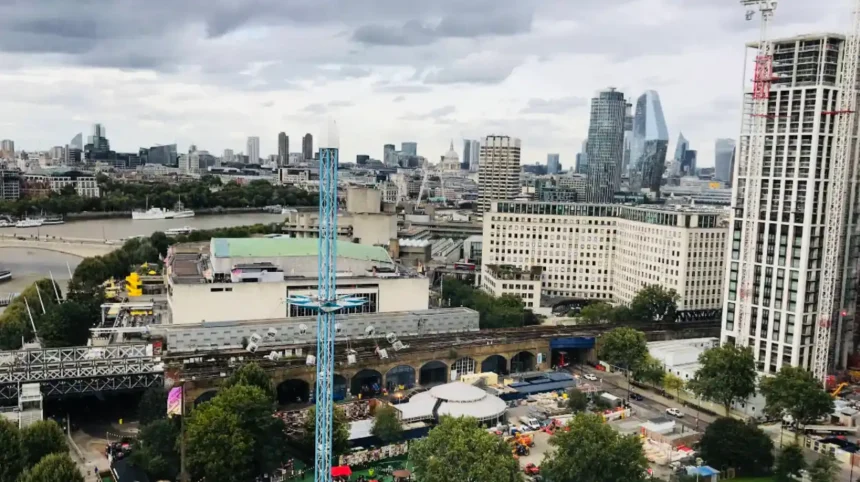
The London Borough of Lambeth developed as a vital riverside transport hub, industrial area, and cultural centre south of the River Thames. It formally emerged in 1965 through the merger of the Metropolitan Boroughs of Lambeth and Wandsworth sectors.
- Where are the primary cultural landmarks located in North Lambeth?
- How do visitors navigate the markets of Brixton and Central Lambeth?
- What green spaces and public parks exist in South Lambeth?
- Where can remote workers and digital nomads work in Lambeth?
- How is public transport structured throughout the borough?
- What live music and nightlife venues operate in Lambeth?
- How do architectural styles vary across Lambeth neighborhoods?
- What major annual events and festivals take place in Lambeth?
- Where can visitors find authentic dining experiences across Lambeth?
- What administrative and practical details must visitors know?
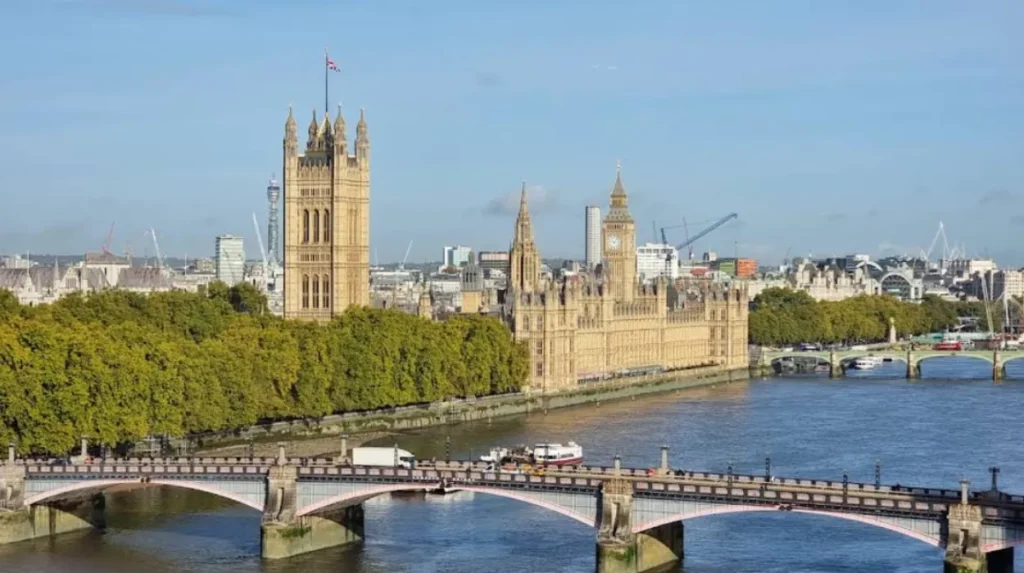
The London Borough of Lambeth spans $26.82\text{ square kilometres}$ from the southern bank of the River Thames down to the borders of Croydon and Merton. Located directly across the water from Westminster, Lambeth historically functioned as a primary entry point into central London. The opening of Westminster Bridge in 1750 and Blackfriars Bridge in 1769 accelerated residential expansion across the northern Marsh ward, transforming agricultural land into urban settlements.
The industrial revolution turned the borough into a centre for engineering, manufacturing, and pottery. The Royal Doulton Pottery factory operated in Vauxhall from 1815 to 1956, establishing Lambeth as an international ceramics hub. The expansion of the London and South Western Railway in 1848 led to the construction of Waterloo Station. Waterloo Station remains the busiest railway terminal in the United Kingdom, serving over 41 million passengers annually.
The London County Council developed extensive public housing schemes across the borough during the mid-20th century. The post-war reconstruction period brought significant demographic changes, notably the arrival of the HMT Empire Windrush at Tilbury Docks in 1948. Many Caribbean immigrants settled in Brixton, establishing the borough as the national capital of British Caribbean culture.
Administrative reorganization under the London Government Act 1963 established the modern London Borough of Lambeth on 1 April 1965. This legislation combined the former Metropolitan Borough of Lambeth with eastern sections of the Metropolitan Borough of Wandsworth, including Clapham and Streatham. Today, the borough contains a population exceeding 318,000 residents across 21 electoral wards. As you explore the modern site, you are crossing land with a deep heritage. Read about the full [History of Lambeth and the South Bank] to understand its origins.
Where are the primary cultural landmarks located in North Lambeth?
North Lambeth contains major cultural landmarks concentrated along the South Bank of the River Thames and Waterloo. Key sites include the Royal National Theatre, the Southbank Centre, the Lambeth Palace estate, and the Imperial War Museum in Geraldine Mary Harmsworth Park.
The South Bank cultural precinct occupies a 2-kilometre stretch along the Thames, representing the largest continuous arts centre in Europe. The Southbank Centre manages three main performance venues: Royal Festival Hall, Queen Elizabeth Hall, and the Hayward Gallery. The Royal Festival Hall opened in 1951 as the main architectural contribution to the Festival of Britain. It hosts over 2,000 paid performances annually, drawing more than 4 million visitors.
The Royal National Theatre stands adjacent to the Southbank Centre. Designed by architects Sir Denys Lasdun and Patrick Softley, the brutalist landmark opened its first auditorium in 1976. The building houses three individual theatres: the Olivier Theatre, the Lyttelton Theatre, and the Dorfman Theatre. Together, these auditoriums seat 2,500 patrons for domestic and international theatrical productions.
Further south along Lambeth Palace Road stands Lambeth Palace, the official London residence of the Archbishop of Canterbury since 1200. The historic complex features the 15th-century Morton’s Tower entrance, the Grade I listed Great Hall, and the St Mary-at-Lambeth church structure, which now houses the Garden Museum. The Garden Museum preserves British horticultural history and contains the tombs of 17th-century botanists John Tradescant the Elder and John Tradescant the Younger.
The Imperial War Museum sits on Lambeth Road within Geraldine Mary Harmsworth Park. The building originally functioned as the Bethlem Royal Hospital, constructed in 1815. The museum displays over 800,000 items documenting military operations involving British and Commonwealth forces from 1914 to the present day.
How do visitors navigate the markets of Brixton and Central Lambeth?
Visitors navigate Brixton markets by walking through the linked arcades of Brixton Village, Reliance Arcade, and Market Row, alongside the open-air stalls on Electric Avenue. The network provides access to over 130 independent food vendors, retailers, and traders.
Brixton Market consists of distinct street markets and covered shopping arcades developed between 1870 and 1935. Electric Avenue, constructed in the 1880s, was the first street market in London lit by electricity. It contains 80 outdoor market stalls selling produce, fish, spices, and household goods six days per week from Monday to Saturday.
The covered arcades—Brixton Village and Market Row—were built between 1928 and 1935 by developer Charles Langley. Historic England designated these arcades as Grade II listed structures in 2010 due to their social and architectural importance. The arcades host 130 traders representing 50 national cultures.
Visitors access the market district directly from Brixton Underground Station, the southern terminus of the Victoria Line. Main access points follow a structured perimeter:
- Electric Avenue Entrance: Located $50\text{ metres}$ east of Brixton Underground Station, serving street traders.
- Market Row Entrances: Accessible via Atlantic Road, Electric Lane, and Coldharbour Lane.
- Brixton Village Entrances: Situated along Coldharbour Lane and Atlantic Road.
- Reliance Arcade Entrance: Connects Brixton Road directly to Electric Lane.
Central Lambeth contains specialized culinary hubs like Pop Brixton on Station Road. Pop Brixton operates as a temporary community project built from 200 recycled shipping containers. It provides low-cost space for 55 local entrepreneurs, food stalls, and community organisations.
What green spaces and public parks exist in South Lambeth?
South Lambeth features major green spaces including Clapham Common, Brockwell Park, Streatham Common, and Kennington Park. These public spaces provide 300 hectares of municipal parkland, sports facilities, historic gardens, and designated nature reserves for outdoor recreation.
Clapham Common occupies 88 hectares in the western part of the borough, spanning the boundary between Lambeth and Wandsworth. The park contains three ponds, a 1890 Victorian bandstand—the largest in London—and broad open grassland. The site is managed under the Commons Act 1876 to preserve public access for sports, leisure, and community events.
Brockwell Park covers 50 hectares between Brixton, Herne Hill, and Tulse Hill. The park was purchased by the London County Council and opened to the public in 1892. It retains the Grade II listed Brockwell Hall, built between 1811 and 1813, and the Brockwell Lido, an outdoor 50-metre swimming pool opened in 1937. The park also features the Old English Walled Garden, which contains historic floral displays and medicinal plant collections.
Streatham Common covers 32 hectares in the southern boundary of Lambeth. The upper section of the common holds statutory designation as a Local Nature Reserve, protecting rare woodland habitat and acid grassland. Adjacent to the common sits The Rookery, a historic formal garden created on the former site of the Streatham Spa mineral springs.
Kennington Park covers 14 hectares in the north-central portion of the borough. Originally known as Kennington Common, it was the site of the 1848 Chartist Demonstration. Architect James Pennethorne redesigned the land into a public park in 1852.
Where can remote workers and digital nomads work in Lambeth?
Remote workers find workspaces across Lambeth in public libraries, municipal hubs, independent coffee shops, and dedicated co-working facilities. Key locations include the Southbank Centre Reading Room, Lambeth Town Hall, Brixton Library, and specialized flexible workspaces.
Public libraries across Lambeth provide free Wi-Fi, power outlets, and desk space for remote work. The borough manages 10 public library branches:
- Brixton Library: Located on Windrush Square, offering 40 study desks and computer access.
- Carnegie Library: Located on Herne Hill Road, featuring quiet study space in a historic 1906 Carnegie building.
- Clapham Library: Located on Mary Seacole Road, offering modern workspace units inside an integrated facility.
- Tate South Lambeth Library: Located on South Lambeth Road, providing study zones near Vauxhall.
The Southbank Centre on the Thames offers free public workspaces in the Level 5 Function Room foyer and Royal Festival Hall foyers. These spaces provide high-speed internet, power points, and desk infrastructure overlooking the river.
Dedicated commercial co-working providers operate across the borough to accommodate freelancers. Impact Hub Brixton inside Town Hall Parade offers flexible desk memberships for social enterprises. The Department Store Studios on Ferndale Road provides 4,500 square metres of workspace, including private offices, hot desks, and meeting rooms. Oval Workspace on Clapham Road offers open-plan desks for creative industries near Oval Underground Station.
How is public transport structured throughout the borough?
Public transport in Lambeth uses an integrated network of National Rail routes, London Underground lines, river bus services, and municipal bus routes. Transport for London coordinates these networks across travel Zones 1, 2, and 3.
London Underground operates three primary lines serving 11 stations across the borough. The Victoria Line serves Vauxhall, Stockwell, and Brixton, providing direct northern transit to central London. The Northern Line serves Kennington, Oval, Clapham North, Clapham Common, and Clapham South. The Jubilee Line connects directly at Waterloo Station.
National Rail services carry high-density passenger volumes through major stations:
- Waterloo Station: Operates as the terminus for South Western Railway, connecting to South West England.
- Vauxhall Station: Provides regional connections on the South Western Main Line.
- Brixton Station: Serves Southeastern train routes to London Victoria and Kent.
- Clapham High Street Station: Operates on the London Overground network, serving London Orbital routes.
- Streatham Station / Streatham Hill / Streatham Common: Connects southern districts to London Bridge and Thameslink routes.
River transport operates via the Uber Boat by Thames Clippers service. Ferries serve two main piers in Lambeth: London Eye Pier near Westminster Bridge and Millbank Pier across from Vauxhall Pier. These boats connect North Lambeth to Canary Wharf and Greenwich.
Transport for London runs over 50 bus routes through the borough 24 hours per day. Key transport hubs at Waterloo, Vauxhall, and Brixton facilitate transfers between bus, train, and underground networks.
What live music and nightlife venues operate in Lambeth?
Lambeth contains historic live music venues, independent theatres, and nightlife sites concentrated in Brixton, Vauxhall, and the South Bank. Notable venues include the O2 Academy Brixton, Electric Brixton, the Royal Festival Hall, and the Vauxhall Gay Village.
The O2 Academy Brixton on Stockwell Road is an iconic live music venue in London. Built in 1929 as the Astoria Cinema, the venue features a 4,951-person capacity and an $11\text{-degree}$ sloping floor that ensures clear stage visibility. The venue has hosted major international acts since converting to a concert hall in 1983.
Electric Brixton on Town Hall Parade operates inside a restored 1913 picture house. It hosts electronic music, live bands, and club nights with a total capacity of 1,500 patrons. The Phonox nightclub on Coldharbour Lane provides specialized electronic and dance music programming with high-specification audio installations.
Vauxhall contains a historically significant LGBTQ+ nightlife hub centred around South Lambeth Road and Goding Street. The Royal Vauxhall Tavern, constructed in 1863, is a landmark venue for cabaret, drag, and live performance. Historic England granted the Royal Vauxhall Tavern Grade II listed status in 2015 to protect its cultural history. Adjacent venues under the railway arches—such as Fire and Lightbox—provide large-scale electronic music events.
The South Bank cultural hub features classical music venues. The Royal Festival Hall seats 2,700 guests and serves as the home venue for the London Philharmonic Orchestra and the Philharmonia Orchestra.
How do architectural styles vary across Lambeth neighborhoods?
Architectural styles in Lambeth vary from medieval structures and Georgian terraces in the north to Victorian suburban villas, Brutalist housing estates, and modern high-rise developments moving south.
The northern section of Lambeth displays medieval and early modern architecture. The Lollards’ Tower at Lambeth Palace dates to 1435, showing classic medieval Kentish ragstone masonry. Nearby Georgian developments appear in Kennington and Vauxhall, characterized by brick townhouses built between 1780 and 1840 around garden squares like Cleaver Square and Bonnington Square.
Victorian residential expansion defined central and southern Lambeth during the late 19th century. Suburbs like Clapham, Herne Hill, and Streatham feature Victorian terraces, semi-detached villas, and red-brick shopping parades. Streatham High Road contains notable examples of Art Deco architecture from the 1930s, such as the Grade II listed Du Cane Court, which contains 676 apartments under a single roof structure.
Post-war civic reconstruction brought modernist and brutalist architecture to the borough between 1950 and 1980. The South Bank complex demonstrates raw poured-concrete construction. Residential developments designed by Lambeth Borough Architect Edward Hollamby introduced progressive social housing projects, including:
- Stockwell Bus Garage (1952): Features a Grade II* listed reinforced concrete roof structure spanning $61\text{ metres}$.
- Central Hill Estate (1967–1974): Built on hillside topography in Upper Norwood using stepped concrete modules.
- Cressingham Gardens (1968–1979): Designed as a low-rise, high-density residential layout bordering Brockwell Park.
Modern architecture along the Vauxhall riverside features contemporary residential towers. The St George Wharf Tower rises 181 metres with 50 storeys, representing the tall-building expansion along the River Thames frontage.
Explore More Area Guide
Best Self-Guided Walking Tours in Lewisham: Heritage, Parks, and Hidden Gems
What Makes Lewisham a Great Destination for Weekend Escapes in South London
What major annual events and festivals take place in Lambeth?
Lambeth hosts major annual public events including the Lambeth Country Show, the Southbank Centre Summer Festival, the Brixton Carnival traditions, and regional arts festivals. These events attract over 500,000 total visitors each year.
The Lambeth Country Show is the borough’s largest free public event, organized annually by Lambeth Council in Brockwell Park during July. Established in 1974, the two-day event combines country show traditions with urban culture. The show grounds occupy 50 hectares and feature vegetable competitions, livestock displays, craft stalls, and live performance stages. The event attracts over 120,000 visitors over its two-day weekend run.
The Southbank Centre organizes seasonal artistic festivals along the riverfront throughout the year. The Summer Festival runs from June through August, featuring public art installations, free outdoor musical performances, and outdoor street food markets. The winter season features the Southbank Centre Winter Festival and Christmas Market along the Queen’s Walk promenade.
Local community festivals celebrate specific neighbourhood cultures across the borough:
- Streatham Festival: Established in 2002, featuring visual arts, live theatre, and music across 30 local venues every October.
- Herne Hill Free Film Festival: A volunteer-run event providing free outdoor and indoor cinema screenings across South Lambeth during May.
- Windrush Day Celebrations: Held on June 22nd in Windrush Square, commemorating Caribbean immigration and heritage with talks, exhibitions, and musical performances.
Where can visitors find authentic dining experiences across Lambeth?
Visitors find authentic culinary experiences in Lambeth through international dining clusters in Brixton, Portuguese eateries in Stockwell, East African dining in Vauxhall, and traditional food markets along the Thames.
Brixton operates as South London’s primary international food hub. The covered markets—Brixton Village and Market Row—house over 50 independent restaurants serving Afro-Caribbean, Latin American, Pan-Asian, and Middle Eastern cuisine. Long-standing local establishments serve traditional Caribbean staples like jerk chicken, curry goat, ackee, and saltfish along Atlantic Road and Railton Road.
Stockwell contains London’s largest Portuguese community, concentrated along South Lambeth Road between Vauxhall and Stockwell stations. Known locally as “Little Portugal,” this corridor features authentic pastelarias (bakeries), cafes, and seafood restaurants. Establishments import regional Portuguese wines, pastéis de nata, and traditional bacalhau dishes.
Vauxhall and Kennington feature diverse East African dining options. Authentic Ethiopian and Eritrean restaurants operate along South Lambeth Road and Kennington Lane, serving injera flatbreads and slow-cooked stews.
The Southbank Centre Food Market operates behind the Royal Festival Hall every Friday, Saturday, and Sunday. The market hosts 40 curated street-food traders offering craft beers, artisanal cheeses, street foods, and baked goods directly to riverfront visitors.
What administrative and practical details must visitors know?
Visitors in Lambeth should understand local safety guidelines, public transport ticketing systems, recycling rules, and accessibility standards. Transport for London controls fare integration across all local transport nodes.
Public transport across Lambeth operates on a cashless fare system. Passengers use contactless bank cards, Oyster cards, or smart devices to tap through ticket barriers. Transport for London enforces daily fare capping across Zones 1, 2, and 3, ensuring passengers are charged the lowest correct fare for multi-mode transit.
Accessibility standards vary across older transport hubs and public spaces:
- Step-Free Underground Stations: Waterloo (Jubilee Line), Vauxhall, and Green Park offer full step-free access from street to train.
- Bus Fleet Accessibility: All Transport for London buses feature low-floor ramps and dedicated wheelchair spaces.
- Public Park Access: Major parks including Clapham Common, Brockwell Park, and Kennington Park maintain paved perimeter pathways, accessible toilets, and dedicated blue-badge parking spaces.
Emergency services across the borough are accessed by dialing 999 for emergency response or 101 for non-emergency police reporting. Metropolitan Police units serve the area through local stations in Brixton and central administrative command hubs.
Waste management and public cleanliness in parks and shopping arcades fall under the jurisdiction of Lambeth Borough Council. Public recycling points for paper, glass, plastic, and aluminum are positioned adjacent to transport hubs, market entrances, and park entrances borough-wide.
What is the London Borough of Lambeth known for?
Lambeth is known for the South Bank cultural district, the London Eye, Lambeth Palace, Brixton’s multicultural heritage, world-class theatres, historic parks, and one of London’s most connected transport networks.