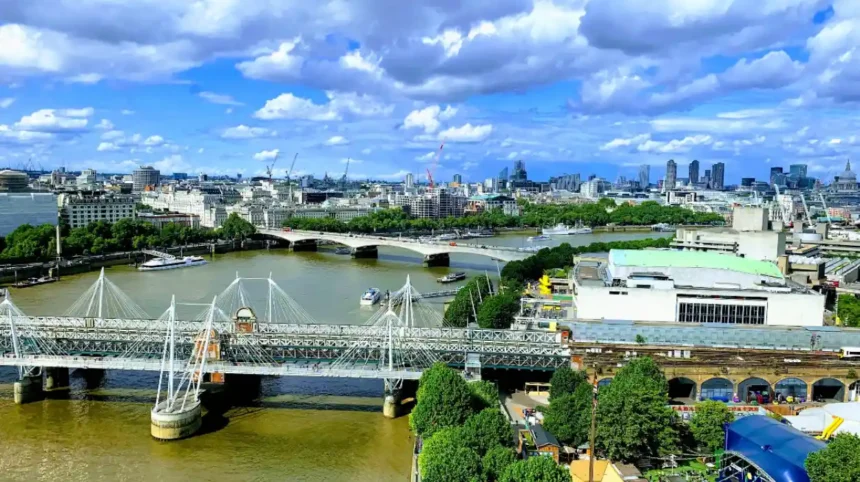
Lambeth is a premier destination because it combines world-renowned cultural institutions, iconic Thames-side landmarks, and exceptional transport accessibility. The borough attracts millions of annual visitors through its dynamic mix of riverside views, historical monuments, world-class performance venues, and vibrant culinary districts.
- How Does Lambeth’s History Shape Its Modern Cultural Identity?
- What Are the Key Cultural Landmarks and Attractions in Lambeth?
- Major World-Class Institutions and Entertainment Venues
- Heritage Buildings, Museums, and Specialist Venues
- How Do Lambeth’s Open Spaces and Green Infrastructure Support Urban Leisure?
- How Does Lambeth Serve Digital Nomads and Business Travellers?
- What Transport Links Connect Lambeth to Central London and Beyond?
- Heavy Rail and National Rail Network
- London Underground Network
- River Transport, Bus Networks, and Active Travel
- What Is the Future Relevance and Economic Impact of Lambeth’s Tourism Sector?
The London Borough of Lambeth is an inner London borough covering 26.82 square kilometres on the south bank of the River Thames. The borough extends from the South Bank arts precinct in the north down to Streatham and Norwood in the south. The area occupies a central position within Greater London, directly opposite the City of Westminster and the City of London.
International and domestic visitors flock to Lambeth due to its high concentration of nationally significant cultural assets. The northern district of the borough, known as the South Bank, receives more than 14 million visitors each year, making it one of the most densely visited leisure zones in Europe. This visitor density is sustained by a 2-kilometre pedestrian boulevard called The Queen’s Walk, which connects key attractions along the riverbank.
The tourism demographic of Lambeth encompasses 4 primary visitor profiles:
- International leisure tourists: Visitors seeking landmark experiences, including the London Eye observation wheel and the SEA LIFE London Aquarium.
- Domestic arts enthusiasts: Audiences attending classical concerts, theatrical productions, and film screenings at the Southbank Centre, the Royal National Theatre, and BFI Southbank.
- Digital nomads and remote workers: Professionals utilising laptop-friendly hubs in Waterloo, Brixton, and Vauxhall.
- Business travellers: Corporate visitors utilising hotel developments around London Waterloo station to combine work with leisure downtime.
Lambeth’s appeal relies on its diversity of urban environments. The borough transitions from the high-density cultural district of Waterloo into multicultural commercial hubs like Brixton, historic residential enclaves like Kennington, and suburban green spaces like Clapham Common and Brockwell Park. Each neighbourhood offers distinct cultural heritage, architectural styles, and community traditions.
The economic output of Lambeth’s visitor economy supports thousands of local businesses, including independent retail stores, dining establishments, and performance venues. Tourism infrastructure integrates with municipal urban planning to maintain high pedestrian accessibility, extensive street lighting, and clear directional signage across all tourist corridors.
How Does Lambeth’s History Shape Its Modern Cultural Identity?
Lambeth’s history as an entertainment district outside City of London jurisdiction shaped its current role as a cultural powerhouse. Medieval marshlands evolved into Georgian pleasure gardens, industrial wharves, and the transformative 1951 Festival of Britain site on the South Bank.
The geographical evolution of Lambeth began as a marshy floodplain along the River Thames. During the medieval period, the land sat outside the legal jurisdiction of the City of London. This territorial status allowed the area to develop entertainment activities that were restricted on the north bank of the river, including theatres, taverns, and animal-baiting arenas.
Lambeth Palace was constructed in the 13th century as the official London residence of the Archbishop of Canterbury, establishing an early religious and administrative anchor in the area. In 1768, equestrian performer Philip Astley established Astley’s Amphitheatre near Westminster Bridge, an event recognized by historians as the birthplace of the modern 360-degree circus ring. During the 18th and 19th centuries, formal entertainment evolved through Vauxhall Gardens, a public pleasure garden that hosted orchestral concerts, fireworks displays, and balloon ascents from 1732 to 1859.
Industrialisation altered Lambeth during the 19th century. The construction of railways, engineering works, glassworks, and breweries transformed the riverfront into a heavy industrial zone. The opening of London Waterloo station in 1848 permanently established Lambeth as the primary rail gateway to southwest England. As you explore the modern site, you are crossing land with a deep heritage. Read about the full [Insert Anchor Text for History Article Here] to understand its origins.
The pivotal transformation of Lambeth into a modern cultural capital occurred in 1951. The British Government selected the post-war industrial landscape of the South Bank to host the Festival of Britain. The national exhibition cleared derelict wharves to construct modernist public architecture, including the Royal Festival Hall. The event successfully established the South Bank as a permanent public realm dedicated to the arts, education, and civic recreation.
The post-war era also shaped Lambeth’s social fabric through Caribbean migration. In 1948, passengers from the HMT Empire Windrush settled in Brixton, establishing the neighborhood as the historic heart of British Caribbean culture, music, culinary traditions, and social activism in the United Kingdom.
What Are the Key Cultural Landmarks and Attractions in Lambeth?
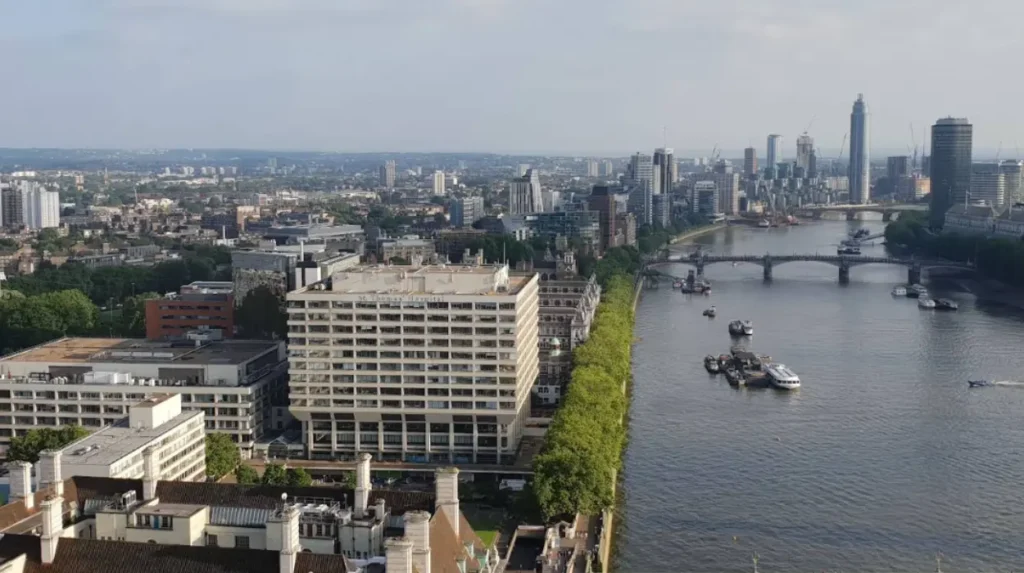
Lambeth hosts premier cultural landmarks including the London Eye, Southbank Centre, Royal National Theatre, Imperial War Museum London, and Lambeth Palace. These sites offer visitors world-class performing arts, historical exhibitions, architectural heritage, and panoramic views of the London skyline.
Major World-Class Institutions and Entertainment Venues
The South Bank cluster represents the largest density of arts and display venues in the United Kingdom. These non-profit and commercial institutions attract multi-generational audiences through targeted artistic programming.
- The Southbank Centre: A 11-acre arts complex comprising 3 main performance venues: the 2,700-seat Royal Festival Hall, the Queen Elizabeth Hall, and the Purcell Room, alongside the Hayward Gallery. The complex hosts over 3.4 million visits annually for orchestral music, contemporary dance, literature, and visual arts exhibitions.
- The Royal National Theatre: A public theatre institution operating within a grade I listed Brutalist building designed by architect Sir Denys Lasdun. The building houses 3 individual auditoriums: the Olivier Theatre, the Lyttelton Theatre, and the Dorfman Theatre.
- The London Eye: A 135-metre tall cantilevered observation wheel engineered by Marks Barfield Architects. Since opening in March 2000, it has served as an iconic symbol of London, carrying approximately 3.5 million passengers annually in 32 glass capsules.
- BFI Southbank and BFI IMAX: The British Film Institute operates 4 repertory cinema screens at BFI Southbank alongside the BFI IMAX at Waterloo, which features the largest cinema screen in Britain, measuring 20 metres high and 26 metres wide.
- Imperial War Museum London (IWM London): Located in Geraldine Mary Harmsworth Park, Kennington, this national museum covers the history of modern conflict from the First World War to present day, housing permanent displays including the Holocaust Galleries and World War I Galleries.
Heritage Buildings, Museums, and Specialist Venues
Beyond the central South Bank riverfront, Lambeth contains specialized historical and architectural sites:
- Lambeth Palace: The historic London home of the Archbishop of Canterbury for over 800 years, featuring the 15th-century Morton’s Tower and the Great Hall housing the Lambeth Palace Library.
- County Hall: The former seat of the London County Council and Greater London Council, opened in 1922. The Edwardian Baroque building houses SEA LIFE London Aquarium, The London Dungeon, and Shrek’s Adventure! London.
- The Old Vic and Young Vic Theatres: Independent performing arts venues located on Cut Street and Waterloo Road. The Old Vic was founded in 1818 and served as the initial home of the National Theatre company.
- Black Cultural Archives (BCA): Located in Windrush Square, Brixton, this facility is the national heritage centre dedicated to recording, preserving, and celebrating the histories of African and Caribbean people in Britain.
- Florence Nightingale Museum: Located within St Thomas’ Hospital, this museum documents the life and medical legacy of Florence Nightingale, the founder of modern nursing.
How Do Lambeth’s Open Spaces and Green Infrastructure Support Urban Leisure?
Lambeth’s public parks and green corridors, including Brockwell Park, Kennington Park, and Clapham Common, provide vital recreational space. These areas combine grade-listed landscape heritage, biodiversity habitats, sports facilities, and outdoor cultural events for residents and leisure travellers alike.
The London Borough of Lambeth maintains over 60 public parks, commons, and open green spaces. These areas account for more than 300 hectares of municipal green infrastructure, supporting public health, biodiversity conservation, and outdoor recreation.
The borough’s open spaces fall into 3 operational categories:
- Metropolitan open land: Large historic commons such as Clapham Common (85 hectares shared with Wandsworth) and Brockwell Park (50.8 hectares).
- District parks: Formally landscaped urban parks such as Kennington Park (14.5 hectares) and Vauxhall Park (3.2 hectares).
- Linear riverfront gardens: Paved civic landscapes such as Jubilee Gardens and The Queen’s Walk along the Thames embankment.
Brockwell Park, situated between Brixton and Herne Hill, features the historic Brockwell Lido, an unheated 50-metre outdoor swimming pool opened in 1937. The park contains Grade II listed features, including Brockwell Hall, formal walled gardens, ponds, and extensive sports facilities. It serves as the venue for the annual Lambeth Country Show, a free community festival that attracts up to 150,000 visitors over two days.
Kennington Park holds historic significance as the location of the 1848 Chartist rally for parliamentary reform. Designed by royal architect John Gibson and opened in 1852, the park features Victorian flower beds, open lawns, public tennis courts, and artificial sports pitches.
Along the riverfront, Jubilee Gardens offers open grassland directly adjacent to the London Eye. Created for the 1977 Silver Jubilee of Queen Elizabeth II and fully redeveloped in 2012, the space incorporates granite edge seats, mature trees, and a specialized children’s play area, serving as a key resting area for tourists walking along the South Bank.
How Does Lambeth Serve Digital Nomads and Business Travellers?
Lambeth serves flexible workers and business travellers through high-density co-working hubs, well-equipped public libraries, and hotels with dedicated remote-work amenities. Combined with high-speed fiber internet and rapid transit connections, the borough supports productive hybrid work and business downtime.
The growth of flexible working models has elevated Lambeth’s appeal for remote workers, digital nomads, and corporate business travellers. The borough provides robust digital infrastructure, with gigabit-capable full-fibre broadband coverage exceeding 88% across commercial districts.
Business travellers and digital nomads access 3 primary workspace environments across Lambeth:
- Commercial Co-Working Hubs: Commercial workspace operators run facilities in Waterloo, Vauxhall, and Brixton. Workspaces such as WeWork (Waterloo Road), Sustainable Bankside, and Impact Hub Brixton supply dedicated desks, private meeting rooms, high-speed Wi-Fi, and printing services on flexible daily or monthly passes.
- Public Workspace Infrastructure: The Southbank Centre operates public foyer spaces in the Royal Festival Hall. These spaces offer free Wi-Fi, power outlets, seating, and café services, serving as one of London’s largest free public co-working areas. The National Poetry Library on the fifth floor of the Royal Festival Hall provides quiet research space.
- Public Library Network: The Lambeth Libraries network provides free workstation access, quiet study spaces, and printing amenities across 10 municipal branches, including Brixton Tate Library, Carnegie Library in Herne Hill, and South Lambeth Library.
Hospitality accommodation in Lambeth accommodates business travellers requiring proximity to the City of London and the West End. Key hotel developments cluster around London Waterloo station and County Hall. Options range from corporate hotels like the Park Plaza Westminster Bridge and London Marriott Hotel County Hall to lifestyle boutique establishments such as The Hoxton Southwark. These properties provide business centers, meeting rooms, executive lounges, and rooftop dining venues suitable for client meetings.
Explore More Area Guide
Why Tourists Should Visit Lambeth in South London for Culture and Landmarks
How Can Visitors Experience the Real Lewisham: Authentic South London Guide
What Transport Links Connect Lambeth to Central London and Beyond?
Lambeth contains major transport nodes, led by London Waterloo station, the busiest railway terminal in the United Kingdom. Four Underground lines, Thames Clipper river bus services, and extensive cycling networks ensure seamless travel across Greater London and southern England.
Lambeth’s transport network handles millions of passenger movements daily, rendering it one of the most connected boroughs in London. The area’s transport hierarchy integrates heavy rail, underground metro, river transit, bus routes, and active travel routes.
Heavy Rail and National Rail Network
London Waterloo station acts as the primary transport gateway for Lambeth. It serves as the terminus for South Western Railway routes connecting London to Surrey, Hampshire, Dorset, Berkshire, and Devon. Waterloo station incorporates 24 platforms and handles tens of millions of passenger entries and exits annually.
Adjacent to the main station, Waterloo East connects to Southeastern services bound for Kent and East Sussex, including Dover, Canterbury, and Hastings. Vauxhall station serves as a secondary interchange, linking South Western Railway services with the London Underground Victoria line.
London Underground Network
Four London Underground lines run through Lambeth, providing rapid transport north across the River Thames and south into suburban districts:
- Jubilee line: Connects Waterloo and Southwark stations to London Bridge, Canary Wharf, and Stratford to the east, and Westminster and Bond Street to the west.
- Northern line: Serves Waterloo, Kennington, Oval, Clapham North, Clapham Common, Clapham South, and Nine Elms stations, providing direct links to the City of London and Camden Town.
- Bakerloo line: Terminates northbound at Harrow & Wealdstone, serving Waterloo and Lambeth North stations.
- Victoria line: Traverses the borough diagonally, stopping at Vauxhall, Stockwell, and Brixton stations.
River Transport, Bus Networks, and Active Travel
The Uber Boat by Thames Clippers river bus service operates from London Eye Pier and Vauxhall St George Wharf Pier. Route RB1 provides regular river transport eastbound to Bankside, Tower Millennium, Canary Wharf, and North Greenwich, while westbound services connect to Battersea Power Station.
Over 40 day bus routes and 15 night bus routes operated by Transport for London traverse Lambeth, running through major transit interchanges at Waterloo, Vauxhall, and Brixton.
Active travel infrastructure includes segregated cycle lanes such as Cycleway 5 (C5), which connects Waterloo to Pimlico across Vauxhall Bridge. Transport for London operates dozens of Santander Cycles docking stations throughout Lambeth, allowing users to hire bicycles for point-to-point journeys across central London.
What Is the Future Relevance and Economic Impact of Lambeth’s Tourism Sector?
Lambeth’s tourism economy generates hundreds of millions of pounds annually, supporting local employment and infrastructure development. Ongoing investments in sustainable urban design, low-emission transit zones, and digital creative hubs ensure the borough remains a resilient, competitive global visitor destination.
The tourism and cultural sector serves as a main economic engine for the London Borough of Lambeth. The sector directly supports over 20,000 local jobs across hospitality, venue management, retail, and arts administration. Visitor spending generates revenue for independent businesses, regional supply chains, and municipal public services.
Future growth in Lambeth’s tourism economy is guided by strategic urban development frameworks designed to improve sustainability, local accessibility, and economic resilience:
- The Waterloo Station Masterplan: A long-term urban regeneration project led by Lambeth Council, Network Rail, and Transport for London. The plan aims to upgrade passenger concourses, expand pedestrian routes around the station, improve public realm integration, and create new commercial workspace.
- Sustainability and Environmental Standards: Lambeth Council declared a climate emergency and established net-zero carbon targets. Tourism operators across the borough are implementing carbon-reduction measures, including energy-efficient building upgrades at the Southbank Centre, zero-waste food initiatives in Brixton Market, and the expansion of Low Emission Bus Corridors along major transit routes.
- Creative Industries Expansion: The borough continues to support the growth of creative industry clusters around Brixton and Vauxhall. Developments like the Brixton Creative Enterprise Zone provide affordable workspace for artists, digital media agencies, and culinary entrepreneurs, ensuring that Lambeth maintains its cultural production capabilities alongside its major display institutions.
Through this combination of historical heritage, world-class arts infrastructure, open green spaces, and high-density transport links, the London Borough of Lambeth maintains its standing as a top visitor destination within South London and across the wider capital.