Key Points
- Understaffed Stations: Southeastern rail stations in major growth areas across south east London and north Kent are frequently left unstaffed.
- Lack of Ticket Barriers: A severe absence of ticket gates and barriers across local stations makes avoiding fare payment straightforward for passengers.
- Infrequent Ticket Checks: On-board ticket inspections on Southeastern Metro services remain extremely rare.
- Loss of Revenue and Funding: Uncollected fares create a “free-for-all” environment, direct financial losses, and diminished overall funding for the network.
- Inaccurate Passenger Metrics: Inadequate ticketing control hides true passenger usage numbers, directly hampering proper service provision and planning.
- Outdated Fleet Technology: The majority of the Metro fleet consists of Networker trains, which lack automated passenger counter technology.
- Government Spending Policy: A “penny wise, pound foolish” approach to railway funding by the government is blamed for failing to capitalize on massive housing and commercial developments.
South East London (South London News) October 12, 2026 – As reported by the editor of Murky Depths, ongoing site visits across South East London and North Kent reveal that potential passenger growth and rail revenue are being systematically lost due to government spending decisions described as “penny wise, pound foolish.” Despite thousands of new homes, commercial spaces, and offices opening near Southeastern stations, the rail network is failing to capture potential income and footfall.
As detailed by the journalist at Murky Depths, station staffing levels across major development zones remain minimal or entirely non-existent. At many local stops, ticket gates and barriers are absent, creating a system where failing to pay for a journey remains remarkably easy for travellers.
How Does Poor Revenue Collection Harm Service Provision and Network Planning?
As reported by the reporter for Murky Depths, the widespread lack of ticket barriers is compounded by an absence of active on-board revenue checks. This environment not only depletes vital operational funding but also severely distorts passenger count data.
Because official passenger figures rely heavily on ticket transactions, unrecorded journeys lead to an underestimation of total usage. This lack of reliable data directly hinders network operators from planning and justifying necessary service improvements or additional train capacity for expanding communities.
Why Do Outdated Trains Prevent Accurate Passenger Tracking?
As highlighted by the news correspondent at Murky Depths, alternative data collection methods such as manual counting fail to provide a complete picture of passenger volume across the region.
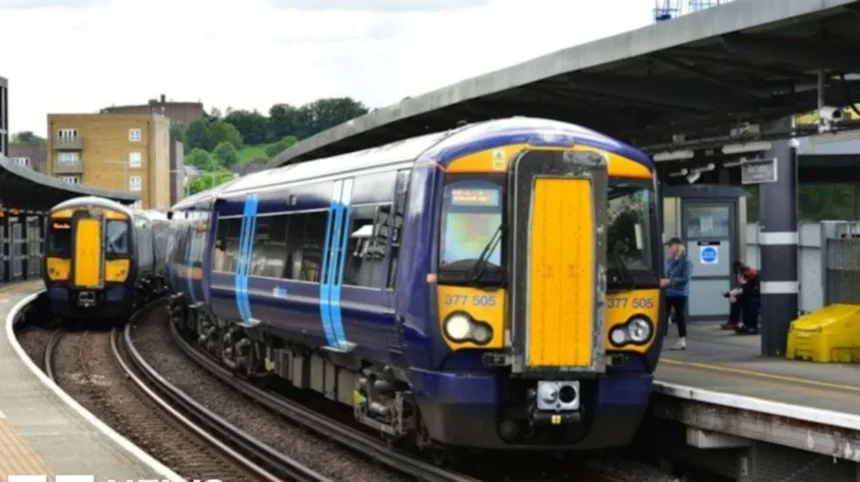
Furthermore, unless recent technological upgrades have occurred, the bulk of Southeastern’s Metro fleet continues to rely on legacy Networker trains. These older train models are not equipped with modern automated passenger counting technology, leaving operators with limited means to monitor actual patronage on suburban routes.
Background of Rail Infrastructure and Revenue Protection in South East London
The suburban rail network serving south east London and north Kent occupies a distinct position within London’s overall public transport system. Unlike the London Underground or London Overground networks managed directly by Transport for London (TfL)—where fully gated stations, mandatory touch-in/touch-out validation, and regular revenue enforcement are standard—suburban heavy rail routes have historically operated under different funding models and staffing structures.
Over recent decades, vast urban regeneration projects have transformed former industrial corridors in places such as Woolwich, Greenwich, Lewisham, and parts of north Kent into high-density residential hubs. However, investment in station infrastructure and physical revenue protection has not kept pace with property development. Many suburban stops were built for lower post-war suburban traffic patterns, lacking the layout or staffing required to operate ticket barriers effectively. Consequently, as the Department for Transport (DfT) maintained tight control over national rail franchising and operational budgets, cost-reduction strategies frequently led to reduced station staffing hours, leaving local stops unstaffed outside peak commuting windows.
Prediction: How This Development Can Affect Passengers and Local Communities
If the current operational approach continues without investment in station staffing, ticket barrier installation, and modern rolling stock equipped with automated counters, several direct consequences are likely to affect local passengers and surrounding communities:
- Stagnant or Reduced Service Levels for Commuters: Because funding decisions and timetable allocations depend heavily on documented passenger numbers, artificially low usage statistics will prevent Southeastern from securing investment for higher train frequencies. Commuters in rapidly growing residential areas may face continued overcrowding on peak-time services because official data fails to reflect actual demand.
- Higher Fares for Honest Ticket Holders: Sustained revenue leakage through uncollected fares puts additional financial strain on the overall transport budget. To compensate for lost operational income, transport authorities may rely on above-inflation fare increases for compliant fare-paying passengers.
- Decreased Personal Security and Accessibility at Stations: Unstaffed, ungated stations reduce visible security staff across the network, particularly during off-peak hours. This environment can deter vulnerable passengers, elderly travelers, and people with mobility needs from using rail services, ultimately reducing public transport adoption in major growth zones.