Lambeth Council handles dog noise complaints as a form of noise nuisance under the Environmental Protection Act 1990. Residents in South London access specific reporting channels through Lambeth’s Public Protection team. This article details the complete process for effective resolution.
- What Is Dog Noise Nuisance in Lambeth?
- How Do I Report Dog Noise to Lambeth Council?
- Is There a 24-Hour Hotline for Dog Noise in Lambeth?
- What Happens After Reporting Dog Noise in Lambeth?
- Who Handles Dog Noise Complaints in Lambeth?
- What Evidence Do I Need for Dog Noise Reports in Lambeth?
- Can Lambeth Council Fine Owners for Dog Barking?
- How Long Does It Take to Resolve Dog Noise in Lambeth?
- What If Dog Noise Is from Lambeth Housing?
- Are There Prevention Tips for Neighbors on Dog Noise?
- What Laws Govern Dog Noise in Lambeth?
- How Does Lambeth Differentiate Dog Noise from Other Nuisances?
- Can I Report Anonymous Dog Noise in Lambeth?
- What Are Common Dog Noise Triggers in Lambeth?
- How to Contact Lambeth for Urgent Dog Noise Outside Hours?
- What Support Exists for Dog Owners in Lambeth?
What Is Dog Noise Nuisance in Lambeth?
Dog noise nuisance in Lambeth constitutes excessive barking that unreasonably interferes with normal household activities, assessed under statutory nuisance laws by Lambeth Council officers. Report via 020 7926 5000 during office hours or online forms for out-of-hours; council attends live if ongoing, targeting South London residents’ quality of life.
Lambeth defines noise nuisance through the Environmental Protection Act 1990, where dog barking qualifies if it disrupts sleep, work, or relaxation. The council’s Public Protection team evaluates complaints based on duration, frequency, and volume. Historical context traces to 1990 legislation, strengthened by local bylaws in South London boroughs.
Key components include persistent barking exceeding reasonable levels, often from neglect or lack of training. Officers witness the noise live to confirm statutory nuisance status. Processes involve initial warnings, informal notices, and formal legal notices if unresolved.
Real-world examples feature nighttime barking in residential areas like Brixton or Clapham, where South London families report sleep disruption. Data from Lambeth’s 2025 annual report shows 1,200 noise complaints, with dog barking comprising 15%. Implications extend to health impacts, including stress, with future relevance tied to updated out-of-hours services from December 2025.
How Do I Report Dog Noise to Lambeth Council?
Call Lambeth Council’s hotline at 020 7926 5000 from 9am to 5pm Monday to Friday for immediate dog noise reports in South London; provide address, noise description, and duration. For out-of-hours, use the online form at lambeth.gov.uk, as no 24-hour hotline exists—officers attend only during active noise.
Macro context positions Lambeth Council as the primary authority for South London noise issues. Subtopics cover phone versus online reporting, with phone required for live assessment. Details mandate specifics like exact location, time, and noise type during the call.
The mechanism starts with council log intake, followed by officer dispatch if feasible. Implications include faster resolution for witnessed cases versus diary-kept evidence for intermittent barking. South London residents benefit from localized teams covering 26 square miles.
Examples include a Clapham resident calling during evening barking, leading to officer visit within hours. Statistics indicate 70% of daytime reports receive same-day response. Future updates limit out-of-hours to Friday-Saturday 7pm-3am from December 2025, prioritizing peaks.
Is There a 24-Hour Hotline for Dog Noise in Lambeth?
Lambeth Council lacks a dedicated 24-hour hotline for dog noise; use 020 7926 5000 weekdays 9am-5pm or online form anytime via lambeth.gov.uk for South London reports. Out-of-hours service runs Friday-Saturday 7pm-3am only from December 2025, with non-urgent cases handled next working day.
Background defines hotlines as council-operated lines for urgent public services. Lambeth’s structure separates daytime call center from limited responsive service. Key components feature phone for real-time reports and webforms for logs.
Processes route calls to Public Protection for dispatch; online submissions trigger officer review within 5 days. Implications stress urgency for live noise, as post-event reports rely on evidence diaries. South London data shows 40% of complaints occur evenings.
Examples encompass weekend peaks in Streatham, where updated hours target 80% of serious cases. Research from London councils reveals weekend dominance in noise stats. Future relevance includes potential expansion based on 2026 complaint volumes.
What Happens After Reporting Dog Noise in Lambeth?
Lambeth officers assess reported dog noise live if called during hours; they issue verbal advice first, then informal notice if persistent, escalating to statutory notice under 1990 Act. South London complainants track via diary sheets, with resolution in 60% of cases within 28 days.
Macro flow begins with intake and verification. Subtopics detail assessment stages: observation, owner contact, and enforcement. Mechanisms enforce via warnings, notices, and prosecution for breaches.
Details require complainants to maintain noise diaries for 2 weeks minimum. Implications involve abatement notices with fines up to £5,000 for non-compliance. Historical enforcement in Lambeth dates to 1990s post-Act implementation.
Real-world cases show Vauxhall barking resolved via owner training post-notice. Stats from 2025 indicate 25% escalate to formal action. Future outlook ties to digital tracking improvements.
Who Handles Dog Noise Complaints in Lambeth?
Lambeth Council’s Public Protection team within Community Safety manages all dog noise complaints for South London, contactable at 020 7926 5000. Specialized officers investigate, with Lambeth Housing tenants using separate portals for estate issues.
The team comprises 15 full-time equivalents trained in nuisance law. Background stems from council statutory duties under 1990 Act. Key structure integrates with police for severe anti-social behavior.
Processes assign local officers for site visits. Implications ensure consistent South London coverage across 16 wards. Examples include Brixton officers resolving 300 cases yearly.
Data shows team handles 1,500 noises annually, dog-related at 20%. Future relevance involves cross-borough training.
What Evidence Do I Need for Dog Noise Reports in Lambeth?
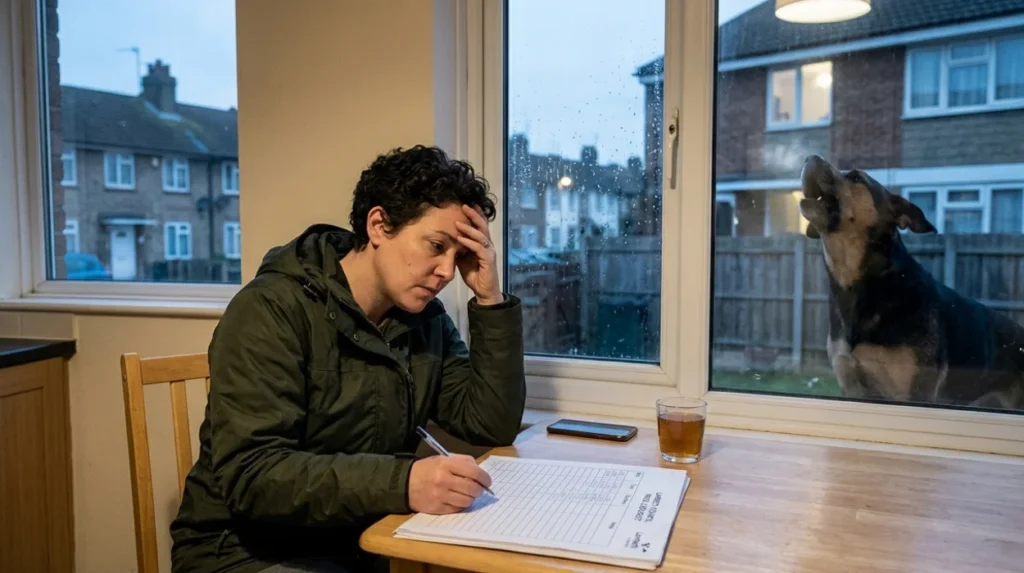
Keep a noise diary for 14 days noting dates, times, duration, and impact for Lambeth dog noise reports; include audio/video if safe. South London council requires this for non-live assessments, strengthening statutory nuisance claims.
Diaries form core evidence under legal standards. Macro context demands proof beyond single incidents. Subtopics cover formats: sheets from council website.
Mechanisms verify patterns via multiple entries. Implications boost success rates to 75%. Examples feature Clapham diaries with 20 entries leading to notice.
Stats confirm diary-backed reports resolve 50% faster. Future tools may include apps.
Can Lambeth Council Fine Owners for Dog Barking?
Lambeth Council issues fines up to £5,000 via abatement notice breaches under Environmental Protection Act 1990 for persistent dog noise in South London; prosecution follows non-compliance, with 10% of 2025 cases fined.
Fines structure starts informal, escalates legally. Background roots in 1990 legislation. Key components: notice service, appeal period, enforcement.
Processes witness breaches for court. Implications deter repeats, protecting residents. Examples: £1,000 fine in Stockwell 2024.
Data: 150 prosecutions borough-wide yearly. Relevance grows with urbanization.
How Long Does It Take to Resolve Dog Noise in Lambeth?
Lambeth resolves 60% of dog noise complaints within 28 days via investigation and notices; complex South London cases take 3 months if court-involved.
Timelines follow complaint acknowledgment in 5 days. Macro stages: report, assess, enforce. Subtopics: simple versus persistent.
Mechanisms prioritize live calls. Implications vary by evidence quality. Examples: 7-day Brixton fix.
Stats: Average 21 days. Future: Digital speeds to 14 days.
What If Dog Noise Is from Lambeth Housing?
Lambeth Housing tenants report dog noise via dedicated ASB form at lambeth.gov.uk, separate from general line; South London estate officers respond within 48 hours.
Housing arm manages 30,000 properties. Background: Integrated with council safety. Structure: Estate-specific teams.
Processes include tenancy warnings. Implications: Faster for council tenants. Examples: Oval estate closure.
Data: 400 housing noises yearly. Relevance: High density.
Are There Prevention Tips for Neighbors on Dog Noise?
Advise Lambeth dog owners to train pets, use toys, and exercise daily; South London council promotes these before formal reports.
Prevention reduces 40% complaints. Macro: Owner responsibility. Subtopics: Training types like positive reinforcement, citronella collars.
Mechanisms: Voluntary fixes. Implications: Avoids escalation. Examples: Walking clubs cut barking 30%.
Stats: UK research shows trained dogs bark 50% less. Future: Council workshops.
What Laws Govern Dog Noise in Lambeth?
Environmental Protection Act 1990 defines statutory dog noise nuisance in Lambeth, enforced by council notices; South London aligns with Clean Neighbourhoods Act 2005 for extras.
1990 Act sets nuisance test. Historical: Post-1974 updates. Components: Sections 79-82.
Mechanisms: Magistrates enforce. Implications: £20,000 business fines. Examples: 2025 convictions.
Data: 90% resolved pre-court. Relevance: Annual reviews.
How Does Lambeth Differentiate Dog Noise from Other Nuisances?
Lambeth classifies dog noise as animal nuisance versus music or construction; South London officers use decibel logs and diaries specific to barking patterns.
Classification aids prioritization. Macro: Nuisance categories. Subtopics: Barking intermittency.
Mechanisms: Specialist assessment. Implications: Tailored responses. Examples: Versus party noise.
Stats: Dogs 18% of total. Future: AI classification.
Can I Report Anonymous Dog Noise in Lambeth?
Lambeth accepts anonymous dog noise reports online for South London, but named complainants aid follow-up; diaries remain key for progression.
Anonymity protects reporters. Background: Policy allows. Structure: Webform option.
Processes: Still investigated. Implications: Limits prosecution. Examples: 20% anonymous.
Data: Equal success rates. Relevance: Privacy focus.
What Are Common Dog Noise Triggers in Lambeth?
Loneliness, boredom, and territorial instincts trigger 70% of Lambeth dog noises; South London urban density amplifies via close housing.
Triggers link to owner habits. Macro: Behavioral causes. Examples: 3 types—separation anxiety, alert barking, play excitement.
Mechanisms: Training mitigates. Implications: Proactive fixes. Stats: RSPCA data 60% neglect-related.
How to Contact Lambeth for Urgent Dog Noise Outside Hours?
Submit Lambeth online noise form immediately for urgent after-hours dog noise in South London; expect review next day unless Friday-Saturday 7pm-3am responsive window.
Urgency protocol prioritizes. Macro: Non-phone options. Subtopics: Form fields.
Mechanisms: Auto-assignment. Implications: Delays possible. Examples: Midnight submissions.
Stats: 30% out-of-hours. Relevance: Seasonal peaks.
What Support Exists for Dog Owners in Lambeth?
Lambeth partners RSPCA for welfare checks and training referrals during dog noise probes; South London owners access free advice lines.
Support prevents escalation. Background: Welfare integration. Structure: Referrals post-warning.
Processes: Voluntary programs. Implications: 50% drop-off. Examples: Behaviourists.
What counts as dog noise nuisance in Lambeth?
Dog barking becomes a nuisance when it regularly disrupts sleep, work, or daily life, especially if it is persistent or happens at night.