Key Points
- Infrastructure Investment: A £7 million power network upgrade has been undertaken to modernise the local electrical infrastructure between Sydenham Park and Churchfields.
- Major Cable Installation: The project involved laying 9 kilometres of new 33,000-volt underground cables to bolster supply reliability across South London.
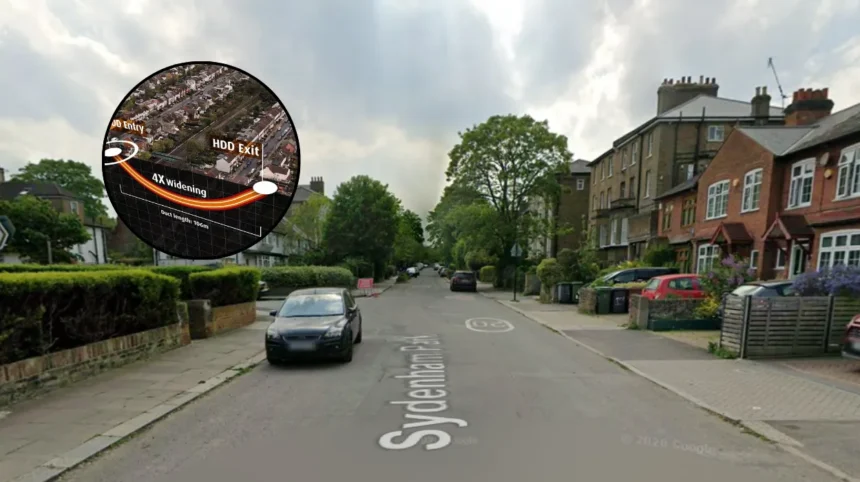
- Innovative Engineering: Engineers successfully deployed Horizontal Directional Drilling (HDD) to construct a 100-metre long, 50-centimetre wide tunnel underneath an active railway and tram line at Avenue Road.
- Zero Service Disruption: The subterranean drilling technique allowed rail and tram services on the overhead tracks to continue operating without suspension or delay, avoiding traditional line closures.
- Utility Collaboration: Trenching along public roads was coordinated with other utility providers in select stretches to combine works and reduce disruption for local communities.
South London (South London News) August 12, 2026 – Engineers in South London have completed a subterranean drilling operation, constructing a 100-metre tunnel directly beneath an active railway and tram line without causing any interruption to public transport services. The engineering milestone forms a key segment of a £7 million power grid improvement project stretching from Sydenham Park to Churchfields, designed to reinforce energy supply security for the surrounding area through the installation of 9 kilometres of high-voltage underground cables.
- Key Points
- How Was the 100-Metre Tunnel Constructed Beneath the Active Railway?
- What Does the £7 Million South London Infrastructure Upgrade Entail?
- How Were Road Trenching and Works Coordinated?
- What Is the Background of This Electricity Infrastructure Upgrade?
- How Will This Development Impact Local Residents, Commuters, and Future Infrastructure Projects?
How Was the 100-Metre Tunnel Constructed Beneath the Active Railway?
To navigate the intersection at Avenue Road, where the railway and tram lines cross the designated cable path, project team members opted against traditional open-cut excavation methods.
Standard procedures for crossing rail corridors typically require lifting track sections, digging open trenches, and temporarily suspending train movements.
Instead, the engineering team deployed specialized Horizontal Directional Drilling (HDD) technology. This trenchless methodology enabled crew members to bore a horizontal passage 100 metres in length and 50 centimetres in diameter deep beneath the railbed.
The 33,000-volt electrical cables were subsequently pulled through the newly formed subterranean conduit, leaving the track bed, rails, and daily commuter journeys entirely undisturbed overhead.
What Does the £7 Million South London Infrastructure Upgrade Entail?
The installation of the underground conduit forms part of a broader £7 million infrastructure investment intended to overhaul and future-proof the electrical distribution network across South London.
The project encompasses the deployment of 9 kilometres of heavy-duty 33,000-volt underground cables running from Sydenham Park to Churchfields.
The upgraded line increases overall capacity and improves resilience against outages across the local distribution network.
How Were Road Trenching and Works Coordinated?
For much of the 9-kilometre route, cables were laid using standard road trenching techniques. To minimise traffic delays and civil disturbance, contractors aligned schedule windows with other utility providers.
This joint utility coordination permitted multiple subterranean maintenance and installation tasks to take place simultaneously within shared trench openings along public highways.
Explore More Local South London News
More Than a Jazz Club: What Blue Note Could Mean for London’s Music Scene
Catford mum hit with 13 parking fines despite valid permit, council admits technical issue
What Is the Background of This Electricity Infrastructure Upgrade?
Urban energy networks across major metropolitan areas face rising demand driven by population growth, commercial expansion, and the ongoing transition toward electrified heating and transport.
High-voltage distribution lines operating at 33,000 volts serve as critical arterial corridors within the regional power grid, transferring energy from primary grid substations to local distribution points.
Historically, updating buried high-voltage cables in dense suburban environments presented severe logistics challenges when encountering existing transport corridors.
Railway lines and light rail tram routes require continuous structural stability, making traditional deep-trenching methods costly and disruptive due to track closures, rail replacement schedules, and passenger travel delays.
The adoption of trenchless techniques like Horizontal Directional Drilling represents a shift in municipal utility engineering, allowing high-voltage grid expansion to occur alongside uninterrupted transport operations.
How Will This Development Impact Local Residents, Commuters, and Future Infrastructure Projects?
The successful execution of this subterranean drilling operation carries immediate and long-term implications for the local community and the broader construction sector.
For local residents and businesses between Sydenham Park and Churchfields, the completion of the 33,000-volt line secures a more stable and high-capacity electrical supply, reducing the likelihood of power disruptions.
Furthermore, by avoiding track closures at Avenue Road, commuters relying on South London rail and tram services were spared journey cancellations, bus replacement services, and extended transit times.
For future civil engineering and utility projects across urban railway networks, this deployment validates trenchless directional drilling as an efficient alternative to traditional open-cut track crossings.
By eliminating the necessity of halting transport services during major utility installations, municipal planners and utility companies can significantly diminish the economic and social costs associated with infrastructure modernization.