Key Points
- Liberal Democrat Victory: The Liberal Democrats secured a commanding 44 out of 48 seats in the Kingston upon Thames Borough Council election, maintaining their firm grip on the administration.
- Opposition Shifts: The Conservatives saw their presence reduced to just 2 seats, while the Kingston Independent Residents Group (KIRG) emerged as a significant local force, also securing 2 seats.
- Wider London Context: The elections, held on 7 May 2026, involved all 32 London boroughs, with over six million residents eligible to participate.
- Mayoral Outcomes: Five boroughs held direct mayoral elections; notably, the Green Party won its first-ever London mayoral seat in Hackney, and Liam Shrivastava (Green) claimed victory in Lewisham.
- Political Trends: The results highlighted a significant surge for Reform UK and the Green Party across the capital, often at the expense of the Labour and Conservative vote shares.
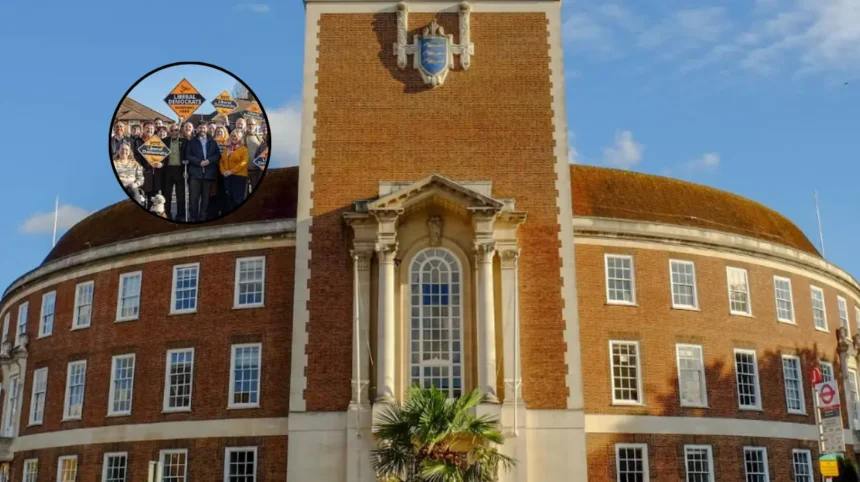
Kingston Upon Thames (South London News) May 15, 2026 — The Liberal Democrats have successfully defended their stronghold in Kingston upon Thames, securing a landslide victory in the 2026 local council elections. As reported by Andreas Kirsch, the incumbent leader of the council, the party won 44 of the 48 available seats, a result he described as a “huge vote of confidence” from the residents. While the Liberal Democrats maintained their previous seat count, the local political landscape shifted beneath them, as the Conservative Party’s representation dwindled and independent local groups cemented their standing in key wards.
- Key Points
- Who won the local election in Kingston upon Thames?
- What happened in Kingston upon Thames in the 2026 council election, and who won?
- When were the 2026 local elections in London?
- Who are the new mayors in the five London boroughs?
- How did the wider London results compare to Kingston?
- What were the specific ward results in Kingston?
- Background of the 2026 Local Elections
- Prediction: How these developments affect London residents
Who won the local election in Kingston upon Thames?
In Kingston upon Thames, the Liberal Democrats emerged as the definitive winners, retaining control with 44 seats. According to official data from the Kingston Council’s electoral services, the party reached the 25-seat threshold for a majority with ease.
The remaining seats were split between the Conservative Party, which secured 2 seats (a loss of 1 compared to the 2022 baseline), and the Kingston Independent Residents Group (KIRG), which now holds 2 seats.
As noted by local political analyst Mark Fox of PollCheck, the Liberal Democrats managed to stave off challenges in key battleground wards such as St Mark’s & Seething Wells and Coombe Vale.
In Coombe Hill, Conservative leader Rowena Bass managed to hold her seat with 854 votes, though her party struggled to gain traction elsewhere in the borough.
What happened in Kingston upon Thames in the 2026 council election, and who won?
The election was characterised by a consolidation of Liberal Democrat power alongside a notable rise in the “Independent” vote. Reporting for LGC Plus, journalist Jessica Hill observed that the Kingston Independent Residents Group (KIRG) proved to be a formidable challenger in specific localities.
For instance, in the Green Lane & St James ward, James Giles of KIRG topped the poll with 1,043 votes, followed closely by his colleague Yvonne Tracey.
The Liberal Democrats’ campaign, led by Andreas Kirsch, focused heavily on local infrastructure and environmental policies.
According to a statement released by the Kingston Liberal Democrats on 8 May 2026, the party thanked the thousands of volunteers who helped maintain their dominance. However, the rise of Reform UK was also evident in the borough; though they did not secure any seats, candidates like Simon Bain in Chessington South & Malden Rushett garnered over 1,000 votes, indicating a growing splinter in the traditional right-wing vote.
When were the 2026 local elections in London?
The local elections took place on Thursday, 7 May 2026. This date saw more than six million Londoners eligible to cast ballots in what many analysts described as a “mid-term” test for the national government. As reported by the ITV News London results hub, all 32 London boroughs were up for election, making it one of the largest democratic exercises in the capital’s recent history.
Who are the new mayors in the five London boroughs?
The 2026 elections were not limited to council seats; five boroughs also participated in direct mayoral elections. The results provided some of the night’s biggest shocks.
As reported by Sky News, the Green Party achieved a historic milestone by winning the Hackney mayoral race. This was followed by another Green victory in Lewisham, where Liam Shrivastava was elected Mayor with 40% of the vote.
In Croydon, Jason Perry (Conservative) narrowly won re-election with 30.7% of the vote, edging out Labour’s Rowenna Davis by a single percentage point. Meanwhile, in Newham, Labour managed to hold the mayoralty with Forhad Hussain succeeding Rokhsana Fiaz.
In Tower Hamlets, the political landscape remained complex as the Aspire party and various independents challenged the traditional Labour-Conservative duopoly.
Explore More Kingston Upon Thames News
Liberal Democrats Hold Kingston upon Thames Council — 2026
Lib Dems Win 44 Seats in Kingston Council Elections 2026
How did the wider London results compare to Kingston?
While Kingston remained a Liberal Democrat fortress, the rest of London experienced a more volatile shift in allegiances.
According to data compiled by London Councils, the overall seat count across the capital saw Labour retaining 708 seats, the Conservatives holding 407, and the Liberal Democrats holding 243. However, the Green Party (297 seats) and Reform UK (79 seats) saw the most significant growth.
As reported by LGC Plus, the Green Party took control of its first-ever London borough by winning a majority in Waltham Forest, gaining 32 seats at the expense of Labour.
In contrast, Reform UK made deep inroads in boroughs like Barking & Dagenham, where they secured five seats, signalling a shift in the political alignment of working-class constituencies.
What were the specific ward results in Kingston?
The ward-by-ward breakdown in Kingston revealed high levels of engagement. In Canbury Gardens, Liberal Democrat Christopher Higgins won with 1,362 votes, while the Green Party’s Linda Jane Sawyer secured 455 votes, placing her ahead of the Conservative candidates.
In Chessington South & Malden Rushett, a ward often seen as a bellwether, Andreas Kirsch personally secured 1,641 votes.
As noted by the Wikipedia 2026 election summary, Reform UK candidates Simon Bain and Kevin Eggleton put up a strong showing here, both surpassing 900 votes, which significantly pressured the Conservative vote share.
Background of the 2026 Local Elections
The 2026 local elections occurred during a period of significant economic and social transition in the United Kingdom. Following the 2024 General Election, the political landscape had been increasingly defined by “multi-partyism,” where smaller parties like the Greens and Reform UK capitalised on voter dissatisfaction with the two main parties.
In Kingston upon Thames, the Liberal Democrats have historically enjoyed strong support, particularly since 2018 when they retook control of the council from the Conservatives. The 2022 elections had already seen the Conservatives reduced to a small opposition group.
The 2026 results are the culmination of a decade-long trend in South West London where “Orange Book” Liberalism has replaced traditional Conservatism as the dominant local ideology.
Nationally, the 2026 elections were the first major test of voter sentiment regarding the Labour government’s fiscal policies and the Conservative Party’s efforts to rebuild its brand under new leadership.
The emergence of the Green Party as a governing force in boroughs like Waltham Forest and Hackney represents a shift in environmental politics from a protest movement to an administrative reality.
Prediction: How these developments affect London residents
The 2026 election results are likely to lead to a fragmented but more localised approach to governance in London. For residents of Kingston upon Thames, the Liberal Democrat landslide ensures a continuation of existing policies, particularly regarding the borough’s controversial low-traffic neighbourhoods (LTNs) and sustainable development projects. However, with the Conservatives further marginalised, the burden of scrutiny will likely shift to independent groups like KIRG, who may focus more intensely on ward-specific issues rather than borough-wide strategy.
For wider London, the “Green Surge” in Hackney, Lewisham, and Waltham Forest suggests that environmental mandates will become central to local council agendas. Residents in these areas should expect more aggressive climate-related policies, such as expanded cycling infrastructure and stricter emissions standards.
Conversely, the growth of Reform UK in East London indicates a significant portion of the electorate feels unheard on issues of housing and immigration. This development will likely force the Labour Party to adjust its rhetoric and policy focus to win back its traditional heartlands before the next general election. Overall, the 2026 results suggest a London that is more politically diverse than ever, where no single party can claim a universal mandate across all 32 boroughs.