Key Points
- Historic Venue Abandoned: Kennington Skatepark, locally known as “the Kenny,” has fallen into absolute decay, effectively transforming into an makeshift encampment for homeless individuals.
- Broken Council Commitments: Lambeth Council failed to deliver on prior commitments to restore the iconic 1970s skatebowl, leading to widespread disappointment among residents and community groups.
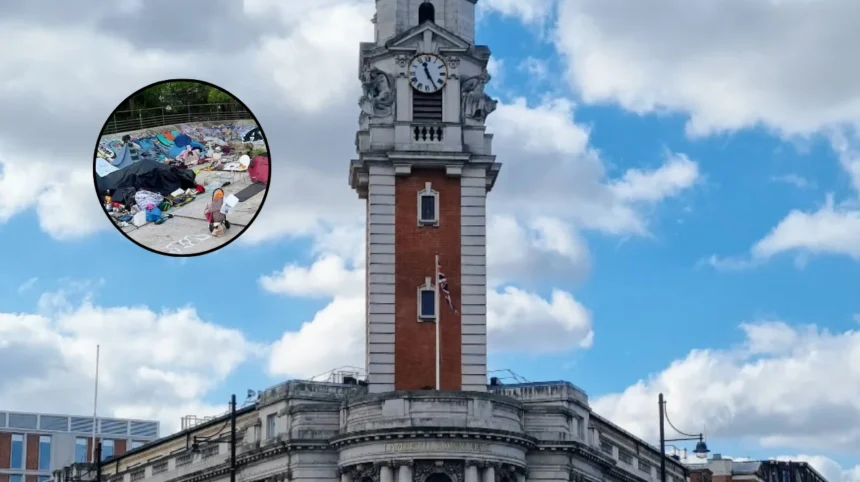
- Public Mobilisation and Demonstrations: Following reporting by local outlets including Brixton Buzz, community campaigners rallied outside Lambeth Town Hall demanding immediate action with slogans such as “Save Our Skatebowl” and “Don’t Kill Kenny.”
- Financial Capital Reviews: Lambeth Council previously paused funding for the landmark skate bowl as part of a wider municipal capital spending review, leaving the space derelict and unmaintained.
- Broader Implications: The dereliction highlights worsening systemic issues across South London, including local authority budget shortfalls, youth infrastructure neglect, and the mounting UK homelessness crisis.
Kennington (South London News) October 7, 2026 — Kennington Park’s historic 1970s skatebowl, affectionately dubbed “the Kenny,” has effectively devolved into a homeless encampment following prolonged local authority neglect, according to extensive local reports and recent photographic documentation.
- Key Points
- Why Has the Historic Skatebowl Fallen into Severe Disrepair?
- How Have Local Campaigners and Residents Responded to the Neglect?
- What Is the Current Condition of the Site and Its Occupants?
- Background of the Kennington Skatebowl Development
- Prediction: How Will This Development Affect Local Stakeholders?
As reported by the editorial team of Brixton Buzz, Lambeth Council broke its explicit pledge to restore the historic recreational space, leaving the landmark bowl in a state of advanced physical decay. As reported by Ruby Gregory of My London, the local authority subsequently faced mounting public backlash after halting capital funding, prompting over 1,800 local residents to sign a formal petition urging municipal leaders not to abandon the heritage site.
According to updates published by the Friends of Kennington Park (FoKP) organisation, community campaigners previously gathered outside Lambeth Town Hall in Brixton to voice their opposition to the local authority’s decision. Demonstrators carried display banners featuring slogans such as “Save Our Skatebowl” and “Don’t Kill Kenny,” expressing deep frustration over wasted municipal preparations and the continuous physical degradation of the site.
Why Has the Historic Skatebowl Fallen into Severe Disrepair?
As reported by Brixton Buzz, the status of the classic concrete bowl was highlighted in a dedicated feature detailing how Lambeth Council failed to follow through on promises to refurbish the site. The venue, recognized as one of the oldest surviving purpose-built skateparks in the United Kingdom, had already suffered from years of overgrowth, structural cracking, and neglect before maintenance completely stalled.
As reported by Ruby Gregory of My London, a spokesperson for Lambeth Council explained that the local authority was forced to pause several capital expenditure projects due to severe financial pressures. As reported by My London, the council official stated that “in light of the council’s financial position, capital projects including the skate park have been paused,” adding that the local authority was undertaking a comprehensive review of all local assets before updating community stakeholders.
According to statements released by the Friends of Kennington Park, significant public funds and community planning efforts had already been invested prior to the council’s sudden pause. The community organisation noted that residents had even agreed to reallocate funds from other park improvement projects to ensure the skatebowl’s restoration went ahead, making the subsequent delay particularly damaging to public trust.
How Have Local Campaigners and Residents Responded to the Neglect?
As reported by Brixton Buzz, the lack of progress sparked swift public mobilization across South London. Campaigners assembled directly outside Lambeth Town Hall in Brixton to demand that Lambeth Council immediately honor its previous commitments and bring the park back into full public utility.
According to public records from the campaign, more than 1,800 citizens signed a petition demanding urgent intervention. As reported by the Friends of Kennington Park, community advocates warned that leaving the concrete structure abandoned would turn a cherished local heritage asset into an unsafe eyesore, while completely demolishing the bowl would prove far more expensive than fulfilling the original restoration agreement.
As reported by Skateboard GB, national sporting bodies also highlighted the social importance of the facility. A representative for Skateboard GB noted that the restoration represented a highly positive project for various demographics within the local community, emphasizing that skateboarding provides an accessible way to engage young people who might otherwise feel alienated from traditional team sports.
What Is the Current Condition of the Site and Its Occupants?
Photographic evidence and field reports show that the central depression of the concrete skatebowl has become heavily overgrown with foliage and weeds, creating a secluded perimeter that now shelters multiple rough sleepers. Tents, makeshift sleeping arrangements, and discarded personal belongings now occupy the lower sections of the bowl where generations of skateboarders once practiced.
According to local resident associations, including the Kennington Park Estate Residents, the area surrounding the bowl has become visually and physically cut off from the main park pathways due to dense thickets of unmanaged trees and bushes. Local residents note that without proper public lighting, daily maintenance, or active sports usage, the space naturally evolved into an informal shelter area for vulnerable, unhoused individuals seeking protection from the elements.
While local advocacy groups stress the urgent need for humane housing solutions for those currently living inside the bowl, sport enthusiasts and park visitors maintain that allowing the space to remain derelict serves neither the homeless population nor the broader public.
Background of the Kennington Skatebowl Development
Constructed during the initial British skateboarding boom of the late 1970s, Kennington Skatepark represents one of the earliest architectural examples of purpose-built concrete skate bowls in the United Kingdom. Situated within the historic grounds of Kennington Park in the London Borough of Lambeth, “the Kenny” served as a central cultural hub for South London youth culture for decades.
Over the past twenty years, the physical condition of the concrete structure steadily declined due to natural weathering, inadequate drainage, and minimal municipal upkeep. Recognizing its historic and social value, community groups formed a coalition with local council members to secure a formal restoration package.
Plans were drawn up to fully restore the concrete bowl, construct accessible ramps, add spectator seating, and trim back surrounding vegetation to re-integrate the structure into the main body of Kennington Park. However, broader financial difficulties across local government sectors in London repeatedly delayed procurement. When Lambeth Council initiated an extensive capital spending review, funding allocated for the skatebowl was unexpectedly frozen, triggering the political standoff and physical deterioration observed today.
Prediction: How Will This Development Affect Local Stakeholders?
The ongoing dereliction and eventual resolution of the Kennington Skatepark situation will directly impact several key demographic groups across South London:
1. Local Youth and Action Sports Enthusiasts
For local children, teenagers, and the London skateboarding community, the loss of usable space removes a rare, free-to-use outdoor sports facility. If Lambeth Council fails to deliver a fully renovated park, young people in Lambeth will lose an essential physical outlet, forcing them to travel further afield or utilize non-designated public urban spaces, potentially increasing friction with local businesses and pedestrians.
2. Local Unhoused Individuals
For the homeless population currently residing within the bowl, any upcoming council intervention will force an immediate transition. If the council clears the site purely for renovation without providing supported housing or accommodation pathways, these vulnerable individuals will simply be displaced to adjacent parks, doorways, or residential estates across Kennington and Brixton.
3. Lambeth Ratepayers and Park Visitors
For local residents and taxpayers, the project’s continued stagnation represents both a safety concern and a financial liability. Unmaintained council assets often incur higher long-term restoration or demolition costs than timely repairs would require. Furthermore, park visitors will continue to experience reduced access to safe, open green spaces until Lambeth Council definitively resolves the site’s structural maintenance and social management challenges.