Key Points
- Demolition scrapped: Lambeth Council has officially removed the Central Hill estate in Norwood and the Cressingham Gardens estate in Tulse Hill from its municipal redevelopment programme.
- Refurbishment commitment: The local authority has pledged to maintain and properly repair existing properties rather than knocking them down.
- End of long-running dispute: The formal vote at a recent cabinet meeting halts twelve years of prolonged uncertainty for local residents.
- Political shift: The decision was passed under the council’s Green Party leadership.
- Resident reaction: Community members have welcomed the decision but noted that residents continue to deal with the long-term impact of the initial 2014 demolition plan.
Lambeth Council (South London News) October 29, 2026 – Lambeth Council has formally pledged to repair and maintain two major housing estates in south London, officially reversing a controversial redevelopment policy that had placed the sites under threat of demolition for more than a decade. The local authority voted to remove the Central Hill estate in Norwood and the Cressingham Gardens estate in Tulse Hill from its estate regeneration schemes during a formal cabinet meeting last Wednesday. The political decision effectively terminates twelve years of structural uncertainty for hundreds of families and local leaseholders living across both housing complexes.
As reported by local news journalists covering the cabinet proceedings, Councillor Scott Ainslie stated during the session that residents had “lived under the threat of demolition,” before confirming the administration’s change of trajectory by adding:
“That ends now. These homes will be kept, maintained properly, and repaired.”
The declaration marks a complete policy shift for the Green Party-led council administration, which has opted to prioritise direct maintenance, structural refurbishment, and property upkeep over full-scale site clearance and reconstruction.
How have local residents responded to the council’s decision?
Local residents affected by the announcement have expressed approval regarding the decision to save their homes, whilst simultaneously addressing the persistent structural and social consequences stemming from the prolonged timeline of the original proposals. The decision brings to an end a twelve-year campaign organized by community members, tenants, and housing campaigners who had consistently opposed the destruction of the low-rise residential neighbourhoods.
As reported by municipal news reporters present at the council meeting, local Cressingham Gardens resident Anne Cooper directly addressed cabinet members during the public proceedings to reflect on the historical context of the dispute. Addressing the cabinet, Anne Cooper stated:
“I really welcome this decision. I do think, however, we are living with the legacy of that disastrous decision back in 2014, and we’ve heard from both Cabinet members and residents about the misery that has caused.”
The public statements made during the meeting underscored the emotional and physical toll experienced by households since the initial redevelopment proposals were introduced in 2014. Residents noted that the extended period of uncertainty impacted day-to-day estate maintenance, leading to compounded repair issues across the properties over the intervening twelve years.
Background of the Cressingham Gardens and Central Hill housing development
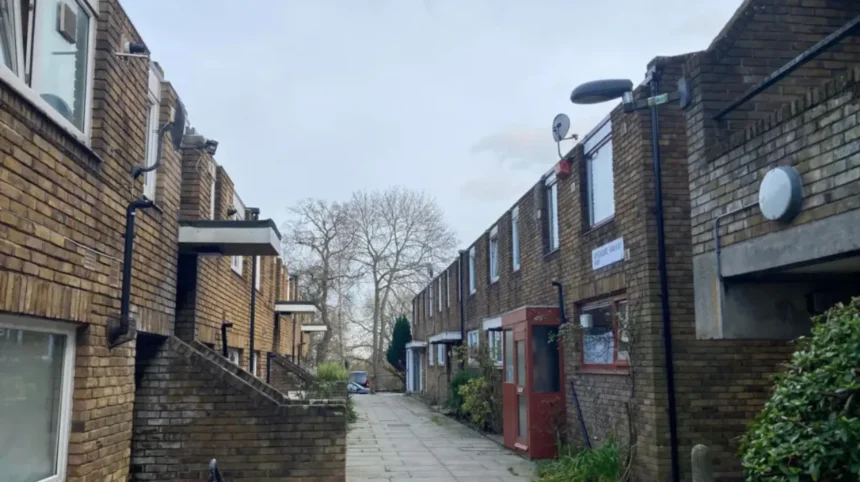
The controversy surrounding the Central Hill and Cressingham Gardens estates dates back to 2014, when the London Borough of Lambeth first proposed comprehensive regeneration plans for several social housing sites across the borough. The Central Hill estate, situated in Norwood, and Cressingham Gardens, located adjacent to Brockwell Park in Tulse Hill, were both identified as sites requiring major structural intervention.
Under the original redevelopment framework, the council sought to demolish existing low-rise residential structures to make way for high-density modern housing developments. The proposed plans generated immediate and sustained opposition from resident groups, architects, and historic preservation advocates. Opponents argued that both estates represented significant architectural heritage—designed in the late 1960s and 1970s under former Lambeth chief architect Ted Hollamby—and provided established, cohesive community spaces.
Throughout the twelve-year span between 2014 and the recent cabinet decision, tenants and leaseholders engaged in extensive legal challenges, public consultations, and community campaigns aimed at demonstrating the viability of estate refurbishment over full demolition. Over time, delayed maintenance schedules and prolonged policy deliberation resulted in deteriorating living conditions across several units, a circumstance highlighted by residents during municipal meetings as a lingering legacy of the original 2014 strategy.
What are the future implications of this decision for local council tenants and homeowners?
The decision to remove Central Hill and Cressingham Gardens from the redevelopment register directly impacts several distinct groups across the local authority area, ranging from long-term social housing tenants to private leaseholders and local council taxpayers.
Immediate effects on council tenants and leaseholders
- Housing stability: Social housing tenants gain secure tenancy outlooks, removing the risk of forced relocation or temporary rehousing outside their immediate neighbourhoods.
- Property values and sales: Private leaseholders who faced restricted property valuations and difficulties securing mortgages due to pending demolition orders can expect greater market predictability and restored asset stability.
- Refurbishment schedules: Residents will see direct council investment diverted toward long-overdue physical repairs, addressing structural maintenance, roofing, damp mitigation, and general estate upkeep.
Broader impacts on the local council and wider housing policy
- Financial allocation: Lambeth Council will reallocate capital resources away from large-scale site acquisition and clearance toward direct, incremental maintenance programmes.
- Precedent for municipal housing: The policy reversal provides a key reference point for other London boroughs evaluating retrofitting and structural restoration as viable alternatives to urban estate clearance.