Key Points
- Demolition Threat Lifted: Lambeth Council’s Cabinet has officially removed Central Hill in Crystal Palace and Cressingham Gardens beside Brockwell Park from its estate redevelopment programme, ending over 12 years of uncertainty.
- Knights Walk Scheme Altered: Knights Walk in Kennington has been withdrawn from the New Homes Hexagon Portfolio due to accessibility and viability challenges stemming from its completed first phase.
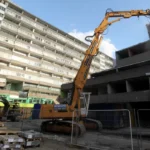
- Financial and Structural Shift: Council officers determined that full demolition and comprehensive redevelopment of both 1960s estates were financially unviable, prompting a strategic pivot towards retention and repair.
- Focus on Existing Housing Stock: The local authority will redirect resources into repairing long-neglected homes, returning empty council properties to use, and introducing targeted infill housing across the borough.
- Preservation of Heritage: The decision secures iconic post-war low-rise municipal architecture designed by renowned municipal architects, including Ted Hollamby and Rosemary Stjernstedt.
Lambeth (South London News) October 27, 2027 — As reported by Ruby Gregory, Senior Local Democracy Reporter for MyLondon, Lambeth Council’s Cabinet formally reversed its previous plans during a meeting on October 21, officially saving two 1960s housing estates from demolition and redevelopment. Central Hill in Crystal Palace and Cressingham Gardens, situated next to Brockwell Park, are no longer under threat of destruction following more than a decade of continuous campaigning and emotional strain for local residents. Under the approved measures, both housing estates have been permanently taken off the council’s estate redevelopment programme. Furthermore, Knights Walk in Kennington has been removed from the New Homes Hexagon Portfolio after officer assessments confirmed that the spatial layout of the completed first phase rendered the proposed second-phase site physically inaccessible and financially unviable.
As detailed by Robert Booth in The Guardian, the cabinet’s landmark ruling brings to a conclusion a twelve-year policy battle that severely damaged local relations, leaving levels of trust in the council exceptionally low. Formal officer evaluations revealed that the total clearance and rebuilding of Central Hill and Cressingham Gardens could no longer be justified financially. In light of these viability findings, Lambeth Council has opted to preserve the existing estates, shifting its focus toward executing essential repairs, enhancing environmental sustainability, bringing empty dwellings back into residential service, and pursuing smaller infill developments to address the borough’s ongoing social housing shortages.
Why Were the Original Estate Demolition Plans Dropped?
According to reporting published by The Times of India, official council assessments concluded that comprehensive redevelopment across both sites was entirely unviable under current financial constraints. The decision marks a significant policy turn for Lambeth Council, moving away from full estate clearance in favour of retaining existing architectural assets.
As reported by Lambeth Council, leader Councillor Martin Abrams described the decision as a decisive moment for both Central Hill and Cressingham Gardens. Councillor Martin Abrams stated that the decision recognised the work involved in securing the future of the communities without demolition, while allowing investment to focus directly on improving residents’ existing homes and making active use of vacant properties. Councillor Martin Abrams affirmed that the local authority can successfully deliver the new housing the borough requires without erasing the architectural achievements created by earlier generations.
As reported by Ruby Gregory of MyLondon, Councillor Martin Abrams further pledged a distinct governance shift during the cabinet meeting, stating:
“We promise to govern alongside residents, not over them. So at Cressingham Gardens and Central Hill, with this decision tonight, we are ending the threat of demolition, unreservedly. These homes will be kept, maintained properly, and repaired. Residents can finally plan for their future with confidence that we will support them with that work.”
How Did Local Leaders and Cabinet Members React to the Decision?
As highlighted by Robert Booth in The Guardian, Cabinet Member for Housing Councillor Pete Elliott emphasised the relief this decision delivers after years of systemic disruption. Councillor Pete Elliott stated:
“For over 12 years, we have fought for a better future for Central Hill and Cressingham Gardens. These proposals end years of uncertainty and put the focus where it belongs: repairing homes, supporting communities and filling empty properties.”
In official statements issued by Lambeth Council, Cabinet Member for Property, Planning and Development Councillor Scott Ainslie noted that the affected estates represent highly valued spaces defined by resilient social ties and distinctive architecture. Councillor Scott Ainslie stated that the local authority had stood alongside residents to argue that their long-term community future should not depend on site clearance or wholesale demolition.
How Will Lambeth Address the Local Housing Demand Moving Forward?
As reported by The Times of India, while Lambeth Council has stepped back from large-scale estate demolition, municipal officials maintained that the structural demand for affordable social housing remains acute. The local authority intends to deploy a broader portfolio of housing delivery models, including direct council construction, property acquisitions, and the development of micro-infill sites across the borough that do not necessitate displacing existing resident populations.
As outlined in official Lambeth Council policy documents, future housebuilding strategies will involve close community consultation on alternative sites. The council is progressing engagement on the Westbury estate in Clapham Town, which holds potential to yield hundreds of new homes. Additionally, municipal officers are scheduled to review ongoing options for the Fenwick Estate in Clapham North and collaborate with local inhabitants to co-design future proposals for the South Lambeth estate.
Background of the Development
The conflict over Central Hill and Cressingham Gardens dates back over a decade, originating in municipal regeneration strategies launched during the early 2010s. Under previous estate renewal frameworks, Lambeth Council sought to address aging structural infrastructure and boost overall housing density by replacing post-war estates with modern high-density housing developments. However, these proposals faced immediate, sustained resistance from residents, architectural historians, and housing campaigners who argued against the social and environmental costs of demolition.
Architecturally, both estates hold national heritage significance within British public housing history:
- Cressingham Gardens: Designed under the direction of Lambeth’s former borough architect Ted Hollamby, the low-rise estate adjoining Brockwell Park was specifically engineered to encourage pedestrian interaction and community cohesion, featuring front doors that face one another and integrated shared green spaces.
- Central Hill: Situated on a steep contour near Crystal Palace, the estate was designed by a team led by pioneering architect Rosemary Stjernstedt—one of the few prominent female architects leading public housing schemes at the time. The layout was structured to maximize natural light and preserve panoramic vistas across south London.
Over twelve years, residents mounted extensive legal challenges, independent architectural audits, and public demonstrations to prove that retrofitting and repairing the estates was structurally feasible and environmentally superior to demolition. The ultimate reversal by Lambeth Council’s Cabinet acknowledges these community efforts alongside changing macroeconomic conditions, high construction inflation, and revised public sector borrowing costs that collectively made broad-scale demolition financially unworkable.
Impact Prediction: How This Development Affects Stakeholders
Impact on Estate Residents and Homeowners
For the long-term tenants and owner-occupiers of Central Hill, Cressingham Gardens, and Knights Walk, the reversal provides immediate legal and psychological security. The removal of demolition orders allows homeowners to secure mortgages or sell properties that were previously blighted by compulsory purchase orders. Council tenants can expect long-overdue maintenance, structural repairs, and energy-efficiency retrofits to proceed, improving living standards without the risk of permanent displacement or loss of social networks.
Impact on Lambeth Council and Local Taxpayers
The cancellation of complex multi-phase demolition projects mitigates the council’s exposure to soaring capital expenditure and debt liabilities associated with major construction delays. However, the local authority now faces the financial demand of clearing years of backlog maintenance on aging 1960s structures. Council budgets will need to balance funding intensive retrofits against acquiring alternative sites to meet statutory affordable housing targets.
Impact on the Broader Housing and Architectural Sector
This decision establishes a significant precedent for municipal housing policy across Greater London and the wider United Kingdom. It signals a strategic shift away from total demolition in favor of retrofitting, preservation, and infill expansion. Urban planners and housing associations will likely view the Lambeth decision as a clear signal that estate renewal must prioritize embodied carbon preservation, architectural heritage, and meaningful resident engagement over top-down clearance schemes.