Key Points
- Direct Appeal: Councillor Martin Abrams, Leader of Lambeth Council, has dispatched a formal letter on day one to the newly appointed Prime Minister, Andy Burnham, offering congratulations while setting out immediate structural demands.
- Impact of Austerity: The communication explicitly calls for reversing “the disastrous impacts that austerity has wrought” across local authorities, noting shared political understanding with Prime Minister Burnham.
- Financial Penalty: Abrams cited that Lambeth, alongside Southwark, Islington, and South Tyneside, was excluded from Fair Funding Review transitional protections, creating a direct £47 million deficit over three years.
- Emergency Measures: The council has been forced into Exceptional Financial Support (EFS) and faces the prospect of selling community assets to balance its budget.
- Five Key Policy Demands: Requirements include lifting transitional funding caps, ending Right to Buy, extending low-interest construction loans, retaining local Mansion Tax and Overnight Levy revenues, creating extreme weather funding, and restructuring the children’s social care market.
- Housing Crisis: The appeal highlights that over 4,500 homeless households currently reside in temporary accommodation across Lambeth.
Lambeth (South London News) July 21, 2026 – In a bold policy intervention delivered on the central government’s first day in office, Lambeth Council Leader Martin Abrams has sent a formal letter to newly appointed Prime Minister Andy Burnham, pressing for immediate emergency funding and structural local government reforms to counteract years of municipal austerity.
- Key Points
- Why Is Lambeth Council Demanding Immediate Action From Prime Minister Burnham?
- What Financial Formula Led to Lambeth’s £47 Million Shortfall?
- What Are the Five Core Demands Put Forward by Lambeth Council?
- How Severe Is the Local Housing Emergency in Lambeth?
- Background of the Particular Development
- Prediction: How This Development Can Affect Local Residents and Municipal Stakeholders
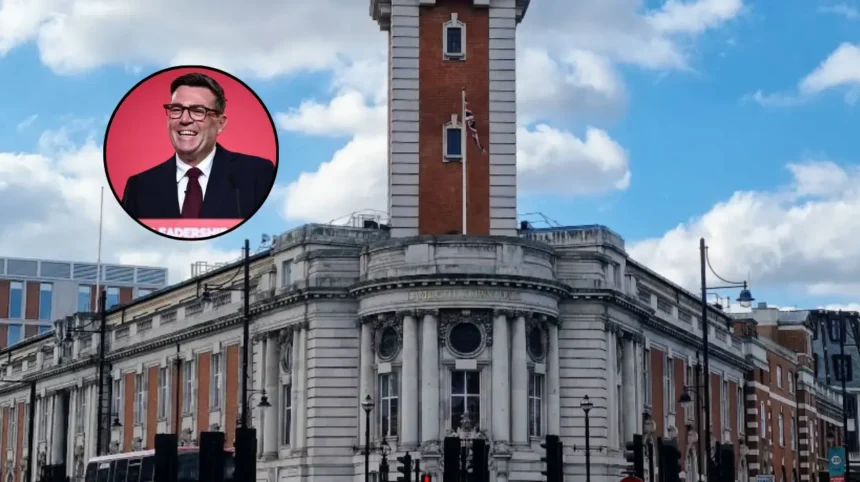
The letter, issued directly from Lambeth Town Hall, underscores the escalating fiscal crisis facing inner-city authorities. While acknowledging Prime Minister Burnham’s background as former Mayor of Greater Manchester—a role where he witnessed the systemic degradation of local public services—Abrams insisted that congratulations must be paired with immediate, tangible policy shifts.
Writing on behalf of the administration, Abrams stated that local authorities can no longer manage surging demand for front-line services under current central financial constraints. The communication directly connects policy choices in Westminster to worsening socio-economic conditions across urban communities.
Why Is Lambeth Council Demanding Immediate Action From Prime Minister Burnham?
In the official correspondence, Abrams drew a direct line between national budget choices and the erosion of civic safety nets. As reported by local municipal communications and verified by council records, Abrams stated:
“You know, like us, that the consequences of those cuts are felt most sharply, whether in Brixton or Bolton, by the poorest and most vulnerable. That political choice has shifted the costs onto our communities, weakened the social fabric, and left councils to manage rising demand with ever diminishing resources”.
The council leader argued that urban local authorities have been left to absorb structural economic shocks without the necessary statutory or financial tools, creating an unsustainable operational environment for local government.
What Financial Formula Led to Lambeth’s £47 Million Shortfall?
At the core of Lambeth’s grievance is the mechanism governing the Fair Funding Review. According to statements outlined in the letter, Lambeth was designated alongside three other local authorities—Southwark, Islington, and South Tyneside—in a manner that effectively excluded them from transitional funding protections.
This specific regulatory exclusion resulted in a direct loss of £47 million over a three-year period for the borough.
Consequently, Lambeth Council was compelled to seek Exceptional Financial Support (EFS) mechanisms from central government, raising the prospect of liquidating municipal land and properties to meet statutory balanced-budget obligations.
Addressing the potential sell-off of public property, Abrams wrote:
“Once sold, the long-term social benefit of a community building is lost forever”.
What Are the Five Core Demands Put Forward by Lambeth Council?
To stabilize municipal budgets and address acute localized pressures, Abrams laid out five specific policy demands for Downing Street to implement:
- Remove Funding Restrictions: Eliminate the cap on transitional funding arrangements that disproportionately penalised specific urban boroughs.
- Social Housing Reform: Abolish the Right to Buy scheme and provide low-interest government loans directly to local authorities to stimulate council house construction.
- Fiscal Devolution: Allow local councils to directly collect and retain revenues generated through local Mansion Taxes and proposed Overnight Visitor Levies.
- Climate Adaptation Funding: Formally recognise the financial strain imposed on local authorities by extreme weather events through dedicated emergency funding lines.
- Children’s Services Market Intervention: Restructure and regulate the children’s social care market to prevent private agencies from extracting excessive profits from vulnerable children’s care placements.
How Severe Is the Local Housing Emergency in Lambeth?
The correspondence directly ties municipal financial distress to the acute housing crisis in South London. Council data referenced in the letter confirms that over 4,500 homeless households in Lambeth currently live in temporary accommodation.
This high concentration of temporary housing obligations places an enormous, recurring burden on the council’s general fund, exacerbating the overall budget deficit and underscoring the urgent requirement for direct council house building powers.
Closing the letter, Abrams offered an avenue for co-operation, subject to statutory reform:
“Lambeth is ready to work with you. We share a commitment to tackling inequality, building the council houses we need and strengthening our communities. But we need the tools to do the job”.
Background of the Particular Development
The direct challenge from Lambeth Town Hall comes against a backdrop of prolonged fiscal distress across English local government.
Following more than a decade of central government funding reductions introduced during successive austerity programs, local authorities across the United Kingdom have seen their core spending power reduced in real terms, even as demand for adult social care, children’s services, and temporary accommodation reached record highs.
The Fair Funding Review was originally conceived by central government to establish a updated, fairer baseline for distributing grant funding based on local needs and resources.
However, the implementation of transitional protection caps—designed to smooth financial transitions—left specific high-deprivation London and Northern boroughs facing significant funding reductions without the safety net afforded to other authorities.
In response to these compounding pressures, multiple councils across England have issued Section 114 notices (effectively declaring municipal bankruptcy) or sought Exceptional Financial Support (EFS) capitalisation directions from central government.
Capitalisation permits local authorities to sell capital assets—such as public buildings, community centres, and land—or use borrowing to pay for day-to-day operational services.
Local government trade unions and policy analysts have consistently warned that relying on asset sales creates a irreversible loss of public infrastructure, removing vital physical community anchors while providing only a temporary fix for structural budget shortfalls.
Explore More Lambeth Council News
Lambeth Council orders urgent financial review Lambeth 2026
Lambeth Council Designates Brixton Village as ACV – Brixton, 2026
Prediction: How This Development Can Affect Local Residents and Municipal Stakeholders
This policy intervention and the response from Downing Street will directly impact multiple groups across the borough of Lambeth and similar urban local authorities:
- Homeless Families and Social Housing Applicants: If central government accedes to the demand to scrap Right to Buy and offer low-interest municipal loans, Lambeth could rapidly scale up its public housing construction pipeline. This would shorten wait times for the 4,500+ households currently in temporary accommodation, offering stable long-term housing while reducing the council’s reliance on expensive private temporary housing providers. Conversely, if central support is withheld, temporary accommodation costs will continue to erode municipal budgets.
- Local Ratepayers and Community Service Users: Should central government refuse to lift funding caps or grant revenue-retention powers (such as the Mansion Tax or Overnight Levy), Lambeth Council will be forced to proceed with capital asset sales and deeper cuts to non-statutory services. Residents could face reduced library hours, diminished park maintenance, cuts to youth services, and the permanent loss of local community facilities.
- Vulnerable Children and Social Care Recipients: Legislative intervention in the private children’s social care market would curb profit margins for external care agencies, allowing local authority funds to be redirected into direct care quality and local preventive services rather than private provider margins.
- Wider English Local Authorities: As a test case for Prime Minister Burnham’s administration, the outcome of Lambeth’s appeal will signal whether central government intends to pivot toward fiscal devolution and structural local government refinancing, or maintain strict expenditure controls on municipal budgets.