Key Points
- Local residents’ group Protect Brockwell Park (PBP) is challenging Lambeth Council’s latest planning permission for commercial events in Brockwell Park, arguing it was “improperly granted” and that the park’s status as protected public open space was not adequately considered.
- PBP says large‑scale, repeated commercial use of the park, including long enclosures and around 37 days of major events, is causing cumulative damage to grass, trees and wildlife and unfairly excludes local residents from large areas for over a month.
- The group has already secured two judicial review victories in which the High Court ruled Lambeth acted unlawfully and irrationally in authorising festivals via “permitted development” and later in granting permission for the 2025 Brockwell Live events.
- Leading barristers have advised that the 2026 planning permission is also flawed because Lambeth relied on vague environmental assurances and failed to take national‑level protections for public open space.
- The costs awarded after the previous judicial reviews did not cover all legal expenses; PBP has used campaign funds to commission expert reports and formally object to the 2026 application, and has received a grant from the Open Spaces Society, Britain’s oldest national conservation body, but is now appealing to the public for further donations.
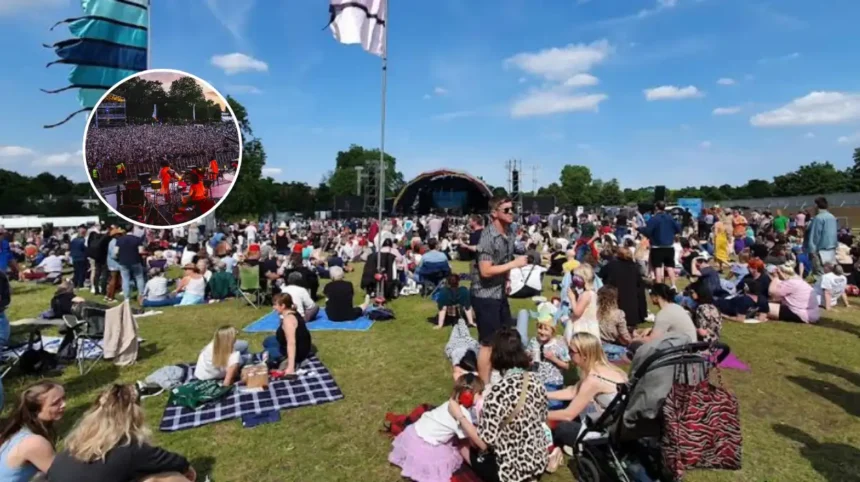
Brockwell Park in Lambeth (South London News) April 20, 2026, faces a fresh legal challenge as the local campaign group Protect Brockwell Park (PBP) moves to challenge Lambeth Council’s decision to approve a new series of commercial events. The group, composed of residents who say they are “passionate about the welfare of Brockwell Park”, is acting through an individual under the Aarhus Convention, which gives the public rights concerning environmental decision‑making.
As the group explains on its CrowdJustice campaign page, this latest legal move is aimed at “protecting Brockwell Park by trying to ensure events are run lawfully and in a way that respects and prioritises its landscape, ecology and local community”. PBP stresses that it is not opposed to all events, but that the current model—large‑scale, repeated commercial use with long enclosures—is “not sustainable” for the park.
Why does PBP say the 2026 permission is vulnerable
PBP’s case rests on the argument that the planning permission granted for events in 2026, including the “Brockwell Live” festival series, was improperly granted.
The group points out that the park is strongly protected under national planning policy as public open space, yet it says Lambeth did not take this protection seriously in its decision‑making.
In submissions to the planning committee, and later in the group’s legal‑support page, PBP notes that key evidence was missing and that the council relied on “vague environmental assurances” rather than robust, quantified assessments of impact on grass, trees and wildlife.
The group has cited advice from leading barristers that this approach sits uncomfortably with national‑level protections for open space and with the previous High Court rulings that already found Lambeth’s use of “permitted development” rules unlawful.
What the previous court rulings found
In 2025, the High Court ruled that Lambeth had acted unlawfully and irrationally in using “permitted development” rights to allow the Brockwell Live and similar festivals to bypass a full planning application. The court found that the temporary‑use window was being exceeded once the full period of fencing, setup and de‑rigging was taken into account, and that the council had failed properly to weigh the impact on the park and its users.
The judgment was reported by the BBC as a clear rebuke to Lambeth, with the judge saying the council had not properly directed itself on the time limits and had not given sufficient weight to the park’s status as public open space.
London‑based legal blog Legal Chronicle, in its analysis by Shemi Esquire, noted that the case had national implications for how local authorities can approve large‑scale commercial concerts in local parks.
What the 2026 permission actually allows
Despite the 2025 rulings, Lambeth has since granted full planning permission for a series of events in Brockwell Park in 2026.
As reported by Timeout and the council’s own planning information page, the 2026 consent includes five festival days across two weekends at the beginning of the summer, with the council stating that this reflects a “new approach” intended to cut the total number of event days and reduce costs by more than £1 million.
The council’s case officer, speaking to the planning committee, argued that the events can be run in a way that minimises environmental harm and that the park remains largely accessible to the public during the festivals.
However, PBP maintains that large enclosures, traffic, noise and backstage infrastructure still effectively exclude residents from significant parts of the park for extended periods and that the cumulative effect of repeated events is not properly assessed.
The campaign’s legal and financial position
PBP’s earlier judicial reviews have already forced Lambeth to accept that large‑scale events must go through full planning channels, something the council acknowledged when it abandoned its appeal against the first High Court decision. A local‑government‑law blog reported that the council dropped its Court of Appeal bid “to enable greater clarity” on future events and to allow proper community consultation.
However, the financial toll has been high. The council’s own figures, noted by the London Evening Standard, show that Lambeth spent almost £200,000 on legal costs contesting the first round of challenges over the 2025 events.
According to PBP’s CrowdJustice page, the court‑awarded costs did not cover all of the group’s legal outlay, and campaign funds have also paid for expert ecological reports and a detailed objection to the 2026 planning application.
The Open Spaces Society, Britain’s oldest national conservation body, has offered a grant to the campaign, as reported on the Society’s website and in the PBP appeal text. Nevertheless, the group says that additional public donations are now needed if it is to mount this next legal step, warning that, if the 2026 permission stands unchallenged, the park will again face “the same pattern” of long‑term enclosures and cumulative damage.
Background of the Brockwell Park events dispute
The Brockwell Park events dispute began when Lambeth Council started using “permitted development” rights to allow the Brockwell Live festival and related commercial events to take place without a full planning application.
This route let the council avoid the usual scrutiny of impact upon the park’s ecology, access and local residents, and allowed organisers to plan a busy schedule of large‑scale, ticketed concerts.
Residents and local campaign groups, including PBP, argued that the permitted‑development approach was being misused to circumvent the 28‑day limit on temporary change of land use and to sidestep proper environmental assessment.
They also pointed out that substantial parts of the park were fenced off for weeks at a time, affecting dog‑walkers, children’s play, tree‑root zones and wildlife habitats.
The first High Court ruling in 2025 gave national significance to the case, as analysed by commentators such as Shemi Esquire on Legal Chronicle, by clarifying how councils must read the time limits and open‑space protections when approving temporary commercial events in parks.
The court’s reasoning has since been cited in planning‑law summaries as a marker of how local authorities should treat the status of public open space when considering entertainment‑use applications.
In the wake of that judgment, Lambeth pledged a “new approach”, including a smaller number of event days and a commitment to full planning applications for major events. PBP and other campaigners welcomed the commitment to planning‑level scrutiny but have now questioned whether the 2026 permission really meets that standard, particularly in terms of evidence and enforceable environmental safeguards.
What this legal challenge could mean for different audiences
For Lambeth residents, the outcome of this latest challenge could determine how much of Brockwell Park remains freely accessible outside of ticketed events and how often the park is fenced off for long periods. If the permission is overturned or narrowed, it may mean fewer days of commercial festivals, shorter enclosures and more predictable, low‑impact community‑led activities. If it stands, residents could continue to face substantial sections of the park being closed each summer, with ongoing concerns about wear on grass and trees.
For local business owners and event organisers, the ruling could shape the feasibility of large‑scale commercial festivals in Brockwell Park and similar green spaces. A stricter interpretation of the public‑open‑space rules and the 28‑day limit might push organisers towards smaller, more dispersed events or alternative venues, affecting revenue and programming.
For councils and planning authorities across the UK, the case matters because it tests how national‑level protections for public open space translate into day‑to‑day decisions on event‑use. If the courts accept that Lambeth’s 2026 permission is flawed, it may prompt other local authorities to tighten their own event‑licensing and planning processes, explicitly requiring detailed ecological assessments and enforceable mitigation.