Key Points
- Lewisham Council has launched a renewed “restoration partner search” for the Grade II listed Ladywell Playtower in south east London, inviting proposals from developers, operators and community organisations.
- The building, opened in 1884 as public baths and later used as a community centre, has stood vacant since 2004 and is listed on Historic England’s Heritage at Risk Register.
- A previous 2022 plan to convert the site into a four‑screen cinema plus 33 homes stalled due to financial‑viability issues and never proceeded beyond planning approval; the council has now ended that agreement and rescinded associated planning permission.
- Lewisham Council and the wider community are shaping the next phase through a community‑feedback exercise and a formal call for expressions of interest, with a shortlist expected and a preferred proposal to go out for further public consultation over the summer.
- News Shopper invited its readers, via a Facebook post, to suggest what they would like the Ladywell Playtower to become; more than 80 comments were received, offering a broad spread of ideas including a community centre, youth club, arts and cultural space, library‑style learning area, housing (including social and key‑worker housing), café or restaurant, and heritage‑focused uses such as reinstating the baths.
- Community suggestions emphasised both public‑benefit and heritage‑retention themes, with some residents favouring uses that preserve the Playtower primarily as a local heritage asset rather than significantly altering it for commercial ends.
Ladywell, Lewisham (South London News) April 20, 2026 has relaunched a drive to secure the future of the long‑derelict Ladywell Playtower, a Grade II listed Victorian building in south east London, as residents and organisations submit ideas for how the site should be revived. In a sign of the community’s attachment to the landmark, the News Shopper Facebook post inviting suggestions about the Playtower’s future drew more than 80 comments, with ideas ranging from youth clubs and community centres to arts spaces, cafés and housing. The council’s new “restoration partner search”, launched in December 2025, now aims to translate such local priorities into a deliverable, long‑term plan by autumn 2026.
- Key Points
- Why is the Ladywell Playtower back in the spotlight?
- What do local residents say the Playtower should become?
- How did the building fall into disrepair?
- What comes next in the restoration process?
- Background to the Ladywell Playtower development
- Prediction: How this development could affect South East Londoners
Why is the Ladywell Playtower back in the spotlight?
Lewisham Council formally stepped back from a previous restoration deal in 2025 after a private developer failed to deliver on a scheme that had been granted planning permission in 2022. That scheme envisaged a four‑screen cinema and 33 homes on the site, but the developer cited financial‑viability problems and made no progress on the required legal agreement, leaving the building in a deteriorating state.
In response, the council moved to rescind planning permission for the stalled project and recommended ending the existing agreement, describing the step as key to unlocking a “new, deliverable plan” for the site.
As reported by Lewisham Council in a December 2025 update, the authority has now launched a fresh Restoration Partner Search that will run into late 2026, inviting organisations with experience in complex heritage restoration to come forward.
At the same time, the council has opened a community‑feedback survey to help prospective partners understand “local priorities” and to ensure that future proposals reflect “local aspirations” while preserving the Playtower’s historic character.
What do local residents say the Playtower should become?
As part of a wider public‑opinion‑gathering exercise, News Shopper posted on Facebook asking readers what they would like to see the former Ladywell Playtower become, and the responses offer a snapshot of what many south east Londoners would like for the site.
More than 80 replies were left, and the outlet’s analysis shows that the most‑frequently suggested use was a community centre or general community hub, receiving 11 mentions.
Several contributors highlighted youth facilities, with five mentions calling for a youth club, skating or activity spaces, reflecting concern about having safe, supervised spaces for teenagers.
Arts and cultural uses such as music, theatre, art and dance were also popular, receiving a similar number of suggestions. Education‑focused ideas appeared regularly, with four respondents proposing a library or learning‑space style arrangement, and four others suggesting some form of housing, including social housing or flats.
A number of comments pushed for more day‑to‑day, social uses such as a café, tea room, restaurant or food court, with some residents explicitly noting that regular footfall could help support the building’s long‑term viability. Others focused on heritage, proposing that the Playtower be returned, at least in part, to its original function as a swimming pool or publicly accessible bath facility.
A recurring thread in the comments was the importance of retaining the building’s historic identity, with several residents arguing that the site should remain primarily a local heritage asset rather than being heavily repurposed for commercial gain.
How did the building fall into disrepair?
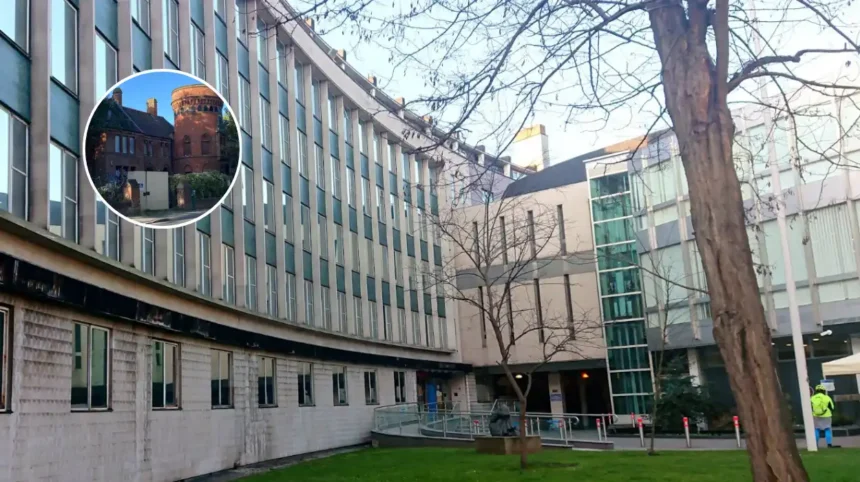
Ladywell Playtower opened in 1884 as Ladywell Baths, providing public bathing facilities for generations of Lewisham residents before it closed in the mid‑1960s. It later reopened for a time as a community centre, but has been largely unused since 2004 after the council withdrew funding and the building slipped into vacancy. Over the years of neglect, the structure has suffered roof damage, water ingress and significant structural deterioration, contributing to its inclusion on Historic England’s Heritage at Risk Register.
The 2022 scheme with the private developer was intended to end that long period of limbo by bringing the site back into public use, but the council later judged that the project “had stalled” and that the developer was unable to confirm the legal and financial arrangements needed to proceed. In a statement on its website, the council said that taking control of the building’s future again would allow it to
“secure a viable proposal for renewal and re‑use that is deliverable, financially viable and shaped by local priorities”.
What comes next in the restoration process?
The current restoration‑partner process is structured in stages, with organisations able and interested in leading heritage‑restoration projects invited to submit expressions of interest by 28 February 2026. Community‑feedback forms, meanwhile, were open until 29 January 2026, giving residents a direct route to shape the criteria against which bids will be assessed.
Once expressions of interest are evaluated, a shortlist is expected, followed by a more detailed proposal‑submission phase.
A preferred proposal is then anticipated to go out for further public consultation over the summer, with the aim of selecting a long‑term restoration partner by autumn 2026. Council officials have said that the final partner will need to demonstrate both technical capability and a commitment to operating the building as a community‑facing asset, in line with the feedback received so far.
Background to the Ladywell Playtower development
Ladywell Playtower stands as one of Lewisham’s most recognisable historic landmarks, originally built as Ladywell Baths in 1884 to serve the growing Victorian‑era population of south east London. The structure combines Victorian municipal architecture with later alterations, and its prominent tower has made it a distinctive feature of the local skyline for well over a century.
After the baths closed in the mid‑1960s, the building was repurposed several times, including a spell as a community centre, before it shut again in 2004 and began its lengthy period of dereliction.
The 2022 cinema‑and‑housing scheme marked the most advanced attempt to bring the site back into active use, with the council and developer agreeing that the project would restore the building’s fabric while adding new public‑facing and residential components.
However, without signed legal agreements and ongoing investment, the building continued to deteriorate, prompting council leaders to re‑evaluate their approach and return the site to a more open, community‑shaped process.
The current Restoration Partner Search is explicitly framed as a response to both the technical complexity of heritage restoration and the need to embed residents’ voices in the decision‑making chain, after earlier engagements showed that local people were wary of purely commercial outcomes.
Prediction: How this development could affect South East Londoners
The outcome of the Ladywell Playtower restoration process has the potential to shape how several groups of south east London residents experience their local area over the coming decade. If the preferred proposal leans towards a community‑centred mix—such as a hub combining youth facilities, arts and cultural activities, and learning spaces—it could provide a new focal point for residents who currently lack dedicated, accessible venues in the immediate neighbourhood. Such a use would likely benefit local young people, families and community groups, giving them a place for structured activities, informal gatherings and skill‑building programmes.
If housing, including social or key‑worker accommodation, forms part of the final scheme, it could contribute modestly to Lewisham’s wider housing‑supply strategy, offering a relatively small number of units in a historically significant building rather than pure commercial upsell. Whether the site is reopened as some form of public‑baths‑style facility or a café‑driven social space, any substantial increase in footfall would also affect the immediate vicinity by bringing more visitors through Ladywell and potentially supporting nearby businesses.