Key Points
- Unauthorised Operations: Freight Brixton, a major multi-purpose venue in South London, has been operating open to the public since November 2025 without formal planning permission being officially issued by Lambeth Council.
- Incomplete Section 106 Agreement: Although Lambeth Council’s Planning Applications Committee resolved to approve the planning application in April 2025, the decision notice remains unissued because negotiations regarding a Section 106 legal agreement have not been completed.
- Early Enforcement Action: Construction began in 2024 prior to planning approval, which initially prompted a planning enforcement investigation by the local authority.
- Freedom of Information Disclosure: A recent Freedom of Information (FOI) response confirmed that formal planning permission has still not been granted, but failed to clarify why enforcement action was deemed unnecessary by council officers.
- Systemic Questions Raised: The continuous, uninterrupted operation of the commercial venue raises significant questions regarding the consistent application and enforcement of UK planning laws across different commercial entities.
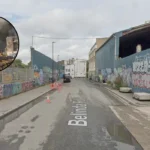
Brixton (South London News) July 25, 2026 –In a major development concerning local planning governance in South London, Questions are being raised over how Freight Brixton—a large-scale multi-purpose commercial venue located in the heart of Brixton—has been permitted to construct, open, and host events for over eight months without formal planning permission ever being formally granted.
- Key Points
- What Did the Freedom of Information Request Reveal About Lambeth Council’s Position?
- Why Is the Distinction Between a Resolution and Formal Planning Permission Important?
- 1. Committee Resolution to Grant
- 2. Execution of Section 106 Legal Agreement
- 3. Issuance of the Decision Notice
- What Is the Background of the Freight Brixton Development?
- How Could This Decision Affect Local Residents, Businesses, and Property Developers?
As detailed in an opinion analysis inspecting local authority records, construction at the former railway goods yard site began in 2024 prior to securing planning consent, triggering an initial planning enforcement investigation by Lambeth Council. In April 2025, Lambeth’s Planning Applications Committee officially resolved to grant planning permission for the site.
However, that resolution was made strictly subject to the successful completion and signing of a Section 106 legal agreement—a binding contract between a developer and a local planning authority that secures public benefits and infrastructure mitigation.
Despite the committee’s resolution, the Section 106 agreement remains unfinalised over a year later. Consequently, Lambeth Council has not issued the formal decision notice required by statute to grant planning permission.
The venue completed its construction work, opened its doors to the public in November 2025, and has maintained an active events calendar ever since.
Under English planning law, a committee resolution to approve a development does not constitute the formal grant of planning permission.
Until a legal decision notice is formally signed and dispatched by the local planning authority, any development or operational activity on-site remains legally unauthorized.
What Did the Freedom of Information Request Reveal About Lambeth Council’s Position?
According to details disclosed through a recent Freedom of Information (FOI) request submitted to the local authority, Lambeth Council confirmed that formal planning permission for Freight Brixton has still not been issued.
However, as highlighted by independent commentators analyzing the FOI response, the information provided by the council failed to explain the key administrative decisions behind the situation:
- Lack of Explanation for Exemption: The FOI response did not provide any official explanation as to why the venue was allowed to open and continue operating uninterrupted without a formal decision notice in place.
- Enforcement Discretion Omissions: The disclosure omitted the specific considerations or internal risk assessments that led local planning officers to conclude that formal planning enforcement action was unnecessary once the venue opened in November 2025.
- Ongoing Status: The response confirmed that negotiations surrounding the Section 106 agreement remained incomplete more than eight months after the commercial opening.
In the UK planning system, developers who undertake building works or commence operational uses prior to receiving a formal decision notice do so entirely at their own commercial risk. While local planning authorities possess statutory discretionary powers under the Town and Country Planning Act 1990 to issue enforcement notices or stop notices, they are not legally obligated to take action unless they deem it expedient in the public interest.
Explore More Lambeth Council News
Lambeth Council Faces £11m Budget Deficit After Miscalculated Budget: Lambeth 2026
Lambeth Council and Airbnb Tackle Illegal Subletting, London 2026
Why Is the Distinction Between a Resolution and Formal Planning Permission Important?
To understand the legal standing of Freight Brixton, it is necessary to examine how planning approvals function within English local government framework:
1. Committee Resolution to Grant
When a planning committee votes to approve an application “subject to a Section 106 agreement,” it establishes the council’s intent to grant permission once specific legal obligations—such as highway improvements, community contributions, or environmental monitoring—are legally finalized between all landholders and the council.
2. Execution of Section 106 Legal Agreement
Section 106 of the Town and Country Planning Act 1990 allows local authorities to enter into legally binding agreements with landowners. Until all parties agree, sign, and seal this document, the statutory prerequisites established by the planning committee have not been fulfilled.
3. Issuance of the Decision Notice
The Decision Notice is the legal document that formally confers planning permission. Without this document, no formal planning permission exists in law, regardless of the committee’s earlier vote.
Because Freight Brixton currently lacks an issued Decision Notice, its current physical build and commercial operations remain technically unauthorized under planning regulations.
What Is the Background of the Freight Brixton Development?
Freight Brixton is situated at 33 Brixton Station Road in South London, occupying a historical former railway goods yard adjacent to the elevated rail arches.
Designed as a multi-purpose indoor and outdoor space, the venue was developed to host a combination of live music events, food vendors, club nights, and private hires, drawing on Brixton’s rich cultural and night-time economy.
- 2024: Construction work commenced at the site without prior planning authorization. Following complaints and site inspections, Lambeth Council opened an official planning enforcement investigation into unauthorized works.
- April 2025: The applicant submitted planning documentation, which was presented to Lambeth’s Planning Applications Committee. Planning officers recommended approval, and committee members voted to resolve to grant planning permission, subject to Section 106 conditions.
- November 2025: Construction was completed, and Freight Brixton formally opened to the public, hosting regular large-scale events.
- July 2026: Eight months after opening, the Section 106 agreement remains unexecuted, the planning decision notice remains unissued, and the venue continues to operate without formal planning permission.
How Could This Decision Affect Local Residents, Businesses, and Property Developers?
The handling of the Freight Brixton case carries wider implications for various stakeholders within the London Borough of Lambeth and across the urban planning landscape:
For local residents living near Brixton Station Road, the ongoing operation of a large event venue without finalized Section 106 obligations creates potential uncertainty.
Section 106 agreements frequently mandate key operational controls, such as noise insulation measures, crowd management obligations, waste collection schedules, and contributions toward local public infrastructure.
If a venue operates without these legal covenants being finalized, local residents may feel that expected safeguards and community mitigations are being delayed or bypassed.
The case establishes a notable precedent regarding planning enforcement consistency. Other local businesses and property developers subject to strict planning controls may question whether equal treatment is being applied across the borough.
If a major commercial operator is permitted to construct and operate for months without a formal decision notice, smaller business owners facing immediate enforcement action for minor breaches may perceive a two-tier planning enforcement system.
Planning enforcement exists fundamentally to maintain public confidence that planning rules are enforced transparently, fairly, and consistently across all applicants.
When a high-profile development operates for over eight months without final planning consent or a clear public rationale from the council regarding why enforcement was withheld, it risks eroding public trust in the local governance of planning controls.