Key Points
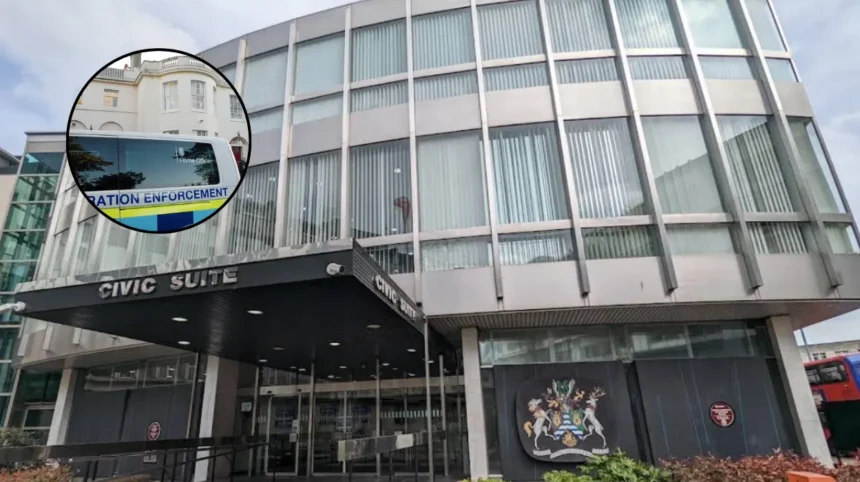
- Historic Local Authority Vote: Lewisham Council has formally passed a landmark motion becoming the first local authority in the United Kingdom to refuse assistance to Home Office immigration raids wherever legally possible.
- Green Administration Leadership: The motion, titled “Building an anti-raids Sanctuary Corridor in and beyond Lewisham,” was proposed by Green Party administration councillors and passed at the full council meeting at the Town Hall on Wednesday, 22 July.
- Resource and Data Shielding: The resolution commits the council to a comprehensive review of its data-sharing protocols, service agreements, and contracts to ensure local authority resources and public funds are not used to facilitate enforcement activity.
- Home Office Defense: The Home Office responded by defending its enforcement visits as intelligence-led, stating it makes “no apology” for collaborating with local authorities to share information and target immigration crime.
- Grassroots Enforcement Data: Freedom of Information (FOI) data obtained by local campaign group Lewisham Anti-Raids revealed that 177 immigration raids occurred across the borough over the past year, making Lewisham a primary focal point for enforcement.
Lewisham (South London News) July 25, 2026 – Lewisham Council has officially resolved to end all voluntary cooperation with Home Office immigration raids wherever legally permissible, becoming the first municipal council in the United Kingdom to adopt a systematic refusal policy. Following a decisive vote at the full council meeting held at Lewisham Town Hall on Wednesday, the local authority pledged to withhold council resources, municipal property, and public funding from supporting immigration enforcement actions.
- Key Points
- What Motion Was Passed by Lewisham Council Regarding Immigration Raids?
- Why Has Lewisham Council Decided to End Support for Home Office Operations?
- How Has the Home Office Responded to Lewisham Council’s Decision?
- What Data Triggered the Local Campaign Against Immigration Raids in Lewisham?
- Background of the Particular Development
- What Are the Predictions for How This Development Will Affect Local Stakeholders?
The policy initiative, spearheaded by the Green Party administration, mandates an immediate top-to-bottom review of all internal data-sharing frameworks, inter-agency service level agreements, and third-party contractor relationships to prevent local authority intelligence from feeding into Home Office deportation operations.
What Motion Was Passed by Lewisham Council Regarding Immigration Raids?
As reported by William Eichler of LocalGov, the motion formally titled “Building an anti-raids Sanctuary Corridor in and beyond Lewisham” was proposed by Green Party Councillor Hau-Yu Tam and seconded by Councillor Wellington Gill, with formal endorsement from the Joint Council for the Welfare of Immigrants (JCWI).
The motion establishes an explicit directive for the council administration to audit its operational processes to block support for Home Office or Immigration Enforcement teams during raids, including coordination executed via local police partnerships.
As detailed in the reporting by Joshua Carroll for Novara Media, the measure seeks to build a legal “firewall” between municipal services and central government border enforcement.
Under the terms of the motion, the council will evaluate service delivery agreements to ensure residents accessing essential local services—such as housing assistance, social care, and health services—do not face secondary reporting or data transfers to immigration officials.
As stated by Lewisham Mayor Liam Shrivastava:
“I’m incredibly proud that Lewisham Council has made this historic decision to defend our migrant workers against the hostile environment. Immigration raids do not build safety in our communities; they spread fear and make it even harder for victims of modern slavery and trafficking to come forward and seek protection. Lewisham is now a true Borough of Sanctuary, in name and in practice.”
Why Has Lewisham Council Decided to End Support for Home Office Operations?
As reported by Kiran Stacey, Policy Editor for The Guardian, the political momentum for the motion escalated after council officials uncovered internal email correspondence from 2023 in which Home Office immigration enforcement officers asked the local authority’s food safety and environmental health teams to conduct “joint operational visits” on local commercial premises.
Green Party representatives argued that utilizing regulatory body checks as a mechanism for immigration enforcement compromised public trust in council services.
According to documentation cited by Local Government Lawyer, the motion highlighted a series of targeted raids on local small businesses over the preceding 12 months, including car washes, takeaway restaurants, barbers, and nail salons.
Councillors condemned these enforcement visits as part of a punitive strategy that targets vulnerable migrants, asylum seekers, and low-wage workers.
As reported by Novara Media, Green Party Leader Zack Polanski publicly endorsed the council’s directive, stating:
“ICE-style immigration raids tear people away from their families, their neighbours and their communities and have no place in a decent society. I’m proud of brave, compassionate Green councils in London working to create a corridor of sanctuary where nobody, no matter where they’re from or what papers they have, has to live in fear of being snatched away from the place they call home.”
How Has the Home Office Responded to Lewisham Council’s Decision?
In response to the passage of the motion, central government immigration authorities maintained their stance on enforcement operations within local authorities.
As reported by the Local Democracy Reporting Service (LDRS), a spokesperson for the Home Office stated that while immigration enforcement visits are intelligence-led, the department makes “no apology” for joining local authorities to enable information sharing and for “fighting criminals who fuel immigration crime”.
As highlighted in The Guardian’s analysis of government data, central ministers have overseen a notable increase in business-targeted immigration enforcement operations nationwide, reporting a 77% surge in workplace raids and an 83% increase in related arrests over recent reporting periods.
Home Office representatives maintain that multi-agency operational cooperation remains a vital tool in disrupting illegal labor exploitation and organized immigration crime networks.
What Data Triggered the Local Campaign Against Immigration Raids in Lewisham?
As reported by the Local Democracy Reporting Service (LDRS), the drive for the council resolution was propelled by data secured through Freedom of Information requests submitted by grassroots coalition Lewisham Anti-Raids.
The figures revealed that 177 separate immigration raids were conducted within the London Borough of Lewisham during the previous calendar year alone, confirming that the area had become a primary focal point for Home Office enforcement activity in South London.
As noted by Local Government Lawyer, the motion approved by the council commits local officers to work alongside community legal advocacy groups, anti-raids networks, and faith organisations to inform local workers and business owners of their legal rights when confronted with enforcement actions.
Background of the Particular Development
The London Borough of Lewisham originally declared itself a official “Borough of Sanctuary” in May 2021 under its former Labour administration, formally pledging to foster an inclusive environment for refugees, asylum seekers, and migrants.
However, local grassroots campaigners and anti-raids networks continuously criticized the declaration as symbolic, arguing that council departments—specifically environmental health, housing licensing, and trading standards—continued to share operational intelligence with border enforcement officers.
Following significant political realignments in local government elections across London, Green Party representatives secured a governing majority in Lewisham.
Upon taking office, administration officials reviewed historical municipal communications and discovered administrative practices wherein council regulatory teams assisted central government officers in joint commercial inspections.
Furthermore, civil society scrutiny surrounding historical data-sharing practices—such as homelessness charity St Mungo’s sharing location details of migrant rough sleepers with the Home Office in 2019—prompted calls for rigid contractual “firewalls” across all council partners and service suppliers.
What Are the Predictions for How This Development Will Affect Local Stakeholders?
The legal and operational shift adopted by Lewisham Council is expected to have multi-faceted consequences across local government bodies, migrant communities, commercial entities, and central government enforcement:
- For Local Migrant Communities and Residents: The establishment of strict data-sharing firewalls is predicted to increase engagement between undocumented or vulnerable residents and municipal public services. Migrant workers may feel more secure accessing emergency housing, social care, public health services, and reporting workplace exploitation or modern slavery without fear of immediate immigration referral.
- For Local Businesses and High Street Retailers: Commercial establishments—particularly independent restaurants, takeaways, car washes, and personal care salons—will likely experience a shift in how local regulatory inspections are carried out. While routine health, safety, and licensing checks by council staff will continue, businesses will no longer face joint municipal-immigration spot checks.
- For Local Authority Administration and Legal Frameworks: Lewisham Council’s stance may trigger legal scrutiny or political friction with the Home Office regarding the boundary between statutory local authority duties and national border control legislation. Council legal teams will need to carefully navigate existing statutory obligations to ensure the policy remains within legal boundaries while withholding discretionary assistance.
- For Surrounding London Boroughs and National Policy: As the first local authority to enact such a policy, Lewisham’s decision is expected to serve as a blueprint for other Green-led and progressive local authorities across Greater London. This could lead to a broader regional “corridor of sanctuary,” altering how municipal councils across London interact with central immigration enforcement authorities.