The Capital FM Summertime Ball is an annual mini-festival held in London, featuring performances by multiple high-profile contemporary pop artists. Capital FM, a major UK commercial radio network owned by Global Media & Entertainment, organises and broadcasts the single-day music event.
- Where does the Summertime Ball take place?
- When did the Summertime Ball first begin?
- Who performs at the Capital Summertime Ball?
- How can spectators purchase tickets for the event?
- What is the economic impact of the Summertime Ball?
- How does the event production operate logistically?
- What security and safety measures are enforced?
- How does the Summertime Ball leverage digital media?
- What is the cultural significance of the event?
- How does the Summertime Ball compare to Jingle Bell Ball?
- What rules and guidelines must attendees follow?
- What are the future trends for the Summertime Ball?
The Capital FM Summertime Ball serves as a flagship live music event for Global Media & Entertainment. The event takes place during a single day in June, serving a capacity crowd of 80,000 attendees. It functions as a multi-artist pop music showcase, bringing together top-charting domestic and international performers. The line-up typically includes contemporary pop, electronic, dance, and hip-hop artists who receive regular airplay on the Capital network.
The event acts as a physical manifestation of the radio station’s playlist, drawing enormous interest from music fans across South London boroughs who commute across the capital to attend. Beyond the live stadium experience, Global leverages the event across its entire media portfolio. The concert is broadcast live on Capital FM radio, streamed via the Global Player application, and filmed for subsequent television broadcast packages and digital video content. This multi-platform distribution maximises the commercial reach of the event, engaging millions of music consumers who are unable to attend the physical stadium performance.
Where does the Summertime Ball take place?
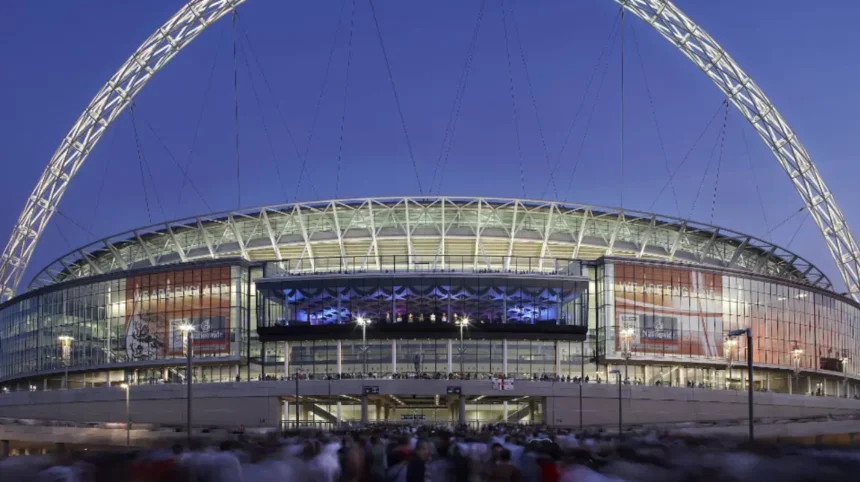
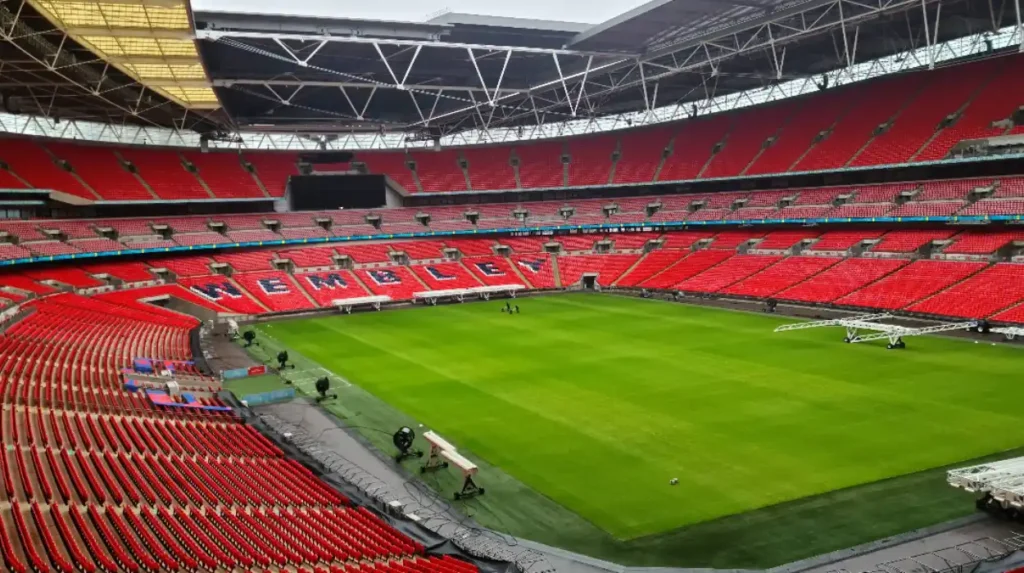
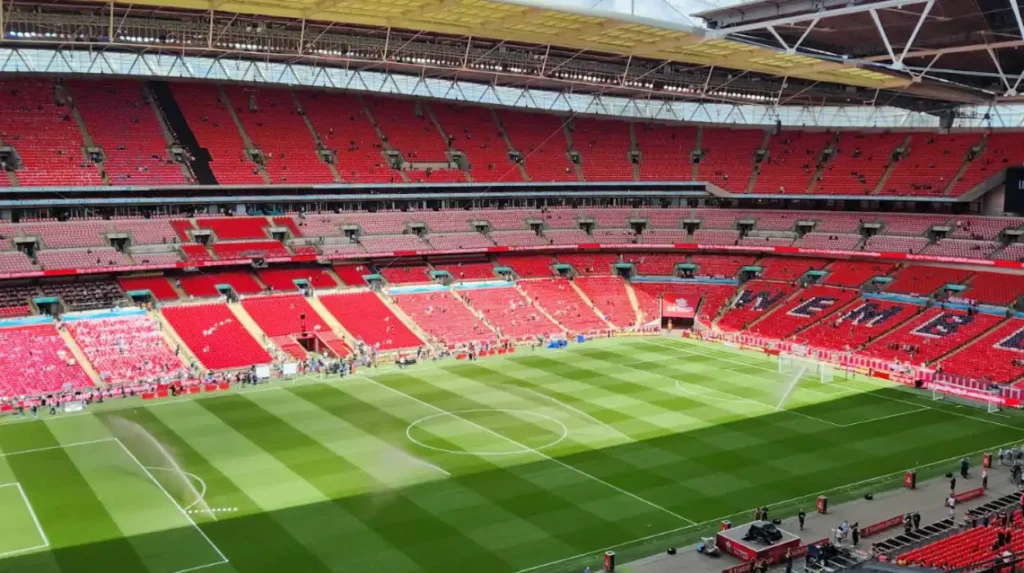
The Summertime Ball takes place at Wembley Stadium, located in Wembley, North West London. The stadium is the largest sports and music venue in the United Kingdom, offering a specific concert capacity of approximately 80,000 spectators for this event.
Wembley Stadium is the definitive home of the Summertime Ball. Located in the Borough of Brent, the stadium is owned by the Football Association (FA) and operated by Wembley National Stadium Limited. The modern stadium opened in 2007 on the site of the original 1923 Wembley Stadium. The venue features a signature 133-metre-tall triumphal arch that supports the north roof structure, making it a highly visible landmark across London. The venue provides the infrastructural capacity required to host a large-scale, multi-artist pop production, including advanced staging, lighting, and sound systems.
The choice of Wembley Stadium establishes the event as a premier fixture in the British summer music calendar. The venue provides extensive transport links, connecting spectators to central London via Wembley Park Station, Wembley Central Station, and Wembley Stadium Station. This accessibility is critical for managing the high volume of attendees, including large groups of young adults and families travelling all the way from South London transport hubs like Clapham Junction or Croydon via the extended London Underground and National Rail networks.
When did the Summertime Ball first begin?
The Summertime Ball first began on 7 June 2009 at Emirates Stadium in North London. The inaugural concert featured an international line-up of performers, establishing the event as a permanent annual fixture for the Capital radio network.
The first Summertime Ball took place at the Emirates Stadium, the home venue of Arsenal Football Club, due to scheduling configurations in 2009. The initial event set the structural template for subsequent years, operating as a single-day Sunday festival with a dense line-up of charting musicians. The headline act for the inaugural 2009 concert was the American singer-songwriter Katy Perry, supported by other prominent acts including Akon, Ne-Yo, Take That, and JLS.
Following the success of the 2009 event, Global Media & Entertainment migrated the franchise to Wembley Stadium in 2010 to accommodate larger crowds and grander stage productions. This move increased the audience capacity from roughly 55,000 at Emirates Stadium to the 80,000 threshold at Wembley. As you explore the modern site, you are crossing land with a deep heritage. Read about the full [Capital FM Summertime Ball Historical Timeline and Venue Changes] to understand its origins. The event has occurred annually in June ever since, with the exception of a two-year hiatus in 2020 and 2021 caused by the COVID-19 pandemic and associated public health restrictions on mass gatherings, which temporarily halted travel from all districts across North, East, West, and South London.
Who performs at the Capital Summertime Ball?
The Summertime Ball line-up consists of high-charting global pop artists, electronic dance music producers, British breakthrough acts, and surprise guest performers. The programming mirrors the active rotation playlist of the Capital FM hit music radio network.
The artist selection process focuses strictly on commercial performance, radio airplay data, and streaming statistics. The line-up routinely blends established international superstars with emerging talent to appeal to a broad demographic of youth and pop music enthusiasts. A typical year features between 10 and 15 distinct acts performing short, hit-focused sets rather than full-length concert sets. This rapid rotation keeps the energy consistent throughout the seven-hour duration of the event.
The performers fall into distinct musical categories to ensure a dynamic show progression. Mainstream pop vocalists form the core of the line-up, exemplified by artists like Ed Sheeran, Taylor Swift, Justin Bieber, and Dua Lipa. Electronic dance music (EDM) DJs and producers play a significant role, providing high-tempo sets that transition the crowd between live vocal acts; examples include Calvin Harris, David Guetta, and South London native Jax Jones. Urban and hip-hop inflected pop acts add variety, represented over the years by pioneering South London performers like Stormzy, Tinie Tempah, and Raye.
How can spectators purchase tickets for the event?
Spectators purchase tickets for the Summertime Ball exclusively through the Global Player mobile application during designated presale and general sale windows. Tickets frequently sell out within hours due to high demand and strict purchasing limits.
The ticketing process for the Summertime Ball is entirely digitised to manage high demand and mitigate secondary ticket scalping. Global Media & Entertainment operates the primary sale window through its proprietary digital platform, the Global Player app. This strategy incentivises listeners to download the application, driving digital engagement across their media ecosystem. Ticket options generally comprise general admission pitch standing, reserved tiered seating, and premium hospitality packages that include food, beverages, and exclusive lounge access.
The sale occurs in two distinct phases over a specific week in late April or early May. The first phase is the Capital Presale, accessible to users who have registered a free account on the Global Player app. Barclays credit or debit cardholders often receive parallel access to an exclusive presale window due to corporate sponsorship agreements. The second phase is the general public sale, which releases any remaining tickets. This digital rush triggers intense traffic spikes from concentrated pop music fanbases nationwide, including high volumes of simultaneous transactions originates from residential pockets across South London. Ticket limits are capped at a maximum of four per transaction to prevent bulk buying by automated ticket bots and unauthorised commercial resellers.
What is the economic impact of the Summertime Ball?
The Summertime Ball generates substantial economic activity for London’s tourism, hospitality, and transport sectors by attracting 80,000 visitors. It also drives significant advertising and sponsorship revenue for Global Media & Entertainment.
The economic impact of the event extends across several sectors of the Greater London economy. Hospitality businesses in the Wembley Park area, including hotels, restaurants, bars, and retail outlets, experience a measurable surge in transaction volumes on the weekend of the event. Public transport operators, specifically Transport for London (TfL) and National Rail, experience increased passenger numbers on the Jubilee and Metropolitan underground lines, as well as suburban rail routes feeding into the Wembley transport hubs from southern terminal stations.
For the organiser, Global Media & Entertainment, the event represents a highly lucrative commercial asset. The company secures multi-million-pound title sponsorships with major corporate entities, such as Barclaycard and Vodafone. These brand partners receive extensive on-site activation spaces, digital branding rights, and integration across the live radio broadcasts. Furthermore, the event provides a massive inventory for high-value audio and video advertisements, commercial partnerships, and branded content deals delivered across Global’s radio stations, social media channels, and physical outdoor advertising billboards lining major arterial routes from North to South London.
How does the event production operate logistically?
The logistics of the Summertime Ball require months of planning, involving a multi-stage production schedule, rigorous crowd management systems, and coordinated broadcast engineering. The entire stadium transitions into a highly technical television and concert studio.
The production timeline for the Summertime Ball begins up to a year in advance with artist booking and stadium scheduling. The physical build at Wembley Stadium begins several days prior to the show date. Production crews install a massive custom-designed stage at the western end of the stadium pitch. This stage incorporates large-scale LED video screens, pyrotechnic launch complexes, automated lighting rigs, and complex audio arrays designed to project clear sound across the vast open-air stadium bowl.
Because the event features back-to-back performances with minimal breaks, the backstage area operates with mechanical precision. Crews utilise a revolving stage mechanism or a split-stage configuration. While one artist performs on the forward section of the stage, the technical crew sets up the instruments and equipment for the next artist on the rear or adjacent section. This engineering minimizes changeover times to less than five minutes. Simultaneously, outside broadcast vehicles parked in the stadium compounds manage the live multi-camera television shoot, routing high-definition audio and video feeds to the Global broadcast centre in central London for real-time digital distribution to major regional hubs, including dedicated relay networks serving South London.
What security and safety measures are enforced?
The event enforces a strict, multi-layered security protocol developed by Wembley Stadium management, the Metropolitan Police Service, and private security contractors. These measures ensure the safety of 80,000 attendees within the stadium perimeter.
Safety operations at the Summertime Ball are comprehensive, reflecting standard UK protocols for major public events. The security perimeter begins well outside the turnstiles of Wembley Stadium. Security personnel conduct initial ticket validation and bag restrictions along Olympic Way. The venue enforces a strict bag policy, prohibiting backpacks and any bags larger than an A4 sheet of paper. This initial screening reduces congestion at the main stadium entrance gates.
At the stadium turnstiles, all ticket holders undergo thorough physical screening. This process includes passing through walk-through metal detectors, undergoing individual body searches by trained security stewards, and subjecting permitted bags to physical inspection. Inside the stadium, medical response teams are stationed at designated first aid points across the pitch and concourses. These teams include St John Ambulance volunteers, paramedics, and medical doctors capable of treating dehydration, minor injuries, and medical emergencies. The Metropolitan Police Service coordinates across regional divisions, including North and South London commands, maintaining a visible presence outside and inside the venue to monitor crowd dynamics and deter criminal activity.
How does the Summertime Ball leverage digital media?
The Summertime Ball leverages digital media by streaming the concert live, publishing real-time social media content, and distributing short-form video clips. This digital distribution strategy expands the event’s audience far beyond the physical stadium.
Global Media & Entertainment utilizes the Summertime Ball as a primary driver for its digital platforms. The core of this strategy is the Global Player app, which hosts the official, high-definition live stream of the concert. This allows global audiences to watch the performances in real time. The app also features exclusive backstage content, including interviews with artists immediately before or after their sets, hosted by Capital FM radio presenters like Roman Kemp, Sian Welby, and Chris Stark.
Social media distribution occurs simultaneously across TikTok, Instagram, X (formerly Twitter), and YouTube. Dedicated digital content teams work backstage and in the stadium bowl to capture, edit, and publish high-impact moments instantly. These include clips of surprise guest appearances, crowd interactions, and specific song hooks. By publishing these clips within minutes of the live occurrence, Capital FM captures the immediate search traffic and trending algorithms online. This virtual experience actively engages millions of hyper-connected young listeners at home, filtering heavily through music communities from South London boroughs to international territories. The long-term digital footprint is sustained on YouTube, where individual performance videos accumulate millions of views in the months following the live event, providing ongoing advertising revenue.
What is the cultural significance of the event?
The cultural significance of the Summertime Ball lies in its status as a barometer for British pop music trends and consumer habits. It reflects the consolidation of radio, live music, and digital media in the modern entertainment industry.
The Summertime Ball serves as an annual reflection of the UK pop music landscape. By analyzing the line-up and running order, cultural observers can identify which musical genres, aesthetics, and artists command the highest commercial value at that specific moment. The event reflects the shifts in public taste, tracking the transition from the indie-pop and R&B dominance of the late 2000s to the EDM, streaming-driven pop, and UK rap trends of the current era. This includes celebrating local subcultures, as the heavy inclusion of drill, grime, and Afroswing influences over the years directly highlights how the distinct musical identity of South London has permeated global mainstream pop charts. It offers a collective, physical gathering point for a generation of young music consumers who primarily interact with music through isolated digital streaming algorithms.
Furthermore, the event highlights the enduring power of traditional media brands when successfully integrated with live experiences. While music consumption has decoupled from traditional radio scheduling, the sold-out status of the Summertime Ball demonstrates that a major radio network can retain cultural authority. Capital FM positions itself not merely as a passive broadcaster, but as an active curator of live youth culture. The event creates shared cultural moments that dominate national entertainment news cycles, solidifying the radio network’s influence over the British music industry.
How does the Summertime Ball compare to Jingle Bell Ball?
The Summertime Ball and the Jingle Bell Ball are twin flagship events run by Capital FM, but they differ in season, venue, duration, and staging requirements. The summer event is an open-air stadium show, while the winter event is an indoor arena show.
| Feature | Capital FM Summertime Ball | Capital FM Jingle Bell Ball |
|---|---|---|
| Season | Summer (June) | Winter (December) |
| Venue | Wembley Stadium (Open-air) | The O2 Arena (Indoor) |
| Duration | Single-day event (Sunday) | Two-day event (Saturday & Sunday) |
| Capacity | Approximately 80,000 per day | Approximately 16,000 per day |
| Stage Setup | Large festival stage with open sky | Arena stage with heavy indoor light effects |
The atmospheric differences between the two events are distinct. The Summertime Ball utilizes the natural daylight of June, with the concert beginning in the early afternoon and concluding after sunset under the open London sky. This gives it a traditional British music festival atmosphere. In contrast, the Jingle Bell Ball takes place entirely indoors at The O2 Arena, which is a prime entertainment landmark situated in Greenwich, South London. Because it occurs in December, the production relies heavily on winter-themed staging, artificial snow effects, indoor pyrotechnics, and immersive light shows to create a festive holiday environment.
The structural formats also diverge regarding scheduling. The Summertime Ball compresses its extensive line-up into one long afternoon and evening on a single Sunday. The Jingle Bell Ball spreads its line-up across an entire weekend, running two distinct shows on Saturday and Sunday. While some headline artists occasionally perform on both nights of the winter event, the line-ups are largely different each day. This dual-day structure allows the indoor South London arena to match the cumulative attendance figures of the single-day stadium event, maximizing ticket revenue across a smaller physical footprint.
What rules and guidelines must attendees follow?
Attendees must follow strict guidelines regarding age limits, permissible items, stadium re-entry, and behavioral standards enforced by Global and Wembley Stadium. Violations of these rules result in immediate denial of entry or ejection without a refund.
Wembley Stadium enforces strict age restrictions for the Summertime Ball to ensure the safety of minor attendees. Children under the age of 5 are completely barred from entering the stadium, regardless of ticket type. On the pitch standing area, no children under the age of 14 are permitted under any circumstances. Anyone under the age of 16 attending the event must be accompanied by a responsible adult over the age of 18. Security personnel verify identification at the gates if an attendee’s age is in question, a mandatory policy applied across all incoming transport streams from North, West, East, and South London alike.
The stadium enforces a strict no-re-entry policy. Once an attendee passes through the turnstiles and their digital ticket is scanned, they cannot leave the stadium perimeter and return later. Prohibited items include professional recording equipment, banners with political messages, glass bottles, aluminium cans, alcohol, umbrellas, and laser pointers. Food and drink from outside the venue are generally prohibited, with exceptions made only for verified medical conditions or small plastic bottles of water with the caps removed. Attendees must comply with the stadium’s code of conduct, which strictly prohibits abusive behaviour, crowd surfing, flares, and smoking or vaping outside of designated external areas.
What are the future trends for the Summertime Ball?
Future trends for the Summertime Ball focus on integrating augmented reality experiences, expanding artificial intelligence content curation, and implementing advanced environmental sustainability protocols. These developments aim to modernize the event infrastructure.
The evolution of the Summertime Ball aligns with broader shifts in the live entertainment industry. Technologically, Global Media & Entertainment is exploring enhanced digital integrations. This includes augmented reality (AR) filters within the Global Player app that interact with the stadium screens, allowing fans to experience real-time digital overlays from their seating blocks. AI search tools and algorithms are increasingly used to analyze listener data—including regional streaming trends tracking what is gaining traction on the streets of South London—to predict which breakthrough artists will have the highest cultural traction by June, optimizing the line-up selection process.
Environmental sustainability represents another critical area of development. Wembley Stadium and Global are under increasing pressure to reduce the carbon footprint of mass gathering events. Future iterations of the Ball are adopting stricter green protocols. These initiatives include shifting to 100% renewable energy grids for stage power, mandating fully compostable or reusable cup systems across all food and beverage vendors, and incentivizing attendees to use public transport through integrated ticket-and-travel schemes that seamlessly link northern stadium entry with southern transit hubs. These structural adjustments ensure that the Summertime Ball remains compliant with evolving London environmental regulations while maintaining its status as a premier pop music event.