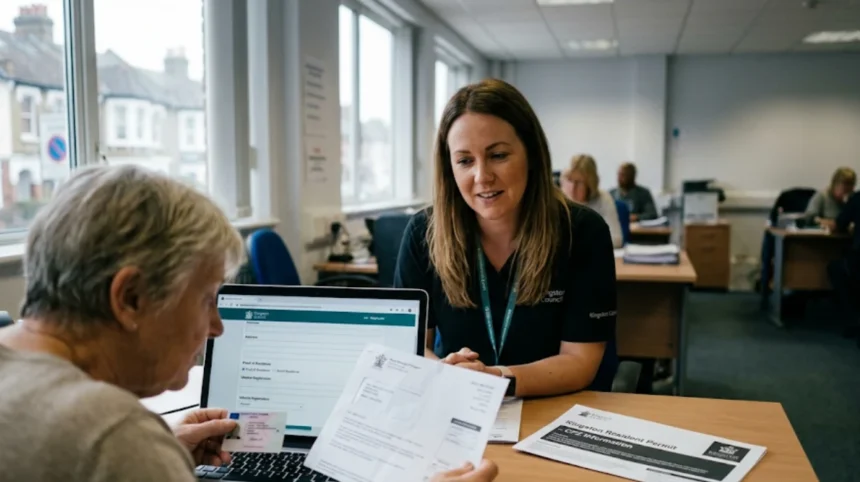
A Kingston resident permit in a new Controlled Parking Zone, or CPZ, is a parking permission for eligible residents who live at an address covered by the zone. The application is normally completed online through Kingston Council, and approval depends on address eligibility, proof of residence, vehicle details, and any planning restrictions attached to the property.
- What is a Kingston resident permit in a new CPZ?
- Who can apply for a Kingston resident permit?
- What documents do you need?
- How do you apply online?
- What happens if your home is in a new development?
- How much does it cost?
- How long does approval take?
- What should new CPZ residents check first?
- Why do new CPZs matter in Kingston?
- What happens after approval?
- What is the best application process?
What is a Kingston resident permit in a new CPZ?
A Kingston resident permit lets eligible residents park in designated CPZ bays near their home once a new parking zone is introduced. It is an address-based permit, not a guarantee of a space, and eligibility depends on the property, zone rules, and council conditions.
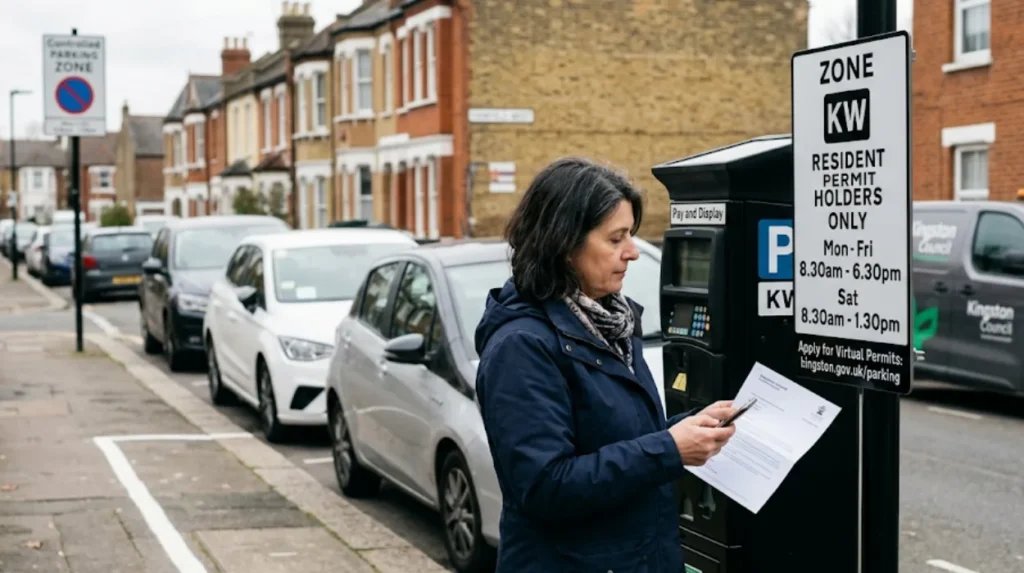
A Controlled Parking Zone is an area where parking is restricted during set hours so that residents, businesses, and visitors follow zone-specific rules. Kingston’s parking management documents show that some new developments do not qualify for CPZ residential permits because planning conditions can remove that right.
A new CPZ usually changes parking access in a street or cluster of streets after consultation and implementation. Once the zone starts, residents in eligible addresses apply for the correct permit type through the council’s parking system, and the permit is generally virtual rather than a paper disc.
Who can apply for a Kingston resident permit?
You can apply if you live at an eligible address inside the CPZ and can prove residency, vehicle ownership or keeper status, and compliance with the zone’s rules. Property ownership alone does not create eligibility if you do not live at the address.
Eligibility starts with the postcode and the exact property record. Council guidance in comparable London boroughs shows that not all addresses inside a CPZ are entitled to a permit, and Kingston’s own parking material points to permit rules that depend on the zone and address status.
New-build homes deserve extra attention. Kingston’s planning and parking policy material states that occupants of some new developments are not entitled to CPZ residential permits, and that this restriction can appear through legal and planning searches before purchase or occupation.
If a property sits within a new CPZ, residents should check whether the address is included in the permit area and whether any exemption, planning condition, or car-free development rule applies. This check comes before collecting documents or paying any fee.
What documents do you need?
Most applications need proof of address, vehicle details, and evidence that you live at the property. Kingston’s resident permit guidance also indicates that applicants should have an email address and supporting documents ready before starting the online form.
Typical documents include a recent proof of address, a vehicle registration document, and details that match the application exactly. Kingston’s permit application walkthrough shows the process asking for two proofs of residence and one proof connected to the vehicle or ownership, along with the vehicle registration mark.
Evidence must match the applicant, the address, and the vehicle record. That consistency matters because councils check whether the person applying is the resident, whether the vehicle is linked to the applicant, and whether the address is valid for the permit area.
For many borough permit systems, the proof of address needs to be recent, usually within the last three months. While Kingston’s video guidance does not publish the exact document list in the snippet, it clearly requires supporting evidence before submission and approval.
How do you apply online?
The application is completed through Kingston’s parking portal. You register or log in, choose the resident permit type, enter your address and vehicle details, upload evidence, review the cost, and submit the form for assessment and payment.
The process begins with account registration if you do not already have one. Kingston’s permit guidance says the applicant creates an account using an email address, confirms it, then logs in to continue with the resident details and address selection.
After logging in, the form asks for the customer type, personal details, postcode, and address selection. The applicant then selects the resident permit option under the permit section, accepts the terms and conditions, and reviews the document requirements before moving forward.
The vehicle stage requires the registration mark, which the system uses to fetch the vehicle make. Once the vehicle details are confirmed, the applicant chooses the permit duration and start date, checks the price summary, uploads supporting documents, and submits the application.
If payment is due, the system redirects to a secure payment page. After payment, the portal confirms whether the application was submitted successfully and sends an email acknowledgment, while approval can take up to five working days according to Kingston’s guidance video.
What happens if your home is in a new development?
A home in a new development can face extra permit restrictions, especially if the planning permission includes a car-free or permit-free condition. In that case, the council can refuse a resident permit even when the address sits inside a CPZ.
This issue matters most in newly built housing estates, flat blocks, and redeveloped sites. Kingston’s local transport policy material states that occupants of new developments will not be entitled to CPZ residential permits when such conditions are attached through planning controls.
The restriction is not a general parking rule for all homes in Kingston. It is an address-specific condition tied to planning, legal searches, and the development’s approval history. That is why buyers, tenants, and landlords should verify permit rights before assuming eligibility.
Residents in a new development should check their purchase documents, lease, tenancy agreement, and any conveyancing search results. Those documents often reveal whether the home has restricted parking rights or no right to apply for a resident permit.
Explore More Help & Resources
How to Manage Your Royal Borough of Greenwich Visitor Parking Permits Online
Comprehensive Guide to Using the Bromley RingGo System for Resident Parking Permits
How much does it cost?
Permit prices depend on the borough’s current charging structure, the zone, the vehicle, and sometimes emissions or household rules. Kingston’s published permit pages and zone documents should be used for the live fee, since parking charges change by policy decision.
London borough permit pricing often varies by permit type and vehicle class, and some councils also adjust fees for low-emission or additional vehicles. Kingston’s parking information page and related zone pages direct residents to the official council website for current charges, which is the only safe source for the live amount.
Because fees change, evergreen guidance should avoid hard-coding a number unless the council has a fixed public schedule attached to the relevant CPZ. The practical rule is to check the permit cost shown in the online application before submission, since the system calculates the amount based on the selected permit.
How long does approval take?
Kingston’s application guidance says approval can take up to five working days after submission. The council then emails the applicant once the permit is approved, and the permit appears in the online account.
That timeline makes the process useful for both planned moves and zone changes, but not for same-day parking needs. Residents in a new CPZ should apply as soon as they become eligible and have the required evidence ready, because a permit normally begins from the chosen start date, not the date the zone changed.
A delay can happen if evidence is incomplete, address details do not match, or the vehicle record does not align with the application. Straightforward applications move faster because the council can verify the record without asking for more documents.
What should new CPZ residents check first?
New CPZ residents should check address eligibility, planning restrictions, permit entitlement, and evidence requirements before they apply. These four checks prevent rejection, wasted payment, and delays caused by ineligible homes or incomplete documents.
The first check is whether the exact address appears in the eligible permit area. The second check is whether the property has a planning condition, exemption, or car-free designation that blocks permit access.
The third check is whether the applicant has the right documents: proof of residence, vehicle details, and account access. The fourth check is whether the zone’s permit rules already apply, because some roads inside a CPZ operate under different controls or exemption zones.
This sequence matters because a CPZ is not the same thing as automatic permit eligibility. The zone creates the parking controls, but the property and planning status determine whether a resident receives a permit.
Why do new CPZs matter in Kingston?
New CPZs matter because they change how street parking works, protect resident access, and shape traffic demand around homes, schools, and local shopping streets. They also affect housing value, daily routines, and the way drivers plan journeys.
Kingston’s transport and parking policy materials show that permit systems are part of a wider strategy for managing street space and sustainable travel. London-wide parking policy also links parking restrictions with reduced car use in well-connected areas, which explains why councils introduce CPZs in the first place.
For residents, the practical effect is immediate. Streets that were previously open to unrestricted parking often move to controlled bays and permit-only or timed restrictions, which changes where visitors, commuters, and households can park.
For new developments, the effect is stronger. A buyer or tenant can live inside a CPZ and still have no right to a resident permit if the planning condition removed that entitlement, which makes parking a material part of the property decision.
What happens after approval?
After approval, the resident permit is active from the start date chosen in the application, and the council confirms the outcome by email. In many modern systems, the permit is virtual, so drivers do not display a paper permit in the vehicle.
The resident should keep the approval email and note the expiry date. That matters because permit renewals are time-sensitive, and a lapse can leave the vehicle exposed to enforcement in the CPZ during controlled hours.
If the application is rejected, the reason normally relates to eligibility, documentation, or address restrictions. The most common issue in a new CPZ is not the form itself but the property’s entitlement status, especially for newly built or planning-restricted homes.
A successful permit is part of a local parking management system, not a personal parking guarantee. It gives the resident permission to park in eligible CPZ spaces under the zone rules, but it does not reserve a bay.
What is the best application process?
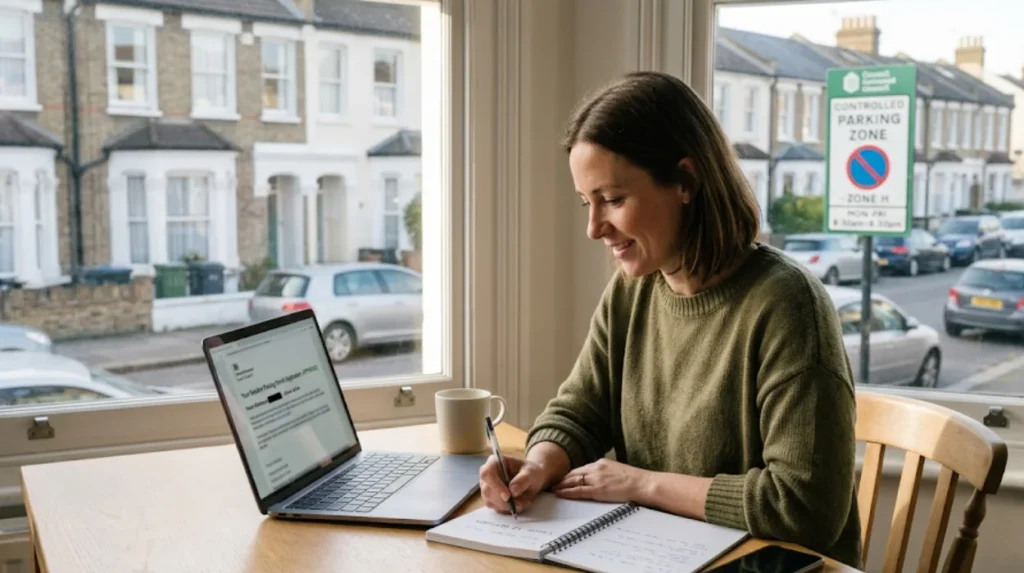
The best process is to confirm eligibility first, gather the correct evidence, complete the online form carefully, upload clear documents, and review the fee before payment. That order reduces rejection and makes approval faster.
Residents in south London often move quickly when a CPZ changes, but the fastest applications are the most organised ones. The council process rewards precise data entry because the portal checks the address, vehicle, and resident details against the evidence uploaded.
A clean application also protects the household from avoidable delay. If the home is a new development, the applicant should verify whether the property is excluded from resident permits before paying, since planning conditions override the standard CPZ route.
For local audiences, the key message is simple: a new Kingston CPZ creates parking controls, but the resident permit is still an eligibility test. The address must qualify, the documents must match, and the application must follow the council’s current process.