Bromley, the largest London borough by area, offers tourists a dense collection of heritage sites ranging from Roman villas and Tudor manors to Darwin’s home and Grade I‑listed Victorian dinosaur sculptures. The most rewarding historic places for visitors include Down House (Charles Darwin’s home), Chislehurst Caves, Crofton Roman Villa, the Crystal Palace Dinosaurs, Bromley College, Scadbury Moated Manor, the Old Palace (Bishop’s Palace), Bethlem Museum of the Mind, and the Bromley North heritage trail centred on H.G. Wells’s birthplace and 17th‑century foundations.
- Why should tourists care about Bromley’s historic places?
- What historic places in Bromley are essential for first‑time visitors?
- Down House – Home of Charles Darwin
- Chislehurst Caves – Man‑made tunnels with Roman to modern history
- Crystal Palace Dinosaurs – World’s first life‑size extinct animal models
- Which deeper heritage sites suit residents and repeat visitors?
- Crofton Roman Villa – Only Roman villa open to the public in Greater London
- Scadbury Moated Manor – Tudor origins and Walsingham family heritage
- The Old Palace (Bishop’s Palace) – Medieval manor to civic centre
- Bethlem Museum of the Mind – Europe’s oldest psychiatric hospital
- Bromley College – 17th‑century Grade I listed charitable foundation
- How can tourists turn historic sites into a coherent heritage trail?
- What practical tips ensure a smooth historic visit in Bromley?
Why should tourists care about Bromley’s historic places?
Bromley’s historic sites span Roman, medieval, Tudor, Georgian, Victorian and 20th‑century layers, giving visitors a compact timeline of British history within Greater London. Most locations are free or low‑cost, well signposted, and sit alongside parks, gardens and transport links, making them ideal for day trips, walking tours andHI‑speed rail access from London Bridge, Victoria and Charing Cross.
Bromley was historically part of Kent, with the western edge linked to Surrey, and its manor was granted to the Bishops of Rochester as early as the 7th century. This long episcopal connection produced major buildings such as the Bishop’s Palace (now part of the Civic Centre) and supported market charters from 862 CE and 1205, establishing Bromley as a regional hub. The borough’s green belt, large parks and listed buildings mean that heritage is not confined to museums but is embedded in streets, gardens and civic spaces.
Tourists benefit from this concentration because multiple high‑quality sites fit into a single day: for example, Down House and Chislehurst Caves in the south‑east, Crystal Palace Dinosaurs and Crofton Roman Villa in the south, and Bromley College, the Old Palace and H.G. Wells birthplace in the town centre and north.
What historic places in Bromley are essential for first‑time visitors?
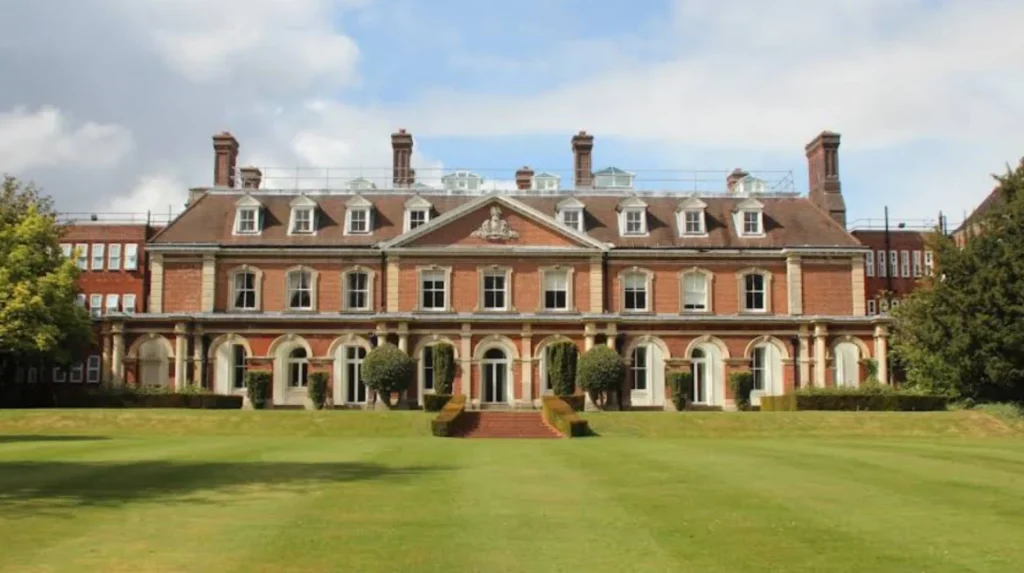
First‑time visitors should prioritise Down House, Chislehurst Caves, the Crystal Palace Dinosaurs, Crofton Roman Villa, and Bromley College, as these sites offer the strongest combination of historical significance, visitor facilities, and recognisable stories. Each location is supported by clear signage, public transport links, and documented opening times, making planning straightforward.
Down House – Home of Charles Darwin
Down House, located in Downe near Biggin Hill, was the home of Charles Darwin from 1842 until his death in 1882, and it is here that he developed many of his theories and wrote The Origin of Species. Managed by English Heritage, the house retains ground‑floor rooms filled with family portraits, furniture and personal possessions as they were in Darwin’s time, while the study contains his writing desk, chair and objects connected with his work. The gardens have been restored to their appearance in his lifetime, with recreated experiments on plant and insect life in the garden and greenhouse.
Practical details:
- Address: Luxted Road, Downe, Kent, BR6 7JT
- Open daily, 10:00–17:00 (last entry 16:00)
- The site is recognised as Darwin’s “outdoor laboratory,” with a walking Sandwalk path and productive garden that visitors can explore.
Down House provides a rare opportunity to see the domestic environment of one of Britain’s most influential scientists, with exhibits directly linked to his research methods and family life.
Chislehurst Caves – Man‑made tunnels with Roman to modern history
Chislehurst Caves are a labyrinth of man‑made tunnels carved over hundreds of years, first open to the public in 1900 as a showplace. In the First World War, the tunnels stored munitions for Woolwich Arsenal; in the 1920s and 1930s they were used for mushroom growing; and during the Second World War they became the largest deep air‑raid shelter outside London, protecting over 15,000 people each night during the Blitz.
In the 1950s–1970s the caves hosted concerts by The Rolling Stones, Jimi Hendrix and many other famous names, adding a unique music history layer to their story.
Practical details:
- Tours last approximately 45–50 minutes and leave every hour on the hour from 10:00 to 16:00
- Open Wednesday to Sunday, plus daily during school and bank holidays (except Christmas and New Year)
- Guided lamp‑lit tours cover Roman, medieval, wartime and pop‑culture history in a single route.
Chislehurst Caves are one of the few London attractions where visitors can physically walk through air‑raid shelters, munition stores and performance spaces that shaped both local and national history.
Crystal Palace Dinosaurs – World’s first life‑size extinct animal models
The 29 Grade I‑listed dinosaur and prehistoric animal sculptures in Crystal Palace Park were created between 1853 and 1855 by artist Benjamin Waterhouse Hawkins, and are the earliest known life‑size models of extinct creatures based on fossil evidence. Although commonly called “dinosaurs,” only four figures are technically dinosaurs; the remainder include ancient mammals, amphibians, and marine and flying reptiles.
In 2007, the group was listed at Grade I on Historic England’s National Heritage List for England, reflecting their importance in the history of science. In 2020, they were declared “At Risk” by Historic England, marking them as highest priority for conservation.
Practical details:
- Location: Crystal Palace Park, SE19 (accessible via Northern, Southeastern and London Overground services)
- Open 24/7 as part of the public park; best viewed in daylight
- Visitor information boards explain the science and art behind the models.
These sculptures represent a unique intersection of Victorian art, early palaeontology and public education, and remain a major landmark for tourists interested in scientific history.
Which deeper heritage sites suit residents and repeat visitors?
Residents and repeat visitors gain the most from sites like Crofton Roman Villa, Scadbury Moated Manor, the Old Palace, Bethlem Museum of the Mind, and Bromley College, which offer layered history, quieter settings and opportunities for focused exploration. These locations are ideal for walking tours, local history research and community heritage activities.
Crofton Roman Villa – Only Roman villa open to the public in Greater London
Crofton Roman Villa was inhabited from circa AD 140 to 400 and was the centre of a farming estate of about 500 acres, making it one of the largest Romano‑British rural sites in the region. It was discovered in 1926 by workmen and opened to the public in 1992; since then, it has welcomed nearly 135,000 visitors from countries throughout the world.
Today, the remains of 10 rooms are protected inside a public viewing building, including tessellated tiled floors and an ancient under‑floor heating system known as a hypocaust. The site’s history spans from an Iron Age hut dwelling to a prosperous Romano‑British farmstead, then to its rediscovery and conservation in the 20th century.
Practical details:
- Address: Crofton Road, Orpington, BR6 8AF
- Open April to October (check local council website for exact dates)
- School visits and guided group tours are available.
Crofton Roman Villa provides a rare, tangible connection to Roman Britain within Greater London, with visible architectural features that illustrate daily life on a large estate.
Scadbury Moated Manor – Tudor origins and Walsingham family heritage
Scadbury Moated Manor, of Tudor origins, is a moated site with archaeological excavations revealing foundations of Tudor kitchens and a great hall. The manor was the seat of the Walsingham family from the 15th century until about 1655, including Sir Thomas Walsingham (patron of Christopher Marlowe) and Francis Walsingham, Queen Elizabeth I’s spymaster, who was born there.
Christopher Marlowe is known to have stayed at Scadbury Manor just before his violent death in 1593, adding literary history to the site. The manor was purchased by the London Borough of Bromley in 1983 and opened to the public in 1985; visitors can follow a self‑guided trail around the moated manor site to see excavations and interpretive information.
Practical details:
- Location: Scadbury Park, Chislehurst
- Open during Heritage Open Days and selected periods; check council calendar
- Self‑guided trails highlight Tudor foundations, moat and parkland.
Scadbury offers a quiet, parkland setting where visitors can explore literary and political history through remains of a significant Tudor estate.
The Old Palace (Bishop’s Palace) – Medieval manor to civic centre
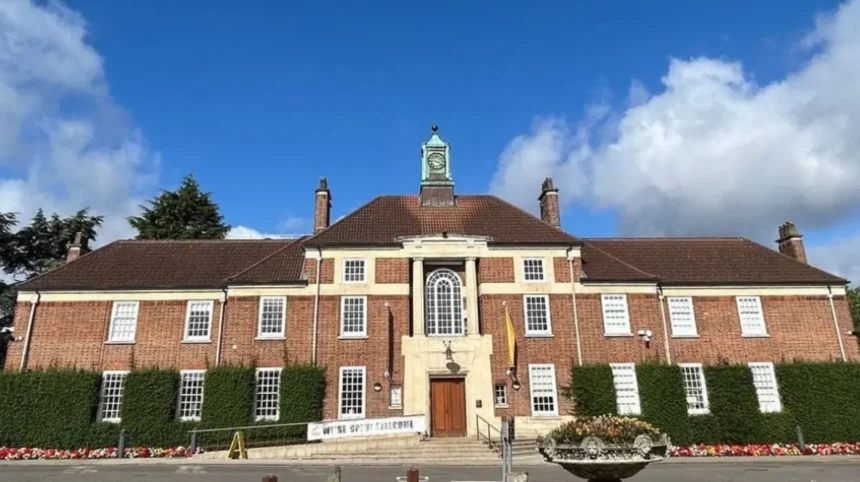
The Old Palace, also known as the Bishop’s Palace, forms part of the Bromley Civic Centre site at Stockwell Close, with the current building dating from 1775 and a manor house on the site since the 10th century. It was once home to former Bishops of Rochester, with the bishop’s connection to Bromley dating back to the 8th century and mentioned in the Domesday Book of 1086.
The palace is Grade II listed, meaning strict planning restrictions and regulations are in place to preserve its historical significance.房间内 are used for civic functions, but the exterior, gardens and parkland are accessible during office hours and public events.
Practical details:
- Address: Stockwell Close, Bromley, BR1 3EW
- Part of Bromley Civic Centre; external areas visible during opening hours
- Guided town tours and heritage events occasionally include the Palace.
The Old Palace illustrates centuries of episcopal power, civic evolution and architectural adaptation, from Saxon manor to Georgian palace to modern civic centre.
Bethlem Museum of the Mind – Europe’s oldest psychiatric hospital
Bethlem Museum of the Mind, located in Beckenham within the grounds of Bethlem Royal Hospital, focuses on the history of mental healthcare and treatments, with collections including 18th‑ and 19th‑century restraints, patient art, and the 17th‑century statues of Raving and Melancholy Madness once on the gateposts of the Moorfields hospital.
Bethlem Royal Hospital, founded as a priory in 1247, is Europe’s oldest extant psychiatric hospital and was the first specialist psychiatric hospital in the United Kingdom, possibly the world. The current hospital buildings, opened in 1930, were designed in a simple Georgian style with Art Deco and Bauhaus elements.
Practical details:
- Location: Monks Orchard Road, Beckenham, BR3 3BF
- Open limited days; check museum website for current schedule
- Free entry; guided tours and exhibitions on mental health history and art.
The museum provides a sensitive, research‑based exploration of mental health history, combining medical, social and artistic perspectives.
Bromley College – 17th‑century Grade I listed charitable foundation
Bromley College, on Bromley High Street, is a Grade I listed building dating from the 17th century, originally founded for widows of local clergymen. The original building consisted of twenty houses built around a quadrangle with a chapel and larger residences for a chaplain and a treasurer.
The college remains a peaceful haven away from the high street, with two courtyards and historically significant architecture that has been carefully maintained and restored. In 2004, trustees launched an Appeal for £1 million for maintenance and to bring the accommodation up to required standards.
Practical details:
- Address: High Street, Bromley
- External viewing at all times; interior access by appointment or during special events
- Part of the Bromley North heritage trail, linked with Market Square and H.G. Wells birthplace.
Bromley College offers a rare example of a 17th‑century charitable foundation still in situ, with architecture and layout that reflect early modern social welfare.
Explore More Area Guide
Best Walking Routes and Nature Trails in Bromley for Tourists and Residents
Best Cafes and Work-Friendly Spots in Bromley for Digital Nomads and Tourists
How can tourists turn historic sites into a coherent heritage trail?
Tourists can create a coherent heritage trail by using the Bromley North heritage trail as a core route, then adding organically linked sites like Down House, Chislehurst Caves, the Crystal Palace Dinosaurs and Crofton Roman Villa via public transport. The trail combines walking routes, thematic signage and historical context in a single, manageable framework.
The Bromley North heritage trail is a guided walk of approximately one hour around historic and interesting places in Bromley North, including Bromley College, the Market Square, and H.G. Wells’s birthplace. H.G. Wells was born at Atlas House, 162 High Street (now a Primark store), on 21 September 1866, and a plaque commemorates his birth on the front of the shop.
As you explore the modern town centre, you are crossing land with a deep heritage. Read about the full [Bromley town centre and North Village heritage history] to understand its origins from Saxon manor to Victorian high street and modern retail hub.
Beyond the town centre, tourists can extend the trail:
- South‑east: Down House and Chislehurst Caves, linked by rail and bus routes
- South: Crystal Palace Dinosaurs and Crofton Roman Villa, accessible via train and local bus
- East: Scadbury Moated Manor and Bethlem Museum of the Mind, within the same general area.
This approach allows visitors to construct a day or multi‑day itinerary that moves from urban heritage (Bromley College, Old Palace, H.G. Wells birthplace) to rural and scientific heritage (Down House, Roman Villa, Dinosaurs) while maintaining a logical geographic flow.
What practical tips ensure a smooth historic visit in Bromley?
Tourists should plan visits around opening times, use public transport (rail and bus) to connect sites, and check council websites for Heritage Open Days and special events that unlock normally restricted buildings. A mix of pre‑booked and walk‑up sites ensures flexibility and reduces the risk of missing key locations.
Key practical points:
- Down House: pre‑book tickets online; allow 2–3 hours including garden walk
- Chislehurst Caves: arrive before tour start times; wear comfortable shoes and bring a light
- Crofton Roman Villa: check seasonal opening dates; combine with nearby Orpington town visit
- Crystal Palace Dinosaurs: open 24/7 as part of the park; best in daylight with good weather
- Bromley College, Old Palace, H.G. Wells birthplace: external viewing at all times; interior access by appointment or during events.
Most sites are accessible via Southeastern, London Overground or Southern services from London Bridge, Victoria, Charing Cross and Blackfriars, with local buses completing the final link. For deeper background, consult the London Borough of Bromley’s local history and heritage pages, which provide trail maps, event calendars and historical context for each location.
By combining iconic destinations like Down House and the Crystal Palace Dinosaurs with lesser‑known sites such as Crofton Roman Villa and Scadbury Moated Manor, tourists gain a comprehensive, factual and evergreen understanding of Bromley’s historic places and their place in British heritage.
What are the best historic places to visit in Bromley?
The best historic places to visit in Bromley include Down House, Chislehurst Caves, Crystal Palace Dinosaurs, Crofton Roman Villa, Bromley College, Scadbury Moated Manor, The Old Palace, Bethlem Museum of the Mind, and the Bromley North Heritage Trail.