
Polish residents in the UK can access several benefits, but eligibility depends on immigration status, residence, and the specific benefit rules. Settled status, pre-settled status, right to reside, and the habitual residence test shape most claims, especially for Universal Credit and other means-tested support.
- What does Poland UK benefit advice mean?
- Who can claim UK benefits?
- What is settled status?
- What is pre-settled status?
- How does the habitual residence test work?
- Which benefits matter most?
- How does Universal Credit apply?
- How does Child Benefit apply?
- What about housing support?
- What documents prove eligibility?
- What changed after Brexit?
- How should South London residents apply?
- Why does this matter now?
Polish people in South London often need clear advice because UK benefit rules changed after Brexit and differ by benefit type. This guide explains the core rules, the main benefits, and the evidence that claimants normally need, using official and reputable sources.
What does Poland UK benefit advice mean?
Poland UK benefit advice means guidance on which UK benefits Polish nationals can claim, what immigration status is required, and how residence tests apply. It covers Universal Credit, Child Benefit, disability benefits, housing support, and the rules that decide whether a person has access to public funds.
The phrase is practical rather than legalistic. It usually refers to support for Polish citizens who live, work, study, or raise a family in the UK and need to know whether they qualify for state help. Since Brexit, the key issue is not nationality alone, but the combination of status, residence, and benefit category.
In South London, this matters for workers on variable hours, parents, disabled residents, and people who have recently moved from Poland or returned to the UK after time abroad. Different benefits use different tests, so one correct answer does not apply to every payment.
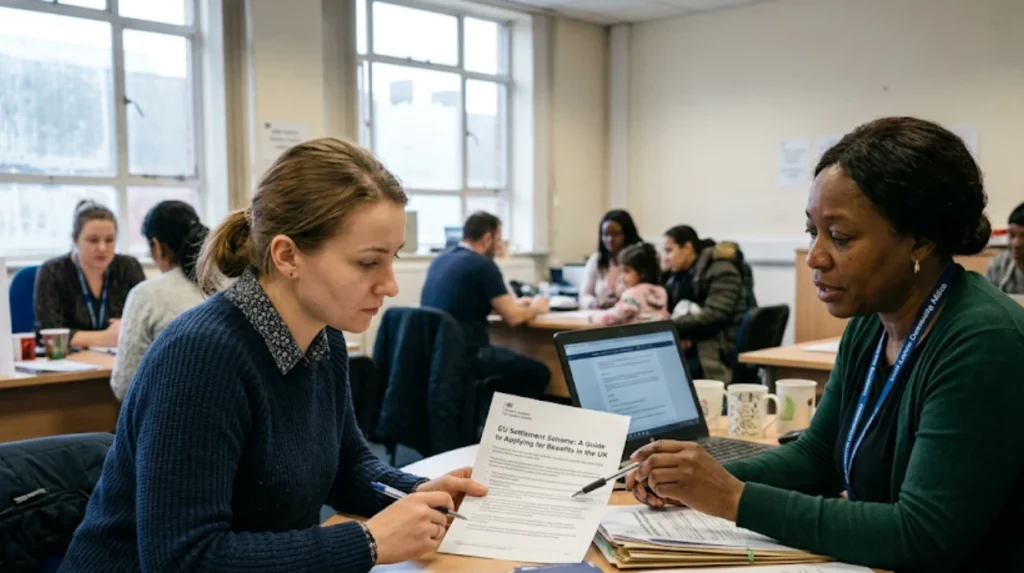
Who can claim UK benefits?
Polish nationals can claim UK benefits when their immigration status and residence conditions satisfy the rules for the specific benefit. Settled status, pre-settled status, indefinite leave, Irish citizenship, or another right to reside can open access, while some migrants still face restrictions.
The UK government defines “right to reside” as the right to live in the UK, and it lists settled status, pre-settled status, Irish citizenship, indefinite leave to enter or remain, and British citizenship as qualifying categories. That status does not automatically unlock every benefit, but it is a central starting point.
Some benefits also require a “no recourse to public funds” check to be clear in the immigration record. If a person’s visa says they have no recourse to public funds, they cannot claim public funds benefits unless an exception applies. Citizens Advice and GOV.UK both treat this as a major threshold issue.
What is settled status?
Settled status is indefinite permission to stay in the UK under the EU Settlement Scheme. It usually gives stronger access to benefits than pre-settled status, because it supports a qualifying right to reside for benefits that require one.
GOV.UK states that settled status gives the right to live in the UK permanently. That makes it a key status for many Polish residents who arrived before the end of the Brexit transition period and completed the EU Settlement Scheme process.
Settled status matters because many benefit systems ask whether a claimant has a legal right to reside and, in some cases, whether they also satisfy habitual residence. For many Polish claimants, settled status is the clearest route to meeting those requirements.
What is pre-settled status?
Pre-settled status is a time-limited form of permission under the EU Settlement Scheme. It can support benefit access in some cases, but many claims still depend on the exact benefit, the right to reside test, and the habitual residence test.
GOV.UK says EU, EEA, and Swiss citizens and their family members may need settled or pre-settled status to get Universal Credit. That wording shows that pre-settled status can matter, but it does not create automatic entitlement on its own.
In practice, claimants with pre-settled status often need to look carefully at the relevant benefit rules. Housing support, disability benefits, and family payments each use distinct criteria, so one status does not produce one universal outcome.
How does the habitual residence test work?
The habitual residence test checks whether a person truly lives in the UK and intends to stay. It matters for many means-tested benefits, and it usually requires evidence of ordinary life in the UK, not just a recent arrival.
Government and advice sources describe the test as having two broad parts: legal right to reside and factual habitual residence. A claimant normally needs both, and decision makers look at evidence such as work, housing, family life, and settled intention.assets.publishing.
Citizens Advice says the test can involve showing that a person was habitually resident before going abroad, or that they have the right to reside and meet the residence rules after returning. This is especially important for Polish people who have moved back to the UK after time in Poland.
The time required is not fixed in every case. Guidance from Turn2us states that between one and three months of residence is required in most cases, although it can be shorter when evidence of settled intention is strong.
Which benefits matter most?
The main benefits for Polish residents include Universal Credit, Child Benefit, disability benefits such as PIP, and housing-related support. Each benefit uses its own legal test, so eligibility depends on status, residence, income, family circumstances, and disability rules.
Universal Credit is one of the most common claims because it supports people on low income or out of work. GOV.UK says EU, EEA, and Swiss citizens and their families may need settled or pre-settled status under the EU Settlement Scheme to qualify.
Child Benefit is another major payment for families. HMRC guidance says the claimant and child generally need to be present and ordinarily resident in the UK, and claims made after 1 May 2004 require a right to reside in the UK.
Disability-related support also matters. Citizens Advice lists Personal Independence Payment, Disability Living Allowance, and Attendance Allowance among public funds that some people with the correct immigration position can claim. These benefits often turn more on residence and disability evidence than on earnings.
How does Universal Credit apply?
Universal Credit is the core working-age benefit for many Polish residents in South London. Eligibility usually depends on immigration status, right to reside, and residence in the UK, with settled or pre-settled status often central to the claim.
GOV.UK states that EU, EEA, and Swiss citizens and their families might need settled or pre-settled status to get Universal Credit. That makes status confirmation one of the first checks before a claim is made.
Universal Credit also considers income, savings, housing costs, and household composition. For a Polish parent working part-time in South London, the claim may include help with rent and childcare costs if the overall household meets the rules.
If a claimant has just arrived or recently returned, the habitual residence test can delay access. That is why many claimants need to prepare evidence before applying, including tenancy documents, payslips, council tax letters, and school or GP registration.
How does Child Benefit apply?
Child Benefit supports families with children, and the UK rules focus on residence, ordinary residence, and right to reside. Polish parents in South London often qualify when they live in the UK, care for the child here, and meet the immigration conditions.
HMRC guidance says that the claimant and child must generally be present and ordinarily resident in the UK. It also says that for claims made after 1 May 2004, the claimant must have a right to reside in the United Kingdom.
This benefit is important because it is not based on wages in the same way as Universal Credit. A Polish family with modest income can still be eligible if the residence and right-to-reside rules are satisfied.
In cross-border cases, the rules become more detailed. HMRC notes that special arrangements exist for temporary absences and education-related absences, which shows that family location and child location both matter.
What about housing support?
Housing support depends on the claimant’s immigration status, residence position, and the particular housing benefit or local support route being used. For many Polish residents, the main issue is whether they satisfy the habitual residence and right to reside rules.
GOV.UK guidance on the habitual residence test for housing-related support states that a claimant needs a legal right to reside and actual habitual residence in the Common Travel Area. That makes housing claims more detailed than simple identity checks.
For South London residents facing rent pressure, this point is crucial. Evidence of real living arrangements, family ties, bank activity, work, and length of stay often becomes central to a decision.
Local councils and housing officers also review homelessness-related and emergency support rules. The legal test is strict because public housing resources are limited, and the claimant’s current living pattern matters as much as nationality.
What documents prove eligibility?
The usual documents include proof of identity, proof of immigration status, proof of address, proof of work or income, and evidence of family or disability circumstances. Strong evidence shortens delays and helps show habitual residence and right to reside.assets.
A Polish claimant normally benefits from having a valid passport or national identity document, Home Office status share code, tenancy agreement, utility bill, bank statement, and recent payslips. For family claims, birth certificates and school letters also matter.
For people returning from abroad, evidence of intention to settle is important. Guidance on habitual residence shows that decision makers look at the quality of the attachment to the UK, not only the date of arrival.assets.publishing.
For disability claims, medical evidence and assessments become central. The benefit system distinguishes between financial support and disability-related support, so a claimant must match documents to the specific benefit requested.
What changed after Brexit?
Brexit changed benefit advice for Polish citizens by making immigration status and the EU Settlement Scheme central to UK benefit access. Nationality alone no longer determines entitlement, and many claims now depend on settled status, pre-settled status, and residence tests.
Before Brexit, EU free movement made many residence questions simpler. After Brexit, the legal framework shifted toward formal status, recorded rights, and stricter checks on public funds eligibility. GOV.UK and legal guidance now place status at the center of the analysis.
This change especially affects people who arrived from Poland, left the UK for a period, and returned later. They often need to prove that their current UK life is stable enough to satisfy habitual residence again.
For many families, the biggest practical effect is that claims now require earlier planning. People need to check status, retain documents, and avoid assuming that work history alone guarantees entitlement.
How should South London residents apply?
South London residents should check their status first, identify the exact benefit, gather evidence, and then claim through the official route for that payment. The correct process reduces delays and avoids refusals caused by missing residence or status evidence.
A practical sequence is simple. First, confirm whether the claimant has settled status, pre-settled status, or another right to reside. Second, identify whether the benefit is Universal Credit, Child Benefit, housing support, or disability support. Third, collect the documents that prove residence, income, and family circumstances.
For many people, the claim is easiest when the person already lives, works, and pays bills in South London. Council letters, GP registration, school records, and tenancy evidence all help show ordinary residence and settled life in the UK.assets.publishing.
If the case is unusual, such as a recent arrival, a returning worker, or a mixed-status family, the claimant should expect extra scrutiny. That is normal under the habitual residence framework, which exists to separate genuine residents from temporary visitors.

Why does this matter now?
This topic matters now because many Polish residents in the UK still need clear, current benefit advice after Brexit and after changes in welfare administration. The key rules remain status, residence, and evidence, and those rules affect work, family support, and housing security.
The long-term relevance is strong because the UK benefit system continues to rely on legal residence tests for many claims. People who understand those tests avoid refusals, appeals, and delays, especially in high-cost areas such as South London.
For content creators and local publishers, this is also a durable evergreen topic because the search intent stays stable. People continue to search for benefit rights, status rules, and practical steps in plain language, especially when they are dealing with rent, childcare, or low income.
The most reliable advice remains constant: check the exact benefit rules, verify the immigration status, and build the claim around evidence. That approach matches GOV.UK, Citizens Advice, and HMRC guidance and stays valid as long as the core legal framework remains in place.
Can Polish citizens claim benefits in the UK after Brexit?
Yes. Polish citizens can still claim certain UK benefits after Brexit if they meet the eligibility rules. The most important factors are immigration status, right to reside, habitual residence, and the specific conditions of the benefit being claimed. Having settled or pre-settled status under the EU Settlement Scheme may affect entitlement, but each benefit has its own rules.