Key Points
- Emergency Response: Ten fire engines and around 70 firefighters were dispatched to tackle a open-air grass fire in Woolwich.
- Scale of Incident: The blaze burnt through approximately five hectares of grass and shrubland.
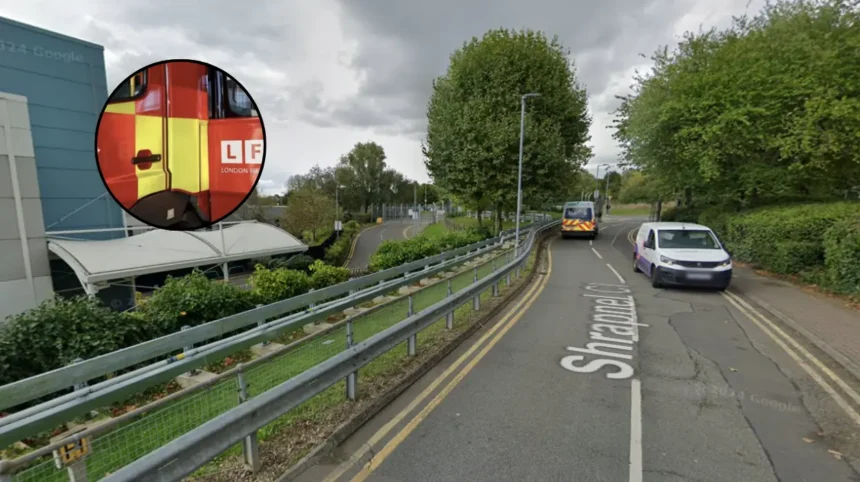
- Location: The incident occurred near Shrapnel Close and in close proximity to Queen Elizabeth Hospital.
- Public Alerts: London Fire Brigade control officers received nearly 40 emergency calls regarding the incident, with the first call logged at 11:27 am.
- Crews Attending: Firefighters responded from local stations including East Greenwich, Eltham, Plumstead, Greenwich, and surrounding units.
- Containment & Damping: The fire was declared under control by 1:07 pm, though crews remained on scene throughout the afternoon to dampen the area and eliminate remaining hot spots.
Woolwich (South London News) August 6, 2026 – Ten fire engines and approximately 70 firefighters were deployed to Woolwich earlier today following a fast-moving open-air fire that ignited five hectares of grass and shrubland near Shrapnel Close and Queen Elizabeth Hospital. London Fire Brigade emergency call handlers received nearly 40 calls from concerned members of the public after smoke became visible across the local area. Crews successfully brought the blaze under control within two hours, remaining on site into the afternoon to dampen down embers and prevent re-ignition.
- Key Points
- What Caused the Emergency Response in Woolwich?
- How Did Firefighters Bring the Woolwich Blaze Under Control?
- What Impact Did the Fire Have Near Queen Elizabeth Hospital?
- What Is the Background to Grass and Shrubland Fires in London?
- How Will This Development Affect Local Residents and Emergency Services?
What Caused the Emergency Response in Woolwich?
Emergency services were alerted shortly before mid-day as dry ground conditions allowed flames to spread rapidly across five hectares of open land. Control officers at the London Fire Brigade received the initial 999 call at 11:27 am, triggering a swift deployment of resources to Shrapnel Close, adjacent to Queen Elizabeth Hospital.
Due to the size of the affected field and the potential proximity to local infrastructure and medical facilities, the incident was quickly escalated. Fire crews from stations across South East London, including East Greenwich, Eltham, Plumstead, and Greenwich, were dispatched to surround the perimeter and contain the spreading flames.
How Did Firefighters Bring the Woolwich Blaze Under Control?
Upon arrival, fire crews faced a moving line of fire consuming dry grass and low shrubland across a significant acreage. Firefighters utilized specialized equipment designed for wildland and open-air fires, deploying hose reels, beaters, and tactical water supplies to create firebreaks and suppress the main body of the blaze.
Through coordinated efforts across multiple sectors of the ground, emergency teams halted the progress of the fire by 1:07 pm. Following the containment, firefighters maintained a strong operational presence throughout the afternoon to carry out dampening-down operations, systematically extinguishing isolated hot spots and ensuring subterranean embers did not reignite under rising temperatures or wind.
What Impact Did the Fire Have Near Queen Elizabeth Hospital?
The proximity of the incident to Queen Elizabeth Hospital heightened concerns during the initial stages of the response. Thick smoke generated by burning vegetation rose over the surrounding roads, prompting precautionary visual assessments by attending crews to ensure smoke drift did not disrupt hospital access roads or air intake systems.
No evacuations of nearby residential property or hospital buildings were reported, and no injuries to members of the public or emergency personnel were recorded. Traffic on local routes around Shrapnel Close experienced brief localized delays as emergency vehicles positioned equipment and ran hose lines across access routes.
Explore More Woolwich News
Woolwich Man, Teens Charged in Gravesend Rape, 2026
Teen Charged with Woolwich Boy’s Murder (Woolwich, 2026)
What Is the Background to Grass and Shrubland Fires in London?
Open-air vegetation fires represent a recurring seasonal challenge for emergency services across Greater London, particularly during periods of warm weather, dry spells, or low soil moisture levels. Grasslands, commons, and parklands—such as those surrounding Woolwich and wider South East London—contain fine fuels like dry grass and light brush that ignite easily and burn rapidly when exposed to a spark or naked flame.
Historically, the London Fire Brigade handles hundreds of grass and shrubland incidents annually. Common catalysts for such incidents include discarded smoking materials, glass bottles acting as magnifying lenses under direct sunlight, unextinguished disposable barbecues, and accidental ignition sources. Due to the high speed at which grass fires can travel across open space, fire services maintain targeted response protocols to deploy high volumes of appliances early, preventing smaller ground fires from expanding into major incidents that threaten structures or woodland.
How Will This Development Affect Local Residents and Emergency Services?
This incident highlights several practical considerations for local residents, municipal authorities, and emergency planners in the Woolwich area:
- Local Residents and Community: Households situated near Shrapnel Close and surrounding parkland will experience localized smoke odours while the ground cools. Residents with pre-existing respiratory conditions may be advised to keep windows closed during post-incident dampening operations. In addition, local land users will see scorched vegetation across the five-hectare footprint until natural regeneration occurs.
- Public Safety and Awareness: The incident is likely to prompt renewed safety reminders from emergency services regarding open-air fire risks, encouraging park visitors to dispose of litter and smoking materials responsibly to reduce accidental ignitions.
- Emergency Service Deployment: For the London Fire Brigade, managing a 70-firefighter incident draws significant tactical equipment and crew availability from surrounding stations in South East London. While operational coverage is dynamically managed across neighboring fire stations, large grass fires temporarily compress local resource availability, reinforcing the importance of swift containment strategies to free up units for subsequent emergencies.