Lambeth offers a concentrated two-day London experience built around the River Thames, historic architecture, museums, theatres, parks, markets and neighbourhood culture. The London Borough of Lambeth recorded a population of 317,600 in the 2021 Census, up from 303,100 in 2011. Its central position places major visitor destinations within practical walking and public-transport distances.
- What makes Lambeth suitable for a 48-hour London itinerary?
- What should visitors see on the first morning in Lambeth?
- How should visitors spend the first afternoon around Waterloo and South Bank?
- Is the London Eye a useful part of a two-day Lambeth itinerary?
- What is the best way to spend the first evening in Lambeth?
- What should visitors explore on the second morning?
- Should the second afternoon focus on Brixton or Brockwell Park?
- How can visitors use Lambeth’s parks and green spaces during 48 hours?
- How should visitors travel around Lambeth during the 48 hours?
- How should visitors adapt the itinerary for different travel styles?
- What should visitors book before starting a 48-hour Lambeth trip?
- What is the most efficient final 48-hour Lambeth itinerary?
- Why is 48 hours enough for a focused Lambeth visit?
A 48-hour Lambeth itinerary works best when visitors divide the borough geographically. The first day focuses on the historic riverside core, Lambeth Palace, the Garden Museum, Waterloo and South Bank. The second day explores cultural attractions, southern neighbourhoods and green spaces such as Brockwell Park.
This approach also gives visitors flexibility. Museums provide structured indoor time, while parks and Thames walks provide open-air alternatives. Evening theatre and dining extend the itinerary without requiring long journeys between districts.
What makes Lambeth suitable for a 48-hour London itinerary?
Lambeth combines riverside landmarks, museums, historic buildings, theatres, parks, markets and neighbourhood culture. The most efficient plan groups nearby attractions, uses walking and public transport, and reserves timed experiences before arrival during your visit safely in London.
Lambeth occupies a strategic section of south London beside the River Thames. Its northern area includes Lambeth Palace, Waterloo and South Bank, while southern areas extend towards Brixton, Streatham and Norwood.
The borough has a strong concentration of cultural institutions. The South Bank contains the Royal Festival Hall, Queen Elizabeth Hall and Hayward Gallery. The National Theatre also sits on Upper Ground beside the Thames. Visit London identifies the South Bank as a major destination for culture, food and family entertainment.
Lambeth also has substantial green infrastructure. Lambeth Council states that the borough contains more than 78 parks, commons and other public open spaces. These include Archbishop’s Park, Brockwell Park, Kennington Park, Norwood Park and Old Paradise Gardens.
This geographical variety makes Lambeth suitable for short breaks. Visitors can combine a historic site, museum, park, riverside walk and cultural performance without crossing the whole of London repeatedly.
What should visitors see on the first morning in Lambeth?
Begin the first day around Lambeth Palace, the Garden Museum and Archbishop’s Park, then walk towards Waterloo and South Bank. Continue along the Thames to major cultural venues, ending with the London Eye or an evening performance at a theatre.
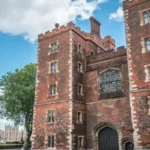
Start near Lambeth Palace Road. Lambeth Palace has served as the London home of the Archbishop of Canterbury for more than 800 years. It remains a working palace, religious centre and historic landmark beside the Thames. The Palace gardens cover just over 10 acres.
Lambeth Palace is not a standard drop-in attraction. Public access depends on scheduled tours, open days and specific events. The official visitor information states that selected days provide access to historic areas including the Great Hall, Chapel and Guard Room.
Visitors planning a 48-hour trip should therefore check the official Palace schedule before assigning a fixed time to the site.
The surrounding conservation area also has historical significance. Lambeth Council designated the Lambeth Palace conservation area in 1968, with later boundary extensions. The protected area includes Lambeth Palace, the former St Mary’s Church and historic development along Lambeth Road.
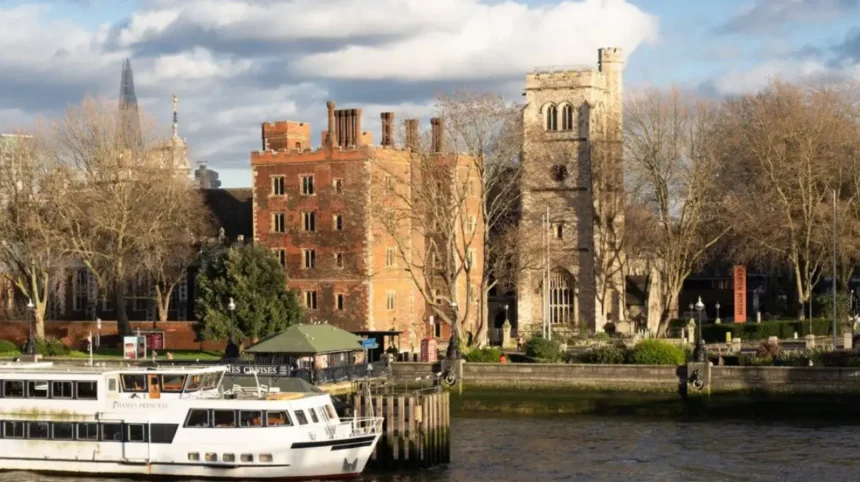
The next stop should be the Garden Museum, immediately beside Lambeth Palace. The museum occupies the former St Mary-at-Lambeth Church. It is Britain’s only museum dedicated to the art, history and design of gardens.
The building itself is part of the attraction. The church dates from the medieval period. Its surviving medieval tower was built in 1377 and repaired in 1834–35. The Garden Museum identifies the tower as the oldest surviving structure in the borough of Lambeth.
The museum also preserves the story of John Tradescant, a major seventeenth-century gardener and plant collector. Tradescant established a botanical garden and collection at his Lambeth home in the 1620s. The Garden Museum interprets this history through objects, art, archives and exhibitions.
As you explore the modern museum and riverside district, you are crossing land with a deep heritage. Read about the full [Insert Anchor Text for History Article Here] to understand its origins.
Allow roughly 90 minutes to two hours for the Garden Museum. This gives enough time for the permanent collection, temporary exhibition spaces, historic architecture and garden areas without compressing the rest of the morning.
Continue into Archbishop’s Park. The park occupies land that was previously part of Lambeth Palace. In the nineteenth century, sections of the Palace grounds were opened for local recreation. Archbishop’s Park became a public park in 1901.
The park provides a useful transition between Lambeth’s historic core and Waterloo. It contains lawns, mature trees, wildlife habitats, sports facilities and a children’s playground. Visitors should follow Lambeth Council’s current opening and closing times because the borough’s parks normally close around dusk.
How should visitors spend the first afternoon around Waterloo and South Bank?
Spend the first afternoon moving west towards Waterloo and South Bank, where visitors can combine riverside walking with the Royal Festival Hall, Hayward Gallery, National Theatre, London Eye and other major cultural destinations in a compact central area.
Waterloo is one of Lambeth’s most useful transport hubs. It provides National Rail, Underground and bus connections and acts as a practical base for exploring South Bank.
Walk towards the River Thames and follow the South Bank riverside route. This section of the river contains a dense concentration of cultural buildings and public spaces.
The Southbank Centre has operated at the heart of London’s cultural scene since 1951. Its principal venues include Royal Festival Hall, Queen Elizabeth Hall, Purcell Room and Hayward Gallery.
Royal Festival Hall opened for the 1951 Festival of Britain. The Grade I listed building contains a 2,700-capacity auditorium and has operated an open-foyer policy since 1983, allowing visitors to enter its public spaces without holding a performance ticket.
Visitors with limited time can therefore enter Royal Festival Hall, explore its public areas and continue along the riverside without committing to a full performance.
The Hayward Gallery provides a different cultural experience. It is the Southbank Centre’s contemporary art gallery and hosts changing exhibitions. Opening hours vary by day and exhibition, so visitors should verify the current schedule before travelling.
The National Theatre is another major landmark on Upper Ground. It presents theatre productions throughout the year and also offers tours and access to its specialist theatre bookshop. The building sits directly on the South Bank, making it easy to combine with the river walk.
For architecture enthusiasts, the Southbank Centre itself provides additional interest. Its buildings represent major phases of post-war British architecture. Official tours explain the development of the Royal Festival Hall and the later Queen Elizabeth Hall complex.
A two-day visitor does not need to enter every venue. Choose one major indoor cultural attraction and use the remaining time for the riverside, public art and architecture.
Is the London Eye a useful part of a two-day Lambeth itinerary?
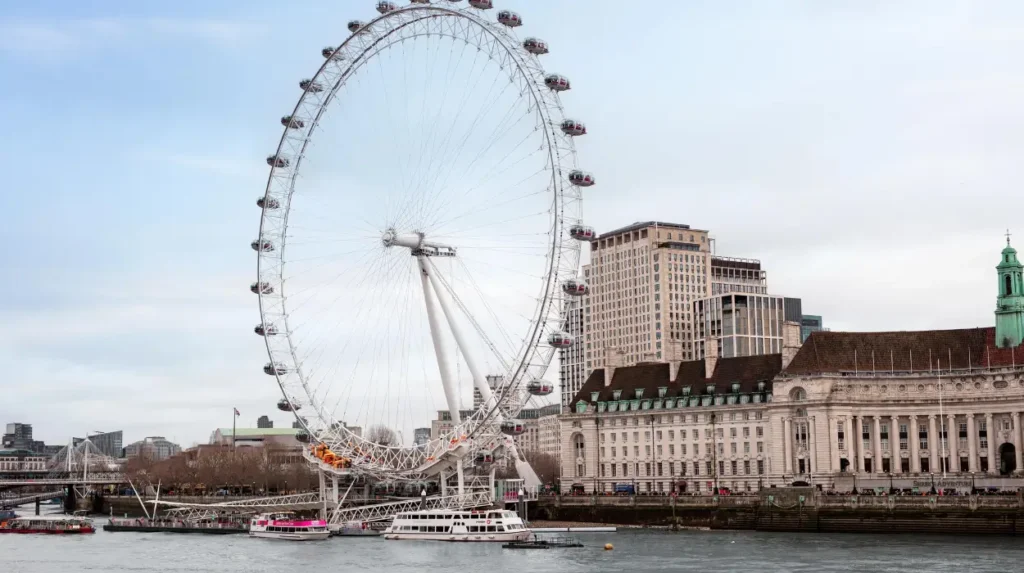
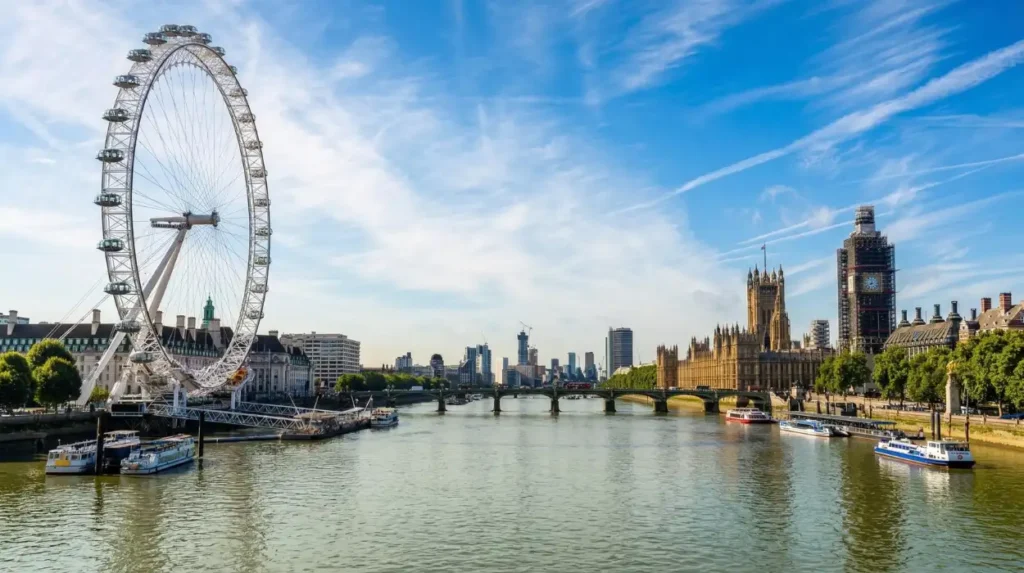
The London Eye provides a compact panoramic experience beside the Thames. Its 135-metre observation wheel takes about 30 minutes to complete one rotation, making it suitable for visitors who want a major London landmark without spending several hours inside one attraction.
The London Eye stands on the South Bank beside Westminster Bridge. It opened in 2000 and reaches 135 metres. The operator describes it as the world’s largest cantilevered observation wheel. One complete rotation takes approximately 30 minutes.
Its location makes it particularly efficient within a Lambeth itinerary. Visitors can walk from the Southbank Centre towards Westminster Bridge, take the London Eye experience, and continue along the river.
The attraction uses timed admission. Visitors receive a designated arrival time, and the operator provides a 15-minute grace period. Queue times vary according to demand, with longer waits during busy periods.
For a 48-hour schedule, booking a suitable time reduces uncertainty. A late-afternoon slot works well because it leaves the morning for museums and the early afternoon for South Bank.
The London Eye also provides a clear geographical overview of central London. Its position on the Thames places Westminster, Parliament and the wider central London skyline within the visual field.
Visitors who prefer architecture, museums or theatre can replace the London Eye with another cultural attraction. The itinerary remains effective because South Bank contains several alternatives within walking distance.
What is the best way to spend the first evening in Lambeth?
End the first day with a theatre performance, South Bank cultural event, riverside meal or evening walk. The area remains convenient after daytime sightseeing because Royal Festival Hall, the National Theatre and other venues provide scheduled evening activities near Waterloo.
Evening planning should centre on the South Bank. The Southbank Centre hosts concerts, talks, dance, performance and contemporary art across its venues. Royal Festival Hall operates Tuesday to Sunday from 10am until 11pm under its current published schedule.
The National Theatre also provides evening performances. Visitors should select the performance before travelling and allow time for dinner, security and seating.
For visitors who do not want a ticketed event, the riverside remains an accessible option. Walk between Westminster Bridge and Waterloo, then return towards the transport hub.
Food choices are concentrated around South Bank, Waterloo and the surrounding streets. The area includes restaurants, cafés and food outlets serving different budgets and cuisines.
A theatre evening works particularly well for domestic business travellers because it uses downtime without requiring a separate journey. Digital nomads also benefit from the concentration of cafés, public spaces and transport connections during the daytime.
The key planning principle is distance. Keep the evening activity within South Bank or Waterloo after a full day of walking. This prevents unnecessary cross-London travel.
What should visitors explore on the second morning?
Spend the second morning exploring Lambeth’s museums and neighbourhoods, then use the afternoon for Brixton or Brockwell Park. Finish near the Thames or Waterloo with food, live performance or a relaxed riverside walk before departure from central London afterwards too.
The second day should begin with an attraction that differs from the first day. IWM London, the Imperial War Museums branch on Lambeth Road, provides a major museum experience and is particularly practical from Lambeth North, Elephant and Castle or Waterloo.
IWM London is free to enter and is open from 10am to 6pm daily, except 24 to 26 December. It focuses on the experiences of people affected by war and conflict and includes collections covering art, film, photography and military history.
The museum is approximately seven minutes from Lambeth North Underground station, 10 minutes from Elephant and Castle and 14 minutes from Waterloo according to IWM’s official access information.
Allow at least two hours for a meaningful visit. Larger collections require selective viewing because the museum contains substantial historical material.
Accessibility planning is also straightforward. IWM provides step-free access through its West Entrance and offers accessibility information covering sensory needs, toilets, wheelchairs and quieter visiting periods.
After the museum, move towards Kennington or Brixton for a neighbourhood-focused section of the itinerary.
Brixton provides a distinct cultural identity within Lambeth. Its markets, food businesses, music history, public art and independent venues create a different experience from the monumental riverside landscape.
Visitors should allow time for lunch rather than treating Brixton only as a transport interchange. The neighbourhood is useful for experiencing local food and everyday urban life.
Should the second afternoon focus on Brixton or Brockwell Park?
Choose Brixton for food, neighbourhood culture and independent businesses, or choose Brockwell Park for open space, historic buildings and recreation. Both options provide a strong contrast with central Lambeth and fit comfortably into the second afternoon.
Brixton works well when food and local culture are priorities. Its commercial streets and markets provide opportunities to sample different cuisines and explore independent businesses.
Brockwell Park provides a quieter alternative. Lambeth Council describes it as a large park on a hilly landscape containing ponds, mature trees, ancient oaks, a walled Old English flower garden and open meadows.
The park was formerly the private residence of glass merchant John Blades. The Metropolitan Board of Works acquired the estate in the nineteenth century and formally opened the landscaped public park in 1892.
Brockwell Hall is one of its principal historic features. The park also contains Brockwell Lido, a walled garden, ponds and a nineteenth-century Tritton Clocktower.
The park has facilities for sport and recreation, including tennis courts, basketball courts, football pitches, a playground and BMX facilities. This makes it suitable for visitors who want physical activity after museum visits.
Brockwell Park also occupies higher ground than many central parts of Lambeth. Its landscape provides broader views across South London.
For visitors with only a few hours, Brixton is more efficient for food and neighbourhood exploration. Brockwell Park is more suitable when outdoor space, walking and historic landscape are the priority.
How can visitors use Lambeth’s parks and green spaces during 48 hours?
Lambeth’s parks provide practical breaks between museums and built-up streets. Archbishop’s Park suits the central itinerary, Brockwell Park suits a longer southern visit, and smaller spaces such as Old Paradise Gardens provide short stops near historic Lambeth.
Green spaces are an important part of Lambeth’s visitor geography. The borough contains more than 78 parks, commons and public open spaces, creating opportunities for short walks alongside major attractions.
Old Paradise Gardens provides an example of a small historic green space. The site began as a burial ground provided by the Archbishop of Canterbury in 1703. It was extended in 1816, closed to new burials in 1853 and converted into a public garden in 1884.
Its history gives visitors another connection between Lambeth’s religious heritage and modern public space.
Archbishop’s Park is more suitable for the first-day route because it sits immediately beside Lambeth Palace and the Garden Museum. Brockwell Park requires more travel but provides a larger landscape.
Park visits also create useful schedule buffers. Unlike ticketed museums, outdoor walks do not normally require advance reservations. Visitors should still check current park closing times, especially in winter, because Lambeth parks close around dusk.
The practical lesson is to use parks as flexible itinerary components rather than fixed attractions. They provide space for rest, photography, walking and informal meals between scheduled activities.
How should visitors travel around Lambeth during the 48 hours?
Lambeth is well suited to car-free sightseeing. Visitors can combine Waterloo, Lambeth North, Vauxhall, Elephant and Castle, Brixton and other transport hubs with walking, buses, Underground services, National Rail, cycling and Thames-side routes.
Walking should be the main method within compact clusters. Lambeth Palace, the Garden Museum and Archbishop’s Park sit close together. South Bank venues also form a concentrated riverside group.
Public transport connects the wider itinerary. IWM London lists Lambeth North, Elephant and Castle and Waterloo among its nearest stations.
The Garden Museum is also close to several major transport points. Its official visitor information identifies Lambeth North, Vauxhall and Waterloo as nearby Underground or rail options, with buses including routes 3, 77, 344 and C10 serving the area.
Cycling is another practical option. IWM London is close to Cycleway 6 and Santander Cycles docking stations.
A car adds unnecessary complexity for a central two-day itinerary. Parking is limited around major attractions, while congestion and traffic create additional travel time.
Visitors should use Transport for London journey information immediately before travelling because engineering works, disruptions and service changes affect London transport schedules.
The most efficient pattern is therefore simple: walk within South Bank and Lambeth’s historic core, use public transport between central and southern neighbourhoods, and avoid unnecessary journeys back to accommodation.
How should visitors adapt the itinerary for different travel styles?
Culture-focused visitors should prioritise museums and performance venues, families should balance indoor attractions with parks, and business travellers should concentrate activities around Waterloo and South Bank for efficient evening and daytime access.
Culture-focused travellers can spend more time at the Garden Museum, Southbank Centre, National Theatre and IWM London. These destinations provide architecture, visual art, theatre, social history and cultural programming.
Families benefit from combining museums with parks. IWM London offers family activities and adventure trails at weekends and during school holidays. Archbishop’s Park and Brockwell Park provide outdoor alternatives.
Digital nomads can structure mornings around museums and afternoons around cafés, public spaces and cultural venues. South Bank has extensive transport connections and public visitor spaces, although visitors should follow individual venue rules regarding work, seating and device use.
Domestic business travellers can concentrate the itinerary geographically. A hotel near Waterloo or Vauxhall reduces transfer time. South Bank provides dining and evening entertainment within walking distance of major transport connections.
Visitors with accessibility requirements should check individual venue access information before travelling. The Southbank Centre publishes step-free route information and accessibility guidance for its buildings. IWM London also provides dedicated access information and step-free entry.
The Garden Museum provides access information and recommends checking current arrangements before arrival. Its official visitor information confirms that it is close to major public transport stations and provides accessible parking arrangements by advance request for visitors with access needs.
What should visitors book before starting a 48-hour Lambeth trip?
Book timed attractions, theatre performances and specialist tours before arrival, while leaving parks, riverside walks and general neighbourhood exploration flexible. Always verify current opening hours because exhibitions, events, maintenance and seasonal schedules change throughout the year.
The first priority is any timed attraction. The London Eye uses arrival slots, while Southbank Centre performances and exhibitions operate according to individual schedules.
Lambeth Palace requires particular attention because it is a working palace rather than a conventional daily museum. Its official information directs visitors towards selected tours, open days and scheduled events.
The Garden Museum currently publishes opening information and advises visitors to check amended hours because events can result in early closures.
IWM London provides free general admission, so it is easier to keep flexible. Special exhibitions can have separate charges.
Visitors should also consider seasonality. Outdoor attractions are more dependent on daylight and weather, while museums and theatres provide reliable indoor alternatives.
For a two-day trip, the best approach is to reserve one major experience each day. Avoid filling every hour with tickets. Flexible time allows visitors to respond to weather, transport conditions, food stops and unexpected discoveries.
Explore More Area Guide
Exploring the Street Art Hotspots of the London Borough of Lambeth
Discover the South Bank & Waterloo Riverside Walk: London’s Ultimate Trail Guide
What is the most efficient final 48-hour Lambeth itinerary?
Two days provide enough time for Lambeth’s central highlights and one southern district, but not every attraction. Prioritise the Thames, South Bank culture, Lambeth’s historic core and one southern district, then leave optional stops for spare time without rushing attractions.
Day 1: Lambeth’s historic and riverside core
Start at Lambeth Palace Road.
Visit Lambeth Palace when a scheduled public tour or open day matches the trip. Otherwise, explore the surrounding historic area and continue to the Garden Museum.
Spend approximately 90 minutes to two hours at the Garden Museum. Explore its former church architecture, garden history collections and Tradescant displays.
Walk through Archbishop’s Park. Continue towards Waterloo and the South Bank.
Choose one major cultural venue. The Southbank Centre provides Royal Festival Hall and Hayward Gallery, while the National Theatre provides theatre, architecture and specialist cultural programming.
Continue along the Thames.
Book the London Eye for late afternoon if panoramic views are a priority. Its 135-metre height and approximately 30-minute rotation provide a defined final attraction before dinner.
Finish with dinner around South Bank or Waterloo. Attend a theatre or music performance if one fits the schedule.
Day 2: Museum, neighbourhood and green space
Start at IWM London when it opens at 10am. General admission is free, making it an efficient second-day anchor.
Spend two hours exploring the museum.
Continue south towards Kennington or Brixton.
Choose Brixton for food, markets and neighbourhood culture. Choose Brockwell Park for historic landscape, walking and outdoor recreation.
If using Brockwell Park, explore Brockwell Hall, the walled garden, ponds and open landscape. The park opened to the public in 1892 and remains one of Lambeth’s major green spaces.
Return towards Waterloo or the Thames for the final meal.
If time remains, use the final period for a riverside walk, a South Bank exhibition or an evening performance.
This structure keeps the two days geographically logical. Day one focuses on northern and riverside Lambeth. Day two moves through the museum district towards southern Lambeth.
Why is 48 hours enough for a focused Lambeth visit?
Forty-eight hours provides enough time to experience Lambeth’s principal visitor themes: medieval and religious heritage, major museums, South Bank culture, Thames views, neighbourhood food and public parks, while retaining flexibility for meals and transport.
A two-day stay cannot cover every destination in the borough. Lambeth is geographically larger and more diverse than its central tourist zone suggests.
The strongest itinerary therefore uses representative experiences rather than attempting complete coverage.
The first day establishes the borough’s historical and cultural identity. Lambeth Palace and the Garden Museum connect the visitor to centuries of religious, architectural and horticultural history. South Bank then demonstrates the borough’s modern role as a major cultural district.
The second day adds social and military history through IWM London, followed by the neighbourhood character of Brixton or the landscape of Brockwell Park.
This sequence creates clear thematic progression without repeating attractions.
It also works across different seasons. Indoor museums and cultural venues provide winter options, while parks and riverside walking become more prominent during longer summer days.
The itinerary remains evergreen because the underlying geography does not depend on a single temporary event. Individual exhibitions, performances and opening times change, but the principal visitor structure remains stable.
Is 48 hours enough to explore Lambeth?
Yes. 48 hours is enough to experience Lambeth’s main visitor highlights when the itinerary is organised by location. Visitors can explore Lambeth Palace, the Garden Museum, South Bank, the London Eye, IWM London, Brixton and Brockwell Park across two days.