Waterloo is one of Lambeth’s most important visitor districts, combining major cultural institutions, riverside landmarks, historic buildings, theatres, museums, public spaces and transport connections. The area sits immediately south of the River Thames and provides direct access to some of central London’s most recognisable attractions.
- What makes Waterloo in Lambeth important for visitors?
- How did Waterloo and the South Bank develop historically?
- What can visitors see along the River Thames near Waterloo?
- What is there to discover at the London Eye?
- What cultural experiences are available at the Southbank Centre?
- Why should visitors visit the National Theatre near Waterloo?
- What can visitors experience at the Old Vic and other Waterloo theatres?
- What can visitors discover at the Florence Nightingale Museum?
- What is special about Leake Street Arches and its street art?
- Which museums and attractions are within a wider walk of Waterloo?
- How can visitors explore Waterloo on foot?
- How well connected is Waterloo for visitors?
- What can visitors do around Waterloo for free?
- Why is Waterloo useful for families, business travellers and digital nomads?
- What is the best way to plan a Waterloo sightseeing visit?
- What should visitors remember about Waterloo in Lambeth?
For visitors, Waterloo is more than a railway station. The neighbourhood connects inland Lambeth with the South Bank, Westminster Bridge, the Thames riverside and a wider cultural corridor stretching towards Blackfriars and Bankside. Visit London describes South Bank and Waterloo as a destination for culture, family activities, food, entertainment and riverside sightseeing.
What makes Waterloo in Lambeth important for visitors?
Waterloo combines transport, culture, history, riverside sightseeing and entertainment within a compact part of central London. Visitors can reach major attractions on foot from Waterloo Station, including the London Eye, Southbank Centre, National Theatre, Old Vic and Leake Street.
Waterloo occupies a strategic position within Lambeth. Its railway and Underground connections bring visitors from across London and southern England directly into a district containing major attractions.
The Waterloo Conservation Area was first designated in 1981. Lambeth Council identifies the area as representing more than a century of development close to the south bank of the Thames. Its buildings range from historic terraces to large commercial structures.
The adjoining South Bank Conservation Area was first designated in 1982. Lambeth Council identifies it as a nationally important collection of twentieth-century buildings along the south bank of the Thames. County Hall dates from the 1920s, while much of the surrounding architecture reflects post-war reconstruction.
This combination gives Waterloo a distinctive visitor structure. Travellers can begin at the station, walk towards Lower Marsh, continue through the South Bank cultural quarter, reach the Thames and then cross towards Westminster.
The district also works well for visitors with limited time. A short walk can connect transport, food, architecture, public art and major attractions without requiring a long journey between separate London neighbourhoods.
How did Waterloo and the South Bank develop historically?
Waterloo developed through railway expansion, industrial activity, housing, public buildings and post-war cultural redevelopment. The railway arrived in 1848, County Hall followed in the early twentieth century, and the Festival of Britain transformed the riverside landscape from 1951 onwards.
Waterloo Station opened in 1848 as the London terminus of the London and South Western Railway. The railway encouraged industrial and commercial development around the station and changed the scale and function of the neighbourhood.
During the nineteenth century, the area contained builders’ yards, timber yards, mills, a brewery, printers, an iron foundry and a lead works. Worker housing developed alongside these industries.
The Lion Brewery stood on the site now occupied by Royal Festival Hall. Its Coade stone lion survives at County Hall, providing a physical connection between the industrial South Bank and its modern cultural landscape.
County Hall became an important early twentieth-century landmark. Construction began in 1911, while the main block was completed in 1933. The building housed the London County Council and became a major civic structure on the South Bank.
The Festival of Britain in 1951 produced another major transformation. Royal Festival Hall became the centrepiece of the festival site and helped establish the cultural identity of the modern South Bank. Lambeth Council identifies the Grade I-listed Royal Festival Hall as a catalyst for the wider development of the area.
As you explore the modern riverside, you are crossing land with a deep heritage. Read about the full to understand its origins.
Waterloo Bridge also forms part of this historical landscape. The present bridge was designed by Giles Gilbert Scott and constructed between 1937 and 1942, replacing the earlier Waterloo Bridge of 1811.
The result is a district where Victorian transport infrastructure, twentieth-century civic architecture and post-war cultural buildings stand alongside contemporary visitor attractions.
What can visitors see along the River Thames near Waterloo?
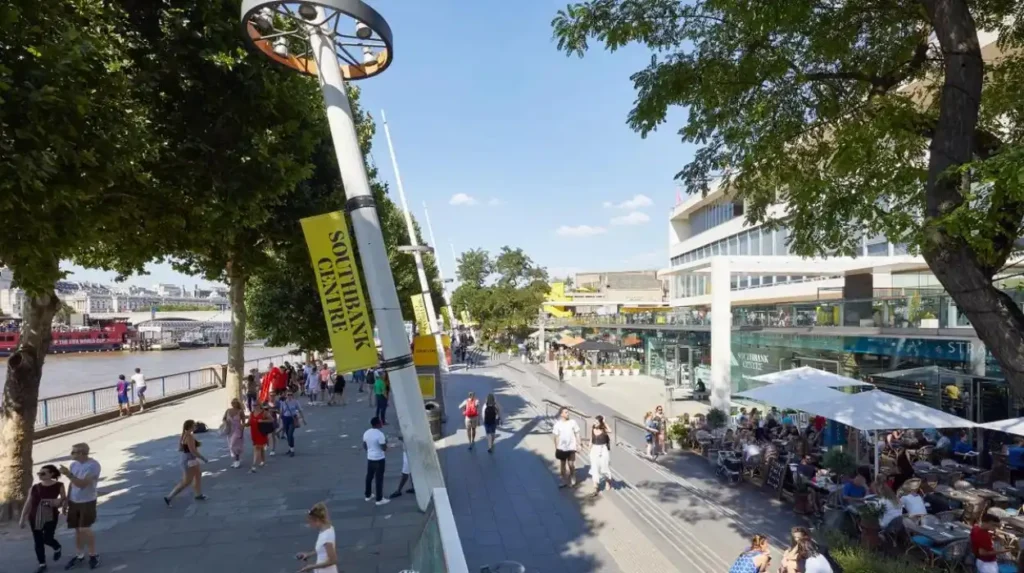
The Thames riverside provides one of Waterloo’s clearest sightseeing routes, linking the London Eye, County Hall, Southbank Centre, National Theatre, Waterloo Bridge and nearby Westminster landmarks. The pedestrian environment supports sightseeing, photography, riverside walks, dining and access to cultural venues.
The South Bank stretches between Lambeth Bridge and Blackfriars Bridge on the southern side of the Thames. Waterloo sits inland from the river and connects directly with this riverside district.
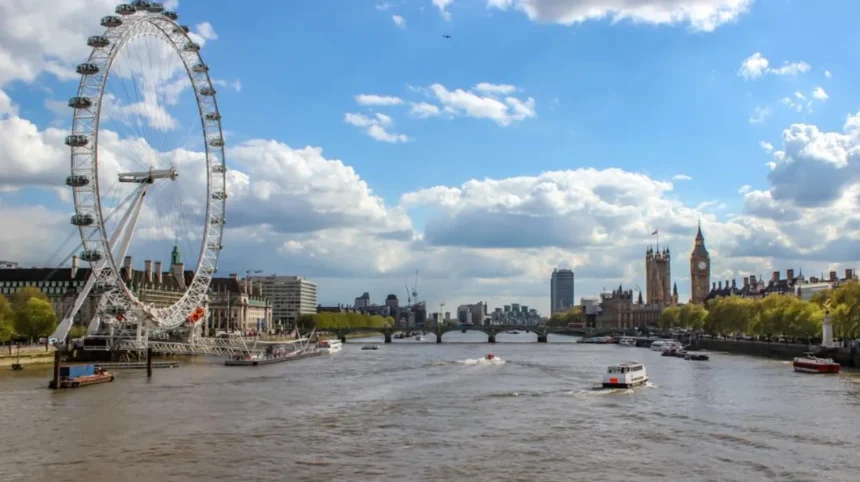
The riverside path provides views towards Westminster, including the Palace of Westminster and Elizabeth Tower. The Thames also creates a strong geographical reference point for navigating the area.
County Hall sits prominently beside Westminster Bridge. Its position opposite the Palace of Westminster reflects the civic importance originally attached to the building.
Further east, visitors reach the Southbank Centre and National Theatre. Continuing beyond Waterloo Bridge leads towards the BFI, Oxo Tower Wharf and the wider Bankside area.
The riverside is particularly useful for visitors who want to combine several attractions without relying on public transport between each stop. The route is pedestrian-focused and contains restaurants, cafés, public seating, cultural venues and seasonal activity.
River services also operate from nearby piers. Visit London identifies London Eye Pier as a stop for Uber Boat by Thames Clippers services, while sightseeing cruises operate from the riverside.
This makes the Thames more than a scenic feature. It functions as a transport corridor and a visual link between Waterloo, Westminster and other central London destinations.
What is there to discover at the London Eye?
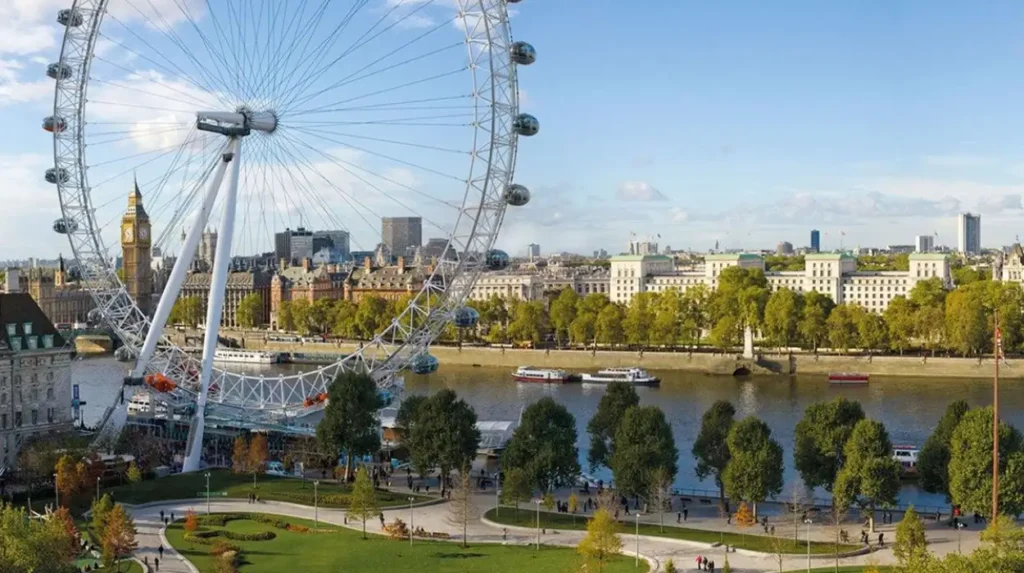
The London Eye is a 135-metre observation wheel on the South Bank offering elevated views across central London. Its 32 passenger capsules complete a rotation in about 30 minutes, providing views towards Westminster, the City and surrounding landmarks.
The London Eye stands beside County Hall and Westminster Bridge. Its height is 135 metres, while its circumference is 424 metres. The attraction contains 32 passenger pods and can accommodate approximately 800 guests per rotation.
The attraction provides a different perspective on Waterloo and Lambeth. From above, visitors can identify the Thames, Westminster, bridges, central London buildings and the wider urban landscape.
A complete rotation takes approximately 30 minutes. The slow movement allows passengers to board and leave without the wheel stopping.
The London Eye is therefore particularly relevant for first-time visitors seeking a concentrated view of central London.
Its location also makes it easy to combine with nearby attractions. Visitors can walk from Waterloo Station to the London Eye and continue along the riverside towards Southbank Centre or Westminster.
Visit London identifies Waterloo as the nearest Underground station, served by the Bakerloo, Jubilee, Northern and Waterloo & City lines.
What cultural experiences are available at the Southbank Centre?
Southbank Centre is a major arts complex beside the Thames, containing Royal Festival Hall, Queen Elizabeth Hall, Purcell Room and Hayward Gallery. Visitors can encounter concerts, theatre, exhibitions, festivals, talks, markets and free public activities throughout the year.
Southbank Centre forms the cultural core of the riverside near Waterloo. Its buildings and public spaces developed from the Festival of Britain legacy and now support a broad programme of arts and cultural activity.
Royal Festival Hall is a Grade I-listed building and the centrepiece of the Festival of Britain site. Its architectural and cultural significance contributes directly to the character of the South Bank Conservation Area.
The complex includes multiple venues serving different artistic formats. Royal Festival Hall hosts concerts, while Queen Elizabeth Hall and Purcell Room support music and performance. Hayward Gallery presents contemporary art exhibitions.
Southbank Centre also operates public spaces that visitors can access without attending a ticketed performance. Visit London states that the centre is free to enter and that more than half of its events are completely free.
The riverside terrace, public art, seasonal markets and food spaces make the centre useful even for visitors without a full-day cultural itinerary.
For digital nomads and business travellers, the surrounding cafés and public spaces also provide opportunities for short breaks between meetings. Visitors should check individual venue policies before working from public or ticketed areas.
Why should visitors visit the National Theatre near Waterloo?
The National Theatre is one of Britain’s leading theatre institutions and has operated from its landmark South Bank building since 1976. The complex combines performance spaces, backstage production facilities, public areas and educational activity beside the Thames.
The National Theatre opened its South Bank building in 1976. The landmark complex became an important part of the modern cultural identity of Waterloo and the South Bank.
The theatre presents productions across multiple stages and supports artists, technicians, designers and creative professionals. Its activities extend beyond performances through touring productions, cinema screenings, digital programmes and education.
In 2026, the National Theatre is marking 50 years of its South Bank building. Its current programme also includes major investment and modernisation work to protect the building and its technical infrastructure.
The institution states that its work generates £241 million in Gross Value Added for the UK economy annually, with one third of that impact created outside London.
For visitors, the National Theatre represents both a performance destination and an architectural landmark. Its large concrete forms, terraces and riverside position make it one of the most recognisable buildings around Waterloo.
Visitors interested in theatre should check the current programme before travelling because performances, access arrangements and ticket availability change according to the schedule.
What can visitors experience at the Old Vic and other Waterloo theatres?
Waterloo has a strong theatre network extending beyond the National Theatre. The Old Vic and Young Vic provide additional performance venues, while nearby cultural spaces support cinema, contemporary art, live events and experimental performance.
The Old Vic is one of London’s historic theatres and stands close to Waterloo Station. Its location makes it especially convenient for visitors arriving by rail or Underground.
The Young Vic is another important theatre in the Waterloo area. It is recognised for contemporary performance and a programme that complements the wider theatre ecosystem around the South Bank.
Visit London identifies the Old Vic, Young Vic and National Theatre among the principal theatre destinations around South Bank and Waterloo.
The area also contains BFI Southbank and BFI IMAX. The British Film Institute, commonly known as BFI, is the UK organisation responsible for supporting and promoting film and television culture.
BFI Southbank provides a programme covering contemporary releases, classic cinema, archive material and specialist seasons. Its presence strengthens Waterloo’s position as a multi-format cultural district.
The combination of theatre and cinema creates a practical advantage for visitors. Different venues provide activities throughout the day, allowing travellers to build cultural itineraries around transport connections and riverside walks.
What can visitors discover at the Florence Nightingale Museum?
The Florence Nightingale Museum at St Thomas’ Hospital explores the life, nursing career and healthcare reforms of Florence Nightingale. Its collection includes personal objects, letters, books, her Crimean War lamp and other material connected with nursing history.
The Florence Nightingale Museum stands at St Thomas’ Hospital on Lambeth Palace Road, within walking distance of Waterloo and the London Eye.
Florence Nightingale helped establish the Nightingale Training School at St Thomas’ Hospital in 1860. The first intake contained 15 probationer nurses, and the school subsequently expanded Nightingale’s approach to professional nurse training.
The museum collection includes Nightingale’s lamp, medicine chest, dress, jewellery, books and letters. It also includes her pet owl, Athena.
The museum opened on the site of the former training school in 1989. Its collection had been assembled through earlier efforts by St Thomas’ Hospital staff, including Dame Alicia Lloyd Still.
The museum provides a focused historical experience within the larger Waterloo visitor district. It is particularly relevant to visitors interested in healthcare, Victorian social reform, nursing, statistics and medical history.
The museum currently operates Tuesday to Sunday, with standard opening hours of 10am to 5pm and last entry at 4.30pm. Visitors should confirm opening arrangements before travelling because schedules change.
What is special about Leake Street Arches and its street art?
Leake Street Arches is an urban arts and entertainment area beneath Waterloo Station, containing eight railway arches and access to the legal graffiti tunnel. The space combines street art, independent businesses, dining and creative activity.
Leake Street runs directly beneath Waterloo Station. The arches were redeveloped as a mixed-use destination containing independent restaurants, entertainment spaces and creative businesses.
The associated graffiti tunnel is one of the area’s distinctive visitor attractions. Graffiti and street art are permitted and actively encouraged within authorised areas of the tunnel.
The artwork changes over time, so the visual experience is not fixed. This gives the location a different character from conventional museums and galleries.
Leake Street Arches is approximately a five-minute walk from Waterloo Station. The London Eye is around five minutes away, while Southbank Centre is around ten minutes away.
The location works particularly well for visitors interested in contemporary urban culture. It also provides a practical food and entertainment stop between Waterloo Station and the riverside.
Visitors should distinguish authorised graffiti areas from other railway infrastructure. The tunnel has specific rules governing artwork, commercial activity, filming and organised events.
Which museums and attractions are within a wider walk of Waterloo?
Visitors can extend a Waterloo itinerary towards Lambeth Road, Westminster and Bankside to reach additional museums and cultural landmarks. The Imperial War Museum, Tate Modern, Borough Market and Westminster landmarks all sit within practical walking or short transport distances.
The Imperial War Museum London is located on Lambeth Road, south-east of Waterloo. The museum was established in 1917 during the First World War and moved to its present Lambeth Road home in 1936.
Its collections document the experiences and consequences of modern conflict. Objects include military equipment, photographs, personal letters, film, sound recordings and works of art.
The museum also functions as a research and archival institution. Its location creates a strong link between Waterloo’s transport history and Lambeth’s wider historical landscape.
Visitors walking east from the South Bank can also reach Tate Modern across the Millennium Bridge area. Tate Modern is one of the world’s major modern and contemporary art museums and occupies the former Bankside Power Station.
Borough Market is another nearby destination for visitors interested in food. It sits beyond the river towards London Bridge and provides access to a large food market with traders selling produce and prepared food.
These destinations expand the geographical scope of a Waterloo visit without changing its central focus: discovering the cultural and historical landscape surrounding the station and Thames.
How can visitors explore Waterloo on foot?
Walking is one of the most efficient ways to explore Waterloo because major attractions sit close together. A practical route can connect Waterloo Station, Lower Marsh, Leake Street, the London Eye, Southbank Centre, National Theatre and Westminster Bridge.
Waterloo Station provides the natural starting point. From the station, visitors can walk towards Lower Marsh, a long-established local street containing independent businesses, cafés and food outlets.
Leake Street provides an alternative route towards the South Bank. Its railway arches sit beneath the station and create a direct connection between the transport hub and the riverside district.
From there, visitors can continue towards the London Eye and County Hall. Westminster Bridge provides views across the Thames towards the Palace of Westminster.
Continuing east takes visitors towards Southbank Centre, Royal Festival Hall, Queen Elizabeth Hall, Hayward Gallery and the National Theatre.
A further walk towards Waterloo Bridge provides elevated views along the Thames. The route can then continue towards BFI Southbank, Oxo Tower Wharf and Bankside.
Visit London describes the pedestrian routes around South Bank and Waterloo as wide and relatively flat, supporting walking-based sightseeing and access to major attractions.
The exact walking order depends on attraction opening times and ticketed activities. A visitor attending a theatre performance should build the itinerary around the performance start time.
How well connected is Waterloo for visitors?
Waterloo is one of London’s strongest transport hubs for visitors, with National Rail, Underground and nearby river services. Waterloo Underground serves four lines, while Waterloo East and Blackfriars provide additional rail connections within easy reach.
London Waterloo connects central London with destinations across southern and south-western England. Visit London lists Bournemouth, Southampton, Exeter and Weymouth among destinations served from Waterloo.
Waterloo East provides connections towards Kent and East Sussex, including Canterbury, Dover and Hastings. Blackfriars provides Thameslink services towards destinations in London and beyond.
Waterloo Underground Station serves the Jubilee, Northern, Bakerloo and Waterloo & City lines. This gives visitors direct access to major parts of central London and interchange opportunities across the Underground network.
River transport provides another option. London Eye Pier is close to the principal riverside attractions and supports passenger services along the Thames.
For visitors arriving from outside London, Waterloo therefore works as both a destination and a gateway. The transport network reduces the need to travel by car and supports walking-based sightseeing after arrival.
What can visitors do around Waterloo for free?
Free activities around Waterloo include riverside walking, public art, street-art viewing at Leake Street, exploring Southbank Centre public spaces and enjoying architectural landmarks. Ticketed attractions such as the London Eye and theatres sit alongside these free experiences.
The Southbank Centre is free to enter, and more than half of its events are completely free according to Visit London. Visitors can explore public areas, view installations and experience the riverside setting without purchasing a performance ticket.
The Thames walkway is another free attraction. Visitors can walk beside the river, view Westminster and photograph bridges and landmark buildings.
Leake Street offers free public access to its graffiti tunnel, subject to the site’s rules. Street art is actively encouraged in authorised areas.
Architecture also provides a free visitor experience. County Hall, Royal Festival Hall, National Theatre, Waterloo Bridge and the railway structures around Waterloo form a concentrated collection of historically significant buildings.
This makes Waterloo suitable for travellers managing a limited sightseeing budget. Paid attractions can be added selectively while the core walking route remains accessible without admission charges.
Why is Waterloo useful for families, business travellers and digital nomads?
Waterloo serves different visitor needs because it combines transport access, cultural venues, public spaces, food outlets and short walking distances. Families have attractions and museums, business travellers have central transport connections, and digital workers have cafés and public cultural spaces.
Families can combine the London Eye, SEA LIFE London Aquarium, Southbank Centre and nearby attractions. Visit London identifies the district as family-friendly and notes its pedestrian routes, transport connections and range of attractions.
Business travellers benefit from the area’s central location. Waterloo provides rapid connections to central London while the South Bank offers restaurants, theatres and cultural venues for downtime outside working hours.
Digital nomads have access to cafés, food venues and public areas. However, reliable Wi-Fi, seating availability and permission for prolonged laptop use vary by venue. Visitors should use designated commercial workspaces when they require guaranteed facilities.
The district also provides different activity levels within a small geographical area. A visitor can spend time in a museum, walk beside the Thames, attend a performance or eat near the station without making a long cross-London journey.
This flexibility makes Waterloo particularly effective for short stays and spare-time itineraries.
Explore More Area Guide
Brixton Culture, Markets & Attractions: Lambeth 2026
Where to Enjoy Live Music in Lambeth? South London 2026
What is the best way to plan a Waterloo sightseeing visit?
The most efficient Waterloo itinerary groups attractions by location and opening time. Start near Waterloo Station, explore Lower Marsh and Leake Street, continue to the Thames, then visit selected cultural venues before finishing around Westminster or the eastern South Bank.
Begin by checking the opening hours of any ticketed attraction. Museums and theatres operate different schedules, while performance venues require visitors to arrive before show times.
A morning route can begin at Waterloo Station and continue through Lower Marsh before reaching the riverside.
The London Eye works well as a scheduled attraction because its visit has a defined duration. The Southbank Centre then provides flexible cultural and public-space options.
The Florence Nightingale Museum suits visitors who want a focused historical experience. Its typical visit lasts approximately 45 to 75 minutes.
The National Theatre, Royal Festival Hall and Hayward Gallery require separate planning because exhibitions, performances and opening times vary.
Leake Street works as a flexible stop because visitors can experience the street art without committing to a long attraction visit.
For an evening itinerary, Waterloo’s theatres provide a natural conclusion. The Old Vic, National Theatre and Young Vic all contribute to the area’s established performance culture.
Visitors should also allow time for transport connections after evening events, particularly when returning to destinations outside central London.
What should visitors remember about Waterloo in Lambeth?
Waterloo is best understood as a connected visitor district rather than a single attraction. Its significance comes from the relationship between the railway station, Thames riverside, South Bank cultural institutions, historic buildings, museums, theatres, street art and central London transport.
The area’s history explains its present-day structure. Railway expansion established Waterloo as a major transport centre. Industrial development shaped the nineteenth-century South Bank. County Hall introduced a major civic presence. The Festival of Britain established the foundations of the modern cultural district.
Today, the London Eye provides a major observation attraction, while Southbank Centre and National Theatre anchor the cultural landscape. The Florence Nightingale Museum provides a specialised historical experience, while Leake Street adds contemporary urban art.
The Thames provides the geographical framework connecting these destinations. Westminster Bridge links Waterloo with Westminster, while Waterloo Bridge connects the South Bank with central London north of the river.
Transport remains central to the visitor experience. Waterloo Underground, National Rail, Waterloo East, nearby Blackfriars and river services provide multiple ways to arrive and continue a journey.
For tourists, the area provides major London landmarks and cultural experiences. For residents, it offers local streets, markets and changing cultural programmes. For business travellers, it provides efficient transport and entertainment close to central workplaces.
Waterloo therefore remains one of Lambeth’s most useful visitor bases. Its attractions are diverse, its historical layers are visible, and its riverside location connects visitors directly with the wider cultural landscape of central London.
What are the main attractions around Waterloo in Lambeth?
Waterloo’s main attractions include the London Eye, Southbank Centre, National Theatre, Old Vic, Young Vic, Florence Nightingale Museum, Leake Street Arches and the Thames riverside. Westminster Bridge and County Hall are also important nearby landmarks.