Lambeth is one of London’s most connected inner boroughs, combining major rail interchanges, Underground stations, extensive bus routes, riverside walking routes and cultural attractions. Its strongest visitor-accessibility advantages are concentrated around Waterloo, South Bank and Vauxhall, while southern neighbourhoods rely more heavily on buses and National Rail.
- How easy is Lambeth to reach from central London and the airports?
- What public transport options are available across Lambeth?
- Is Lambeth suitable for wheelchair users and visitors with limited mobility?
- Which parts of Lambeth are easiest to explore on foot?
- What accessible attractions can international visitors experience in Lambeth?
- How easy is it for international visitors to pay for transport in Lambeth?
- Does Lambeth have enough visitor facilities for international travellers?
- Is Lambeth practical for visitors who do not speak English fluently?
- How accessible are Lambeth’s river services for visitors?
- What are the main accessibility limitations in Lambeth?
- How should international visitors plan an accessible Lambeth itinerary?
- What does Lambeth’s future transport strategy mean for visitor accessibility?
- Is Lambeth accessible enough for international visitors?
The London Borough of Lambeth covers 27.25 square kilometres and had an estimated resident population of 318,000 in 2022. Lambeth Council describes the borough as densely populated and highly diverse, with 63% of residents identifying their ethnicity as something other than White British. This international character supports a visitor environment where different languages, cultures and travel needs are common.
For international visitors, accessibility means more than step-free transport. It includes airport connections, ticketing, navigation, walking conditions, accessible attractions, accommodation, toilets, food, digital information and the ability to move between neighbourhoods without a private car. Lambeth performs strongly across many of these areas, but accessibility varies significantly between northern, central and southern parts of the borough.
How easy is Lambeth to reach from central London and the airports?
Lambeth is highly accessible from central London because Waterloo, Vauxhall and Brixton connect visitors with Underground, National Rail and bus services. Heathrow has direct Elizabeth line connections into central London, while Gatwick connects through National Rail services towards Victoria and other London interchanges.
Lambeth sits immediately south of the River Thames and directly opposite central London districts. This location gives international visitors short connections to Westminster, the City, the West End and major London attractions.
Waterloo is the principal gateway for visitors entering Lambeth from other parts of Britain and from central London. Waterloo Underground serves the Jubilee, Northern, Bakerloo and Waterloo & City lines. South Bank is also within walking distance of Southwark Underground station on the Jubilee line. Visit London identifies Waterloo and Southwark as the principal Tube stations for the South Bank and Waterloo area.
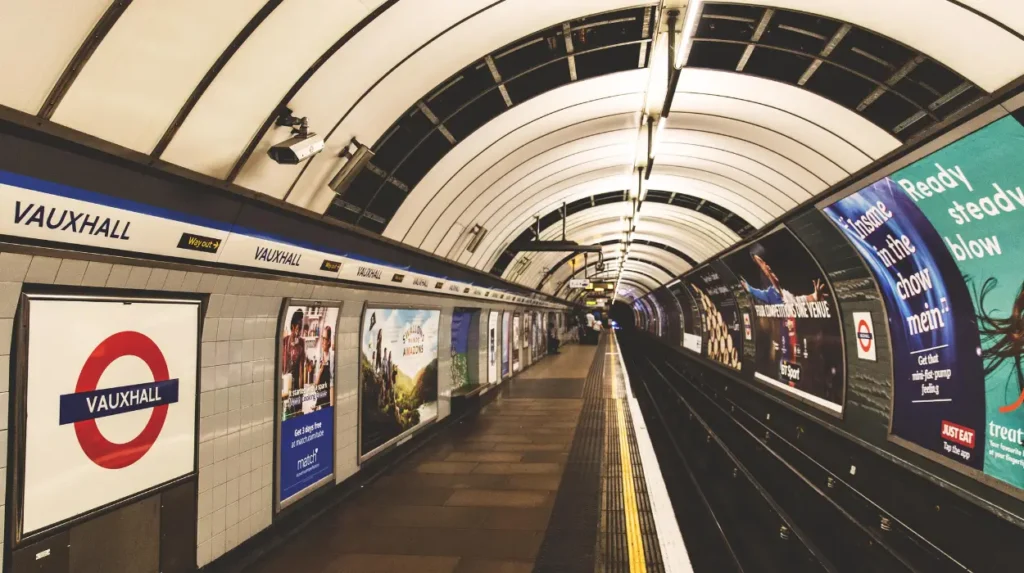
Vauxhall provides another important interchange. It combines National Rail, London Underground and London Bus services. This makes Vauxhall particularly useful for visitors staying around Vauxhall, Kennington, Stockwell and nearby parts of Lambeth. Lambeth Council identifies Vauxhall as a key interchange requiring continued investment in capacity, access and connections.
International visitors arriving at Heathrow have access to the Elizabeth line, which provides a direct rail connection from Heathrow into central London. TfL states that all 41 Elizabeth line stations are step-free from street to platform.
Gatwick Airport connects to London through National Rail services and Gatwick Express services. TfL’s Visitor Oyster information also identifies Gatwick trains towards Victoria as an option for visitors arriving at Gatwick.
The practical implication is straightforward. Visitors should choose their London accommodation according to the nearest accessible transport interchange rather than relying solely on straight-line distance.
What public transport options are available across Lambeth?
Lambeth has a strong public transport network based on Underground services, National Rail, buses, walking and river transport. Northern Lambeth has the strongest central-London connections, while southern neighbourhoods depend more heavily on buses and National Rail for longer journeys.
Public transport is the main way to explore Lambeth without a car. Lambeth Council reports that almost four out of five trips made by residents already use public transport, walking or cycling, and that most households do not have access to a car.
The Underground is particularly useful in northern and central Lambeth. Stations and lines provide connections towards Westminster, the West End, the City and other major visitor districts.
National Rail adds important connections through Waterloo, Vauxhall, Brixton and other stations. These services are especially relevant for visitors travelling between Lambeth and destinations elsewhere in Greater London or southern England.
The bus network fills many gaps between Underground and railway stations. This is important because Lambeth’s geography stretches from the Thames through central neighbourhoods to Brixton, Streatham and the southern boundary of the borough.
Lambeth Council identifies a clear difference between northern and southern connectivity. Northern and central areas benefit from Underground services with fast and frequent central-London connections. Southern Lambeth has less consistent National Rail connectivity, while cross-borough east-west journeys are less well served than journeys towards central London.
This distinction matters for tourists. A visitor staying near Waterloo can reach many attractions with short walks and direct public transport. A visitor staying farther south needs more journey planning and greater reliance on buses or National Rail.
TfL provides visitor maps covering Tube, buses, National Rail, Overground, DLR, river services and cycling. Its visitor mapping system also includes accessibility information such as step-free maps and toilet facilities.
Is Lambeth suitable for wheelchair users and visitors with limited mobility?
Lambeth offers substantial accessible infrastructure, particularly around South Bank, Waterloo and major transport hubs, but it is not uniformly step-free. TfL provides accessible buses, step-free station information and journey-planning tools, while individual attractions provide separate access arrangements.
Accessibility varies by transport mode and station. TfL states that all London bus routes use low-floor vehicles with dedicated wheelchair space and access ramps. Buses can also be lowered to reduce the step between the pavement and vehicle.
The Underground is less uniformly accessible. TfL states that more than one-third of Tube stations have step-free access. Step-free access means lifts, ramps or level surfaces that avoid stairs and escalators.
This creates an important distinction between being able to reach Lambeth and being able to complete a fully step-free journey.
A station without step-free access can still serve a visitor who is able to use stairs. It is unsuitable for a visitor who requires continuous step-free access. Visitors should therefore check the complete journey rather than checking only the destination station.
TfL’s accessible journey planner allows users to select options such as full step-free access, step-free platform access, limited walking and transport preferences. The system also incorporates current disruption information.
TfL recommends planning step-free journeys in advance because lifts and other facilities can be affected by disruption. The authority also publishes step-free maps and accessibility guides.
Black cabs provide another option. TfL states that all London taxis have wheelchair ramps, while some private-hire vehicles also provide step-free access.
For visitors with limited mobility, the most practical approach is to combine an accessible hotel, step-free transport route and attractions with confirmed access arrangements.
Which parts of Lambeth are easiest to explore on foot?
South Bank and Waterloo provide Lambeth’s strongest pedestrian environment for international visitors, with a largely step-free riverside promenade, pedestrianised routes, major attractions, restaurants and public spaces concentrated within a compact central area.
South Bank is one of the most visitor-friendly parts of Lambeth because several major attractions sit along or near the Thames.
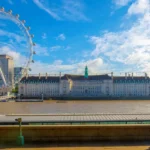
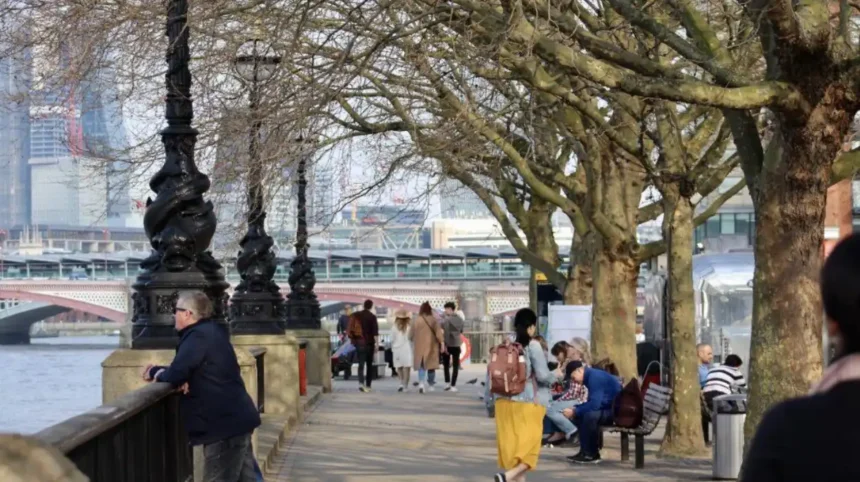
Visit London describes the South Bank riverside promenade as step-free and extending from Lambeth Bridge past County Hall, Southbank Centre, the National Theatre and Oxo Tower towards Blackfriars Bridge.
The wider South Bank and Waterloo area also includes pedestrianised walkways described by Visit London as wide and flat. This makes the district particularly practical for visitors who want to reduce reliance on public transport between attractions.
The route includes major visitor destinations such as the London Eye, National Theatre, Southbank Centre, Hayward Gallery, BFI Southbank and SEA LIFE London Aquarium.
Walking also reduces the need to navigate unfamiliar transport systems for short journeys. International visitors can move between attractions, restaurants, riverside spaces and cultural venues while remaining close to central transport links.
The situation changes farther south. Lambeth’s streets include busy roads, hills, junctions and neighbourhood centres where pedestrian conditions differ. Lambeth Council’s transport strategy recognises the need to continue improving streets so they become safer, more accessible and attractive for walking and cycling.
Visitors with mobility requirements should therefore distinguish between South Bank’s riverside environment and the wider borough’s more varied street network.
What accessible attractions can international visitors experience in Lambeth?
Lambeth contains major accessible cultural attractions, including the Southbank Centre, South Bank riverside promenade and several visitor venues around Waterloo. Individual attractions publish access information covering lifts, ramps, toilets, seating, hearing support and other visitor facilities.
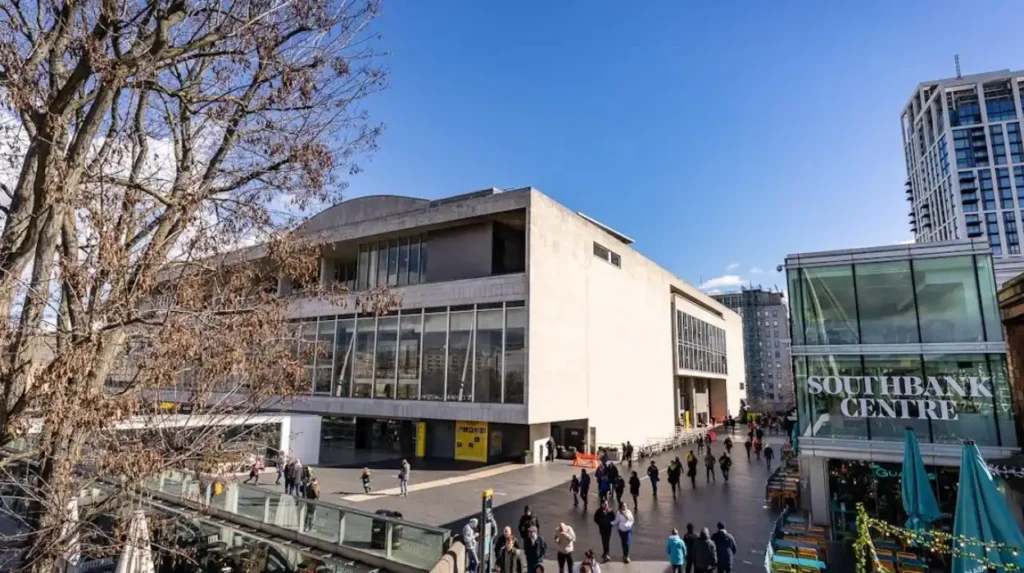
The Southbank Centre is one of the clearest examples of inclusive visitor infrastructure. Its listed facilities include accessible lifts, ramps, wheelchair spaces, automatic doors, accessible toilets, clear signage, hearing loops, audio information and braille information.
This makes the Southbank Centre relevant to visitors with different accessibility requirements rather than only wheelchair users.
The South Bank area also contains the London Eye, SEA LIFE London Aquarium, National Theatre, Hayward Gallery, BFI Southbank and London Dungeon. These venues operate independently, so accessibility arrangements differ between attractions.
The Florence Nightingale Museum is located on Lambeth Palace Road near St Thomas’ Hospital. Its public transport connections include Waterloo, Westminster, Lambeth North and several London bus routes. The venue advises visitors to contact it regarding accessibility.
Lambeth Palace provides a different type of visitor experience. The medieval complex is the London residence of the Archbishop of Canterbury. Guided tours cover areas including the Crypt, Guard Room, Chapel and Library, with tours requiring advance booking.
As you explore the modern site, you are crossing land with a deep heritage. Read about the full to understand its origins.
The Garden Museum, located in the former St Mary-at-Lambeth church, provides another cultural destination near the Thames. Visit London’s South Bank guide identifies it as a place to explore the history of British gardening.
For accessibility-focused travel, checking the venue’s current access guide before booking is essential. A venue can have step-free entrance access while individual galleries, toilets, seating areas or temporary exhibitions have different arrangements.
How easy is it for international visitors to pay for transport in Lambeth?
International visitors can use contactless payment or a Visitor Oyster card across London’s public transport network. Visitor Oyster cards work on the Tube, buses, tram, DLR, London Overground, Elizabeth line and relevant National Rail services, reducing the need for cash.
London’s transport ticketing system is designed around electronic payment. Visitors can use contactless bank cards where accepted or purchase a Visitor Oyster card.
TfL’s Visitor Oyster information states that the card can be used on the Tube, Elizabeth line, London Overground, DLR, river services, cable car and National Rail services within London. On buses and trams, visitors tap when boarding rather than tapping out.
For international travellers, contactless payment is convenient but requires a compatible card or mobile wallet. Overseas bank charges and foreign-exchange fees depend on the visitor’s card issuer rather than TfL.
A Visitor Oyster card provides an alternative for travellers who prefer to separate travel spending from their main bank account.
Visitors should use the same payment method consistently during journeys where fare rules require it. Keeping one physical card or device dedicated to transport also reduces the risk of accidentally using different payment methods.
Children have separate fare considerations. TfL states that visitors aged 11 to 15 can have a Young Visitor discount applied to an Oyster or Visitor Oyster card, providing a 50% reduction on adult-rate pay-as-you-go fares for up to 14 days.
Does Lambeth have enough visitor facilities for international travellers?
Lambeth has a strong concentration of hotels, restaurants, cultural venues, public spaces and transport facilities around South Bank, Waterloo and Vauxhall. Visitor infrastructure becomes more dispersed in southern Lambeth, making location selection important for short leisure stays.
South Bank has a particularly high concentration of visitor facilities. Hotels, restaurants, cultural institutions and transport interchanges operate within walking distance of the riverside attractions.
Visit London lists major hotels in the South Bank area, including London Marriott Hotel County Hall, Premier Inn County Hall, Park Plaza Westminster Bridge and Park Plaza County Hall.
The concentration of accommodation reduces journey complexity. Visitors can stay near Waterloo and walk to major attractions rather than travelling across the borough every day.
Lambeth Council also maintains planning information relating to hotels and visitor accommodation, demonstrating the borough’s established role as a visitor and business destination.
Food and drink facilities are particularly dense around South Bank and Waterloo. Restaurants, cafés, bars and food outlets line the riverside and surrounding streets. Leake Street Arches and Gabriel’s Wharf add further visitor-oriented destinations.
Public toilets are another important part of accessibility. TfL provides a Tube toilet map covering toilet and baby-changing facilities across the Tube, DLR and London Overground network.
For visitors with specific accessibility requirements, venue-specific facilities remain more important than general neighbourhood provision. Accessible toilets, changing facilities, seating and lifts should be checked against the day’s itinerary.
Is Lambeth practical for visitors who do not speak English fluently?
Lambeth is practical for international visitors because its central areas operate within London’s established visitor infrastructure, with standardised transport signage, digital journey-planning tools, maps and major cultural venues. Visitors still benefit from downloading travel information before leaving their accommodation.
London’s transport network uses consistent symbols, line colours, station names and interchange information. This reduces the need for extensive English-language communication during routine journeys.
TfL’s visitor maps provide separate information for Tube, buses, rail, river services and cycling.
Digital tools add another layer of support. TfL Go provides live arrival information, route planning, disruption alerts and step-free journey options. Users can plan journeys to stations, addresses and points of interest.
Major cultural venues also use visual signage and accessible communication systems. The Southbank Centre, for example, lists clear signage, large letters or pictograms, audio information, braille and hearing-loop facilities among its accessibility features.
International visitors should save hotel details, transport routes and attraction addresses offline before travelling. This is useful when mobile data is unavailable or network congestion affects connectivity.
How accessible are Lambeth’s river services for visitors?
River transport provides an additional accessible travel option along the Thames, linking Lambeth’s riverside area with destinations beyond the borough. TfL states that boats use ramps, most piers are step-free and accessible toilets are available on most vessels.
River services provide a different transport option from Tube, rail and buses. For visitors staying near South Bank, the Thames can function as a transport corridor as well as a sightseeing route.
TfL Visitor Shop information states that Uber Boat by Thames Clippers vessels are wheelchair, mobility scooter and pram accessible by ramp. Most piers are described as step-free and wheelchair accessible, although visitors should check individual pier conditions.
The RB1 service operates between Battersea Power Station or London Eye and Barking Riverside depending on the time of day. This provides a river connection between central and eastern London.
For visitors, river transport can also reduce dependence on Underground interchanges. It is particularly relevant when the destination lies close to a Thames pier.
Accessibility still requires route-level checking. A fully accessible boat does not automatically guarantee a completely step-free journey from hotel to pier or from the arrival pier to the final destination.
What are the main accessibility limitations in Lambeth?
Lambeth’s main accessibility limitations are uneven step-free coverage, differences between northern and southern transport provision, congestion affecting buses and gaps in east-west connections. These issues are less pronounced around South Bank and Waterloo than in southern neighbourhoods.
Lambeth is not uniformly accessible. The borough’s transport network reflects its size, geography and historical development.
Lambeth Council states that a significant number of rail and Underground stations do not have step-free access. The council also identifies longer and less convenient step-free journeys as an existing problem.
Bus journeys can also become slower because of congestion. This affects visitors travelling between central Lambeth and southern neighbourhoods.
The council identifies limited public transport connections between northern and southern parts of the borough. East-west journeys are also less well served than routes towards central London.
This means an itinerary that looks geographically close on a map can still require a complicated public transport journey.
Visitors with mobility requirements should therefore prioritise accessible interchanges and direct routes over the shortest theoretical route.
The most accessible visitor experience is concentrated in the central riverside area. South Bank combines step-free walking infrastructure, major attractions, hotels, restaurants and strong transport connections in one compact district.
How should international visitors plan an accessible Lambeth itinerary?
International visitors should build each Lambeth itinerary around confirmed step-free transport, accessible attractions and short walking distances. TfL Go, official station information and venue access guides should be checked before departure and again on the travel day.
Start by choosing accommodation close to a suitable transport hub. Waterloo and South Bank provide the strongest combination of visitor attractions, rail, Underground services, buses and pedestrian routes.
Next, identify the accessibility requirement that applies to the entire journey. A visitor requiring full step-free access needs to check the hotel entrance, route to the station, station-to-platform connection, train boarding, destination station and final walking route.
TfL Go allows users to select full step-free access, avoid stairs and reduce walking. The service also accounts for current disruptions and lift closures.
Attractions should be checked individually. The Southbank Centre provides extensive accessibility facilities, while other venues publish different access arrangements.
For a first visit, a compact South Bank itinerary offers a straightforward starting point. Visitors can combine the riverside promenade with the London Eye, Southbank Centre, National Theatre, Hayward Gallery, BFI Southbank or other nearby attractions.
Visitors should also plan rest stops. South Bank contains benches, cafés, restaurants and open spaces along the riverside environment, supporting slower-paced itineraries. Visit London specifically identifies benches and smooth walkways as features supporting visitors with limited mobility.
Explore More Area Guide
Best Photography Locations in Lambeth: Scenic Spots & Iconic Views
Discover Top Outdoor Activities and Parks in Lambeth, London
What does Lambeth’s future transport strategy mean for visitor accessibility?
Lambeth’s transport strategy places long-term emphasis on accessible public transport, walking, cycling, better interchanges and sustainable growth. Planned improvements focus on major hubs such as Waterloo, Vauxhall and Brixton alongside wider street and public-realm improvements.
Lambeth’s transport strategy is designed around an inclusive network that supports walking, cycling and public transport while improving accessibility and environmental performance.
The strategy recognises that population and employment growth will increase demand on the transport network. Lambeth’s projected household growth from 143,655 in 2016 to 172,649 in 2036 was linked to a projected population exceeding 359,000 in the council’s transport planning evidence.
Waterloo and Vauxhall are particularly important because they function as major gateways between Lambeth and the wider London transport system.
The strategy identifies improvements to capacity, access and interchange at Waterloo, Vauxhall and Brixton stations as priorities.
The council also aims to strengthen healthy walking routes and improve street accessibility. These measures have direct relevance to international visitors because better local streets reduce dependence on short vehicle journeys.
Lambeth already has a strong sustainable travel profile. The council identifies it as a borough where public transport, walking and cycling account for a very large share of trips.
The long-term direction therefore supports a visitor model based on public transport and walking rather than private car use.
Is Lambeth accessible enough for international visitors?
Lambeth is highly accessible for international visitors when accommodation, transport and attractions are planned around its strongest connected areas. South Bank and Waterloo provide the easiest overall experience, while southern Lambeth requires more detailed route and accessibility planning.
For most international tourists, Lambeth offers a strong combination of transport connectivity, cultural attractions, riverside walking, accommodation and visitor facilities.
Its biggest advantage is location. Waterloo, South Bank and Vauxhall provide direct links into central London and onward connections across the capital.
Its second advantage is the concentration of attractions. South Bank combines major cultural venues, entertainment destinations, restaurants, hotels and a step-free riverside route.
Its third advantage is London’s wider accessibility infrastructure. TfL provides accessible buses, step-free route planning, accessibility maps and live journey information.
The main limitation is uneven accessibility. Not every station is step-free, and southern Lambeth has weaker transport connectivity than the central riverside area.
For wheelchair users and visitors with limited mobility, accessibility should therefore be assessed as a complete journey rather than a single destination.
For first-time international visitors, South Bank and Waterloo provide the most straightforward base. Visitors can combine step-free walking routes with major cultural attractions and several transport options while remaining close to central London’s principal landmarks.
Lambeth is therefore an accessible London destination with a clear geographic pattern: central riverside Lambeth offers the strongest visitor accessibility, while the wider borough rewards advance transport planning.
Is Lambeth easy for international visitors to get around?
Yes. Lambeth has strong public transport connections through Waterloo, Vauxhall, Brixton and surrounding stations. Visitors can use the Underground, National Rail, buses, walking routes and Thames river services to travel around the borough and reach central London.