Lambeth is one of South London’s strongest destinations for art, exhibitions, architecture and public creativity. The borough combines major contemporary galleries, specialist museums, historic buildings, artist-led spaces, community projects and outdoor artworks.
- What makes Lambeth an important destination for art lovers?
- Which contemporary art gallery should visitors experience in Lambeth?
- Where can visitors discover art beyond major exhibitions?
- What can art lovers see at the Garden Museum?
- Which historic house offers an unusual art experience in Lambeth?
- How does Lambeth connect art with its history?
- Where can visitors find public art in Lambeth?
- How can art lovers explore African and Caribbean creativity in Lambeth?
- Can visitors experience war art and photography in Lambeth?
- What can visitors learn about art while exploring Lambeth?
- What is the best way to plan an art-focused day in Lambeth?
- Why is Lambeth relevant for future art and cultural tourism?
- What should art lovers remember about visiting Lambeth?
Its cultural landscape is particularly concentrated around the South Bank, Waterloo, Lambeth Palace Road, Vauxhall, Brixton and Herne Hill. Visitors can move between formal gallery exhibitions and free public art without travelling far.
Lambeth also has an unusually broad relationship with art. Contemporary painting sits alongside sculpture, photography, installation, textiles, architecture, garden design, socially engaged art and historic decorative interiors. This range makes the borough relevant to visitors interested in both established institutions and less conventional creative spaces.
The South Bank provides the highest concentration of major cultural venues. Hayward Gallery forms part of the Southbank Centre complex, while the surrounding Queen’s Walk contains permanent artworks and commemorative features. Lambeth Council identifies public art along the riverside as an established part of the South Bank Conservation Area.
Further south, Brixton adds a community-focused dimension. Windrush Square, local murals, cultural organisations and creative projects connect visual culture with the area’s African and Caribbean heritage.
For visitors seeking a deeper historical connection, Lambeth also contains places where artists and creative practitioners lived or worked. Vincent van Gogh lived in Stockwell from 1873, while Khadambi Asalache transformed 575 Wandsworth Road into a highly personal work of art.
What makes Lambeth an important destination for art lovers?
Lambeth offers major galleries, specialist museums, historic interiors, public sculptures, community art and creative education within a compact South London area, giving visitors access to established institutions and grassroots artistic activity throughout the year.
Lambeth’s artistic identity is not based on one gallery. It is formed by a network of cultural institutions and public spaces.
The borough’s cultural infrastructure includes Hayward Gallery, Morley Gallery, the Garden Museum, 575 Wandsworth Road, Black Cultural Archives and other exhibition or museum spaces. Lambeth Council’s cultural infrastructure assessment specifically identifies several art galleries and museums within the borough, including Hayward Gallery, Morley College Gallery, Skylark Galleries, the Garden Museum, 575 Wandsworth Road and Black Cultural Archives.
The South Bank is the most internationally recognised part of this network. The area connects visual art with theatre, music, architecture and riverside public space. Lambeth Council describes the South Bank Spine Route as a connection used by millions of visitors each year and linking cultural institutions including Hayward Gallery, Royal Festival Hall and the National Theatre.
The result is a destination where art can be experienced in several formats. Visitors can study a temporary exhibition, examine a historic collection, walk through a sculpture-filled public space or explore an artistically significant building.
Which contemporary art gallery should visitors experience in Lambeth?
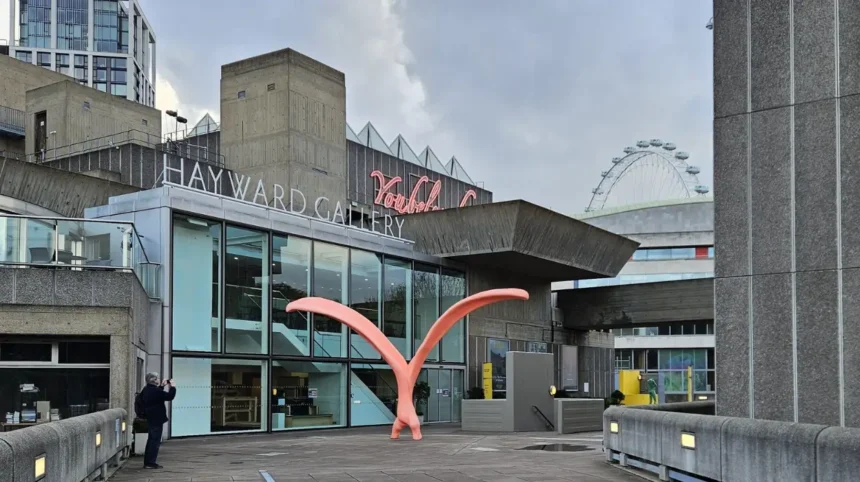
Hayward Gallery is Lambeth’s leading destination for contemporary art, presenting major temporary exhibitions by international artists and offering a distinctive Brutalist setting within the Southbank Centre’s wider cultural complex beside the River Thames.
Hayward Gallery stands on Belvedere Road within the Southbank Centre. It opened in July 1968 as part of the Southbank Centre’s Brutalist complex. The building forms part of a wider cultural group that includes Queen Elizabeth Hall and Purcell Room. Southbank Centre records the opening of the expanded complex in 1967.
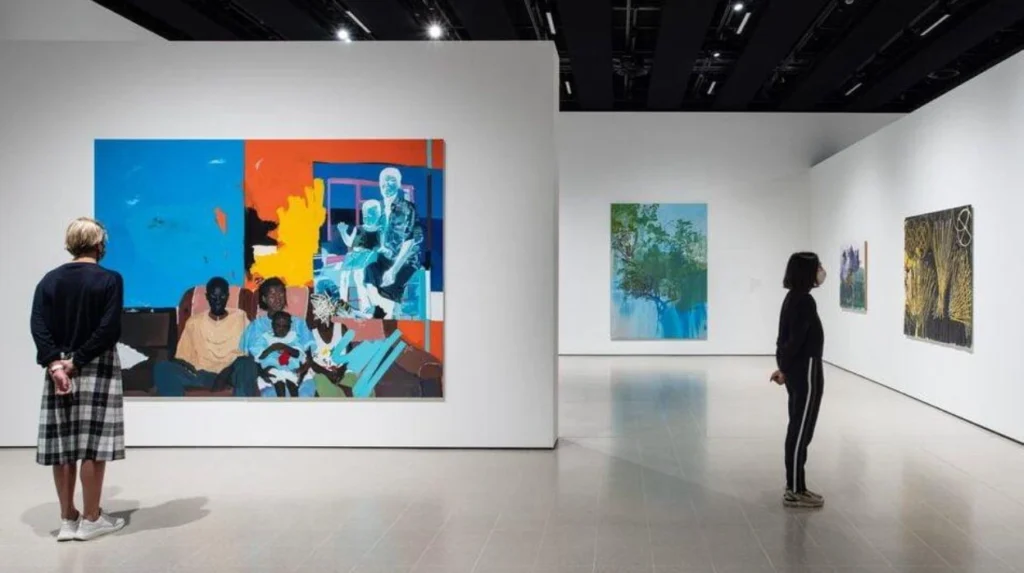
The gallery specialises in temporary contemporary art exhibitions. Its programme has included major artists and thematic exhibitions covering painting, sculpture, installation and other contemporary practices.
Hayward Gallery is especially important for visitors who prefer large-scale temporary exhibitions rather than a permanent collection. This makes the experience different from a traditional museum visit because the content changes according to the exhibition programme.
The building itself is also significant. Its exposed concrete structure, elevated walkways and pyramid rooflights form part of London’s recognised Brutalist architectural heritage. The gallery underwent a major refurbishment that included 66 new glass pyramid rooflights, restoring adjustable natural light to the upper galleries.
Art lovers interested in research can also explore the Hayward Gallery Art Library. The library contains approximately 22,000 books and exhibition catalogues focused on modern and contemporary British and international art. Its holdings include catalogues relating to Hayward exhibitions from 1968 onwards.
Visitors should check the current exhibition programme before travelling because the gallery’s experience changes with each temporary exhibition.
Where can visitors discover art beyond major exhibitions?
Morley Gallery provides an accessible alternative to large commercial institutions, presenting painting, printmaking, sculpture, photography, ceramics, textiles, installation, digital art and sound art through exhibitions involving students, emerging artists and established practitioners.
Morley Gallery is located at Morley College London’s Waterloo Centre on Westminster Bridge Road. The gallery is part of an educational institution with a long history of creative learning.
Morley’s exhibition programme supports artists at different stages of development. The gallery presents work created by students and staff alongside exhibitions involving independent and established artists. Morley states that its exhibition programme normally covers a wide range of media, including painting, printmaking, sculpture, photography, ceramics, textiles, installations, digital art and sound art.
The gallery also provides insight into how artists develop professional practices. Students gain experience through exhibiting work, promoting exhibitions and engaging with audiences.
Recent programming demonstrates this breadth. The 2026 Artists of Morley programme includes exhibitions covering stained glass, linocut prints, photography, ceramics, painting, jewellery and creative practice.
Morley is therefore particularly relevant to visitors who want to discover artists before they become widely recognised. Its educational setting also creates a direct connection between artistic training and public exhibition.
The wider college contains a permanent collection and artworks by artists including Edward Bawden, Martin Froy, John Piper and Bridget Riley.
Morley also extends its creative programme beyond the gallery. Pelham Hall on Lambeth Walk operates as a sculpture studio and has supported sculpture education for five decades. Its history connects creative practice with a former Edwardian chapel built in 1910.
What can art lovers see at the Garden Museum?
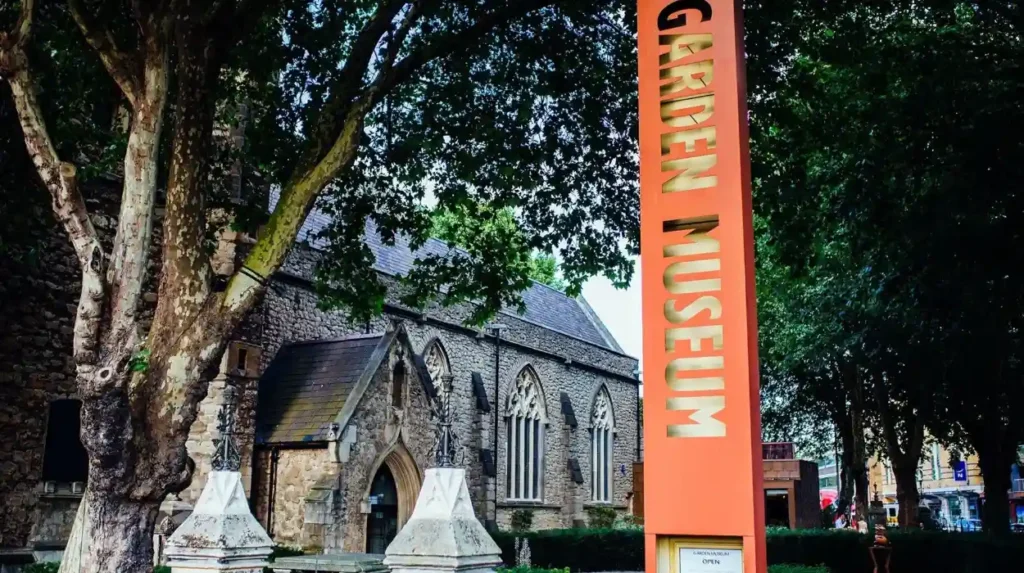
The Garden Museum combines art, design, architecture and horticultural history inside the former St Mary-at-Lambeth church, with exhibitions, collections, gardens and educational programmes connecting visual culture to Britain’s long tradition of garden design.
The Garden Museum stands on Lambeth Palace Road beside Lambeth Palace. It occupies the former St Mary-at-Lambeth church and describes itself as Britain’s only museum dedicated to the art, history and design of gardens.
Its collection extends beyond gardening equipment. Visitors encounter paintings, botanical art, photography, decorative objects and artefacts connected with British garden history. Lambeth Council also identifies botanical art, photography and paintings among the museum’s collection areas.
The museum is particularly valuable for visitors interested in the relationship between art and landscape. Garden design involves composition, colour, structure, planting, architecture and visual planning, making it an important crossover between fine art and the built environment.
The museum also operates gardens within its site. Its courtyard and community garden provide an outdoor element to the visit, allowing visitors to connect displayed material with living landscapes.
The exhibition programme changes throughout the year. In 2026, listed exhibitions include Benton End: A Paradise of Pollen and Paint, Threads of Ascent: Tapestries by Clare Woods and Sabine Moritz: Lie Down in Green Pastures.
This makes the Garden Museum useful for visitors who want an art experience that combines historical collections, temporary exhibitions and outdoor space.
Which historic house offers an unusual art experience in Lambeth?
575 Wandsworth Road offers one of Lambeth’s most distinctive artistic experiences, preserving Khadambi Asalache’s hand-carved interior, furniture and collections inside an early nineteenth-century terraced house transformed into an integrated work of art.
575 Wandsworth Road is a Grade II-listed terraced house originally built around 1819. Kenyan-born writer and civil servant Khadambi Asalache bought the property in 1981 and spent decades transforming its interior.
Asalache created intricate fretwork using reclaimed timber, including discarded pine doors and floorboards. His designs incorporated influences from African architecture, Moorish architecture in Andalusia and Ottoman architecture.
The house demonstrates a different definition of art from a conventional gallery. The walls, ceilings, doors, furniture and decorative features form one interconnected environment.
The National Trust acquired the property in 2010 and opened it to the public in 2013. The house retains its decorative scheme and collections, including textiles, lusterware, furniture and illustrations of African landscapes.
The National Trust Collections catalogue records thousands of objects associated with the property. These include fretwork panels, paintings, furniture and decorative objects.
Visitor access is deliberately controlled because of the building’s size and fragile interiors. Current National Trust information states that visits require advance booking, with tours scheduled on selected Thursdays and Fridays during the visitor season.
For art lovers, the importance of 575 Wandsworth Road lies in the relationship between architecture, craft and personal collecting. The house is both an historic building and a preserved artistic environment.
How does Lambeth connect art with its history?
Lambeth’s artistic landscape developed through entertainment gardens, riverside culture, industrial expansion, migration, education and modern cultural institutions, creating a continuous relationship between historical places and the contemporary galleries and public artworks found across the borough today.
The borough’s relationship with art predates modern galleries. Vauxhall Pleasure Gardens became one of London’s major entertainment destinations from the eighteenth century. Under Jonathan Tyers, who managed the gardens from 1729, the site developed a strong connection with music, performance, visual spectacle and the arts.
The gardens included architectural features, decorative environments, performances and artistic entertainments. A statue of George Frideric Handel was erected there and later entered the Victoria and Albert Museum’s collection.
This historical culture established an important precedent for public-facing art and entertainment in Lambeth.
As you explore the modern cultural sites, you are crossing land with a deep heritage. Read the full to understand its origins.
The nineteenth and twentieth centuries brought further cultural development. The South Bank later became a major national cultural centre, while educational organisations such as Morley College created spaces where artistic practice and public exhibition developed together.
The history of art in Lambeth is therefore not confined to museums. It is embedded in public spaces, educational institutions, architecture and neighbourhood identities.
Where can visitors find public art in Lambeth?
Public art is especially prominent along the South Bank, where sculptures, commemorative features, architectural details and riverside installations form an outdoor cultural environment that complements galleries such as Hayward Gallery, the National Theatre and the wider Southbank Centre.
The South Bank Conservation Area contains an established tradition of permanent artworks and commemorative features. Lambeth Council identifies the Queen’s Walk and building forecourts and terraces as important locations, while historic sculptures within St Thomas’ Hospital also contribute to the area’s cultural character.
This creates an outdoor art route that does not require a gallery ticket.
The riverside environment is particularly suitable for visitors who want to combine art with walking. The Queen’s Walk connects major cultural buildings with open public space and views across the River Thames.
Architecture also forms part of the visual experience. The Southbank Centre’s Brutalist buildings create a recognisable setting for exhibitions, performances and outdoor cultural activity.
Public art extends beyond the South Bank. Brixton has a strong tradition of community-focused visual culture, with Windrush Square forming an important civic and cultural space.
Lambeth Council’s planning documentation identifies Windrush Square, Brixton Oval, St Matthew’s Peace Gardens and surrounding streets as a significant open-space network in central Brixton.
Visitors should also look for murals, commemorative artworks and temporary creative projects around Brixton’s streets and cultural venues. These works often connect visual culture with local history, migration and community identity.
How can art lovers explore African and Caribbean creativity in Lambeth?
Brixton provides an important setting for exploring African and Caribbean cultural expression through galleries, archives, public spaces, community organisations, murals and commemorative projects linked to migration, identity, heritage and the Windrush generation.
Brixton’s cultural identity is closely connected with African and Caribbean communities. Windrush Square is one of the most important public spaces for understanding this heritage.
The Black Cultural Archives is located at 1 Windrush Square and forms part of Lambeth’s cultural infrastructure. The organisation preserves and promotes the history of Black people in Britain through archival material, exhibitions, research and public programmes.
Visual culture is also used to communicate local history. Lambeth Council educational material about Windrush public art encourages consideration of monuments, representation and the meaning of statues in public spaces.
The borough also supports contemporary organisations that connect art with community participation. Lambeth Council identifies 198 Contemporary Arts and Learning in Herne Hill as a public art gallery and centre for social engagement, education and creative enterprise.
This combination makes Brixton and surrounding areas relevant to visitors seeking art connected to social history rather than only conventional gallery collections.
For travellers, the key distinction is that this experience involves both objects and place. The surrounding streets, squares, archives and cultural organisations provide context for understanding the art.
Can visitors experience war art and photography in Lambeth?
IWM London on Lambeth Road provides a major art, photography and film experience focused on war and conflict, with dedicated galleries displaying works that examine military history, human experience, propaganda, memory and the visual consequences of conflict.
IWM London is located on Lambeth Road, close to Lambeth North and Elephant & Castle. The museum is the flagship branch of Imperial War Museums and examines the experiences of people affected by conflict.
Its Blavatnik Art, Film and Photography Galleries opened in November 2023. The galleries provide dedicated space for IWM’s collections of art, film and photography related to war and conflict. Entry to these galleries is free.
The collection includes important twentieth-century artists. John Singer Sargent’s Gassed, for example, is held at IWM London. The large oil painting was created in 1919 and records soldiers affected by chemical warfare during the First World War.
Other works include Paul Nash’s The Menin Road, a major First World War painting depicting a devastated landscape.
The museum therefore provides a strong example of how art can function as historical evidence. Paintings and photographs record events, emotions, landscapes and political circumstances that written records alone do not communicate in the same visual form.
IWM London also provides exhibitions, talks, workshops and guided experiences. Its visitor information states that the museum is open daily from 10am to 6pm, apart from 24–26 December, although visitors should check current arrangements before travelling.
What can visitors learn about art while exploring Lambeth?
Lambeth supports learning through galleries, archives, workshops, artist programmes, public art projects and specialist collections, allowing visitors to study artistic techniques, historical context, exhibition practice, architecture, conservation and relationships between art and local communities.
Learning is an important part of Lambeth’s cultural infrastructure.
Morley Gallery connects exhibitions with formal art education. Students work across painting, sculpture, photography, ceramics, textiles, jewellery and other disciplines, giving visitors direct exposure to developing artistic practices.
575 Wandsworth Road offers another form of learning. Its National Trust programme includes creative writing, visual art, craft and music activities, together with artist residencies and collaborative projects.
The Garden Museum provides educational activity around art, gardening, cooking and plant science. Its programmes connect visual culture with practical creative activity.
The Hayward Gallery Art Library provides a more research-focused resource. Its collection of approximately 22,000 books and exhibition catalogues supports research into modern and contemporary art, artists, architecture and exhibition history.
IWM London adds a historical research dimension through art, photography, film and archival material relating to conflict.
For digital nomads and business travellers, these institutions also create useful cultural downtime between meetings. The South Bank’s concentration of galleries, riverside routes, cafés and public spaces makes it practical to combine an exhibition with a short walking itinerary.
What is the best way to plan an art-focused day in Lambeth?
An effective Lambeth art itinerary combines one major exhibition with one specialist collection and an outdoor art route, allowing visitors to experience contemporary art, historical material, architecture and public artworks without spending the entire day inside galleries.
Start around Waterloo and the South Bank for the greatest concentration of cultural venues.
Hayward Gallery works well as the main contemporary art stop. Check its current exhibition before arrival because the programme changes throughout the year.
Continue towards the riverside and Queen’s Walk. This section provides opportunities to see public artworks, architectural landmarks and cultural buildings without requiring additional admission.
The Garden Museum provides a contrasting experience on Lambeth Palace Road. Its collection connects art with gardens, landscape design and historic architecture.
For a specialist experience, travel towards Wandsworth Road and visit 575 Wandsworth Road when a pre-booked tour is available. The property requires advance planning because visitor access is controlled.
Another route begins at IWM London. This works particularly well for visitors interested in twentieth-century art, photography and historical documentation.
A Brixton-focused itinerary provides a different cultural emphasis. Start around Windrush Square, explore the Black Cultural Archives and continue through the surrounding streets to identify public artworks and community cultural spaces.
Visitors with more time can include Morley Gallery, especially when a public exhibition is scheduled. Its programme changes frequently, so checking current exhibition information is essential.
The most efficient strategy is to group venues geographically rather than trying to visit every institution in one day. Lambeth is large enough for separate South Bank, central Lambeth, Vauxhall and Brixton art itineraries.
Explore More Area Guide
Lambeth Architectural Landmarks Shaping the Skyline | London 2026
How Accessible Is Lambeth for International Visitors? London 2026
Why is Lambeth relevant for future art and cultural tourism?
Lambeth’s future cultural relevance rests on its combination of major institutions, creative education, community organisations, public art, heritage buildings and expanding creative industries, creating a resilient cultural ecosystem for visitors, residents, artists and local businesses.
Lambeth’s cultural infrastructure is supported by major institutions and a growing creative economy. The council’s 2025 Growth Plan identifies creative industries as one of the borough’s growth sectors and includes cultural development within its long-term economic strategy.
This matters for cultural tourism because art destinations depend on more than individual exhibitions. They require artists, educators, venues, public spaces, audiences and supporting businesses.
The borough’s cultural model combines internationally recognised venues with smaller organisations. Hayward Gallery provides international contemporary art. Morley supports artistic education. The Garden Museum focuses on gardens and design. 575 Wandsworth Road preserves an individual artistic legacy. Brixton’s cultural organisations connect art with community history.
Public art adds another permanent layer. Unlike temporary exhibitions, sculptures and commemorative features remain part of the streetscape and can be encountered without advance planning.
This diversity gives Lambeth strong relevance for repeat visitors. A traveller returning to the borough at a different time can experience a different exhibition programme while revisiting permanent public artworks and historic locations.
For art lovers, Lambeth is therefore more than a collection of galleries. It is a connected cultural landscape where contemporary practice, historical memory, architecture, craft, public art and community identity operate alongside one another.
What should art lovers remember about visiting Lambeth?
Art lovers should approach Lambeth as a connected cultural district rather than a single attraction, combining South Bank galleries, specialist museums, historic artistic interiors, public artworks and community spaces for a broader and more complete experience.
The South Bank is the strongest starting point for contemporary art. Hayward Gallery provides major temporary exhibitions, while surrounding public spaces add architecture and outdoor artworks.
The Garden Museum offers a different interpretation of visual culture through garden art, design and history. 575 Wandsworth Road provides an especially distinctive experience because an entire domestic interior functions as a preserved artistic environment.
Morley Gallery adds emerging and educational perspectives, while IWM London demonstrates the role of painting, photography and film in recording conflict.
Brixton adds community and heritage dimensions. Windrush Square and nearby cultural organisations connect art with migration, identity and African and Caribbean history.
Together, these places demonstrate the breadth of art in Lambeth. The borough contains conventional gallery exhibitions, specialist collections, historic interiors, public sculpture, architectural art, community projects and creative education.
Visitors should check individual venue programmes, opening times and booking requirements before travelling. Exhibition dates change, and some smaller or specialist venues operate limited schedules.
For tourists, Lambeth provides a practical way to combine major London culture with neighbourhood exploration. For residents, it offers changing exhibitions and community programmes. For business travellers, it provides accessible cultural experiences during limited free time.
The central lesson is straightforward: Lambeth’s art scene is distributed across the borough. Exploring it as a network reveals more than visiting one gallery alone.
What are the best art galleries to visit in Lambeth?
Lambeth has several important art venues, including Hayward Gallery, Morley Gallery and 198 Contemporary Arts and Learning. Hayward Gallery is particularly notable for major contemporary exhibitions, while Morley Gallery focuses on a broad range of artistic practices and educational exhibitions.