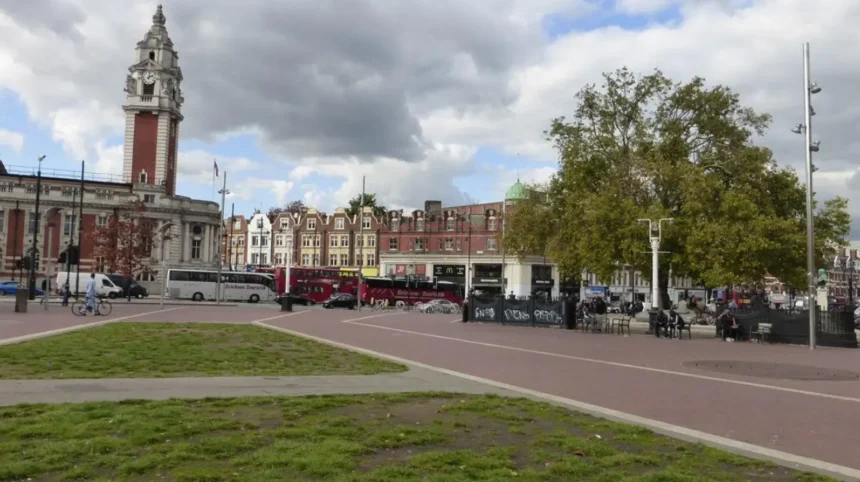
Lambeth is one of London’s most culturally diverse boroughs because its communities have been shaped by centuries of migration, international trade, political movements, changing housing patterns and strong local institutions. Its neighbourhoods include Brixton, Clapham, Stockwell, Vauxhall, Kennington, Waterloo, Streatham, Norwood and parts of Herne Hill, each with distinct cultural identities and histories.
- What makes Lambeth one of London’s most diverse boroughs?
- How did migration shape Lambeth’s multicultural identity?
- Why is Brixton central to Lambeth’s cultural diversity?
- How does Windrush heritage explain Lambeth’s diversity?
- Which Lambeth neighbourhoods demonstrate cultural diversity?
- How do food and markets reflect Lambeth’s multicultural communities?
- How do Lambeth’s cultural institutions preserve its diverse heritage?
- What can tourists experience when exploring Lambeth’s cultural diversity?
- How does Lambeth’s diversity affect its identity as a South London destination?
- What does the future of diversity in Lambeth look like?
- Why should visitors include Lambeth when exploring multicultural London?
The borough’s diversity is particularly visible in its food, markets, music, festivals, religious institutions, community organisations, archives and public spaces. Brixton has a nationally recognised connection with Caribbean and African heritage, while other parts of Lambeth reflect European, Asian, Middle Eastern and wider international communities.
The 2021 Census provides a clear statistical picture. The Office for National Statistics recorded 55.0% of Lambeth residents in the White ethnic group, 24.0% in the Black, Black British, Black Welsh, Caribbean or African ethnic group, 8.1% in the Mixed or Multiple ethnic groups category, 7.3% in the Asian, Asian British or Asian Welsh category and 5.7% in the Other ethnic groups category.
These figures demonstrate that Lambeth’s diversity is not concentrated in one small community. It forms part of the borough’s wider demographic structure.
For visitors, this creates a destination where cultural heritage is embedded into ordinary streets, markets, public squares, performance spaces, restaurants, libraries and community venues. Lambeth therefore offers more than individual attractions. It provides a geographical view of how migration and multicultural life have shaped South London.
What makes Lambeth one of London’s most diverse boroughs?
Lambeth’s diversity comes from long-term migration, established African and Caribbean communities, international residents, mixed neighbourhoods, cultural institutions and transport connections that have continually linked South London with the wider world. Census data confirms substantial ethnic, religious and cultural variety across the borough today.
Lambeth’s demographic character developed over a long period. Migration increased during different historical phases, including the expansion of Victorian London, post-war reconstruction and later international migration.
The borough also contains neighbourhoods with different social and cultural profiles. Brixton has a particularly strong African and Caribbean identity. Stockwell has long-established Portuguese connections alongside other international communities. Clapham, Waterloo, Vauxhall, Kennington and Streatham contain further layers of migration and cultural exchange.
The 2021 Census records an important distinction between ethnicity and nationality. Ethnic group describes how people identify themselves within the census classifications. Nationality refers to citizenship and does not provide the same measure of cultural identity.
Lambeth’s diversity therefore cannot be measured by one statistic alone. Ethnicity, country of birth, language, religion, nationality and migration history each provide different information.
Religion also demonstrates this variety. In 2021, 43.7% of Lambeth residents identified as Christian, 8.1% identified as Muslim, 1.0% identified as Hindu, 0.8% identified as Buddhist, 0.4% identified as Jewish and 0.2% identified as Sikh. A further 37.5% reported no religion.
The religious figures show another important characteristic of modern Lambeth: diversity includes both different faith communities and a substantial population with no religious affiliation.
How did migration shape Lambeth’s multicultural identity?
Migration transformed Lambeth through successive waves of settlement, employment and community formation. Caribbean migration after 1948 became especially significant in Brixton, while African, European and other international communities subsequently added further cultural, linguistic and social connections.
Lambeth’s multicultural identity has roots before the Windrush generation. The borough’s history includes international trade, industrial development, religious communities and political movements connected with wider British and global events.
The post-war period produced one of the most important transformations. On 22 June 1948, the HMT Empire Windrush arrived at Tilbury carrying passengers from the Caribbean. The arrival became a defining event in modern British migration history. Lambeth subsequently became one of the principal centres associated with the Windrush generation.
Lambeth Council records that many Windrush passengers initially stayed in accommodation in the deep shelter beneath Clapham South before moving towards Brixton. Brixton’s proximity to employment services, transport and housing helped establish the area as an important centre for Caribbean settlement.
The story was not limited to one Caribbean nationality. Jamaicans formed a particularly important community, while people from Trinidad and Tobago, Barbados, Guyana and other Caribbean countries also contributed to the area’s development.
African migration added another major dimension. A Lambeth Council historical publication records that people from Ghana and Nigeria established communities in Lambeth from the early 1950s, alongside residents from other African countries and Caribbean islands.
This migration created permanent institutions. Businesses, churches, newspapers, social organisations, restaurants, community groups and cultural organisations developed around established communities.
The process continued beyond the post-war period. Later migration from Europe, Asia, the Middle East and other parts of Africa increased the range of cultures represented across Lambeth.
This is why Lambeth’s diversity is best understood as cumulative. Each period of migration added another layer to the borough’s existing social geography.
Visitors exploring Lambeth today therefore encounter places shaped by different generations rather than a single migration event.
Why is Brixton central to Lambeth’s cultural diversity?
Brixton is central to Lambeth’s cultural diversity because it became a major centre of Caribbean settlement after 1948 and developed enduring African and Caribbean businesses, music, food, political activity, community organisations, public memorials and cultural institutions.
Brixton is one of the clearest places to understand Lambeth’s multicultural development.
The area became strongly associated with Caribbean London during the second half of the twentieth century. New residents established businesses, social networks and cultural organisations, creating an urban environment that reflected Caribbean life while remaining connected to wider London.
Brixton Market became an important commercial environment for this transformation. Food, clothing, music and other goods connected the area with Caribbean and international markets.
The cultural influence expanded beyond commerce. Brixton became associated with reggae, sound-system culture, political activism and Black British creative life. These developments contributed to London’s wider cultural landscape.
The history also contains difficult chapters. The 1981 Brixton Uprising followed longstanding tensions involving policing, unemployment, housing conditions and racial inequality. Lambeth Archives identifies the uprising as an important event in the borough’s modern history.
For visitors, Brixton’s cultural significance is therefore both celebratory and historical. Public spaces and institutions preserve achievements while also documenting experiences of discrimination and social change.
Windrush Square provides a major point of reference. The square commemorates the arrival of the Windrush generation and contains the African and Caribbean War Memorial. It also sits beside the Black Cultural Archives.
The Black Cultural Archives is a nationally recognised institution dedicated to collecting, preserving and celebrating the histories of African and Caribbean people in Britain. Its location at Windrush Square makes it especially relevant to understanding Brixton’s place in British multicultural history.
As you explore modern Brixton, you are crossing land with a deep heritage. Read about the full to understand its origins.
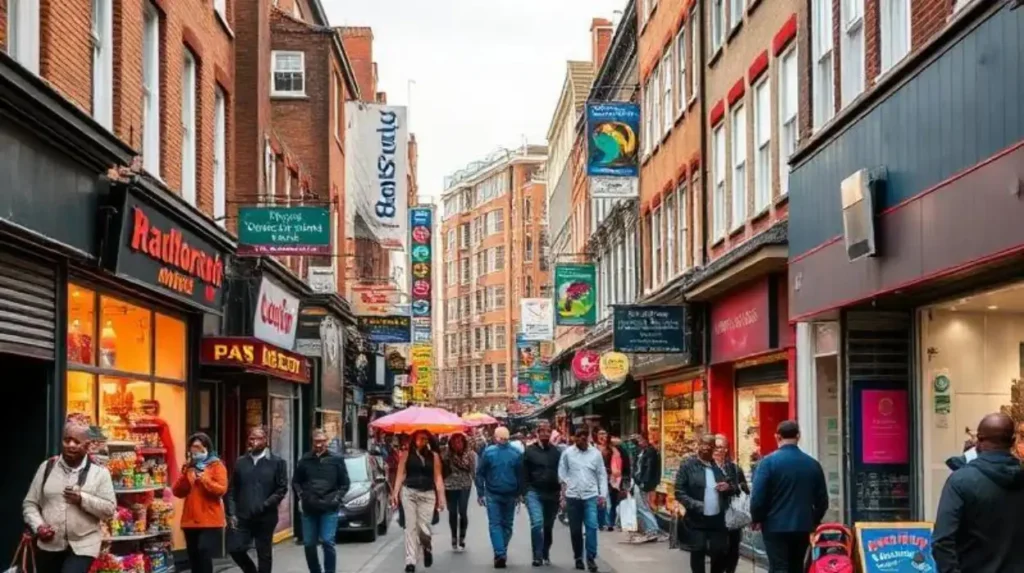
How does Windrush heritage explain Lambeth’s diversity?
Windrush heritage explains a major part of Lambeth’s diversity because Caribbean migration after 1948 established long-lasting communities in Brixton and surrounding areas, influencing employment, housing, food, music, politics, public services, religion, business and cultural life across South London.
The term Windrush generation describes people who arrived in Britain from Caribbean countries during the post-war period and the wider generation connected with that migration.
The name comes from HMT Empire Windrush, which arrived at Tilbury on 22 June 1948. Windrush Day is observed annually on 22 June.
Lambeth has a particularly strong connection with this history. Many passengers and later Caribbean migrants settled in or around Brixton and Clapham. Their descendants remain an important part of the borough’s population.
The cultural legacy appears in several forms.
Food is one of the most visible examples. Caribbean restaurants, cafés, bakeries and food businesses form part of Lambeth’s commercial landscape. Traditional dishes, ingredients and cooking techniques have become established within London’s wider food culture.
Music provides another major connection. Brixton became associated with reggae, dub, soul, ska, sound systems and later forms of Black British music. Music venues and cultural spaces helped connect local communities with national and international audiences.
Public memory is also significant. Windrush Square provides a permanent civic reference point. The square includes monuments and public space dedicated to recognising African and Caribbean contributions to Britain.
Lambeth continues to commemorate this heritage through public programmes. In 2026, Lambeth Council announced a borough-wide Windrush Day programme featuring talks, cultural activities and community events.
The Windrush story also demonstrates that multiculturalism involves institutions as well as population statistics. Community groups, archives, businesses, libraries, religious organisations and cultural venues preserve traditions and provide spaces for intergenerational exchange.
For tourists, this makes Windrush heritage accessible through physical locations rather than only historical texts.
Which Lambeth neighbourhoods demonstrate cultural diversity?
Brixton, Stockwell, Clapham, Streatham, Vauxhall, Kennington, Waterloo and neighbouring areas each contribute different cultural, social and historical layers to Lambeth, creating a borough where international communities, long-established residents, businesses, institutions and heritage sites coexist within a compact part of South London.
Brixton provides the strongest public association with Caribbean and African heritage. Its markets, restaurants, music history, community institutions and Windrush landmarks create a concentrated cultural landscape.
Stockwell adds another important layer. The neighbourhood has a long-established Portuguese community and a wider international population. Portuguese businesses, cafés and community connections contribute to the area’s identity.
Clapham has a particularly important connection with the Windrush story because some early arrivals stayed in accommodation beneath Clapham South Underground station before moving into surrounding neighbourhoods. Lambeth Council continues to document this connection through exhibitions and community history projects.
Streatham provides another example of contemporary multicultural South London. Its high street contains restaurants, shops and services serving different communities, while its residential areas contain a varied population.
Waterloo and Vauxhall demonstrate diversity within a more central urban environment. Their transport connections bring residents, workers and visitors from across London and beyond.
Kennington combines historic housing, civic institutions, cultural venues and diverse residential communities. The area also sits close to major landmarks and transport routes connecting central London with South London.
The significance of these neighbourhoods lies in their combined geography. Lambeth is not a single cultural district. It is a collection of interconnected neighbourhoods with overlapping histories.
Transport has reinforced this pattern. Underground stations, railway stations and bus routes have supported commuting, business, education and social connections across London.
This accessibility also makes Lambeth attractive to visitors. A traveller can move between different cultural environments within a relatively short journey.
The result is a borough where diversity is experienced spatially. Different streets, markets, businesses and public spaces reveal different aspects of Lambeth’s demographic history.
How do food and markets reflect Lambeth’s multicultural communities?
Lambeth’s food and market culture reflects its multicultural population through Caribbean, African, Portuguese, European, Asian and international ingredients, dishes and businesses. Brixton is especially important, with food markets and independent businesses providing visible links between migration, commerce and everyday cultural identity.
Food is one of the most accessible ways for visitors to experience Lambeth’s multicultural character.
Brixton’s commercial areas provide examples of Caribbean and African food traditions alongside international cuisines. Restaurants and independent food businesses serve dishes associated with different countries and regions.
Caribbean cuisine has a particularly strong presence. Jamaican dishes such as jerk chicken, rice and peas, patties and Caribbean-style fried fish are closely associated with Brixton’s cultural identity.
African food is also represented through businesses serving cuisines from countries such as Ghana and Nigeria. These establishments demonstrate how migration creates commercial networks that preserve culinary traditions while adapting to London’s diverse customer base.
Portuguese influence is particularly visible around Stockwell and neighbouring areas. Portuguese cafés, bakeries and food businesses contribute another distinct element to Lambeth’s food landscape.
Markets have a wider significance than food alone. They provide spaces where residents purchase ingredients, meet other people, operate businesses and maintain connections with cultural traditions.
For tourists, these places offer a direct way to understand multicultural London through everyday activity rather than formal heritage attractions.
Food also demonstrates cultural exchange. Dishes that originated in one country are prepared, sold and consumed in a different social environment. Over time, these cuisines become part of London’s broader food culture.
The commercial landscape therefore supports the wider argument about Lambeth’s diversity. Multiculturalism exists not only through population statistics but also through the goods, services and businesses available within neighbourhoods.
How do Lambeth’s cultural institutions preserve its diverse heritage?
Lambeth’s cultural institutions preserve diversity through archives, exhibitions, libraries, memorials, community programmes and public history projects. The Black Cultural Archives, Lambeth Archives, Brixton Library and Windrush Square provide important places for documenting African, Caribbean and wider South London histories.
Cultural institutions transform community history into accessible public knowledge.
The Black Cultural Archives is one of the most important examples. Based at Windrush Square, it collects and preserves records relating to the histories of African and Caribbean people in Britain. Its collections support research, education and public understanding.
Lambeth Archives provides another major historical resource. Its collections cover centuries of local history, including political movements, social change, migration and community development. Lambeth Council’s historical timeline records events ranging from the abolitionist campaigns associated with William Wilberforce and the Clapham Sect to Windrush, the Brixton Uprising and Nelson Mandela’s 1996 visit.
Brixton Library also contributes to the cultural landscape. Libraries provide access to books, local history material, community events and educational resources.
Public spaces have an equally important role. Windrush Square functions as both a civic space and a place of remembrance. Its monuments connect present-day visitors with African and Caribbean military and migration histories.
Community events extend this work. Lambeth’s Windrush programmes include talks, exhibitions, performances and other activities that connect historical records with contemporary communities.
These institutions are important for tourism because they provide context. A visitor who sees a market, restaurant or public monument gains a deeper understanding when the historical background is available.
The preservation of diverse heritage also supports intergenerational knowledge. Younger residents can encounter records, photographs, stories and artefacts documenting the experiences of earlier generations.
This makes Lambeth’s cultural diversity an ongoing historical process rather than a fixed demographic label.
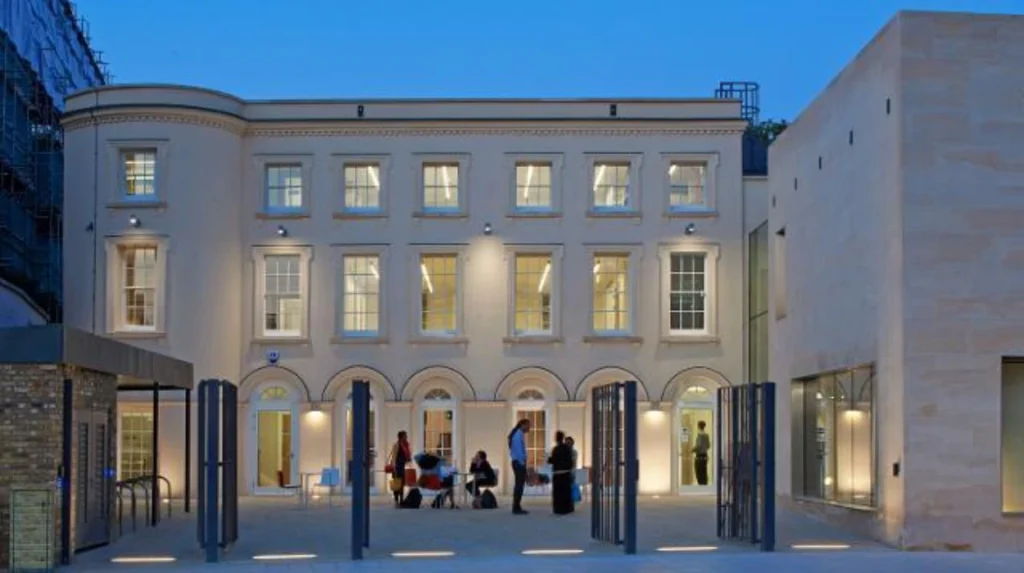
What can tourists experience when exploring Lambeth’s cultural diversity?
Tourists can experience Lambeth’s diversity through Brixton markets, Windrush Square, Black Cultural Archives, cultural venues, independent restaurants, music locations, public art, libraries, heritage walks and community events that connect contemporary South London with its migration history.
Visitors do not need a single attraction to understand Lambeth’s multicultural identity. The strongest experience comes from connecting several locations.
Windrush Square is an appropriate starting point because it combines public space, memorials and access to the Black Cultural Archives. The square is open 24 hours, making it accessible for visitors exploring Brixton.
Brixton Market provides a commercial perspective. Visitors can observe food businesses, independent traders and international products within a historic market environment.
A visit to the Black Cultural Archives adds historical depth. The organisation currently states that visits are by appointment, so visitors should check its official arrangements before travelling.
Heritage walks provide another way to explore the area. Lambeth Council has organised public history walks focusing on Windrush passengers and their experiences in Brixton during the 1940s and 1950s.
Clapham offers a different perspective. The area connects with the early experiences of Windrush arrivals who stayed in accommodation beneath Clapham South.
Food exploration provides a practical cultural experience. Visitors can explore Caribbean, African, Portuguese and other international cuisines across Lambeth.
Music is also significant. Brixton’s history connects with reggae, sound-system culture and Black British music, while venues and cultural organisations continue to support live performance.
For visitors interested in social history, Lambeth Archives provides evidence of the borough’s wider development. For visitors interested in contemporary culture, markets, restaurants and community events demonstrate how that history continues in everyday life.
How does Lambeth’s diversity affect its identity as a South London destination?
Lambeth’s diversity makes its visitor identity closely connected with multicultural heritage, food, music, public history and neighbourhood life. The borough combines major London attractions with community-based cultural experiences, giving visitors access to both internationally recognised landmarks and local histories.
Lambeth occupies an important position within South London. Its northern boundary reaches central London, while Brixton, Stockwell, Clapham and Streatham extend southwards through densely populated neighbourhoods.
This geographical position contributes to the borough’s accessibility and cultural exchange.
The visitor economy benefits from this combination. People visiting the South Bank, Waterloo or central London can reach Lambeth’s cultural districts quickly. Residents from other London boroughs also travel into Lambeth for food, entertainment, shopping and cultural events.
The borough’s diversity therefore has both local and metropolitan significance.
Cultural identity also supports independent businesses. Restaurants, shops, markets, performance venues and community organisations create a visitor environment that differs from conventional central London sightseeing.
Lambeth’s diversity is particularly relevant to travellers interested in contemporary British history. The borough connects the post-war migration story with current cultural life.
The Windrush story provides a strong example. The arrival of Caribbean migrants after 1948 influenced communities, businesses and institutions for generations. Lambeth Council describes the borough as central to this history and continues to organise annual Windrush activities.
The borough’s demographic data reinforces this historical picture. In 2021, 24.0% of Lambeth residents identified within the Black ethnic group category, compared with 13.5% across London. The proportion identifying within the Asian ethnic group category was 7.3%, while 8.1% identified within the Mixed or Multiple category.
These figures place Lambeth’s ethnic composition within a broader London context while showing the particularly strong presence of Black communities.
Explore More Area Guide
Quiet Escapes and Peaceful Parks in Lambeth 2026
What Can Art Lovers Experience in Lambeth? South London 2026
What does the future of diversity in Lambeth look like?
Lambeth’s future diversity is shaped by demographic change, migration, younger generations, cultural institutions, independent businesses and continued recognition of local heritage. Census data already shows changing ethnic and religious profiles, while community organisations continue preserving and developing Lambeth’s multicultural identity.
The 2021 Census shows measurable demographic change from 2011.
The proportion of Lambeth residents identifying as White declined from 57.1% in 2011 to 55.0% in 2021. The Black ethnic group category declined from 25.9% to 24.0%, while the Mixed or Multiple category increased from 7.6% to 8.1%. The Other ethnic groups category increased from 2.4% to 5.7%.
Religious affiliation also changed. The proportion reporting no religion increased from 28.0% in 2011 to 37.5% in 2021. Christian identification declined from 53.1% to 43.7%, while Muslim identification increased from 7.1% to 8.1%.
These statistics demonstrate that diversity is dynamic.
The future of Lambeth’s cultural identity therefore involves both continuity and change. Established Caribbean and African communities remain central to the borough’s heritage, while newer migration and changing identities continue to influence local life.
Cultural institutions will remain important because they preserve records while creating opportunities for new generations to engage with history.
Public celebrations also maintain cultural visibility. Windrush Day provides an annual opportunity to recognise Caribbean migration and its contribution to Britain. Lambeth’s 2026 programme demonstrates that this heritage remains part of the borough’s contemporary cultural calendar.
For tourists, this means Lambeth remains relevant as a place to understand multicultural London through both historical evidence and contemporary neighbourhood life.
Why should visitors include Lambeth when exploring multicultural London?
Visitors should include Lambeth because its multicultural character is historically documented, geographically concentrated and visible through markets, food, music, archives, memorials, neighbourhoods and community events. Its strongest cultural experiences connect modern London with migration histories and established local communities.
Lambeth offers a particularly strong case study of how migration shapes an urban borough.
Its diversity is measurable through Census data. It is visible in businesses and markets. It is preserved in archives. It is commemorated through public memorials. It is expressed through food and music. It is maintained through community organisations and cultural programmes.
Brixton remains the most recognisable cultural centre, particularly because of its African and Caribbean heritage and its connection with the Windrush generation.
Clapham adds an important Windrush history through the early accommodation used by Caribbean arrivals. Stockwell contributes Portuguese and international cultural connections. Streatham, Waterloo, Vauxhall and Kennington provide additional examples of Lambeth’s wider demographic and cultural mix.
The most important point for visitors is that Lambeth’s diversity is not an isolated attraction. It forms part of the borough’s everyday identity.
The 2021 Census provides the demographic evidence, while Lambeth’s archives and cultural institutions provide the historical explanation. Together, they show why the borough developed such a distinctive multicultural character.
For tourists, exploring Lambeth therefore provides more than a collection of restaurants, markets or landmarks. It offers an understanding of how migration, community formation and cultural exchange have shaped South London.
Lambeth’s diversity is the result of generations of people establishing homes, businesses, institutions and cultural traditions. That process remains visible across the borough today.
Why is Lambeth one of London’s most diverse boroughs?
Lambeth is highly diverse because of generations of migration, particularly Caribbean and African migration, alongside European, Asian and other international communities. This diversity is visible in neighbourhoods such as Brixton, Stockwell, Clapham and Streatham.