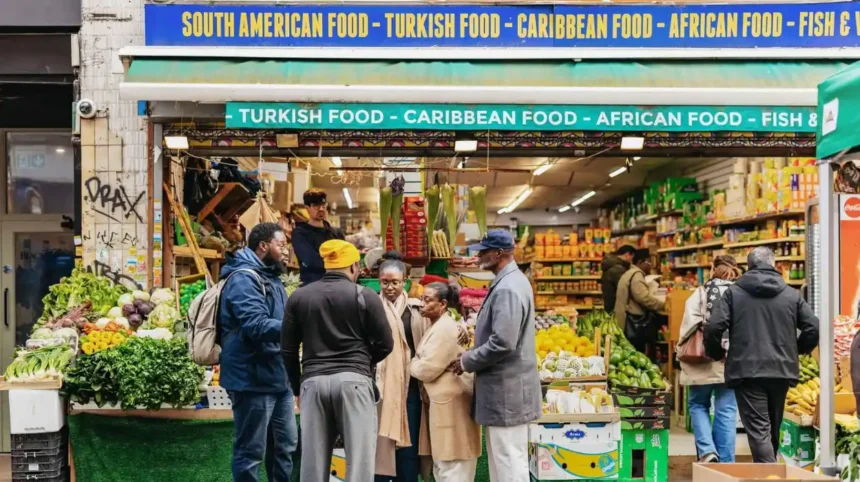
Lambeth’s food-market culture combines traditional street trading, international cuisine, farmers’ produce, independent food businesses and community-led markets. The borough includes established destinations such as Brixton Market, Brixton Village, Lower Marsh Market, Herne Hill Market, Venn Street Market and West Norwood Feast.
- What makes Lambeth’s food markets worth visiting?
- Which Lambeth food markets should first-time visitors explore?
- What can visitors eat at Brixton Market and Brixton Village?
- How should visitors explore Lower Marsh Market in Waterloo?
- When should visitors visit Lambeth’s weekend and farmers’ markets?
- How can visitors plan a Lambeth food-market walking route?
- How can visitors experience Lambeth’s food culture responsibly?
- Why are Lambeth’s food markets important to the borough’s identity?
- How can visitors get the most from Lambeth’s food markets?
For visitors, the best approach is to treat Lambeth’s markets as a collection of neighbourhood food experiences rather than a single market destination. Brixton provides the strongest concentration of international food and traditional market trading. Lower Marsh links food with Waterloo’s historic streetscape. West Norwood Feast provides a monthly community-market experience. Other local markets add specialist produce and weekend options.
Market schedules and trader line-ups change, so visitors should check official market information before travelling. Lambeth Council currently lists Brixton Market, Brixton Farmers’ Market, Herne Hill Market, Lower Marsh Market, Oval Market, Venn Street Market and West Norwood Feast among the borough’s markets and events.
What makes Lambeth’s food markets worth visiting?
Lambeth’s food markets are worth visiting because they combine fresh produce, international street food, independent traders and community activity across distinct neighbourhoods. Brixton offers the broadest food choice, while Lower Marsh, Herne Hill and West Norwood provide different local market experiences.
Lambeth is an inner-London borough with a strong market tradition. Its markets serve different purposes. Some operate as regular street markets. Others focus on prepared food, farmers’ produce, community events or independent businesses.
The council describes Lambeth markets as places selling fresh fruit and vegetables, handmade goods and street food influenced by cuisines from around the world. Brixton Market has more than 80 licensed pitches across Electric Avenue, Pope’s Road and Brixton Station Road.
This creates an important distinction for visitors. A food-market visit in Lambeth is not limited to buying lunch. It can involve grocery shopping, tasting prepared food, buying specialist ingredients and exploring local commercial streets.
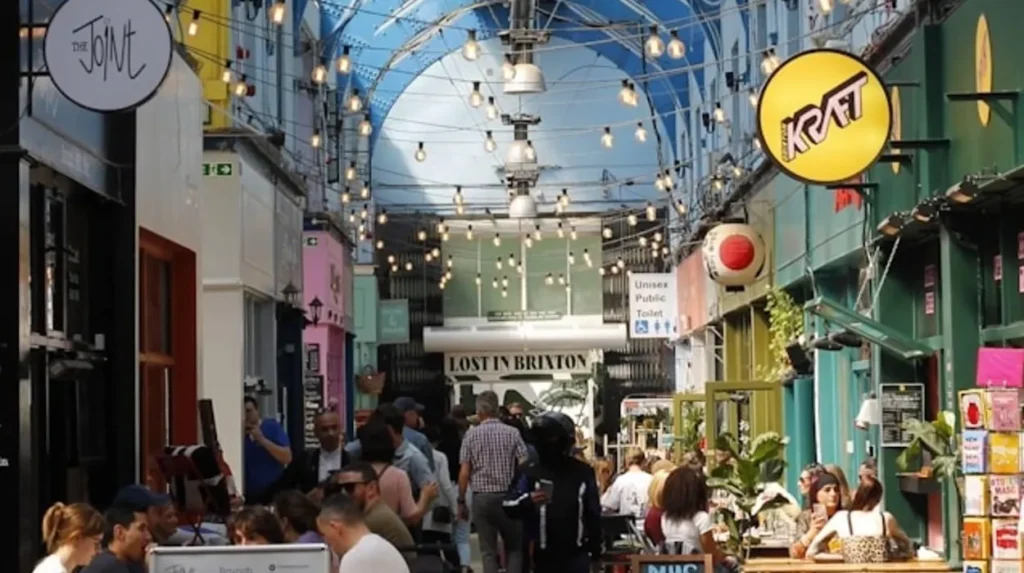
Brixton demonstrates this variety particularly clearly. Brixton Village consists of Market Row and Granville Arcade and has more than 100 independent vendors representing more than 50 nationalities. Its traders include restaurants, cafés, fishmongers, butchers and greengrocers.
The result is a market culture that supports both traditional shopping and contemporary food tourism.
Which Lambeth food markets should first-time visitors explore?
First-time visitors should prioritise Brixton Market and Brixton Village for the widest food choice, then visit Lower Marsh Market for a historic Waterloo experience. Weekend visitors should consider Herne Hill Market or West Norwood Feast when their dates coincide.
Brixton is the strongest starting point for visitors with limited time. Lambeth Council identifies more than 80 licensed pitches across its main Brixton market streets. The market combines traditional trading with hot-food stalls and international produce.
Brixton Village provides a complementary experience. It is centred on Market Row and Granville Arcade and focuses heavily on independent food and drink businesses. Its official visitor information identifies cuisines including Jamaican seafood, Mexican street food, Ethiopian injera and Japanese pancakes.
Lower Marsh is the strongest choice for visitors staying around Waterloo. The market occupies Lower Marsh, a historic street close to Waterloo Station. Lambeth’s Film Office describes its traditional street market as selling fresh fruit and vegetables, lunchtime food, clothes, gifts and flowers.
Herne Hill Market provides another Sunday option. Lambeth Council currently identifies Herne Hill Market as a Sunday market operated on behalf of the council.
West Norwood Feast is different again. It is a monthly community market held on the first Sunday of each month from April to December, according to Lambeth’s current events information.
Visitors should therefore choose according to their available day, location and preferred food experience.
What can visitors eat at Brixton Market and Brixton Village?
Visitors can eat Caribbean, African, South American, Asian, Middle Eastern and European food across Brixton’s market area, alongside fresh produce, spices, fish, meat, bread and specialist groceries. Brixton Village adds independent restaurants, cafés and food businesses within covered market arcades.
Brixton has one of Lambeth’s strongest concentrations of international food businesses. Its market streets include Electric Avenue, Pope’s Road and Brixton Station Road. The council identifies hot food alongside traditional market goods and fresh produce.
Brixton Village adds another layer. Its official information lists Jamaican seafood, Mexican street food, Ethiopian injera and Japanese pancakes among its international food offer. Traditional traders include fruit and vegetable sellers, fishmongers and other specialist food businesses.
Visitors can therefore divide a Brixton food visit into two parts.
The first is traditional market shopping. This involves fresh produce, ingredients, specialist groceries and long-established food traders.
The second is prepared food. This involves eating at independent restaurants, cafés and food businesses within the market environment.
This distinction is useful for tourists because the two experiences answer different needs. Someone looking for a quick lunch can focus on prepared food. Someone interested in Lambeth’s everyday food economy can explore the produce and grocery traders.
Brixton Village states that its businesses represent more than 50 nationalities. Its food offer therefore reflects the international character of the neighbourhood rather than one single cuisine.
Visitors should allow sufficient time to walk between the covered arcades and surrounding market streets. Visit London also identifies Brixton Village and Market Row as a major food destination, highlighting its combination of international food vendors, fresh produce and independent businesses.
How should visitors explore Lower Marsh Market in Waterloo?
Visitors should explore Lower Marsh Market on foot, combining weekday street food with independent shops and the Saturday produce market. The market sits in Waterloo, making it convenient for visitors combining food with South Bank, Waterloo Station and nearby cultural attractions.
Lower Marsh provides a more compact market experience than Brixton. The street runs through Waterloo and has a long-established relationship with market trading.
Lambeth’s Film Office currently describes weekday trading as including street food from 08:00 to 18:00 and Saturday trading as a produce and flea market from 08:00 to 18:00. Sunday is listed as closed.
The market is particularly useful for visitors staying in central London because Waterloo is a major transport hub. A food-market visit can therefore fit naturally into a wider sightseeing itinerary.
Lower Marsh also has historical significance. Lambeth Council reported in August 2026 that the street has hosted market trade since the early nineteenth century. Its current summer programme includes outdoor dining and additional public-space activity.
As you explore the modern market, you are crossing land with a deep heritage. Read about the full to understand its origins.
The market is also suitable for visitors who want variety without spending an entire day at a food destination. A short visit can combine lunch, produce shopping and exploration of the surrounding Waterloo streets.
Visit London describes Lower Marsh as a market with food and produce traders, including options ranging from fresh produce to smoked salmon.
The best strategy is simple. Visit during a trading period, walk the length of the market, compare food options and then explore nearby Waterloo.
When should visitors visit Lambeth’s weekend and farmers’ markets?
Weekend markets give visitors a stronger focus on fresh produce, local food businesses and community activity. Brixton Farmers’ Market operates on Sundays, while Herne Hill Market operates on Sundays and West Norwood Feast takes place monthly, making weekends especially useful for market exploration.
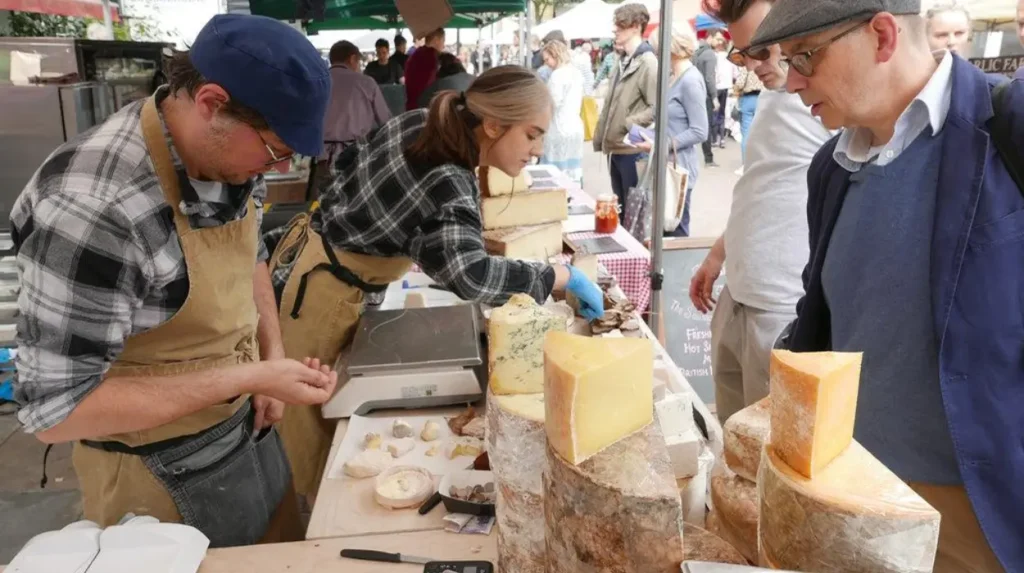
Brixton Farmers’ Market is an important part of Lambeth’s food-market network. Lambeth Council previously confirmed its community-led Sunday operation on Brixton Station Road, with trading from 09:30 to 15:30. Its listed traders included organic meat producers, seasonal fruit and vegetable growers, artisan bakeries, cheese sellers, honey producers and vegetarian food businesses.
Because market arrangements change, visitors should verify the current timetable before travelling. The underlying concept remains different from Brixton’s main market. Farmers’ markets focus more directly on producers, seasonal goods and specialist food products.
Herne Hill Market provides another Sunday option. Lambeth Council currently identifies it among the markets operating on behalf of the council.
West Norwood Feast provides a larger community-market format. Lambeth’s current events calendar lists it as a monthly market held on the first Sunday of each month from April through December.
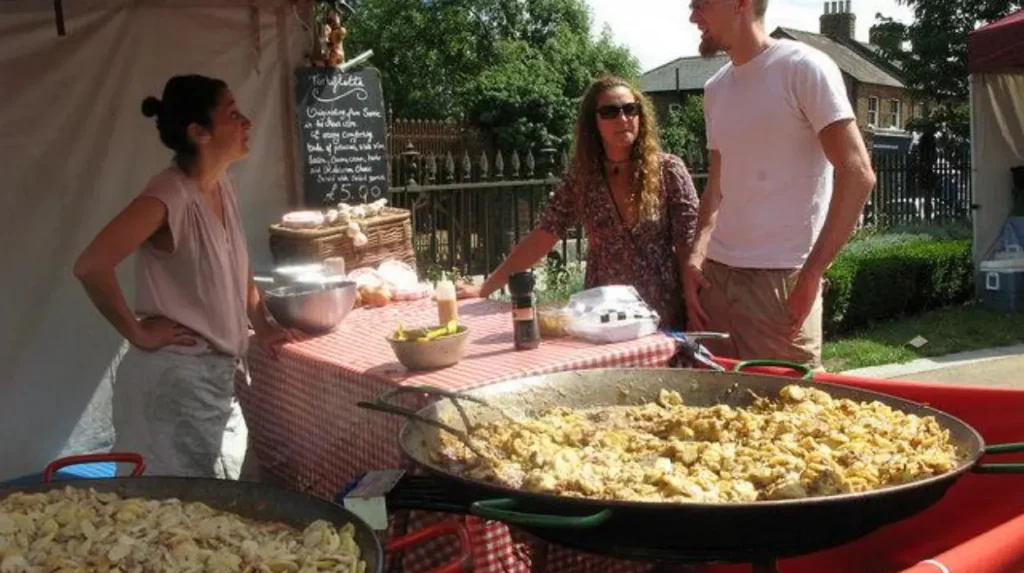
The Feast includes more than food. Lambeth describes it as involving street food, arts, crafts, vintage goods and local produce. Earlier council information divided the event into hubs including Food Fair, Fresh and Green, Village Green and Artisans’ Market.
This makes West Norwood particularly useful for visitors who want food combined with local community activity.
A Sunday market itinerary can therefore be planned around three priorities: farmers’ produce, prepared food and neighbourhood exploration.
How can visitors plan a Lambeth food-market walking route?
A practical Lambeth food-market route should group markets by neighbourhood rather than crossing the borough repeatedly. Use Brixton for a concentrated food visit, Waterloo for Lower Marsh, and West Norwood or Herne Hill for scheduled weekend markets.
Brixton works best as a self-contained food destination. Visitors can start around Brixton Station, explore Brixton Market, continue through Electric Avenue and then enter Brixton Village and Market Row.
The route works because the market areas are geographically concentrated. Lambeth identifies Electric Avenue, Pope’s Road and Brixton Station Road as core Brixton market locations.
Visitors should not treat every trader as a separate destination. The better approach is to walk through the area and identify food categories as they appear.
A simple Brixton route starts with fresh produce and grocery stalls. It then moves towards prepared food. Visitors can finish in Brixton Village, where restaurants, cafés and specialist food businesses provide a wider choice for lunch or an early dinner.
Waterloo requires a different route. Start at Waterloo Station, walk towards Lower Marsh and explore the market street. Continue towards the South Bank afterwards. This keeps the food-market visit connected to other major London attractions.
West Norwood works best as a dedicated neighbourhood visit because Feast is a scheduled community event rather than a daily market. The current Lambeth events calendar confirms its monthly first-Sunday pattern from April to December.
Visitors should also distinguish between market opening hours and individual trader hours. A market can operate during published hours while individual food businesses have different service periods.
Checking the market operator before travelling is therefore an important part of the route-planning process.
How can visitors experience Lambeth’s food culture responsibly?
Visitors can support Lambeth’s food culture by buying directly from independent traders, respecting market rules, reducing waste and checking food information when necessary. Choosing local businesses keeps spending within neighbourhood economies and supports the diverse trader network that defines Lambeth’s markets.
Markets are working commercial environments. Visitors should leave clear space around stalls, follow pedestrian routes and respect traders serving other customers.
Food waste is another important consideration. Ordering appropriate portions reduces unnecessary waste. Reusable shopping bags also make sense when purchasing produce or packaged food.
Supporting independent traders is particularly relevant in Brixton Village. Its official information states that the market has more than 100 independent vendors representing more than 50 nationalities.
Visitors with allergies should ask traders directly about ingredients and preparation methods. Market food businesses operate under food-safety requirements, but customers still need to communicate their dietary requirements clearly.
Lambeth Council requires food businesses trading in the borough to register with the local authority. The council also states that food hygiene, standards and health-and-safety inspections form part of the regulatory framework for market traders.
This regulatory structure applies to different types of food businesses, including hot-food traders and sellers of fruit, vegetables, meat, delicatessen products, cakes, breads, jams and chutneys.
Visitors should also avoid assuming that every market operates every day. Lambeth has markets with different schedules, including Sunday, Saturday and monthly formats. The council specifically lists Herne Hill on Sundays, Venn Street on Saturdays and Streatham Market monthly from March to December.
Responsible market tourism therefore combines spending, consideration and preparation.
Explore More Area Guide
Lambeth’s Village-Like Areas: Where to Explore in 2026
Best Things to Do Around Norwood, Lambeth 2026
Why are Lambeth’s food markets important to the borough’s identity?
Lambeth’s food markets connect commercial activity with migration, community identity, independent enterprise and neighbourhood regeneration. Brixton demonstrates this through its Afro-Caribbean heritage, while West Norwood Feast demonstrates community-led market activity and Lower Marsh preserves a long-standing Waterloo market tradition.
Food markets are significant because they reflect the communities that use and operate them.
Brixton provides the clearest example. Brixton Village records the development of the area from a Victorian shopping centre into a diverse modern neighbourhood. Its history includes the growth of Caribbean communities after the Second World War and the continuing influence of Afro-Caribbean heritage.
The market’s physical history is also significant. Electric Avenue was built in the 1880s and became the first market street to receive electric lighting. Market Row followed in 1928, while Granville Arcade opened in 1937. Brixton Village received Grade II listed status in 2010.
This heritage remains visible in the market’s food culture.
West Norwood provides a different model. Lambeth describes West Norwood Feast as a volunteer-run, non-commercial market and a cultural attraction. Council investment has supported its future sustainability and local community activity.
The Feast also contributes to wider town-centre regeneration. Lambeth’s planning material identifies the market as part of the area’s community-led commercial activity.
Lower Marsh represents another historical layer. The street has hosted market trading since the early nineteenth century, while its contemporary programme combines market activity, food businesses, outdoor dining and public-space improvements.
Together, these markets show why Lambeth’s food culture cannot be reduced to restaurant dining. The markets connect food with architecture, migration, enterprise, public space and local history.
How can visitors get the most from Lambeth’s food markets?
Visitors get the most from Lambeth’s food markets by choosing one main neighbourhood, checking the current market timetable, arriving during active trading hours, exploring both prepared food and fresh produce, and allowing time for surrounding streets, shops and cultural attractions.
The first priority is timing. Brixton provides regular market activity, while Lower Marsh operates during weekday and Saturday periods. Herne Hill has a Sunday market, Venn Street operates on Saturdays and West Norwood Feast follows a monthly schedule.
The second priority is choosing the right market for the desired experience.
Brixton is the strongest choice for international cuisine, traditional market shopping and independent food businesses. Brixton Village adds restaurants and cafés to the wider market environment.
Lower Marsh is better for combining food with Waterloo sightseeing and historic streets.
Brixton Farmers’ Market is suited to visitors interested in producers, seasonal goods and specialist food products.
West Norwood Feast is appropriate for visitors who want food combined with community activity, arts, crafts and local produce.
The third priority is exploration. Do not focus only on one meal. Markets are designed around movement between traders. Sampling one prepared dish, purchasing a specialist ingredient and visiting independent shops creates a more complete market experience.
The fourth priority is checking information before departure. Lambeth’s market network includes different operators, schedules and locations. Official council information is the most reliable starting point for current market listings.
For tourists, the simplest strategy is to select Brixton for a dedicated food day, Lower Marsh for a Waterloo food stop, or West Norwood Feast for a scheduled community-market visit.
Lambeth’s food markets are therefore best explored as neighbourhood experiences. Each market combines food with a particular local setting, trading tradition and community identity. That combination gives visitors a practical way to experience Lambeth beyond its major tourist attractions.
What are the best food markets to visit in Lambeth?
Brixton Market and Brixton Village are the leading choices for international food, fresh produce and independent traders. Lower Marsh Market, Herne Hill Market and West Norwood Feast provide additional neighbourhood food-market experiences.