Key Points
- A planning proposal has been submitted by Bow Arts Trust to Bexley Council to develop the empty Erith Town Hall into a hub for artists.
- This regeneration project is set to offer social, cultural, and economic benefits via the provision of affordable workspaces for local artists.
- Rather than submit an application for planning permission, the trust has decided to seek a Lawful Development Certificate (LDC) in relation to the proposed use or development.
- The application will be based on the current classification of the site under Class E as the uses for commercial, business, and service purposes.
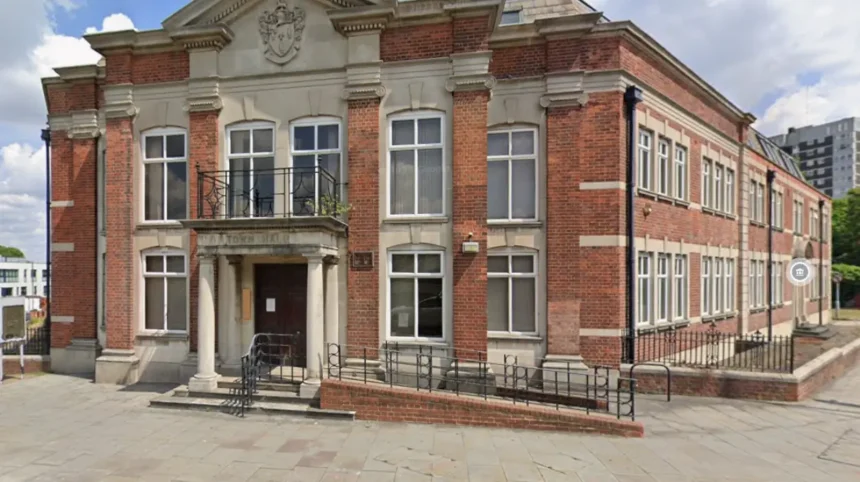
Erith (South London News) September 16, 2026 – Plans to convert a vacant South East London town hall into a sustainable creative and community hub have officially been lodged with Bexley Council. Bow Arts Trust has put forward a proposal to transform the historic Erith Town Hall into a series of creative studios aimed at delivering long-term social, cultural, and economic value through affordable workspace for artists and local community groups.
What Are the Details of the Bow Arts Trust Application for Erith Town Hall?
Bow Arts Trust has submitted an application for a Lawful Development Certificate for a Proposed Use or Development to Bexley Council regarding the future of the Erith Town Hall site. Rather than seeking full planning permission, the organisation’s submission relies on the building’s current planning framework to facilitate the change in operational focus.
The trust maintains that a full planning application is unnecessary for the proposed internal changes and operational shift. Under current planning regulations, the site operates within Class E categorisation, which encompasses commercial, business, and service uses. Bow Arts Trust asserts that establishing artist studios, workspace areas, and public-facing creative spaces falls entirely within this existing classification.
The application outlines an initiative to convert the building’s interior into managed, affordable creative studios. By establishing low-cost workspaces, the trust intends to support local creative practitioners while providing broader community access to cultural programming within the historic venue.
How Will the Proposal Impact the Local Heritage and Building Structure?
Erith Town Hall stands as a prominent civic building within the local area, having previously served administrative functions for the local authority before falling vacant. The submission highlights a commitment to working within the existing architectural footprint, avoiding intrusive structural alterations that would compromise the historic character of the building.
By applying for a Lawful Development Certificate, Bow Arts Trust signals that its proposed works remain focused on internal reconfigurations necessary to subdivide the larger municipal spaces into functional studio units. The proposal emphasises sustainability, aiming to adaptively reuse the existing fabric of the building rather than initiating energy-intensive construction or demolition.
The trust’s submission indicates that bringing the property back into active daily use will help safeguard the structural integrity of the site, preventing the decline often associated with prolonged periods of vacancy.
What Is the Background of the Erith Town Hall Development?
Erith Town Hall was constructed to serve as the administrative center for the local municipal council, playing a key role in the civic life of South East London throughout the twentieth century. Following local government reorganisations and the centralization of Bexley Council’s administrative services, the building gradually saw its municipal functions relocated to other facilities across the borough.
Over recent years, the building remained largely unoccupied, leading to ongoing discussions among local residents, heritage advocates, and council officials regarding its long-term viability and purpose. As a prominent fixture in Erith’s town centre, the vacant status of the town hall became a focal point in broader conversations about urban regeneration and the retention of historic civic assets in South East London.
The introduction of Bow Arts Trust into the site’s history follows a broader trend across London where disused public buildings are repurposed for artistic and educational uses. Bow Arts Trust, an established cultural charity formed in 1995, has a history of taking over underutilised or vacant buildings to create affordable artist studios, educational workshops, and community galleries. The current application for Erith Town Hall represents the latest attempt to integrate cultural infrastructure into suburban town centres seeking economic and social revitalization.
How Will This Development Affect Local Residents and Artists in Erith?
The proposed transformation of Erith Town Hall into a creative hub stands to directly impact several key demographic groups across Bexley and the wider South East London area.
For local artists and creative professionals, the project will increase the supply of affordable workspaces in an environment where rising property costs across Greater London have continually squeezed independent practitioners out of traditional studio spaces. The provision of managed, low-cost units allows emerging talent to establish permanent working bases within the borough, reducing the need to commute to central London locations.
For the surrounding community in Erith, the activation of a long-vacant civic anchor is expected to drive increased footfall to the town centre, generating spillover economic benefits for nearby retail and hospitality businesses. Furthermore, the establishment of a community-focused hub offers opportunities for local schools, resident groups, and educational initiatives to access cultural programming, workshops, and public events within a dedicated local venue.
For Bexley Council and local planning authorities, the outcome of the Lawful Development Certificate application will set a precedent for how vacant public assets within the borough can be reactivated using existing Class E planning provisions without undergoing lengthy planning procedures.