Key Points:
- Opposing Planning Advice: Lewisham Council planning officers have recommended the refusal of an 800-home scheme at Deptford Bridge, whereas Royal Borough of Greenwich planning officers have suggested their committee back the proposals.
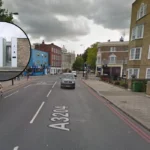
- Border-Straddling Site: The multi-building development is proposed for the former Lewisham College campus, which spans the administrative boundary between the London Borough of Lewisham and the Royal Borough of Greenwich.
- Low Affordable Housing Provision: Out of the entire 800-home masterplan, just 3 per cent of the properties are designated as legally defined affordable housing.
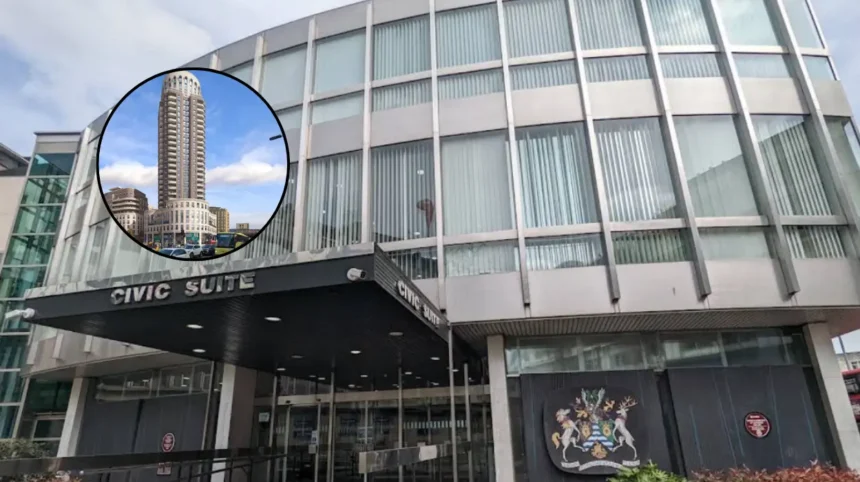
- Design and Height Objections: Lewisham Council officers have highlighted significant concerns over design, heritage impact, and townscape suitability, specifically pointing to a proposed 30-storey residential tower on Deptford Broadway.
- Joint Decision Date: Both main planning committees are scheduled to sit in separate meetings on September 24 to issue formal determinations on their respective sections of the cross-border application.
Lewisham (South London News) September 17, 2026 – As reported by Darryl Chamberlain of The Greenwich Wire, planning officers from two adjoining South London local authorities have reached opposing conclusions regarding a major redevelopment scheme at Deptford Bridge, setting up a decisive series of committee meetings.
As detailed by Darryl Chamberlain, Lewisham Council planning officers have formally recommended that their councillors reject the proposed 800-home scheme on the site of the former Lewisham College building. In contrast, as reported by Darryl Chamberlain of The Greenwich Wire, officers at the Royal Borough of Greenwich have indicated that they believe the application should be approved on their side of the administrative boundary.
The complex development proposal, brought forward for the vacant educational site that straddles the boundary between the two London boroughs, is due to go before both authorities’ main planning committees on September 24. Because the site falls under dual governance, both committees must evaluate the submitted plans for their respective geographic footprints.
As reported by Darryl Chamberlain, a central point of contention across the broad planning submission is the level of affordable provision. Across the entirety of the proposed 800-home layout, just 3 per cent of the total housing volume is designated to meet the legal definition of “affordable” homes.
However, as further noted by Darryl Chamberlain of The Greenwich Wire, Lewisham planning officers focused heavily on urban design and scale in their recommendation to throw out the scheme. Primary amongst the objections raised by Lewisham planners is the proposed inclusion of a 30-storey residential tower situated on Deptford Broadway, which officers concluded would prove overly dominant and inappropriate for the immediate local townscape.
What Are The Specific Details Of The Deptford Bridge Masterplan?
As reported by Darryl Chamberlain of The Greenwich Wire, the comprehensive plans involve clearing the former Lewisham College site to construct a high-density, multi-block residential complex. The proposals cover land directly adjacent to Deptford Creek and the Deptford Bridge Docklands Light Railway (DLR) infrastructure.
The project encompasses multiple buildings varying in height, with the proposed landmark 30-storey structure positioned on the Lewisham side facing Deptford Broadway. Additional residential blocks and commercial ground-floor units are split between the two local authority territories along the Creek corridor.
As noted by Darryl Chamberlain, the minimal provision of affordable housing—standing at 3 per cent—has drawn intense scrutiny from community groups and local planning commentators, given the severe housing waitlists present in both South London boroughs. The developer’s planning documentation indicates that viability constraints associated with complex site geometry, DLR infrastructure proximities, and commercial workspace provision restricted the volume of subsidized housing that could be included within the scheme.
Why Have Lewisham And Greenwich Planners Taken Differing Stances?
As reported by Darryl Chamberlain of The Greenwich Wire, the divergence in officer recommendations reflects differing planning evaluations regarding urban density, architectural heritage, and local impact.
Lewisham Council planners concluded that the visual impact of the 30-storey tower on Deptford Broadway, along with the surrounding conservation areas and streetscapes, presented unacceptable harm to the local environment. Officers within Lewisham determined that the public benefits delivered by the proposal—including the private housing yield and minimal affordable units—did not outweigh the negative impacts of its height, massing, and architectural footprint.
Conversely, as reported by Darryl Chamberlain, Greenwich Council planning officers assessed the portion of the scheme falling within their borough boundaries as acceptable in planning terms. Greenwich officers concluded that the proposed regeneration of the redundant educational land, alongside the delivery of new housing units and commercial space along the creek, justified recommending approval to their committee members.
Background Of The Deptford Bridge Development
The site occupied by the former Lewisham College campus has long been identified as a key strategic location linking the commercial centers of Deptford and Greenwich. Positioned directly along Deptford Creek, the area has undergone dramatic urban transformation over the past two decades, shifting from historic industrial, educational, and commercial uses toward high-density residential towers.
Following decisions by the educational institution to consolidate its operations elsewhere, the land became vacant, prompting private developers to prepare masterplans for high-density regeneration. Because Deptford Creek serves as the natural geographical border between the London Borough of Lewisham and the Royal Borough of Greenwich, major construction projects along the waterway frequently require dual planning applications and cross-borough coordination.
In recent years, planning authorities across London have faced heightened policy demands to secure higher percentages of affordable housing—typically aiming for 35 per cent to 50 per cent on major developments under Greater London Authority guidelines. Consequently, developments presenting significantly lower affordable percentages, such as the 3 per cent put forward for Deptford Bridge, have faced increasing friction from municipal planning officers and local resident groups.
Prediction: How This Development Decision Could Affect Key Stakeholders
Should the planning decisions split on September 24—with Lewisham refusing permission for its section and Greenwich granting approval—the developer will face a complex set of choices that could directly impact local residents, property buyers, and regional housing supply.
For local residents in Deptford and Greenwich, a split outcome or complete refusal by Lewisham would delay or fundamentally alter the construction timeline. If Lewisham councillors follow their officers’ advice and reject the application, the developer may be forced to redesign the scheme, reducing the height of the 30-storey tower or increasing the proportion of affordable housing to gain municipal support. Alternatively, the developer could lodge an appeal with the Planning Inspectorate or request that the Mayor of London call in the application for a final decision.
For home seekers and the wider South London property market, the outcome will dictate whether 800 new homes are brought to market at Deptford Bridge. A refusal or prolonged planning appeal will lock up the former college site in ongoing legal and architectural negotiations, delaying the delivery of both private market homes and the small allocation of affordable housing planned for the area. Conversely, if both councils ultimately grant permission, it will set a significant precedent for high-density, low-affordable developments along the Lewisham-Greenwich border.