Lambeth is one of South London’s most culturally diverse boroughs, with an artistic heritage shaped by contemporary galleries, Caribbean creativity, public art, historic architecture and community-led cultural movements. From Brixton’s street-art culture to Vauxhall’s independent exhibition spaces and Waterloo’s major cultural institutions, the borough offers visitors several ways to explore its creative identity.
- What Makes Lambeth an Important Centre of Artistic Heritage?
- Where Can Visitors Explore Lambeth’s Contemporary Art Galleries?
- Beaconsfield Gallery in Vauxhall
- San Mei Gallery in Stockwell
- Morley Gallery in Waterloo
- Corvi-Mora in Kennington
- Which Cultural Institutions Preserve Lambeth’s Artistic and Social History?
- Where Can Visitors Discover Lambeth’s Street Art and Public Creativity?
- How Does the Garden Museum Contribute to Lambeth’s Artistic Heritage?
- Why Is the Southbank Centre Important to Lambeth’s Artistic Identity?
- Which Historic Buildings Reveal Lambeth’s Artistic Development?
- How Can Visitors Understand Lambeth’s Artistic Heritage Through Historical Collections?
- What Role Do Local Communities Play in Preserving Lambeth’s Artistic Heritage?
- Community Archives and Historical Representation
- Independent Artists and Creative Organisations
- Education and Public Participation
- How Can Visitors Plan an Artistic Heritage Tour of Lambeth?
- Start at Waterloo and Lambeth’s Riverside
- Explore Vauxhall’s Independent Galleries
- Discover Stockwell’s Creative Spaces
- What Should Visitors Know Before Exploring Lambeth’s Art and Cultural Attractions?
- Check Opening Times
- Understand Admission Arrangements
- Consider Accessibility and Transport
- Allow Time for Independent Exploration
- How Will Lambeth’s Artistic Heritage Remain Relevant in the Future?
Discovering Lambeth’s artistic heritage involves more than visiting traditional art galleries. Its cultural landscape includes historic buildings, photography collections, community archives, murals, artist studios and exhibitions documenting the experiences of different generations. These places reveal how art reflects Lambeth’s changing identity, social history and multicultural communities.
Whether you are visiting South London for a cultural weekend, exploring local neighbourhoods or looking for independent creative spaces, Lambeth provides a varied introduction to London’s artistic life.
What Makes Lambeth an Important Centre of Artistic Heritage?
Lambeth is an important centre of artistic heritage because its cultural identity combines historic institutions, contemporary galleries, Caribbean creativity, public artworks and community archives. Its artistic development reflects industrial history, migration, social movements and the growth of independent creative organisations.
The London Borough of Lambeth stretches along the south bank of the River Thames, covering Waterloo, Vauxhall, Kennington, Stockwell, Brixton, Herne Hill, Tulse Hill and Norwood. Each neighbourhood contributes to the borough’s cultural character.
Lambeth’s artistic development has several historical foundations. During the eighteenth and nineteenth centuries, Thames-side industries included pottery and glassmaking. These industries established an important relationship between manufacturing, design and decorative arts.
The borough subsequently developed a strong cultural presence through public institutions, educational organisations and community initiatives. The twentieth century brought further cultural change through Caribbean migration, independent music, photography, theatre and contemporary visual art.
The London Museum’s Lambeth collections document these different influences. Its collection includes historical prints, drawings, photographs, maps and material associated with Vauxhall Gardens, Lambeth Palace and Brixton’s communities.
Lambeth’s artistic heritage therefore represents several connected cultural traditions:
- Historic visual art: Examples include eighteenth-century engravings, architectural illustrations and historical maps.
- Contemporary art: Examples include experimental exhibitions, installations and photography.
- Caribbean cultural expression: Examples include community photography, music-related visual culture and representations of the Windrush generation.
- Public creativity: Examples include murals, graffiti and outdoor artworks.
- Community heritage: Examples include oral histories, archival photographs and locally produced exhibitions.
This combination makes Lambeth particularly relevant to visitors interested in understanding how local communities shape London’s wider artistic identity.
Where Can Visitors Explore Lambeth’s Contemporary Art Galleries?
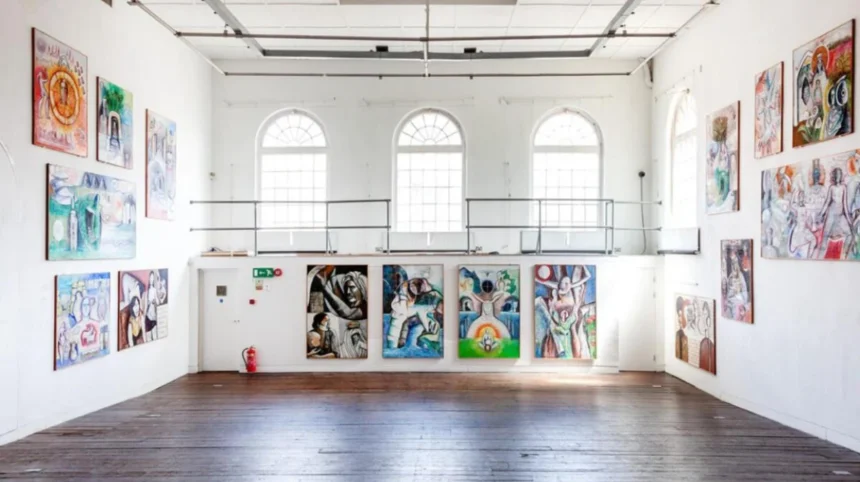
Visitors can explore Lambeth’s contemporary art through independent galleries, experimental exhibition spaces and artist-led organisations. Beaconsfield Gallery, San Mei Gallery, Morley Gallery and other creative venues provide access to changing exhibitions and emerging artistic practices.
Lambeth’s independent gallery scene provides an alternative to London’s larger national museums. These spaces regularly introduce visitors to contemporary painting, sculpture, photography, installation art and interdisciplinary projects.
Beaconsfield Gallery in Vauxhall
Beaconsfield Gallery is an independent contemporary art organisation based in a former Lambeth Ragged School at 22 Newport Street.
The organisation was established in 1994 by artists. Its programme focuses on experimental exhibitions, commissioned artworks, artist residencies and interdisciplinary cultural activities.
The building itself contributes to the visitor experience. Its historic educational architecture provides a setting for contemporary installations and artistic experimentation.
Beaconsfield is particularly relevant to visitors interested in:
- Experimental contemporary installations.
- Artist-led exhibitions and creative research.
- Interdisciplinary art projects, including sound and performance.
- The relationship between historic buildings and contemporary culture.
Its location makes it suitable for combining a gallery visit with an exploration of Vauxhall’s wider cultural environment.
San Mei Gallery in Stockwell
San Mei Gallery is an independent contemporary art space at 39a Loughborough Road, Stockwell, SW9 7TB.
Opened in 2017, the gallery follows an artist-led approach to contemporary exhibition-making. Its programme introduces visitors to emerging and established artists working across different creative disciplines.
San Mei Gallery provides an intimate setting for exploring experimental exhibitions. Its programme connects contemporary artistic practice with research, cultural discussion and community engagement.
For visitors exploring Stockwell, the gallery offers an opportunity to discover creative work outside London’s larger commercial gallery districts.
Morley Gallery in Waterloo
Morley Gallery is the public exhibition space associated with Morley College London. It is located at 61 Westminster Bridge Road, SE1 7HT.
The gallery presents changing exhibitions covering painting, sculpture, printmaking, photography, ceramics, textiles and digital art.
Its connection with an educational institution makes it an important part of Lambeth’s wider creative learning environment. Exhibitions introduce visitors to different artistic approaches while supporting the relationship between education and professional creative practice.
Visitors should check the current exhibition programme and opening arrangements before travelling.
Corvi-Mora in Kennington
Corvi-Mora is a contemporary art gallery at 1A Kempsford Road, Kennington, SE11 4NU.
Its exhibition programme features international and British artists working across painting, sculpture, photography, ceramics and installation.
The gallery offers a smaller-scale exhibition experience within Kennington’s residential streets. Its location also makes it relevant to visitors exploring independent creative businesses and cultural spaces around Vauxhall and Kennington.
Which Cultural Institutions Preserve Lambeth’s Artistic and Social History?
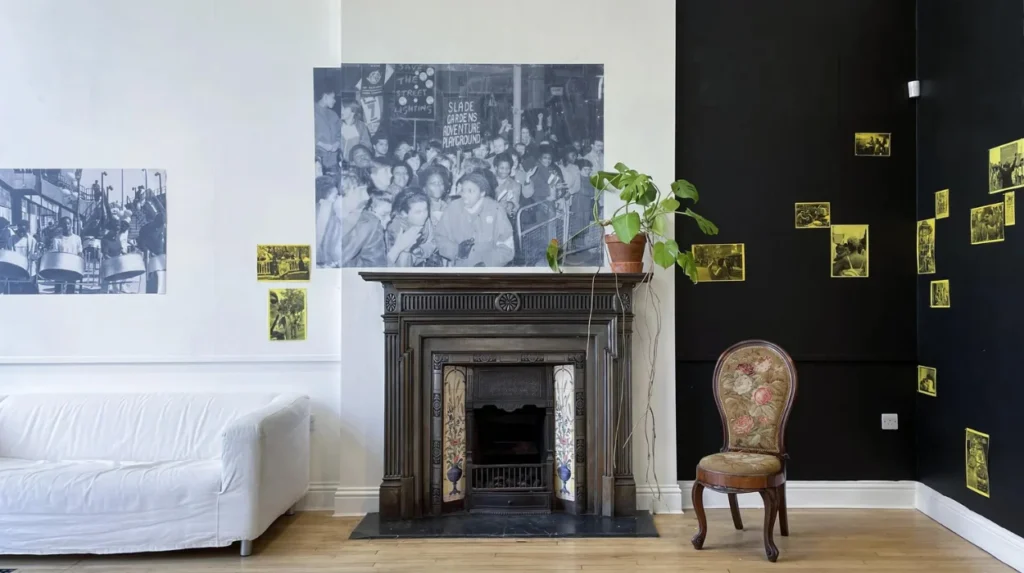
Lambeth’s cultural institutions preserve artistic heritage through historical documents, photographs, community collections and exhibitions. Lambeth Archives and Black Cultural Archives provide particularly valuable resources for understanding the borough’s artistic development and multicultural identity.
Lambeth Archives on Brixton Hill
Lambeth Archives is one of the most useful destinations for visitors interested in the historical foundations of Lambeth’s cultural identity.
Located at 16 Brixton Hill, SW2 1ET, the archive operates as the borough’s record office and local studies library. Its collections document the development of Lambeth and the experiences of people who have lived and worked in the area.
The collection includes:
- Historical photographs and illustrations.
- Architectural drawings and maps.
- Documents relating to local organisations.
- Records of businesses, schools and community groups.
- Materials documenting women’s history, Black history and LGBTQ+ history.
- Artworks and historical artefacts.
The archive’s catalogues extend back to the sixteenth century. Its digital image collection, Lambeth Landmark, provides access to more than 16,000 photographs, illustrations, maps and other historical documents.
Visitors can use these materials to investigate how Lambeth’s streets, buildings, neighbourhoods and cultural communities have changed.
The archive also provides exhibition and educational facilities. Researchers, students, local residents and visitors interested in London’s social history can use its resources. Lambeth Council+1
Black Cultural Archives in Brixton
Black Cultural Archives is an important institution for understanding African and Caribbean contributions to British culture.
Located at 1 Windrush Square, Brixton, SW2 1EF, the organisation collects, preserves and celebrates the histories of people of African and Caribbean descent in the United Kingdom.
Its origins are connected to community campaigns for better representation of Black British history. The organisation developed in response to historical inequalities and the limited recognition of Black communities within mainstream historical institutions.
Its collections include archival documents, photographs, museum objects, research materials and historical records. The institution also organises exhibitions, educational programmes and public engagement activities.
The Windrush generation forms an important part of this cultural history. Between 1948 and 1971, Caribbean migrants established communities across Britain, with Brixton becoming one of the most recognised centres of Caribbean life in London.
Black Cultural Archives helps visitors understand the relationship between migration, identity, music, visual culture and community representation.
The institution currently operates through booked research visits, scheduled open days, exhibitions and events. Its reading room and library have designated opening times, so visitors should check appointment requirements before arriving.
Where Can Visitors Discover Lambeth’s Street Art and Public Creativity?
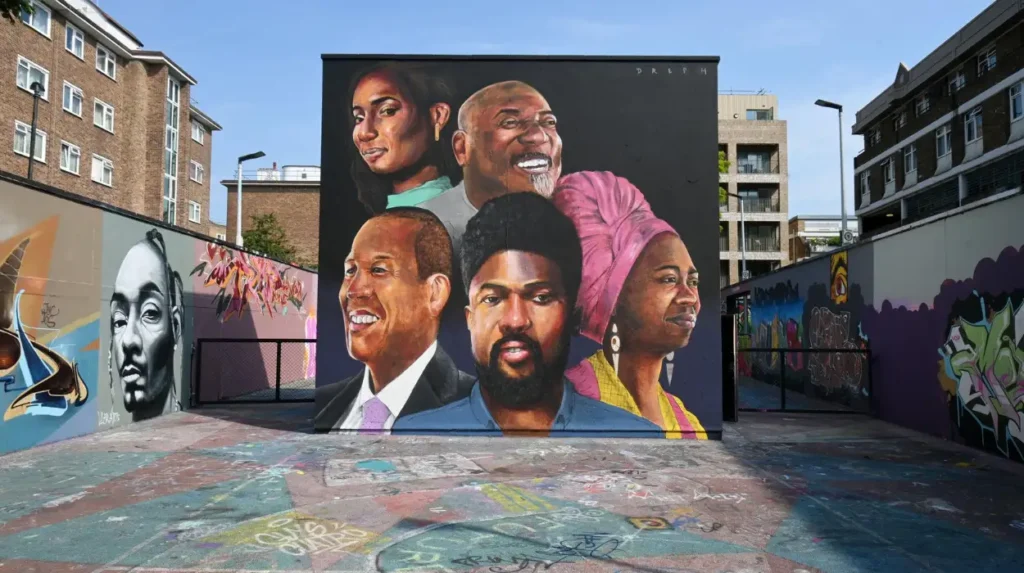
Lambeth’s street-art heritage is particularly visible around Brixton, Stockwell and Vauxhall. Murals, graffiti walls and public artworks connect contemporary artistic expression with neighbourhood identity, community participation and the borough’s multicultural history.
Street art is an important part of Lambeth’s contemporary creative environment. Unlike traditional gallery exhibitions, public artworks appear within everyday urban spaces.
They transform walls, buildings and public areas into locations for visual communication. Artists use different techniques, including spray painting, stencilling, illustration and large-scale mural production.
Stockwell Hall of Fame
Stockwell Hall of Fame is a recognised outdoor graffiti and street-art location in Lambeth.
Situated at 7 Aytoun Road, SW9 0TT, the site provides a designated environment for graffiti artists and creative expression.
Its painted walls create an evolving collection of artwork. Different artists contribute changing designs, making the location a useful destination for visitors interested in contemporary urban art.
The site also demonstrates the relationship between public recreation and artistic activity. Its refurbishment, completed in 2019, helped maintain its role as a community space for street-art culture.
Visitors can photograph the changing artwork and observe the techniques used by graffiti artists. The location is particularly relevant to people exploring Brixton and Stockwell’s alternative creative identity.
Brixton’s Murals and Community Art
Brixton’s public art reflects its history as a centre of African and Caribbean culture, music and community activism.
The neighbourhood’s visual identity includes murals, painted shopfronts, commemorative artworks and independent creative projects.
These artworks often address themes such as cultural identity, migration, music, equality and local heritage. Their subjects reflect the experiences of different generations within Brixton’s communities.
Visitors exploring Brixton Market, Electric Avenue and surrounding streets encounter a mixture of historic commercial architecture and contemporary visual expression.
Street-art locations also change over time. Building renovations, new commissions and repainting affect the appearance of individual artworks. Visitors should therefore treat street art as an evolving cultural collection rather than a permanent museum exhibition.
Public Art Around Vauxhall
Vauxhall provides another setting for exploring Lambeth’s relationship with public creativity.
Its cultural environment combines independent galleries, historic buildings, public spaces and contemporary development. Artistic activity around Newport Street and Tyers Street connects smaller exhibition venues with the neighbourhood’s architectural heritage.
Public art in this area demonstrates how creative work contributes to the identity of changing urban environments.
Visitors can combine an independent gallery visit with a walk through Vauxhall’s streets and nearby public spaces.
How Does the Garden Museum Contribute to Lambeth’s Artistic Heritage?
The Garden Museum preserves Britain’s artistic relationship with gardens through botanical paintings, photography, historical objects and garden-design archives. Its location inside the former St Mary-at-Lambeth church connects visual creativity with the borough’s medieval architectural heritage.
Garden Museum stands beside Lambeth Palace on Lambeth Palace Road.
It is Britain’s only museum dedicated to the art, history and design of gardens. Its permanent collection includes historical gardening objects, botanical artwork, paintings and photography.
The museum explores the relationship between artistic design and the natural environment. Its exhibitions examine how gardeners, designers and artists have represented plants, landscapes and outdoor spaces.
St Mary-at-Lambeth Church
The museum occupies the former St Mary-at-Lambeth church, a historic building with medieval origins.
Its surviving church tower dates from the fourteenth century and is recognised as one of Lambeth’s oldest surviving structures.
The church was deconsecrated during the twentieth century and subsequently adapted for museum use. This conversion preserved an important historic building while creating a new cultural destination.
The architectural setting adds historical context to the museum’s artistic collection. Visitors experience botanical paintings and garden-related objects inside a building associated with centuries of religious and community history. Garden Museum+1
Botanical Art and Garden Design
The Garden Museum provides access to different forms of botanical creativity.
Botanical art records the visual characteristics of plants through detailed illustrations and paintings. Garden photography documents landscapes, planting arrangements and designed outdoor spaces.
The museum also preserves the Archive of Garden Design, which contains working records of leading British garden designers from the twentieth and twenty-first centuries.
Its wider programme includes exhibitions, educational activities and community projects. These activities connect artistic heritage with sustainability, plant science, architecture and contemporary environmental interests.
For visitors interested in combining art with architecture and landscape design, the Garden Museum offers a distinctive experience within Lambeth.
Why Is the Southbank Centre Important to Lambeth’s Artistic Identity?
The Southbank Centre is a major cultural institution on Lambeth’s northern waterfront. Its artistic identity developed from the 1951 Festival of Britain and expanded through contemporary art, music, literature, architecture, performance and public exhibitions.
Southbank Centre occupies a prominent position along the Thames in Waterloo.
Although its cultural programme extends beyond traditional visual art, it plays an important role in Lambeth’s wider artistic heritage.
The institution’s origins are associated with the 1951 Festival of Britain. The Royal Festival Hall was the festival’s principal permanent building and officially opened on 3 May 1951.
The complex expanded in 1967 when the Hayward Gallery, Queen Elizabeth Hall and Purcell Room opened.
Hayward Gallery and Contemporary Visual Art
The Hayward Gallery is one of London’s recognised contemporary art exhibition venues.
Its programme includes exhibitions featuring established and emerging artists. Different exhibitions cover painting, sculpture, photography, installation and other contemporary art forms.
The gallery has also hosted historically significant exhibitions. One example is The Other Story, presented between November 1989 and February 1990. Curated by Rasheed Araeen, the exhibition celebrated artists of African, Asian and Caribbean heritage working in post-war Britain.
This exhibition established an important moment in the recognition of underrepresented artists within British art history.
Public Art and Cultural Events
The wider Southbank Centre programme combines exhibitions with music, literature, dance and performance.
Its public areas also provide access to cultural activity without requiring visitors to attend a ticketed performance.
The institution regularly presents free exhibitions and installations. Its programme also includes educational activities, festivals and artist-led events.
For visitors exploring Lambeth, the Southbank Centre provides an opportunity to understand how large cultural institutions influence the artistic identity of a neighbourhood.
Its location near Waterloo Station makes it convenient for visitors combining several cultural attractions in one day.
Which Historic Buildings Reveal Lambeth’s Artistic Development?
Lambeth’s historic buildings reveal how architecture, craftsmanship, religious institutions and public education influenced local artistic development. Lambeth Palace, St Mary-at-Lambeth and historic cultural buildings provide important examples of this relationship.
Lambeth Palace and Its Historic Architecture
Lambeth Palace is the historic London residence of the Archbishop of Canterbury.
Situated beside the River Thames, the palace has served as an important religious and architectural landmark for centuries. Its buildings contain different architectural features reflecting successive periods of construction and restoration.
The Great Hall, historic gateways, religious interiors and decorative details demonstrate the craftsmanship associated with historic British architecture.
Although Lambeth Palace is not a conventional public art gallery, its architectural heritage provides valuable context for understanding decorative arts and historic visual culture.
Its connection with St Mary-at-Lambeth and the Garden Museum also creates an interesting cultural route for visitors exploring the northern part of the borough.
Public access to Lambeth Palace is generally organised through scheduled tours and special opening arrangements. Visitors should check availability before planning a visit.
Historic Buildings and Creative Reuse
Lambeth’s artistic heritage also includes buildings that have acquired new cultural functions.
Beaconsfield Gallery is one example. Its former educational building now provides an environment for experimental contemporary exhibitions.
The Garden Museum demonstrates another form of creative reuse through the conversion of a historic church into a specialist cultural institution.
These examples show how preserving historic architecture supports contemporary artistic activity. Buildings retain their physical character while accommodating exhibitions, educational projects and public engagement.
Visitors interested in architectural photography should examine building façades, entrances, decorative features and the relationship between older structures and modern developments.
How Can Visitors Understand Lambeth’s Artistic Heritage Through Historical Collections?
Historical collections connect Lambeth’s contemporary art scene with its earlier cultural traditions. Archival photographs, paintings, maps, illustrations and oral histories help visitors understand the people, institutions and social changes behind the borough’s creative identity.
Lambeth’s artistic heritage developed through several connected historical periods.
During the eighteenth century, Vauxhall Gardens became an important entertainment destination. The gardens featured performances, music, decorative structures and illuminated public spaces.
Artists documented this environment through engravings and illustrations. The London Museum holds historical images showing the gardens, including works depicting their walks, architectural features and entertainment spaces.
During the nineteenth century, industrialisation changed Lambeth’s relationship with art and design. Pottery, glassmaking and other manufacturing activities contributed to the area’s material culture.
The development of public education also expanded access to artistic learning. Institutions and educational organisations established opportunities for working communities to engage with creative subjects.
The twentieth century introduced further cultural influences through migration, changing neighbourhood identities, music and community activism.
Brixton became particularly important within the development of Caribbean culture in Britain. Its artistic identity reflects the experiences of people who established homes, businesses and cultural organisations in the area.
Lambeth’s archives provide the evidence needed to explore these changes. Historical photographs and documents allow visitors to compare earlier neighbourhoods with their present-day appearance. London Museum+1
As you explore the borough’s contemporary galleries, historic churches and cultural landmarks, you are also crossing places shaped by centuries of social and artistic change. Explore the full [Historical Development of Lambeth and Its Cultural Heritage] to understand the origins of its creative identity.
What Role Do Local Communities Play in Preserving Lambeth’s Artistic Heritage?
Local communities preserve Lambeth’s artistic heritage through cultural organisations, independent exhibitions, historical research, public murals and educational programmes. Their participation ensures that artistic traditions reflect local experiences rather than relying exclusively on major museums.
Community participation is central to the borough’s creative identity.
Lambeth’s cultural organisations provide opportunities for residents, artists, researchers and younger generations to contribute to local heritage.
Community Archives and Historical Representation
Black Cultural Archives demonstrates how community organisations preserve histories that are often underrepresented in traditional historical collections.
Its work documents the experiences of African and Caribbean communities across Britain. The archive also provides educational resources and research opportunities.
Its establishment reflects the importance of community participation in historical preservation.
Independent Artists and Creative Organisations
Independent galleries contribute to Lambeth’s cultural environment by supporting artists and presenting exhibitions outside major museum institutions.
Beaconsfield Gallery and San Mei Gallery provide examples of independent exhibition spaces.
These organisations connect artists with audiences through exhibitions, research projects and cultural events.
Their programmes also introduce visitors to creative approaches that extend beyond conventional painting and sculpture.
Education and Public Participation
Educational activities help preserve artistic traditions by introducing creative subjects to different age groups.
The Garden Museum provides learning activities connected with botanical art, gardening and design.
Lambeth Archives supports historical research and educational engagement through its records and exhibition facilities.
These activities establish connections between cultural institutions and local communities. They also help younger visitors understand the historical development of their neighbourhoods.
How Can Visitors Plan an Artistic Heritage Tour of Lambeth?
Visitors can explore Lambeth’s artistic heritage through a neighbourhood-based itinerary covering Waterloo, Vauxhall, Stockwell and Brixton. Combining galleries, archives, historic architecture and street art creates a broader understanding of the borough’s creative development.
A successful artistic heritage tour should combine different types of cultural attractions rather than concentrating on one gallery.
Start at Waterloo and Lambeth’s Riverside
Begin around Waterloo and the South Bank.
Visit the Southbank Centre to explore contemporary exhibitions, architectural landmarks and cultural installations.
Continue towards the Garden Museum to discover botanical art, historic architecture and garden-design collections.
Lambeth Palace is another nearby landmark worth including when public access is available.
Explore Vauxhall’s Independent Galleries
Travel towards Vauxhall and explore Beaconsfield Gallery.
Continue towards nearby independent exhibition spaces, including Corvi-Mora and Cabinet Gallery.
This part of the itinerary introduces visitors to contemporary artistic practices within historic and changing urban environments.
Discover Stockwell’s Creative Spaces
Stockwell provides an opportunity to explore independent art and public creativity.
Visit San Mei Gallery and continue towards Stockwell Hall of Fame.
Visitors should organise the itinerary around opening arrangements. Independent galleries often have different exhibition schedules, while archives and specialist cultural organisations sometimes require advance appointments.
Explore More Area Guide
Where to Explore Lambeth’s Literary and Artistic Heritage
Best Places to Visit Near Lambeth’s Historic Hospitals
What Should Visitors Know Before Exploring Lambeth’s Art and Cultural Attractions?
Visitors should check exhibition schedules, admission arrangements, accessibility information and appointment requirements before exploring Lambeth’s cultural attractions. Gallery opening days vary, while archives and specialist collections often operate through scheduled visits and research appointments.
Planning helps visitors make better use of their time.
Check Opening Times
Independent galleries operate different opening schedules. Some open on selected weekdays, while others concentrate on weekend exhibitions.
The Garden Museum publishes its opening arrangements and ticket information through its official website.
Lambeth Archives also publishes its opening times and recommends appointments for accessing research collections, particularly on Saturdays.
Understand Admission Arrangements
Not every cultural attraction operates like a conventional museum.
Some galleries offer free entry to exhibitions, while specialist museums charge admission or require advance booking.
Black Cultural Archives currently operates through appointments, scheduled open days and organised events rather than unrestricted walk-in access.
Visitors should confirm the arrangements directly with each organisation.
Consider Accessibility and Transport
Lambeth benefits from extensive public transport connections.
Waterloo, Vauxhall, Brixton, Stockwell and Lambeth North provide useful connections for exploring different parts of the borough.
Visitors should also check individual building accessibility, particularly when exploring historic structures with original architectural features.
Allow Time for Independent Exploration
Artistic heritage is not limited to formal exhibition spaces.
Allow additional time to explore neighbourhood streets, public artworks, local markets and historic buildings.
This approach provides a more complete understanding of the relationship between Lambeth’s artistic institutions and everyday community life.
How Will Lambeth’s Artistic Heritage Remain Relevant in the Future?
Lambeth’s artistic heritage will remain relevant through the preservation of historical collections, support for independent artists, community-led exhibitions and the adaptation of historic buildings. Digital archives and accessible cultural programmes also strengthen long-term public engagement.
The future of Lambeth’s creative identity depends on maintaining connections between historical preservation and contemporary artistic activity.
Digital collections are one important part of this process.
Lambeth Landmark already provides online access to more than 16,000 historical images and documents. Digital access allows researchers, residents and international visitors to explore local history without physically visiting the archive.
Independent galleries also contribute to the future of artistic heritage by providing exhibition opportunities for contemporary artists.
Community organisations remain important because they preserve cultural experiences that are not always represented in national collections.
Black Cultural Archives provides a clear example of this approach through its work documenting African and Caribbean histories in Britain.
Historic building conservation is another important consideration. Cultural reuse allows buildings to retain their architectural significance while supporting modern creative activities.
The Garden Museum and Beaconsfield Gallery demonstrate how historic spaces continue to serve public cultural purposes.
Lambeth’s future artistic identity will therefore depend on three connected priorities: preserving historical evidence, supporting creative participation and maintaining accessible cultural spaces.
For visitors, these developments mean that Lambeth’s artistic heritage remains an evolving part of South London’s cultural landscape.
Lambeth offers a varied introduction to South London’s artistic heritage through independent galleries, historic buildings, community archives, street art and specialist museums.
Beaconsfield Gallery, San Mei Gallery, Morley Gallery and Corvi-Mora introduce visitors to contemporary artistic practices. Lambeth Archives and Black Cultural Archives preserve the borough’s historical and multicultural identity. The Garden Museum connects botanical creativity with medieval architecture, while the Southbank Centre demonstrates the continuing importance of major cultural institutions.
Exploring these destinations together provides a deeper understanding of how Lambeth’s artistic identity developed and how its communities continue to shape it.
For tourists, residents and cultural researchers, the borough offers an accessible way to explore the relationship between art, history, architecture and everyday urban life.
What are the best places to discover Lambeth’s artistic heritage?
The best places include Beaconsfield Gallery, San Mei Gallery, Morley Gallery, Garden Museum, Lambeth Archives and Black Cultural Archives. These venues showcase contemporary art, historical collections and local cultural heritage.