Key Points
- Lambeth Council’s Cabinet formally reversed previous plans to demolish and redevelop two landmark 1960s housing estates during a meeting on October 21.
- The decision brings an end to more than 12 years of uncertainty, threat of demolition, and anxiety for residents living on the Central Hill estate in Crystal Palace and the Cressingham Gardens estate beside Brockwell Park.
- In addition to Central Hill and Cressingham Gardens, the proposals also remove Knights Walk and Trinity Rise from the council’s New Homes development portfolio.
- A 2022 review led by Sir Bob Kerslake, former head of the civil service, previously highlighted that feedback from residents across the estates was uniformly negative and that trust in the council had plummeted due to inconsistent policies.
- Under the newly approved direction, the local authority will shift focus toward retaining, repairing, and improving existing properties rather than pursuing widespread estate regeneration through demolition.
Lambeth (South London News) November 3, 2026 — Lambeth housing estates saved from demolition and redevelopment Lambeth Council’s Cabinet formally reversed the previous plans during a meeting last week (October 21).
Why Were Central Hill And Cressingham Gardens Under Threat For Over A Decade?
The protracted controversy began more than twelve years prior, leaving communities in limbo as local authorities weighed the future of prominent post-war modernist architecture. As reported by journalists covering municipal affairs for major outlets, the historic renewal programme had originally been taken forward through the council’s housing company, Homes for Lambeth. However, the approach triggered immense local friction. A comprehensive 2022 review conducted by Sir Bob Kerslake, former head of the civil service, found that feedback from residents across the affected areas was “uniformly negative”. Furthermore, Sir Bob Kerslake noted that levels of trust in the local authority were “exceptionally low” as a direct consequence of poor communication and shifting municipal policies. Following those findings, the housing company was dissolved, and the regeneration oversight was brought back in-house by the council.
What Did Lambeth Council Decide At The October 21 Cabinet Meeting?
During the formal session on October 21, the administration altered its strategic trajectory. As detailed in official council documents and local media coverage, the Cabinet agreed to formally stop the renewal and rebuild plans for both the Central Hill estate in Crystal Palace and the Cressingham Gardens estate near Brockwell Park. Instead of clearing the land for new construction, the local authority resolved to maintain, repair, and improve the existing 1960s buildings. Alongside these two sites, the council’s proposals also removed Knights Walk and Trinity Rise from the New Homes development portfolio. Regarding Knights Walk, reports noted that a completed first phase had left the proposed second-phase site entirely inaccessible, rendering any continuation of that specific scheme unviable.
How Did Local Leaders And Community Campaigners Respond?
The reversal was met with a mixture of immense relief from long-term campaigners and intense debate among political figures regarding future housing provision. Expressing gratitude toward the tireless determination of local residents, Councillor Martin Abrams, Leader of Lambeth Council, stated that:
“Our task now as an administration is simple; protect the homes people have, improve the homes they live in, and build the homes our communities urgently need.”
Councillor Martin Abrams added that the council had ultimately stood alongside residents in arguing that their long-term security should not depend on the physical erasure of their neighborhoods.
Conversely, opposition voices raised critical questions concerning the long-term financial backing of the new maintenance-only strategy and the broader implications for the borough’s housing shortage. As highlighted by political representatives such as Councillor Simon Cordon during the discussions, concerns were voiced regarding how basic repairs and maintenance would be funded moving forward, and whether retaining un-refurbished stock adequately addresses deep-seated structural challenges within the local housing market.
Background of the Particular Development
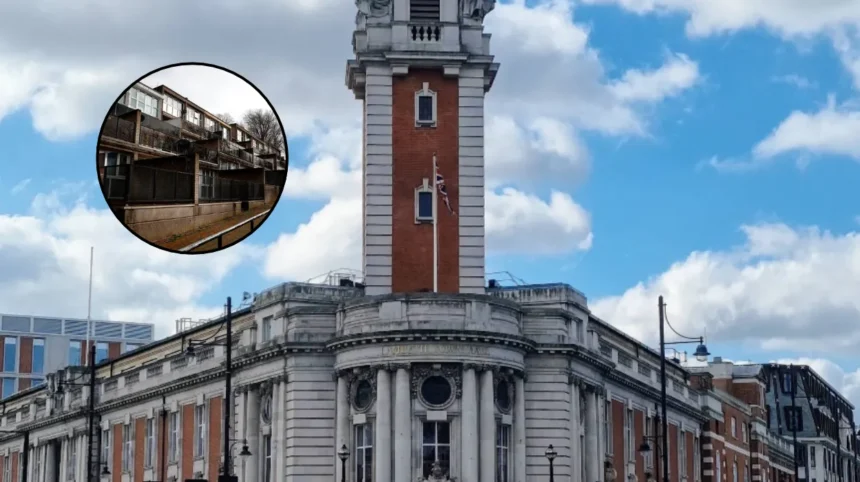
The decision to scrap demolition plans for Central Hill and Cressingham Gardens marks a definitive turning point in London’s post-war housing estate regeneration debate. Built in the 1960s, both estates are celebrated examples of modernist architectural design, characterized by low-rise, high-density layouts intended to foster strong community cohesion. Over preceding decades, successive local administrations across London increasingly turned toward estate “renewal”—often involving wholesale demolition and private-public partnerships—as a mechanism to tackle perceived structural obsolescence and boost overall housing numbers.
However, these schemes frequently encountered fierce grassroots resistance. Residents argued that displacement disrupted established social networks, destroyed functional homes, and frequently resulted in a net loss of genuinely affordable social rent housing. In Lambeth, the accumulation of 12 years of planning blight stalled investment in day-to-day maintenance, leading to deteriorating living conditions that intensified resident distress. The intervention of the Kerslake review in 2022 served as a watershed moment, prompting the local authority to re-evaluate the social and financial viability of large-scale demolition, culminating in the October 2026 policy reversal.
Prediction
This major policy shift carries substantial implications for residents, local taxpayers, and housing applicants across the London Borough of Lambeth. For the immediate resident population of Central Hill and Cressingham Gardens, the immediate threat of eviction and property loss is lifted, providing psychological relief after more than a decade of persistent anxiety. Physically, the focus will shift from displacement to structural upkeep, meaning tenants will remain in their established communities while relying on the council to execute necessary property repairs.
However, abandoning wholesale redevelopment poses downstream challenges for municipal housing targets. Because previous regeneration models anticipated delivering thousands of newly built properties—comprising both market-rate and social housing units—the pivot to a maintenance-focused approach removes a major anticipated pipeline of new supply. With Lambeth facing acute local housing waiting lists, the local authority faces increased pressure to identify alternative, unbuilt brownfield sites to meet regional housing quotas without relying on the clearance of existing neighborhoods.